



“Diaries of an Academic of Color” is an illustrated series that portrays the daily lives of Global South academics in the Global North, living and working through the annihilation of Palestinians and the aggressions against Lebanon, Iran and elsewhere.
Through free-form writing and illustration, the contributors reflect on what divestment can mean for academics of color within knowledge-producing institutions across the Global North. Grounded in the urgency of documenting the present moment and its reverberations in academia, the series reveals how the dehumanization of the “other” has always been structural and systemic.
This story is by Watfa Najdi, with illustrations by Pascale Ghazaly.
What does it mean to think beyond extractivism in times of war?
I was invited to speak at an event. At the time, I was feeling vulnerable and constantly worried about the situation in Lebanon, and I rarely felt like leaving the house.
However, it was an important event, so I said yes.

That night, as I was sitting on the stage speaking, a strike hit al-Nuweiri neighborhood in Beirut. Among the martyrs, there was a family with the same last name as mine: Najdi. I didn’t know, and I kept talking about the importance of moving beyond the North/South paradigm that casts certain populations as perpetual beneficiaries or aid recipients in need of Western expertise… I remember saying something about care, holding space, and listening to voices from the majority world. I didn’t look at my phone until the panel ended.
When I finally did, I saw several messages about the strike, the victims, the names.
“Israeli air strikes on central Beirut have killed 22 people and wounded at least 117, Lebanon’s Ministry of Public Health said… The strikes appear to have hit densely populated residential areas as flames and smoke rose from two residential blocks.” (Al Jazeera, October 2024)
For a few minutes, everything inside me froze until my dad finally answered his phone and said they were okay. I then texted a friend who lived close to the targeted area. She replied briefly that they were still trying to process what happened, but they were okay.
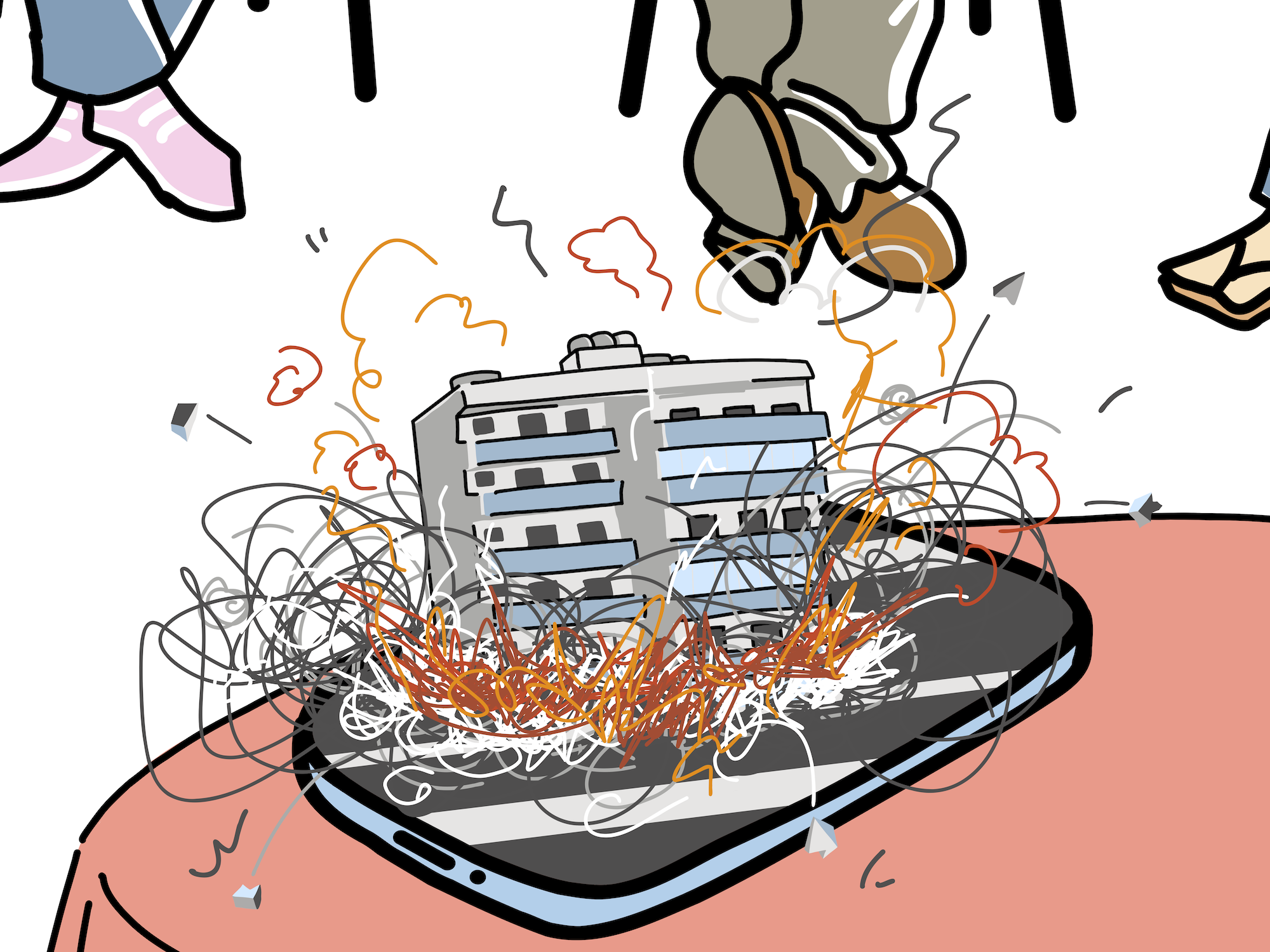
After that, I put on a smile and said I needed to leave early. So, while everyone went upstairs to continue the conversation, I slipped out and rushed back home. That day I realized that academic conversations feel impossibly small during war, and the world you come from suddenly becomes too heavy to carry into these spaces but also too real to just put on hold.
Excerpt from Megaphone’s X account posted the following day (October 11, 2024):
“Hussein (51) and Lara (40), along with their twins Bassam and Zakaria (15) and Fatima Najdi (4), were laid to rest on Friday in their hometown Srifa, as well as their grandmother Inaam Saqlawi, her brother, and his wife. The death toll from the Noueiri massacre has now reached 22 martyrs, with over 117 others injured.”
How are you doing? How’s your family?
A professor asked me how I was doing. Over the past months, I’ve learned not to answer those questions fully. Most people ask because (I assume) it would be impolite not to, and what they expect is a short confirmation that your family back home is “doing okay,” even while surviving a war. So, I usually say exactly that: “they’re okay” then I smile and nod.
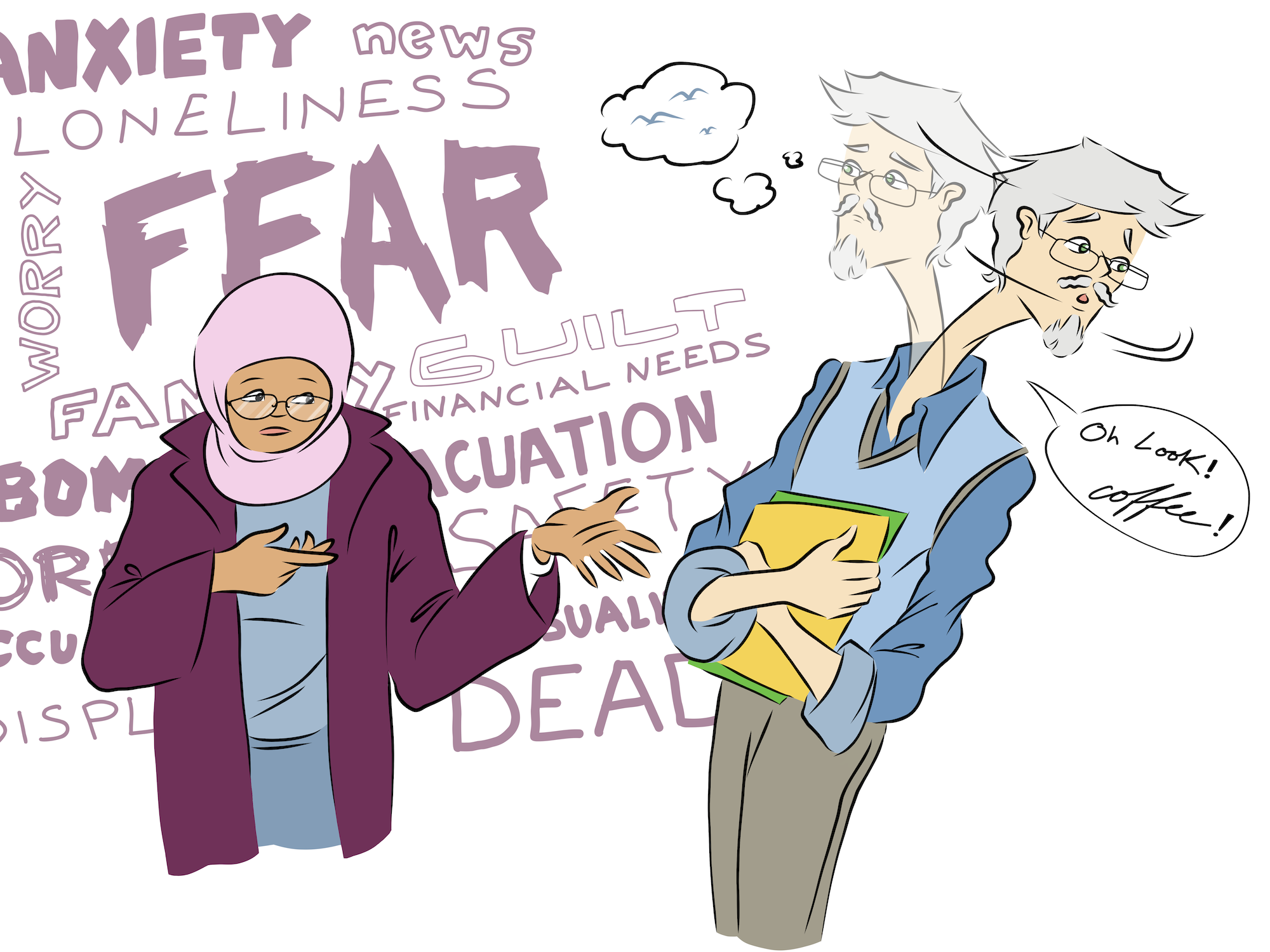
But this time there was something in his tone that made me believe he actually wanted to know more about what’s happening. So, I let myself say a little more. “It’s terrible,” I said. “Last night I couldn’t sleep. I stayed up following the news… watching which buildings were being bombed…”
I was tired and angry, so the words kept coming. “They hit a building close to my neighborhood in Beirut. It’s just…”
I don’t remember what I said after that, only the moment he gently cut in: “Can you walk with me? I need to grab my coffee from inside.”
I froze for a second but then nodded and walked beside him towards the class. It took me a minute to put a smile back on… I stood there as he grabbed his cup and checked something on his desk.
He then turned back to me and said, “…you were telling me about the situation in Beirut?”
I felt ridiculous sharing, even if for a few seconds, something very personal to me with someone who preferred to listen to a conversation about war while sipping coffee. I smiled again and said, “oh, that was it. The situation is difficult. Hopefully it will end soon.”

He smiled back, warmly. I don’t think he was pretending. But this is probably as far as he could go. Not because of lack of empathy, but because news about war, suffering and pain from the other side of the world can only be acknowledged briefly, never long enough to interrupt the rhythm of (academic) life.