




In January 2026, Prime Minister Edi Rama visited Jerusalem, where he met with Israeli Prime Minister Benjamin Netanyahu who faces an arrest warrant from the International Criminal Court for alleged crimes against humanity in Gaza. During his visit, Rama addressed the Israeli parliament (Knesset), emphasizing strong bilateral ties and blaming Hamas for the “humanitarian catastrophe in Gaza”. He did not directly address the scale of civilian casualties or criticize the Israeli government.
Since 2013, Albania has been governed by the Socialist Party under Rama, who secured a fourth consecutive term in 2025. His leadership has been marked by strong executive power and centralized decision-making. At the same time, civil society groups and international organizations have raised concerns about democratic standards, including pressure on independent media and political influence over state institutions. According to Transparency International, Albania continues to struggle with corruption, ranking 91st globally in 2025 and relatively low compared to other European countries.
Against the tide
More than two years have passed since the genocidal war against Palestinians in Gaza began. This first live-streamed genocide has sparked widespread popular support for Gaza, particularly in Western European countries. While academic, cultural, and tourist engagements with Israel are increasingly viewed as ethically and morally corrupt, the Albanian government has pursued the opposite trajectory. Instead of distancing itself from Israel, Albania has deepened its ties.
Albania is cultivating closer political and economic relations, signing new bilateral agreements, and aligning itself with Israeli interests across a wide spectrum, including defense, cybersecurity, culture, and finance. Under the leadership of Prime Minister Edi Rama, now in his fourth consecutive term, this trajectory appears undeterred and indifferent to both the immense civilian suffering in Gaza and the growing pro-Palestinian sentiment within Albania.
Against the backdrop of the International Court of Justice’s assessment that a plausible case for genocide exists in Gaza, many governments have grown increasingly cautious about the optics and ethics of (openly) deepening ties with Israel. Some have recalled ambassadors, suspended arms exports, or quietly shelved bilateral agreements. Others, such as Ireland, Norway, Spain, Canada, UK, Australia and France issued formal recognitions for the state of Palestine.
Albania has charted a strikingly different course. Not only has it continued to expand cooperation with Israel across multiple domains, but it has done so openly and without hesitation. Moreover, it has treated these partnerships as achievements to be celebrated rather than associations with a state apparatus suspected on charges of genocide with its most senior leader warranted for crimes against humanity by the International Criminal Court.
To understand Albania’s current relations with Israel and Palestine, it is helpful to consider the long history of Albanian foreign policy. As a small, economically weak country, Albania has often aligned itself with more powerful states to protect its interests.
Making sense of an unusually close relationship
Albania gained independence in 1912 after five centuries of Ottoman rule. From 1925 to 1939, the country was ruled by President, later King, Zog. During this time, the country became an unexpected refuge for Jews. This period has even been described as “a golden era” for Jews in Albania. Beginning in 1933, Jewish refugees fleeing Nazi persecution in Germany and Austria began arriving, many using Albania as a temporary stop on their way to the United States or Latin America.
The Albanian Embassy in Berlin continued to issue visas until late 1938, and King Zog personally supported efforts to protect Jewish refugees. As a result, hundreds, possibly thousands, of Jews passed through Albania before 1939.
The situation changed when Italy invaded Albania in 1939. Emigration became difficult, leaving many Jews unable to leave the country. They remained relatively safe under Italian rule until 1943, when Nazi Germany took control. Even then, Albanian authorities refused the Germans’ demands for lists of Jews. Many Jews were sheltered by officials and ordinary citizens alike.
Albania was the only European country that had more Jews after World War II than before it. After the war, about half of the Jewish population—around 300 people—left for Israel or other countries. The rest were not permitted to leave and remained in Albania until the communist regime collapsed in 1991.
When Albania stood with Palestine
In 1949, Albania officially recognized Israel, partly because it agreed with the Soviet view that Israel could weaken British influence in West Asia. However, this did not lead to full diplomatic relations. From 1955 to 1967, Albania ignored Israel’s repeated attempts to establish diplomatic relations, though it maintained contact with the Israeli Communist Party (MAKI).
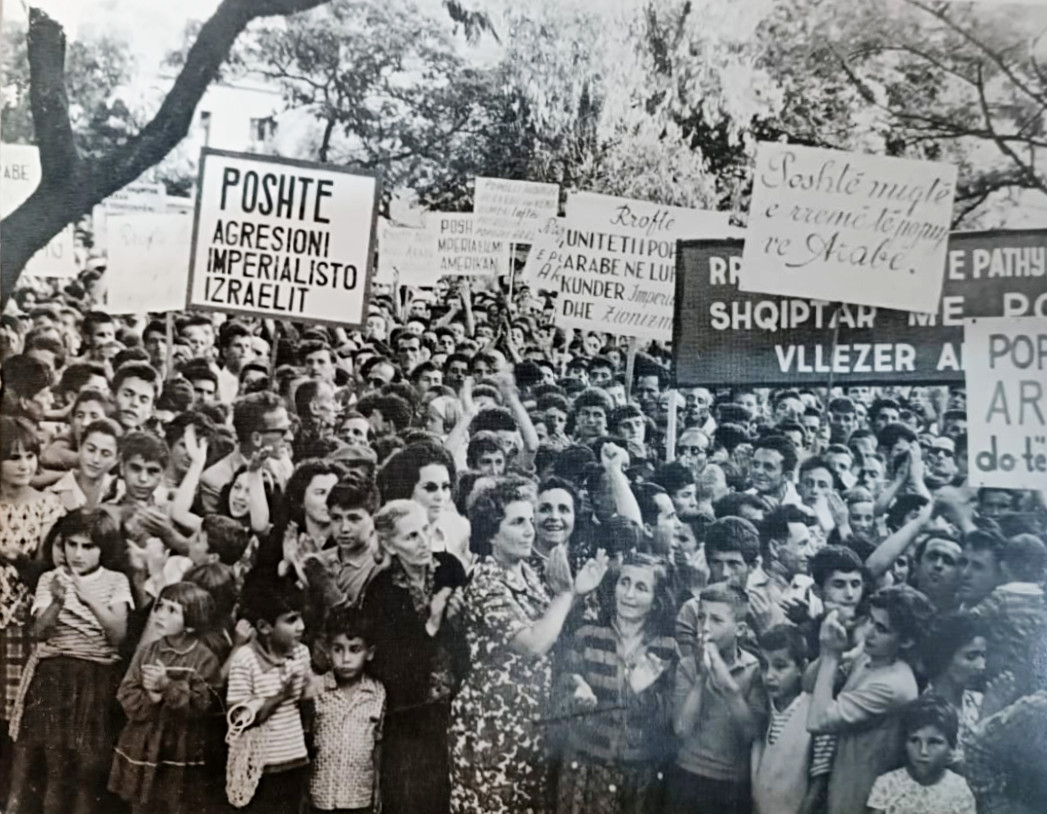
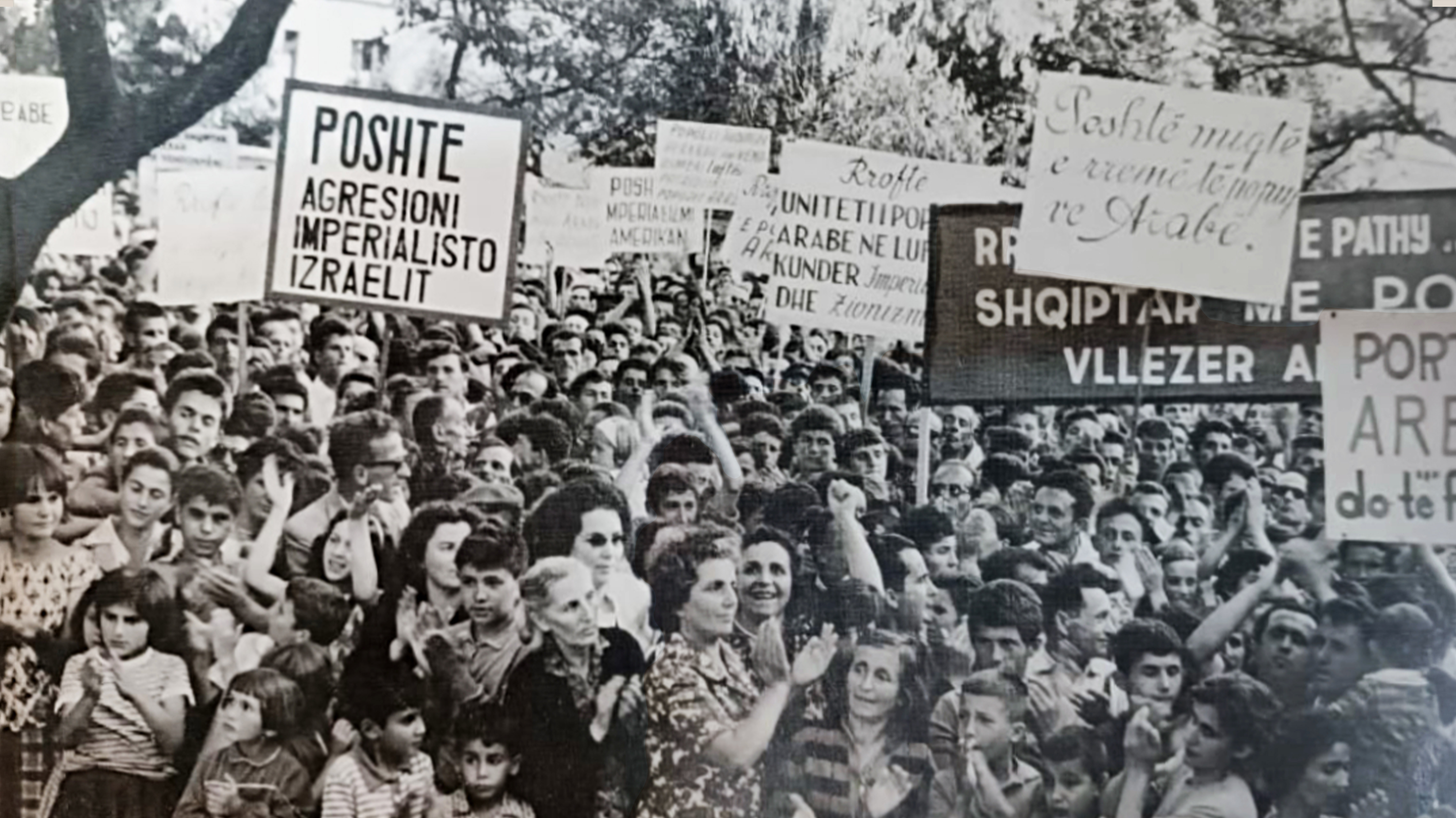
Following events such as the Suez Crisis in 1956 and the Six-Day War in 1967, Albania adopted an anti-Israel stance. The country’s leaders portrayed Israel as a tool of imperialist Western powers, particularly the United States.
At the same time, Albania’s communist leader, Enver Hoxha, aligned the country with the Palestinian cause, viewing it as part of a broader anti-imperialist struggle. Albanian leaders viewed Palestine as resisting what they saw as an “imperialist proxy” in Israel. In turn, the PLO’s alliance with Albania was based on anti-colonial and anti-imperialist politics.
Relations between Albania and Palestinian groups began in 1967 and were influenced in part by shared ties with China. Albania eventually recognized Fatah, partly because of its international profile and its critical stance toward both the United States and the Soviet Union.
However, relations became strained after the 1972 Munich Olympic attack, which Albania condemned as detrimental to the Palestinian cause. As Fatah developed closer ties with the Soviet Union, Albania became suspicious of the Soviet influence within the Palestinian movement. Although the PLO continued to seek closer ties, including opening an office in Tirana, Albania remained cautious.
In the early 1980s, relations depended largely on Albania’s broader West Asia strategy and the PLO’s relationship with the Soviet Union. Following Hoxha’s death in 1985, his successor, Ramiz Alia, introduced a more flexible foreign policy, enabling closer international engagement. During this period, a PLO embassy was finally established in Tirana.
A wall fallen, a map redrawn
A few years later, following the collapse of communism, Albania shifted its focus toward the West and established diplomatic relations with Israel in 1991. That same year, most of the remaining Jewish population moved to Israel.
Under the new Democratic Party government, Albania initially reduced its ties with the PLO. However, after joining the Organization of the Islamic Conference, now known as the Organization of the Islamic Cooperation, in 1994, Albania renewed relations with Arab countries. In 1996, Palestinian leader Yasser Arafat visited Albania, even as it continued to strengthen its relationship with Israel. In 1998, Albania opened its embassy in Tel Aviv.
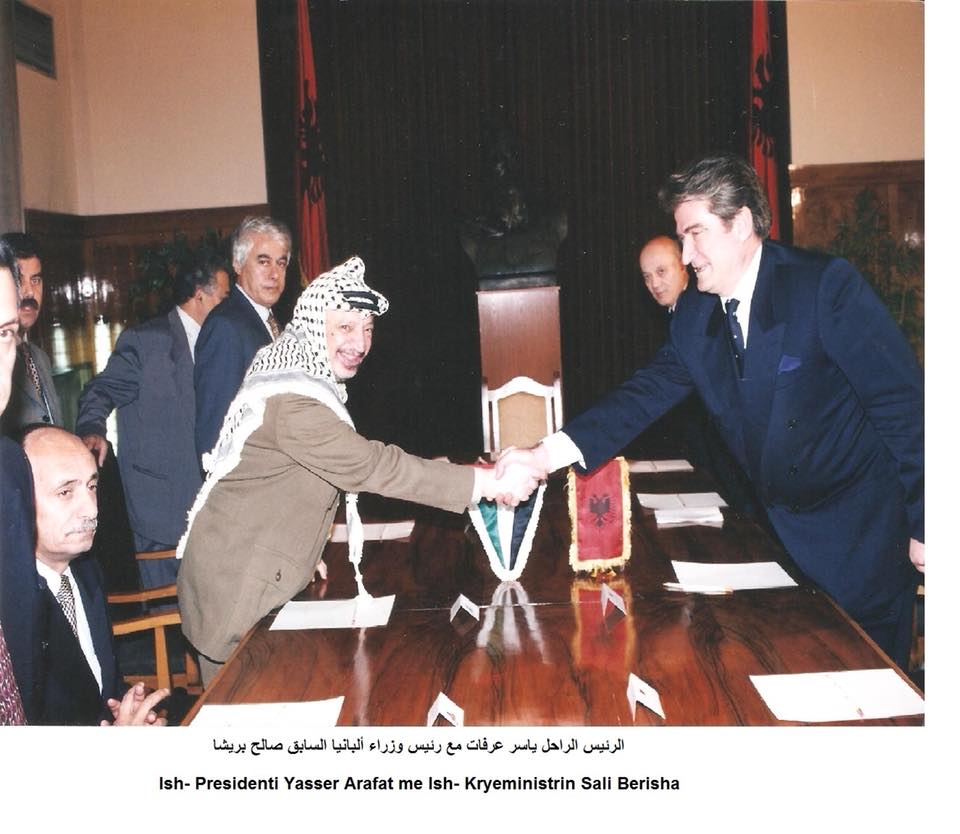
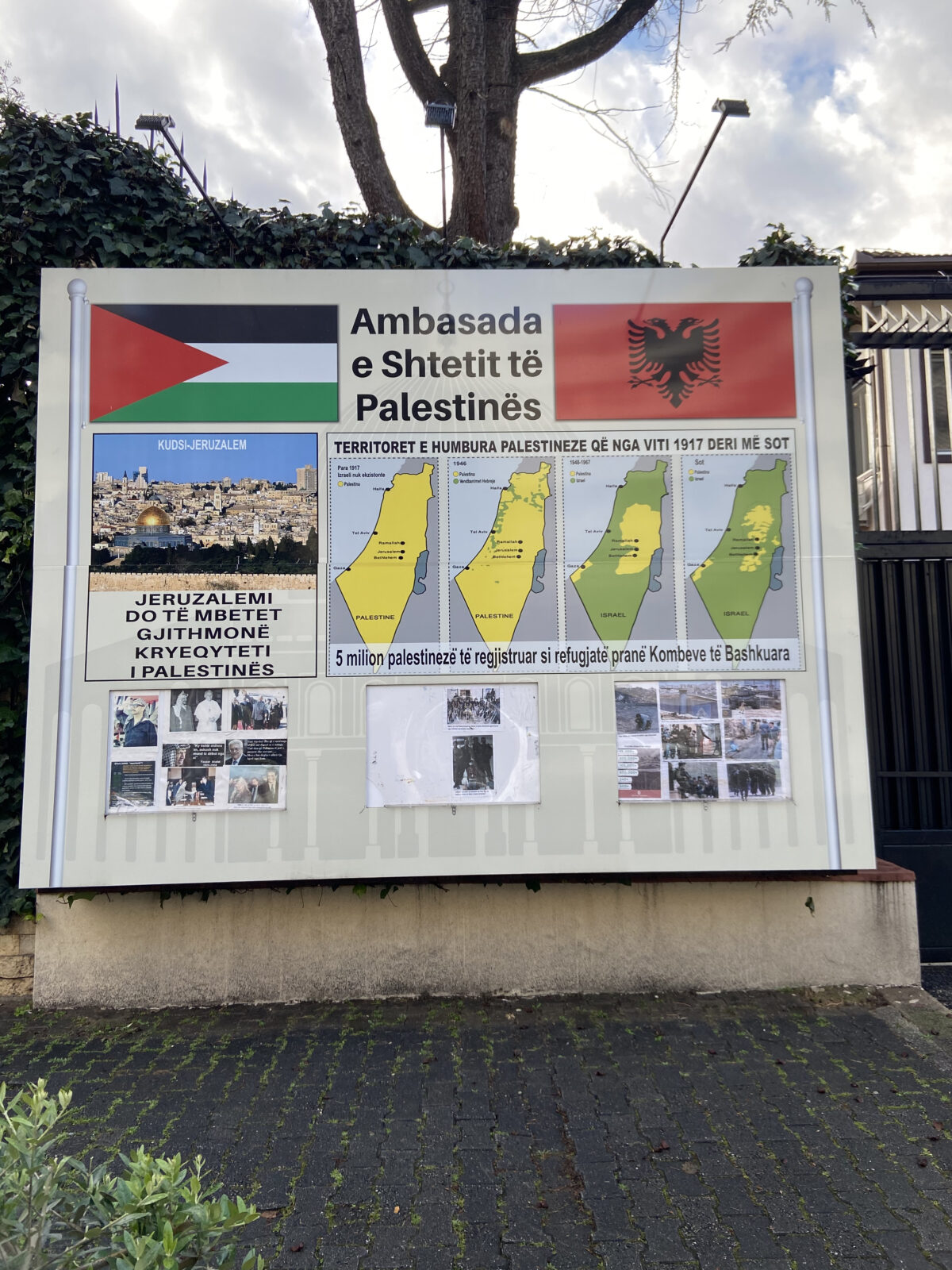
Today, Albania recognizes the Palestinian Authority and supports a two-state solution. However, in 2011, Prime Minister Sali Berisha opposed Palestine’s bid for full UN membership, arguing that a negotiated agreement with Israel was preferable.
During his visit to Israel that same year, Berisha emphasized the historical connections between Albanians and Jews, and voiced his concerns about regional security, especially regarding Iran’s nuclear program. Israel opened its embassy in Tirana in 2012.
Deals, drones, and abstentions
Over the past two years, Albania and Israel have signed numerous agreements, covering sectors such as agriculture, education, energy, culture, tourism, defense, and drone technology. Trade between the two countries has also grown quickly. According to Albania’s Institute of Statistics, Israeli exports to Albania increased by over 150% between May 2023 and May 2024.
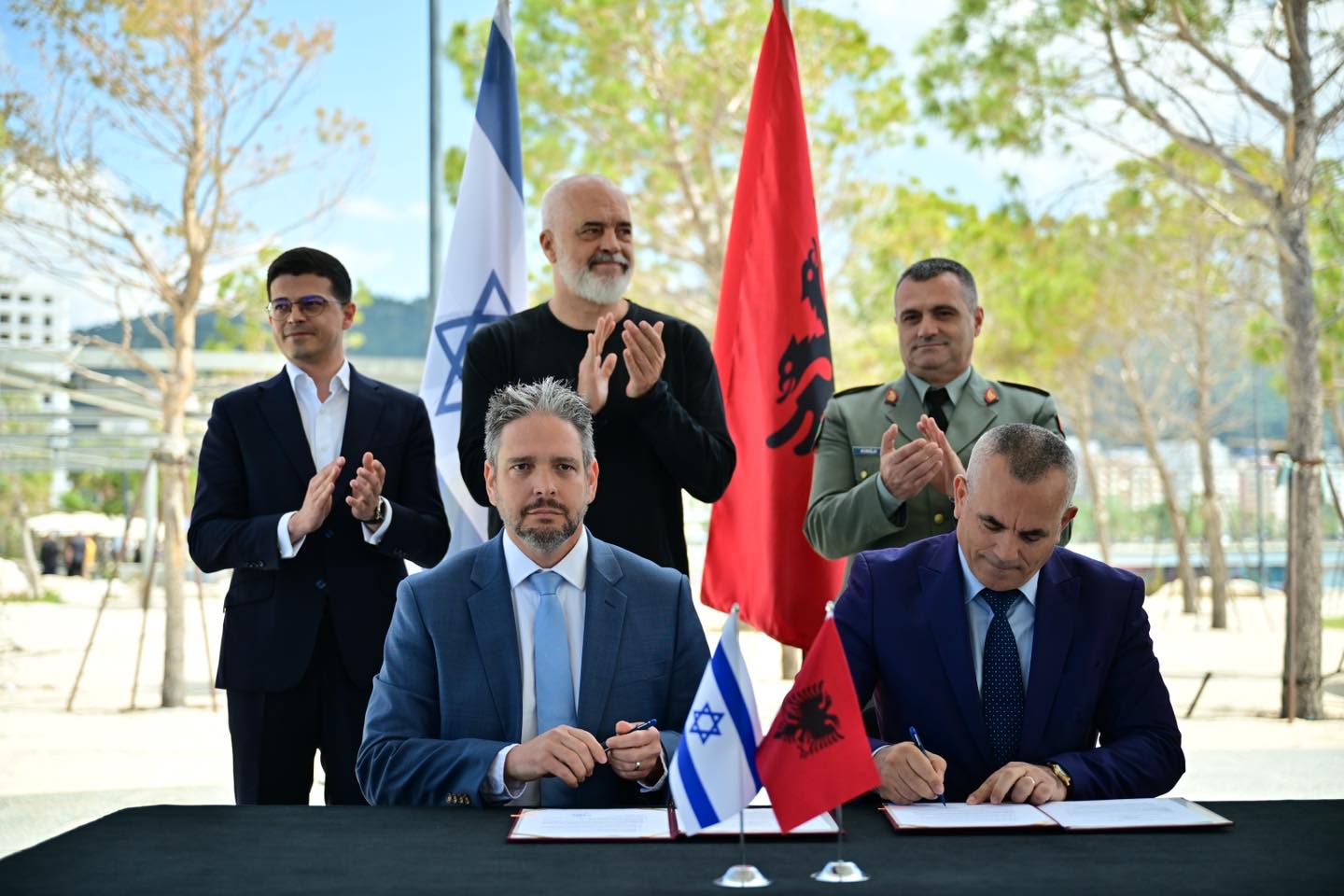
Israeli investment in Albania is expanding, especially in finance. In early 2025, reports indicated that investors associated with Israel’s One Zero Digital Bank were considering entering the Albanian banking market. Later that year, JET Bank, the country’s first fully digital bank, was established and is owned by British-Israeli businessman Idan Avishai. Other figures of Israeli origin in its leadership include Oliver Hemmer and Rami Solomon.
Meanwhile, Albania has come under scrutiny from human rights researchers. Reports tracking global fuel shipments to Israel during the war in Gaza list Albania as one of 11 countries supplying fuel. These exports are officially presented as commercial, not military.
However, critics point out that fuel is essential for military operations, including for vehicles and aircraft. According to international humanitarian and criminal law, states and private actors are expected to ensure that their activities do not directly or indirectly contribute, to serious human rights violations, including genocide.

There has also been an increase in military cooperation between Albania and Israel. In late 2025, Albania signed a multimillion-euro arms deal with Israeli defense companies, including Elbit Systems. The agreement includes artillery systems, mortars, and tactical drones, as well as plans to develop domestic production in partnership with KAYO, Albania’s state-owned company.
Since June 2023, the two countries have officially cooperated in cybersecurity and training, building on the assistance Israel offered Albania following the Iranian cyberattack in July 2022, which targeted Albanian government digital services and websites.
On 12 May 2026 the Albania-Israel Summit was held in Tirana, for ‘strengthening cooperation in innovation, technology and cybersecurity’ and brought together 40 Israeli companies. Also in May 2026, Elbit registered its Albanian branch with the National Business Center, which will carry out the same activity as in Israel. Earlier in 2025, Elbit and KAYO agreed to reopen the Albanian aviation academy to train military and civilian pilots.
Political ties have deepened as well. In November 2025, Albania established an “Israel Allies Caucus” in its parliament as part of an international network linked to the Israel Allies Foundation. The group is co-chaired by representatives from both major parties, reflecting broad political support for closer relations with Israel. Israeli sources described the initiative as an example of “faith-based diplomacy,” citing Albania’s history of protecting Jews during World War II as the basis for this relationship.
Between 2022 and 2023, Albania served as a non-permanent member of the United Nations Security Council. During this period, Albania’s position on Gaza received significant attention. In October and December of 2023, the UN General Assembly voted on resolutions calling for an immediate humanitarian ceasefire. Albania abstained from voting on both resolutions.
This pattern continued into 2024 and 2025. Albania abstained from several key votes, including those on ending Israel’s occupation of Palestinian territories, advancing Palestine’s status at the UN, and a French-Saudi initiative outlining a pathway to Palestinian statehood.
The price of belonging
Albania’s growing alignment with Israel is part of a broader foreign policy pattern. Since the fall of communism in 1991, Albania has positioned itself as a close ally of Western powers. The country has sought NATO membership, achieved in 2009, as well as European Union integration and strong ties with the United States. Closer relations with Israel fit within this strategy. Some analysts argue that strengthening ties with Israel is also a way of strengthening connections with Washington.
This approach was further illustrated in February 2026 when Albania joined four other countries in committing troops to an international security force for Gaza. The initiative is part of a new organization, the “Board of Peace,” which is backed by U.S. President Donald Trump. The organization focuses on post-war governance in Gaza. Its charter was signed at the World Economic Forum in Davos and was later tied to the UN Security Council Resolution 2803 as part of the Gaza Plan. However, its structure has raised questions. Trump holds a lifetime leadership role with veto power, and permanent membership requires a $1 billion contribution. Critics argue that this “pay-to-play” model is unusual for a peace initiative and reflects U.S. political and economic interests.
Prime Minister Rama’s policies highlight a long-standing feature of Albanian foreign policy: close alignment with powerful Western states, sometimes at the expense of independent decision-making or consistent application of international law. High-profile economic deals reinforce concerns about this approach. For example, Jared Kushner, the son-in-law of Donald Trump, is leading a $1.4 billion luxury resort project on Sazan Island. Approved with limited public debate, the project aims to transform a former military base into a high-end tourism destination, according to reporting by The New York Times. Critics argue that such projects, coupled with Albania’s pro-Israel stance as a predominantly Muslim country, serve to whitewash and boost Israel’s international image while obscuring its domestic governance issues.
Rewarded for loyalty
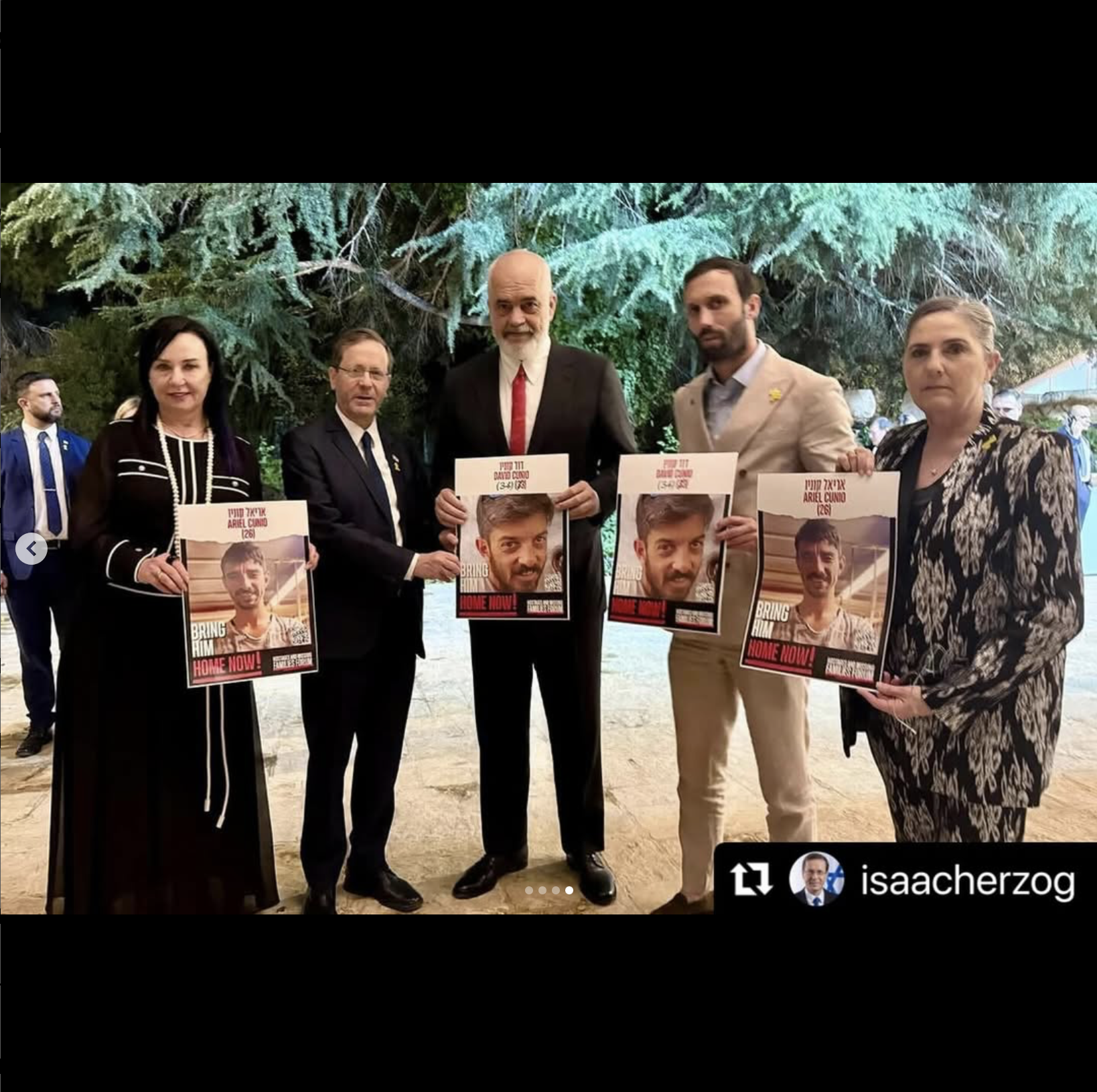
In September 2024, Israeli President Isaac Herzog became the first Israeli head of state to visit Albania. He was warmly welcomed by Prime Minister Edi Rama and senior officials. The visit marked a clear step forward in strengthening ties between the two countries. Some analysts argue that such visits also serve Israel’s broader goal of achieving international legitimacy, particularly in regions like Southeast Europe. According to Rexhepi “[t]he Israeli president is travelling to Europe’s peripheries to exert legitimacy, showcasing at home that their leaders can still travel abroad.” Others note that engaging with a Muslim-majority country like Albania helps Israel project a more favorable image in the wider Muslim world.
Albania’s diplomatic positioning at the UN has coincided with closer political ties to Israel. In April 2025, Prime Minister Edi Rama received Israel’s Presidential Medal of Honor. He was praised for his “moral clarity” and steadfast support of Israel during what President Isaac Herzog called “our darkest hour.” This was a reference to the October 7 Hamas attack and the ensuing war. Rama has repeatedly condemned Hamas in public statements, at times comparing the group to the Nazis, and arguing that peace is not possible while Hamas remains active.
Cooperation has also expanded at the ministerial level. In October 2025, Albania’s foreign minister visited Israel, and both countries signed agreements to strengthen cooperation in diplomacy and culture. These agreements include training opportunities for young Albanian diplomats. The visit received significant publicity on social and mainstream media platforms, including stops at Holocaust memorial sites and locations associated with the October 2023 attacks. However, critics point out the absence of public statements addressing the high number of Palestinian civilians killed by Israel.
On the road to Brussels
For countries like Albania, whose EU membership bid remains contingent on goodwill from Brussels and Washington, endorsing, or at minimum not challenging Israeli actions serves as a form of political currency. Albania’s economic, political, and diplomatic moves point to a wider foreign policy strategy characterized by coloniality by proxy.
This is most clearly manifested through Albania’s absurd participation in the deeply problematic “Board of Peace,” which reflects its willingness to engage in frameworks shaped by larger powers. It also reflects a deeper, often implicit expectation embedded in the architecture of European integration: that aspiring members on the periphery must demonstrate their worthiness through institutional reforms, economic benchmarks, and geopolitical alignment with core Western powers.
Scholars such as Piro Rexhepi argue that countries in the Balkans, shaped by a history of external imperial domination — from the Ottoman Empire to European colonial interventions — often seek security and recognition by aligning with dominant powers and navigating contemporary global hierarchies. For countries on the political fringes of the “core West,” access to the Western-backed liberal order is also conditioned by silence, oblivion, or, at worst, complicity in the genocide in Gaza.
In this context, Albania is not merely an eager partner of Israel. It is also performing the role that Western geopolitical expectations have prescribed for it. In this role, Palestinian suffering is not treated as a moral emergency demanding a response. Rather, it is treated as an inconvenient variable to be managed, minimized, and ultimately ignored on the road to Brussels.