





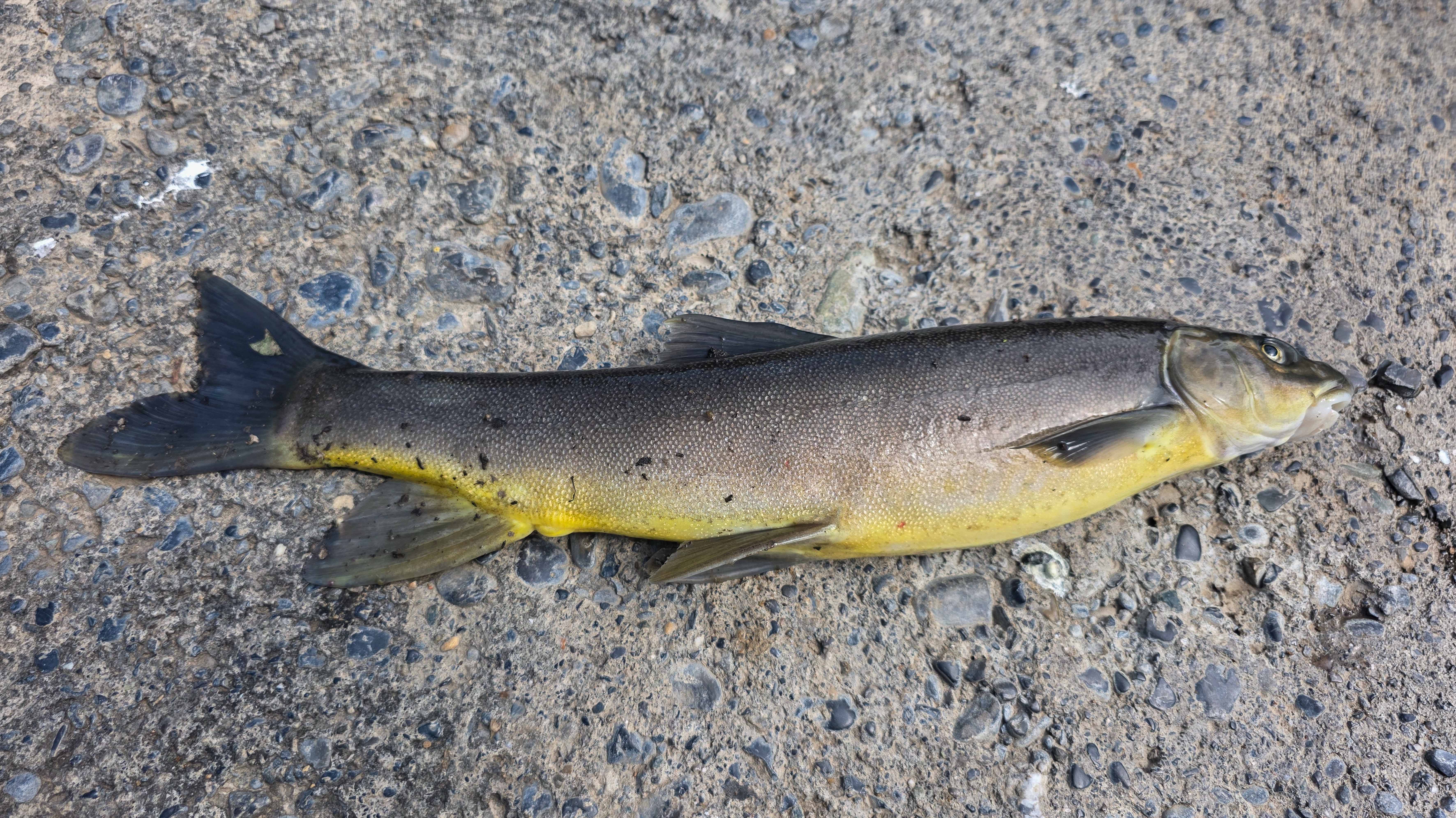
When hundreds of native snow trouts (Schizothorax) floated lifelessly across the surface of the Beehama spring in Kashmir’s Ganderbal district, residents stepped into the cold water to pull out the dead fish by hand.
For generations, the spring had provided drinking water, nurtured native fish and anchored community life. Its sudden collapse has come to symbolize a broader crisis unfolding across Kashmir, where polluted and drying freshwater springs are threatening ecosystems, livelihoods and public health.
“The fish are the pride and beauty of this spring. In the past, it was full of fish, and local families earned a livelihood by selling them. Today, that beauty of the spring has almost disappeared because polluted wastewater is being discharged directly into it, causing the fish to suffocate and die”, explains Bilal Ahmad Bhat, a resident of Beehama village.
For Bilal one of the biggest threats to the Beehama spring is the continuous inflow of contaminated water from household drains. Household wastewater, bathroom drains, plastic, diapers, and other solid waste are being dumped into the water, severely damaging the ecosystem. If the spring is cleaned regularly, the polluted inflows will not get accumulated and the aquatic life can still be saved.

According to Bilal, the only way forward is to reduce pollution, restore the spring, and treat it as a shared public responsibility. In other words, what is needed is scientific intervention, proper treatment, and regular monitoring. “If we continue to pollute these freshwater sources, we will not only lose the fish but also a vital natural resource that supports biodiversity, livelihoods, and public health,” he explains.
“Instead of these measures,” he adds, “the authorities are invested in fencing the spring and other infrastructure projects, while maintaining the cleanliness of the spring should have been the priority.”
“No one paid attention until the mass fish mortality brought Beehama into the spotlight. I personally entered the water, retrieved the dead fish, and showed them to the public and the media to highlight the scale of the crisis. If the deaths were caused by deliberate poisoning or negligence, those responsible should be held accountable. If pollution is the cause, the administration, particularly the Fisheries Department must act immediately,” Bhat explains.
While rooted in Kashmir, the degradation of the valley’s springs reflects a much broader global freshwater crisis. Across the world, rivers, lakes and springs are increasingly pushed toward ecological collapse by the combined pressures of untreated sewage, agricultural runoff, rapid urbanisation and climate crisis.

Rising temperatures reduce dissolved oxygen in water, intensify algal blooms and accelerate eutrophication, while erratic rainfall and floods wash greater loads of sewage, sediments and pollutants into freshwater ecosystems. These conditions and others have contributed to fish kills, biodiversity loss and declining water quality in countries all across the globe.
Not The First Mass Fish Kill
A mass fish kill occurred on 22 October 2017 along a 1.5-km stretch of the Jhelum River in Srinagar, where thousands of fish died within less than three hours, making it one of the first documented large-scale fish kill events in the river. The study found evidence consistent with chemical contamination rather than oxygen depletion. Dead fish showed discoloration, bulging eyes, rough skin, open sores and abnormal body shape morphological changes that the researchers say are indicative of chemical exposure.
Water quality measurements did not support the official low-oxygen explanation. The river had neutral pH (7.2–7.3), normal temperature (15.8–16°C), and dissolved oxygen around 6 mg/L, which experts say do not indicate sudden hypoxia as the primary cause.
Investigating the 2017 Erratic Fishkill Episode in the Jhelum River, Kashmir Himalaya
Waste, Sewage and Broken Habitats
“The recent fish mortality affecting the native Schizothorax (locally known as Kasheer Gaad) is the result of multiple interacting factors rather than a single cause,” explains Prof. (Dr.) Farooz Ahmad Bhat, Dean of the Faculty of Fisheries at Sher-e-Kashmir University of Agricultural Sciences and Technology of Kashmir (SKUAST-K).
Schizothorax is a bottom feeding fish that naturally grazes on organisms growing on stones. However, visitors often throw bread, corn, rotten rice, and processed snacks into the springs. The uneaten food settles on the bottom, decomposes, increases Biological Oxygen Demand (BOD), and fuels microbial growth. During summer, this process rapidly depletes dissolved oxygen, causing fish kills.

“The problem worsens when natural spring outlets are blocked, turning flowing springs into stagnant pools. Water quality tests from affected springs have shown elevated ammonia, nitrate, and nitrogen levels, largely linked to detergent discharge, surface runoff, and other human activities. Plastic and other solid waste further degrade these fragile ecosystems”, Prof. Farooz adds.
He highlights that Kashmir’s springs were lined up with natural stones and boulders that provided shaded habitats and shelter for fish. In several locations, these have been replaced with concrete and tiles without ecological assessment, exposing aquatic life to direct sunlight and reducing natural habitat. Artificial modification of natural spring ecosystems, rising temperatures, pollution, and declining dissolved oxygen have together created conditions that these highly sensitive fish cannot survive.
“Our institution does not directly manage these springs. We investigate disease outbreaks or pollution cases when they are reported by government departments or local bodies. Through the National Surveillance Programme for Aquatic Animal Diseases, we monitor aquatic health, although our primary mandate is supporting fisheries production”, Prof. Farooz says.

The recent incidents in Mattan, Beerwah, Verinag, Beehama, and Panzath involved a large number of fish. Delayed reporting remains a major challenge, as samples often deteriorate before they reach laboratories.
“Decades ago, spring water in rural Kashmir was clean enough to drink directly. Today, localized pollution has significantly reduced its quality. Continuous water flow is essential because it naturally flushes out organic waste. When springs become stagnant, organic matter accumulates, oxygen levels decline, and sensitive species like Schizothorax become increasingly vulnerable,” the professor explains.
He emphasized that while government departments can take corrective measures, long-term conservation depends on community behaviour. People continue feeding fish despite repeated advisories, often using unsuitable food that pollutes the water and can spread infections. Unless public participation improves, these incidents will continue to recur.
Degraded Water Conditions
An official Fish Mortality Analysis Report prepared by the Faculty of Fisheries at Sher-e-Kashmir University of Agricultural Sciences and Technology of Kashmir (SKUAST-K) found that the fish deaths at Martand Temple Spring in Anantnag were caused by multiple interacting factors rather than a single event.
Scientists recorded dissolved oxygen levels of just 4.0–4.8 milligrams per litre, well below the 6–12 mg/L required for cold-water fish, alongside elevated concentrations of phosphorus, nitrate, ammonia, and free carbon dioxide, indicating nutrient pollution and severe environmental stress.
The report concluded that these degraded water conditions weakened the native Schizothorax (snow trout), making them susceptible to laboratory-confirmed bacterial (Aeromonas hydrophila) and fungal (Saprolegnia parasitica) infections that ultimately led to the fish mortality. It recommended regular water-quality monitoring, measures to improve dissolved oxygen, periodic health surveillance, routine cleaning of springs, and preventing visitors from throwing food into the water to reduce future fish kills.
When the Water Turns Toxic
Underlining the urgency of the situation, Dr. Surayyah Jan Qadeem, Medical Officer at the University of Kashmir said that if contaminated or decaying fish are consumed, they can cause food poisoning, which in severe cases may progress to sepsis, shock, acute kidney injury, multiple organ failure, and even death.

Any contamination of water that enters the food chain poses a risk to human health. Once fish begin to decay in polluted water, they further degrade water quality, just as any decomposing organic matter would. Consuming such fish or contaminated water can lead to serious illness. Further, the health risks also depend on the nature of the pollutants entering the water. Exposure to pesticides, fertilizers, heavy metals, or other toxic chemicals can result in poisoning and may affect multiple organs, including the kidneys, liver, lungs, heart, and blood.
Organophosphorus compounds, commonly found in certain pesticides, are particularly hazardous if exposure is significant. “Untreated sewage and wastewater entering streams and springs not only degrade aquatic ecosystems and contribute to fish mortality but also increase the risk of waterborne diseases and other health hazards for communities that depend on these water sources. Protecting freshwater ecosystems is therefore both an environmental and a public health priority,” explains Dr. Surayyah.

“The locals were really concerned after we discovered a lot of dead fish floating in the Brengi stream in Anantnag district. We worry that water contamination or any ecological disruption harming the stream could be connected to the incident. Such an incident raises grave worries about the health of this delicate freshwater ecosystem because the Brengi is home to valuable brown trout and native snow trout”, says Junied Ahmad, a 35 year old resident from Kokernag in the Anantnag district of Kashmir. Juneid adds that the locals want the authorities to conduct an immediate and transparent inquiry to discover the source of the fish fatalities.

“Since 2013, we have been conducting surveillance of aquatic animal diseases across Jammu, Kashmir, and Ladakh to document disease incidence across different climatic regions and understand how climate influences disease prevalence,” says Dr. Feroz Ahmad Shah, Senior Scientist and Head of the Department of Aquatic Animal Health Management, (SKUAST-K).
Dr. Feroz’s team began surveillance at 20 locations and gradually expanded their outreach to fish farmers. In 2018, they launched the Fish Health Management Android app to register farmers, collect farm and disease data, and issue regular advisories. The platform provides disease diagnosis, treatment recommendations, and management guidance to help reduce fish mortality and improve farmers’ livelihoods.
The same year, they established the region’s first Aqua Clinic, offering on-site diagnosis and treatment for aquatic animal diseases. Since then, they have identified several disease agents, strengthened their engagement with fish farmers, and investigated both routine disease outbreaks and cases referred by police and courts involving mass fish kills linked to runoff, pesticides, and illegal chemical use.
“Our Disease Surveillance Programme combines active surveillance through field visits, sample collection, and environmental assessments with passive surveillance, where farmers submit diseased specimens for laboratory diagnosis. We monitor both capture and culture fisheries and maintain detailed records on disease incidence, environmental conditions, and mortality patterns across farms, springs, and other water bodies”, Dr. Feroz adds.

On average, disease outbreaks result in losses of 20–30% of fish stocks in affected farms, although precise estimates vary and require detailed analysis. Beyond disease surveillance, Dr. Feroz’s team regularly advises farmers and government agencies on biosecurity, fish health management, and climate-specific best practices. Government support for aquaculture is available through subsidies and national schemes implemented by agencies such as the National Fisheries Development Board (NFDB). Their Fish Health Management app continues to be used, and in 2021, the Government of India launched the nationwide RFD app, which was informed, in part, by the data generated through the programme.
Fish are Suffocating
A large-scale fish mortality event in Dal Lake on 25 May 2023 was attributed to low dissolved oxygen (DO) levels, a 10°C rise in temperature with the onset of spring, reduced photosynthesis caused by cloudy and rainy weather, and increased organic pollution washed into the lake through runoff. The decomposition of sewage, aquatic weeds, agricultural waste and fertilisers consumed much of the dissolved oxygen, causing fish to suffocate. According to reports fish kills have become recurrent in Kashmir, including incidents in Nigeen Lake (2012), the Jhelum River (2017) and Fashkoori Wetland (2022), where officials similarly associated the deaths with oxygen depletion or elevated nutrient levels.
Eutrophication is identified as the underlying ecological driver of these recurring fish deaths. A 2022 study found that dissolved oxygen levels in Dal Lake have declined drastically over the past 40 years, while phosphate and nitrate concentrations have increased due to untreated sewage, agricultural runoff and sediments from adjoining catchments. It further highlights that around 1,200 houseboats discharge an estimated 9,000 tonnes of waste annually into the lake, while 15 major drains carry sewage into Dal Lake. A 2020 expert panel also found that 70% of Srinagar’s sewage flows directly into Dal Lake, with overloaded and poorly maintained sewage treatment plants failing to meet pollution control standards, further degrading fish habitat.
Mining, Money and Missing Fish
“The Panzath spring is a blessing bestowed upon us by Allah, and it is our collective responsibility to protect it. Over the years, dirty household drains have been diverted into the spring, polluting the water and leading to the death of many fish. For the first time in my life, I have seen fish lying dead here”, says Abdullah Raheem Bhat, a resident of Panzath district Anantnag.
Locals complain that most of the fish have died since May this year. A de-weeding and clean up drive was organized in the first week of July 2026, as a joint effort by the Auqaf Committee, the Department of Fisheries, the Public Health Engineering (PHE) Department, and local residents.

They organized this initiative after noticing that the water was becoming increasingly polluted and the natural flow of the spring was being obstructed by excessive vegetation.
“This spring is public property and supplies drinking water and irrigation to Panzath and several neighbouring villages, including Drinyan, Laidoora, Vessu, Damjan, Sangran, Nasu, and Vampora. Keeping it clean is not just the government’s responsibility, it is the duty of every resident. The overwhelming participation of local youth in this clean up shows that people understand the importance of preserving this shared resource”, Abdullah adds.
According to him, if the spring remains clean, the fish will survive too. “If there is water, there is life, and protecting this spring is essential for our future,” he says.
Monitoring the spring area throughout the year ensures clean and flowing water which benefits both people and aquatic life. However, Abdullah believes the authorities should have acted much earlier. While the Fisheries Department operates trout farms in Nagbal and Vampora, the spring itself did not receive adequate attention. Stronger protection and regular maintenance are essential to ensure that such incidents do not happen again.

“Kashmir’s rivers including the Rambiara, Vishav, Doodhganga, Pohru, Arpath, Bringi, and Sukhnag are important trout habitats and should have been major contributors to the region’s economy. Significant public funds have been invested in the fisheries sector under the Holistic Agriculture Development Programme (HADP), but much of that potential is being undermined”, explains social activist Dr. Raja Muzaffar Bhat.
He adds that illegal riverbed mining has devastated these freshwater ecosystems. The fingerlings released by the Fisheries Department have been wiped out, fish habitats have been destroyed, and natural breeding grounds have collapsed. While private fish farms have emerged, the natural river ecosystem has suffered immense damage, with little accountability.
“Our intervention before the National Green Tribunal (NGT) helped strengthen enforcement by the Fisheries Department and other agencies, including the Geology and Mining Department, the police, and the Flood Control Department. The tribunal’s directions gave authorities the legal backing to act against illegal mining,” Dr. Raja adds.

He emphasizes that the Sukhnag River is a designated trout stream where mining is prohibited, and no mining leases or e-auctions were ever approved. Despite this, a company allegedly carried out illegal extraction worth more than ₹500 crore (USD 52mn), destroying trout habitats, fish eggs, tadpoles, and the fish stock of a local farmer.
More than 3,000 mature fish were reportedly lost in May 2024, yet no first information report has been registered. Dr. Raja eventually approached the National Green Tribunal on behalf of fish farmer Peerzada Rayees. Following the tribunal’s intervention, an expert team from Delhi investigated the matter, and a detailed charge sheet has now been prepared against the company. The case is scheduled for hearing this July but till the time of writing of this report no hearing was held, Dr. Raja however, still hopes the affected fish farmer will finally receive justice.
Scientists and local communities across the planet have been warning that the climate crisis is amplifying threats by warming freshwater systems and altering hydrological cycles, making pollution impacts more severe and reducing the resilience of already stressed ecosystems.
Kashmir’s dying springs are not an isolated environmental problem, they are part of a worldwide pattern in which freshwater ecosystems are becoming increasingly vulnerable to the combined impacts of pollution and a warming climate.