



There is a particular cruelty in destruction that goes unwitnessed or unrecognized. Not merely the bombs, but the silence that follows when the world turns its gaze elsewhere, scrolling past the rubble and the blood as if it were content rather than catastrophe, only preoccupied by a closed trade route and fluctuating oil prices rather than the ethnic cleansing of a people.
That silence has enveloped south Lebanon, and it is becoming yet another moral failure of an era defined by live streamed genocides, the death of international law, and pride in war crimes.
What is happening in south Lebanon is not, by any serious measure, a proportionate military campaign. It is the systematic hollowing out of a people from their ancestral land, and an eradication of life from that land itself.
To date, Israeli attacks on Lebanon since October 2023 have killed more than 7,000 people and injured more than 24,000, according to conservative numbers by the Lebanese Health Ministry, with the majority civilians. More than one million people – a fifth of the population – are displaced, while medical workers, journalists, and civilian infrastructure have been systematically targeted.
This mass displacement is not a byproduct of the war. It is its stated objective. Israeli officials explicitly stated in late March 2026 that they were demolishing south Lebanon houses and villages “in accordance with the model as Gaza,” and that 600,000 displaced people would not be allowed to return “until the safety of Israel’s northern residents is guaranteed.”
Despite a ceasefire agreed in November 2024, over 15,000 Israeli violations were recorded by UNIFIL, with Amnesty International documenting near-daily Israeli strikes on southern Lebanon throughout the 15 months period, until March 2, 2026, when Israel formally resumed full-scale war.
A Civilizational Wound
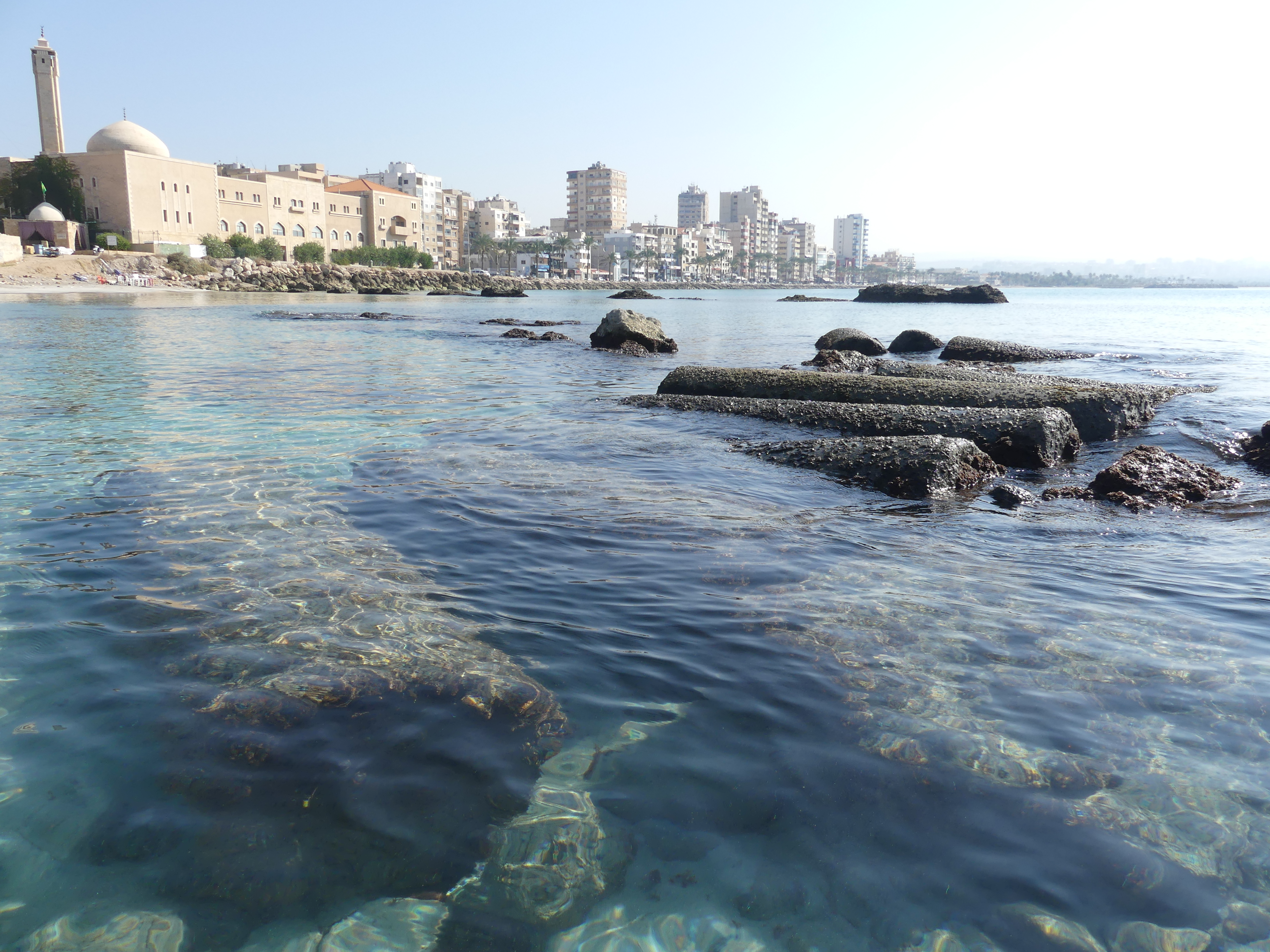
South Lebanon is not simply territory. It is among the most layered, historically dense regions in West Asia. The villages of Jabal Amel carry centuries of Islamic scholarship, poetry, and legal tradition. This is a land that has outlasted empires. Tyre (Sour) is one of the oldest continuously populated cities on earth, an ancient Phoenician port that gave the world its purple dye and the alphabet’s early spread. It has been sacked, rebuilt, and survived Alexander the Great, the Crusaders, and every empire that passed through. On October 23, 2024, Israeli airstrikes destroyed large swathes of the city, with one strike landing 50 metres from the ancient ruins, today the city is under evacuation orders by the Israeli army.
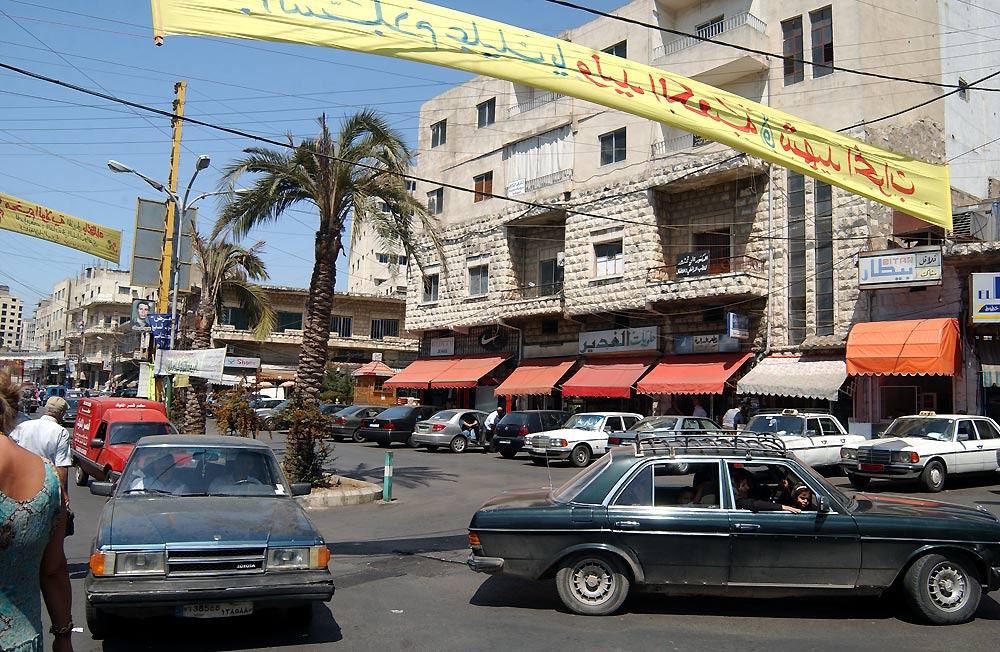
Then there is Nabatieh, the beating heart of Jabal Amel, and another city under evacuation orders. Its name is tied to the Nabataean traders who moved between Sidon and Damascus. For centuries it has connected the mountains to the coast, the inland villages to the sea, a crossroads where the whole of the south converged.
At its centre, the Monday Market stretches back 500 years, a weekly ritual that survived Ottoman rule, civil war, and years of Israeli occupation. By late 2024, roughly 85 percent of the city’s buildings had been damaged or destroyed, along with some 300 businesses. Israel did not stop at the ceasefire, what remained was struck again when fighting resumed. A UNDP assessment found that “58 percent of agricultural assets in the Nabatieh district had been destroyed”, the highest proportion anywhere in the south.
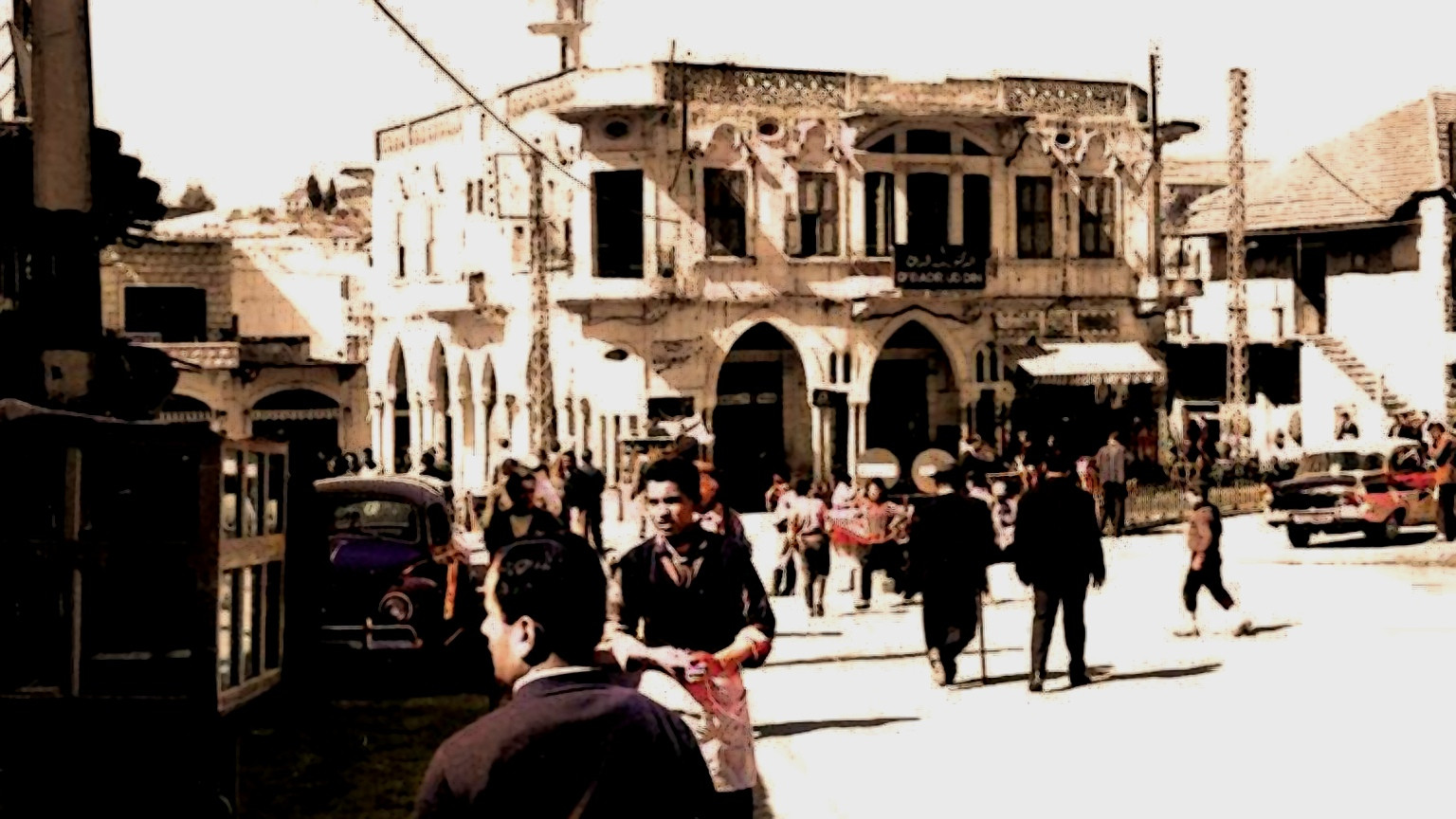
Nabatieh, like other towns and villages in the South, has been destroyed before, in 1978, in 1982, and in 2006. People rebuilt each time.
What Israeli airstrikes and ground incursions are doing to this landscape is beyond the mass murder of people. It is destroying a world, systematically flattening architecture that predates the state of Israel itself, obliterating millennial olive groves and family homes, forcing the flight of entire communities whose roots run deeper than most nations. When heritage sites, mosques, and village squares are reduced to powder, something is lost that no reconstruction can return.
This is ethnic cleansing: the forced displacement of a population from its ancestral land through systematic terror.
Killing the Land Itself
But Israel’s war on Lebanon does not stop at human communities. It extends into the soil, the forests, the water, the animals, and the very biological substrate of the south. This is not collateral damage. It is a deliberate strategy, and it is documented.
During the 2024 Israeli war, Lebanon lost around 1,910 hectares of prime farmland, 47,000 olive trees, and roughly 1,200 hectares of oak forests, some of the last remaining native woodland in the region. Among the casualties was Harj al-Raheb, the Monk Forest, on the southern edge of Ayta ash-Shaab, a 16-hectare woodland of ecological and cultural richness that had endured for centuries. Satellite images now show white craters where green canopy once stood, alongside extensive bulldozing that stripped the terrain bare. Fire and phosphorus erased in months what has lived there for millennia.
The weapon of choice for much of this destruction is white phosphorus, a chemical substance that ignites on contact with oxygen, burns at up to 800 degrees Celsius, and releases thick toxic smoke. Human Rights Watch verified its use in at least 17 municipalities across south Lebanon. In at least five of those, the munitions were used in populated areas, landing on the roofs of residential buildings. The stated rationale is to burn down fields for visibility. Trees, in other words, are a threat. Forests must be destroyed. Nature itself is the enemy, just as the US military had done in Vietnam using napalm to burn life during their murderous imperial campaign against the country’s national liberation movement.
More than 918 hectares were hit in 191 documented white phosphorus attacks from October 2023 until the 2024 ceasefire alone, according to data collected by Lebanese researcher Ahmad Baydoun and the environmental group Green Southerners. The long-term consequences remain unknown, but easy to predict.
Even though Israel shelled Lebanon with white phosphorus repeatedly between 1982 and 2006 in its various wars of aggression, there have been no local studies on its long-term environmental impact, due to lack of resources, political inaction, or the difficulty in accessing samples. The poison persists in the soil; but the science to measure it has been mostly unused.
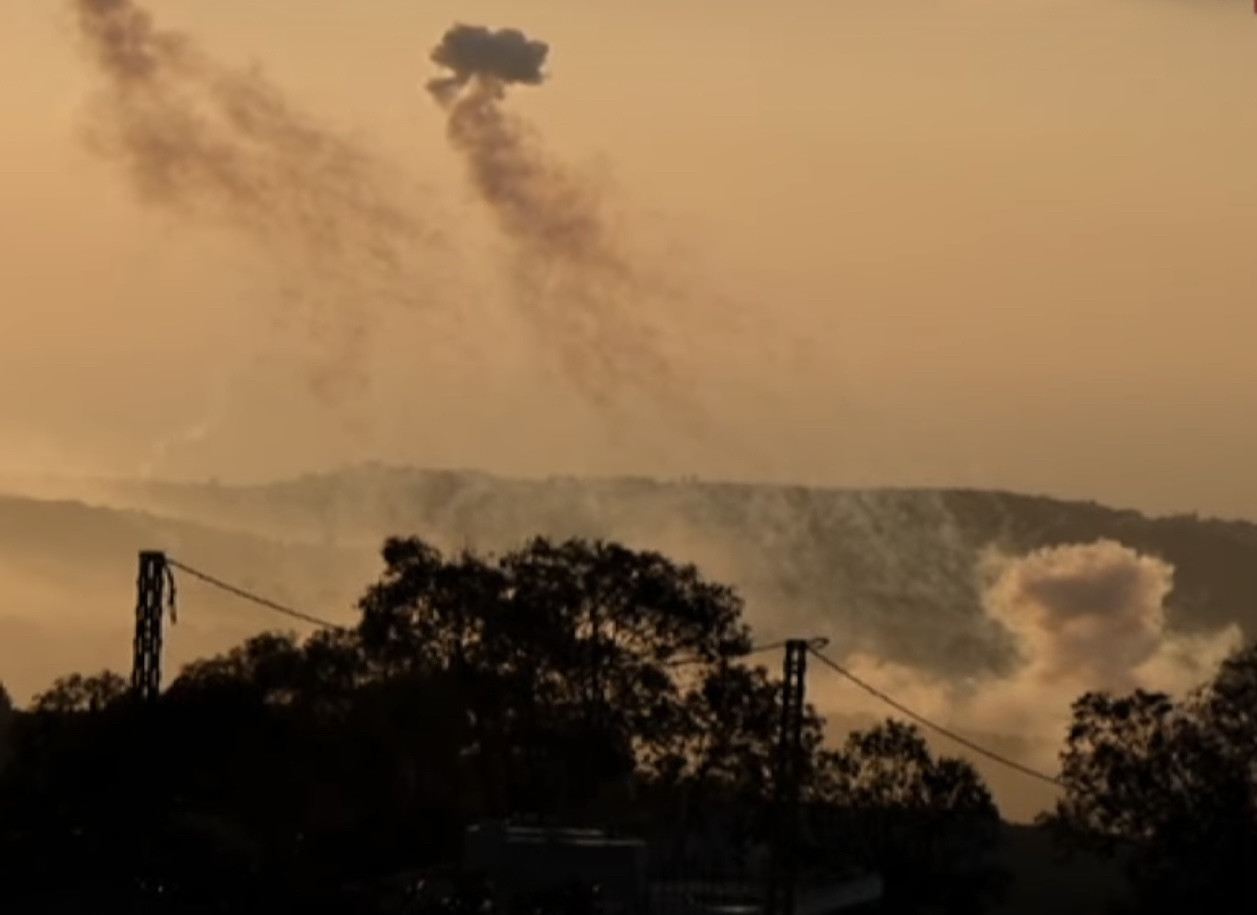
Then, as if to ensure that whatever survived the bombs and fire could not sustain life, came the herbicides. In early February 2026, Israeli planes sprayed toxic chemical substances across Lebanon’s southern border, covering approximately 8.5 square kilometres of agricultural land, forests, and livestock grazing areas with glyphosate at concentrations up to 50 times higher than standard agricultural use. Lebanon’s agriculture and environmental ministries found glyphosate levels 20 to 30 times above average in soil samples from the affected area. Glyphosate is banned in Lebanon and classified by the World Health Organization as potentially carcinogenic to humans.
The targeted area contained ancient oak, terebinth, and laurel forests that provide habitat for wildlife, alongside olive groves that produce oil and soap, tobacco plantations, and grazing land. As environmental researcher Hisham Younes, founder and president of Lebanese environmental group Green Southerners, puts it: “This spraying does not take place over an intact ecosystem or healthy soil. It occurs over land already severely stressed and degraded by the intensive use of white phosphorus, incendiary munitions, and the accumulation of heavy-metal residues from sustained bombardment.”
The glyphosate is not the beginning of the destruction. It is the finishing blow, applied to a landscape already burned, bombed, and poisoned, ensuring that even if people are allowed to return, there is nothing left to return to. That life will no longer be possible, for humans, plants, and animals alike.
Lebanon’s agriculture minister described the spraying as “consistent with known practices along the border, where such substances are used to create vegetation-free zones, effectively resulting in systematic desertification.” Lebanon’s government-backed environmental report has gone further, formally accusing Israel of ecocide and documenting damage to forests, agricultural lands, marine ecosystems, water resources, and atmospheric quality, concluding that the scale and intentionality of the destruction “constitute what must be recognized as an act of ecocide.”
Israel’s war, as is the case with previous colonial wars across the world, is one on the land as a living system, on the biological heritage of a civilization, on the ecosystems that sustain human and non-human life alike, waged with chemical weapons, incendiary munitions, and bulldozers, in full view of the world.
The US War Machine
The south of Lebanon is home to communities that have lived in this region for over a thousand years. Entire villages have been evacuated by force and erased. Families have been killed in their homes, in their cars, on roads marked for civilian evacuation.
This is not incidental. Striking the predominantly Shia population of south Lebanon, and Lebanon in general is the goal. When a religious community becomes a military target in the eyes of the aggressor, and in the narratives of much of the regional and international media, we have crossed into the now too common space of genocide and ethnic cleansing.
None of this happens in a vacuum. The bombs falling on Lebanese villages are, in a direct and documented sense, US bombs. The aircraft delivering them are US aircraft. The intelligence enabling the targeting has, by multiple credible accounts, has US fingerprints.

The United States has not merely failed to restrain Israel, it has actively armed, funded, and provided diplomatic cover for a campaign that has drawn condemnation from human rights organizations, UN officials, and international legal bodies, both in Palestine and in Lebanon. Each time a resolution calling for accountability has come before international bodies, the US position has been to obstruct, or sanction international judges, rapporteurs, and any organization that dares speak the truth.
This makes the United States not a neutral broker or a concerned ally urging restraint, but a co-belligerent (together with various other Western and Arab countries). When cluster munitions, bunker-busting bombs, and incendiary weapons are supplied to a military deploying them in densely populated civilian areas and ecologically sensitive forests, the supplier shares responsibility for what follows, including the genocide, ethnic cleansing, and ecocide.
One Unhinged Logic
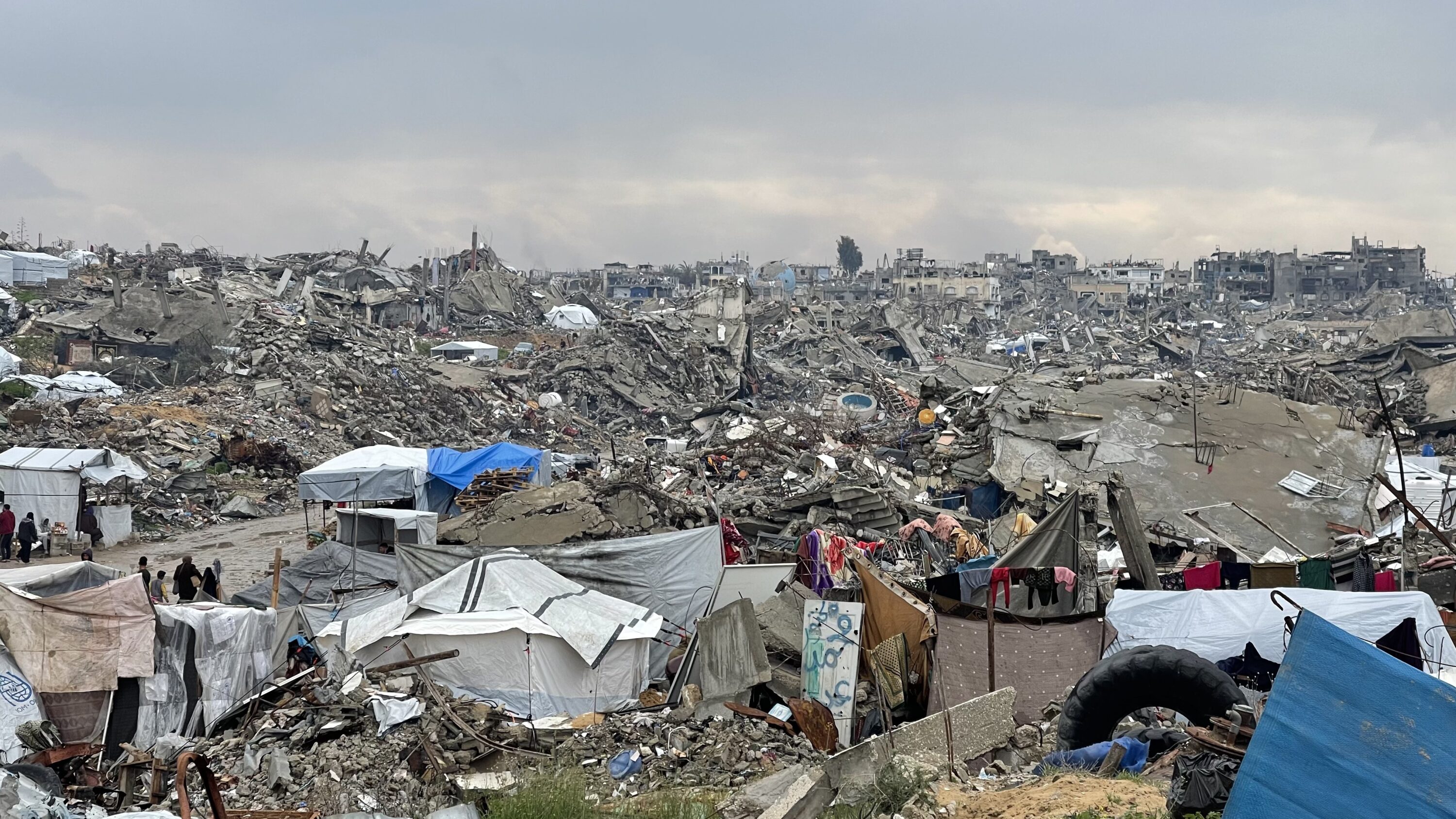
It is impossible to understand Lebanon in isolation from Gaza. What we are witnessing is a single operational and ideological logic playing out across two theaters. In Gaza, the world has watched the near-total destruction of a civilian population with hospitals bombed, aid blocked, famine used as a weapon, with mounting horror and mounting futility. The patterns have become undeniable: this is not warfare constrained by the laws of armed conflict. It is warfare that has discarded those laws entirely and proudly.
Lebanon is the expansion of that logic northward. The same targeting of civilian, medical, and vital infrastructure. The same displacement of hundreds of thousands. The same deliberate erasure of agricultural and ecological life. The same impunity. Having encountered no meaningful international consequences in Gaza, the methods were exported. Why wouldn’t they be? The world demonstrated, repeatedly, that there would be no price.
This is what unchecked military power looks like when it is also diplomatically shielded: it grows, and it finds new applications for the same tools, from bombs to bulldozers to crop-killing herbicides.
The Silence of States and People
What is most disorienting and perhaps most dangerous about this moment is not just the actions of Israel and the United States. It is the silence of everyone else.
For Gaza, Arab states have issued statements of concern that function as moral performance without consequence while they maintained trade and security cooperation as the genocide was ongoing. For Lebanon, it was mostly silence. Most Arab governments offered barely even the performance.
European governments, with a handful of exceptions, oscillated between performative concern and active complicity over Gaza, and extended that into near-total silence on Lebanon.
Solidarity movements outside the region have fractured along political, sectarian, and national lines. The Shia identity of the majority of the victims has meant limited solidarity in the sectarian environment plaguing the Arab world. Hezbollah’s violent role in Syria has complicated it further. But these are not explanations. Across the globe, Palestine solidarity networks have been almost entirely absent in opposing the ethnic cleansing of south Lebanon. Very few, if any, have mobilized.
Apparently this is not an important story, not compared to the closing of the Strait of Hormuz. International media has been comfortable looking away while an entire civilian ecosystem is chemically sterilized and an ancient people are expelled from their land.
The principle that civilians deserve protection from collective punishment does not carry an asterisk that reads “unless their politics or sectarian identity are disagreeable.”
Beyond Lebanon.
We are watching, in real time, the collapse of the international legal order – with all its deficiencies – that was constructed after 1945 precisely to prevent this kind of impunity. The Geneva Conventions, the Responsibility to Protect, the International Criminal Court, these institutions exist because the world looked at the ruins of the Second World War and said: never again, and we will build structures to ensure it. Those structures are not being eroded. They are being actively demolished, with US and Western diplomatic tools serving as the wrecking ball.

If a nuclear-armed, Western-backed state can conduct what legal scholars describe as ethnic cleansing and genocide, with full documentation, in real time, broadcast on every platform, and face no meaningful consequences, then the message is clear: the rules do not apply to the powerful. They never did, perhaps. But the pretense that they did was itself a form of protection, however limited, for the vulnerable. That pretense is gone now.
For Lebanon specifically, the consequences may be generational. The displacement of hundreds of thousands of people from the south creates demographic and psychological wounds that will shape Lebanese politics for decades. A country already broken by corruption, economic collapse, and sectarian divisions is being further hollowed out. The question is not only whether south Lebanon can be liberated and rebuilt, but whether the Lebanese state, such as it is, can survive another existential blow.
What is being asked of the world is not complicated. It requires the application of consistent principles: that civilians may not be collectively punished, that ancient communities may not be erased from their land, that the laws of war apply to all parties equally, and that silence in the face of documented atrocity is itself a moral choice.
The south of Lebanon is burning. Its people are scattered and left alone to face a ruthless war machine. Its forests are ash. Its soil is poisoned.
The world knows. And the world, for the most part, has decided to look away.
History will not be kind to this moment. The question is whether we wait for history’s verdict, or whether some of us, states, institutions, ordinary people with a voice, choose to act before there is nothing left to save.