




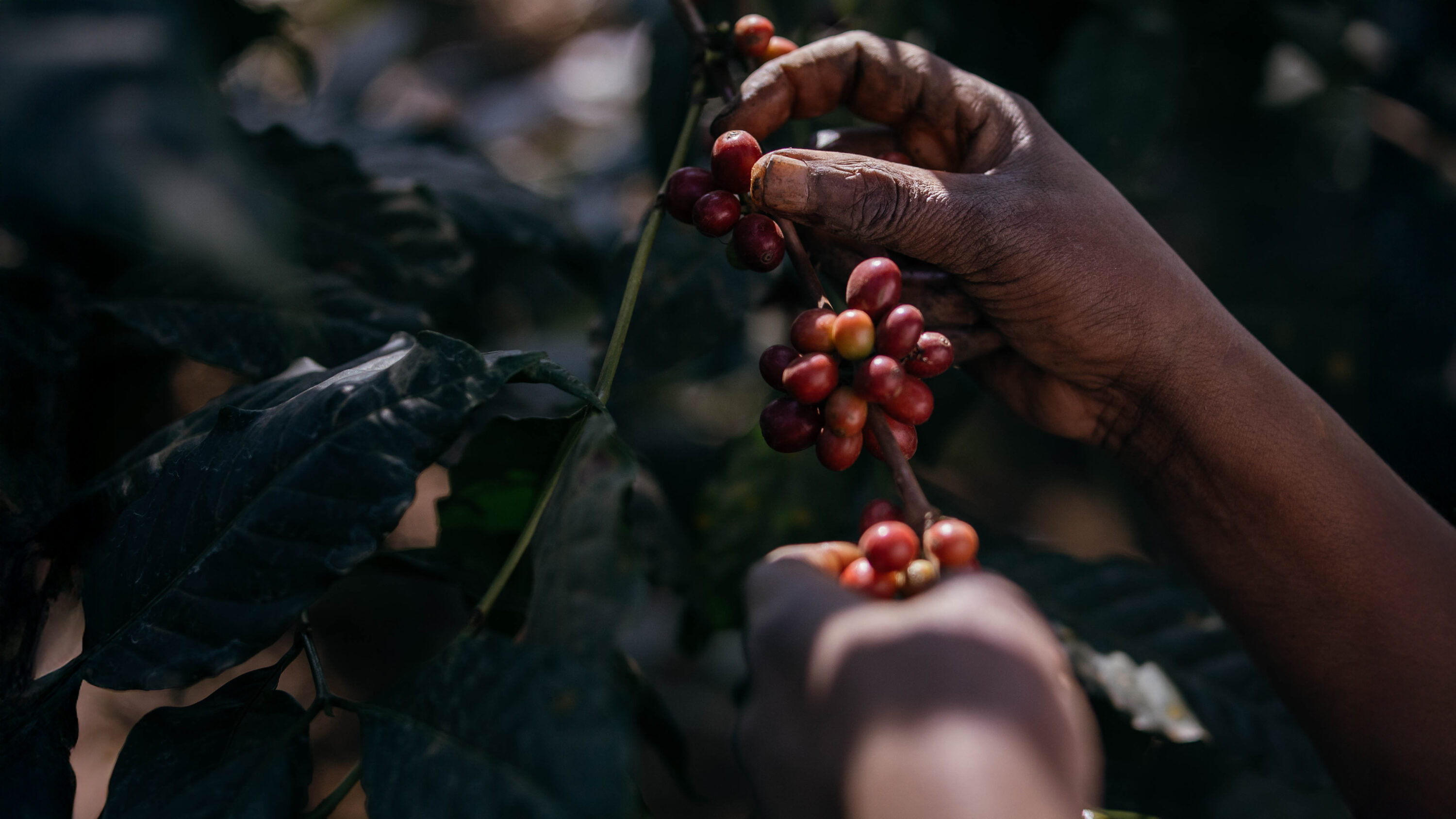
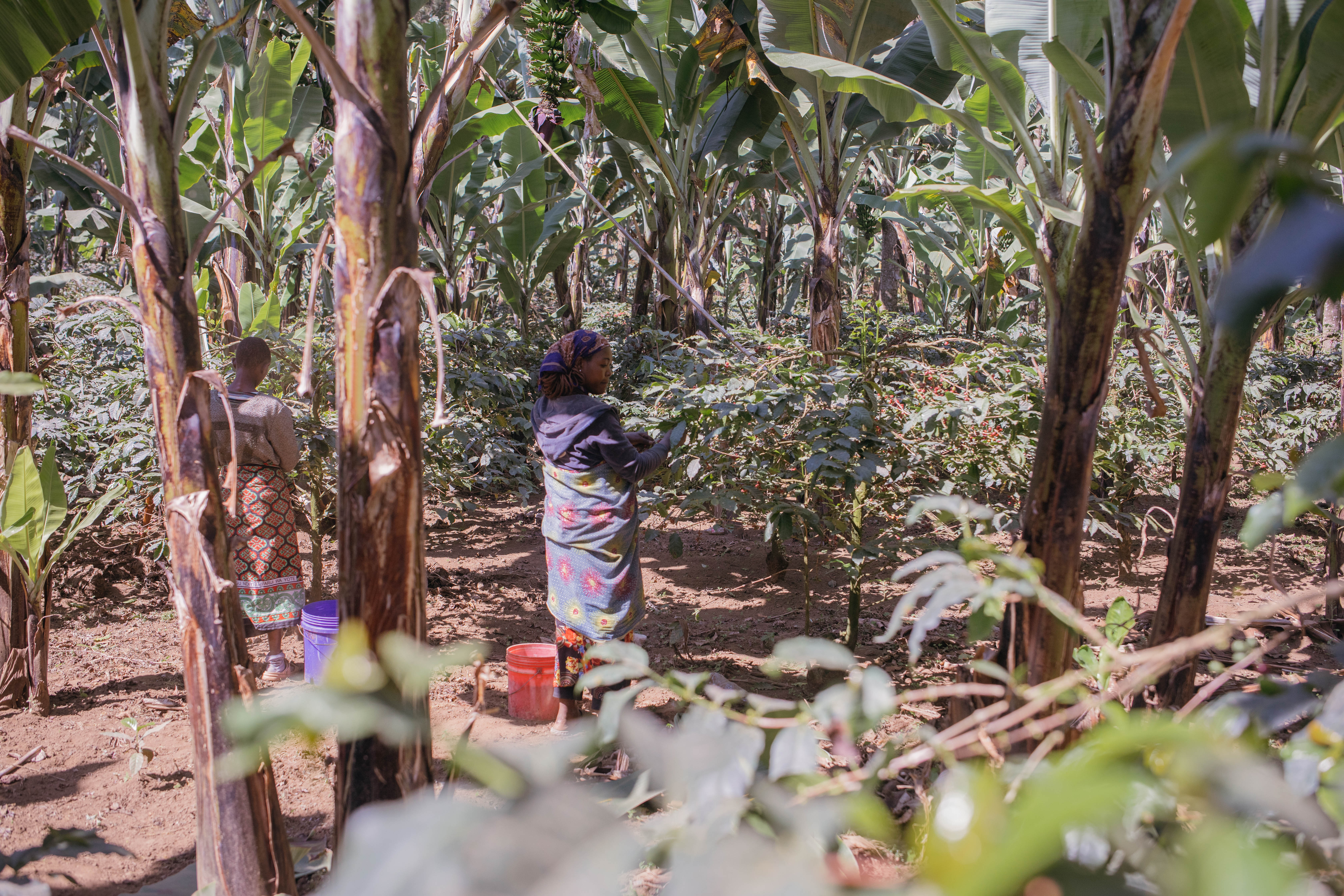
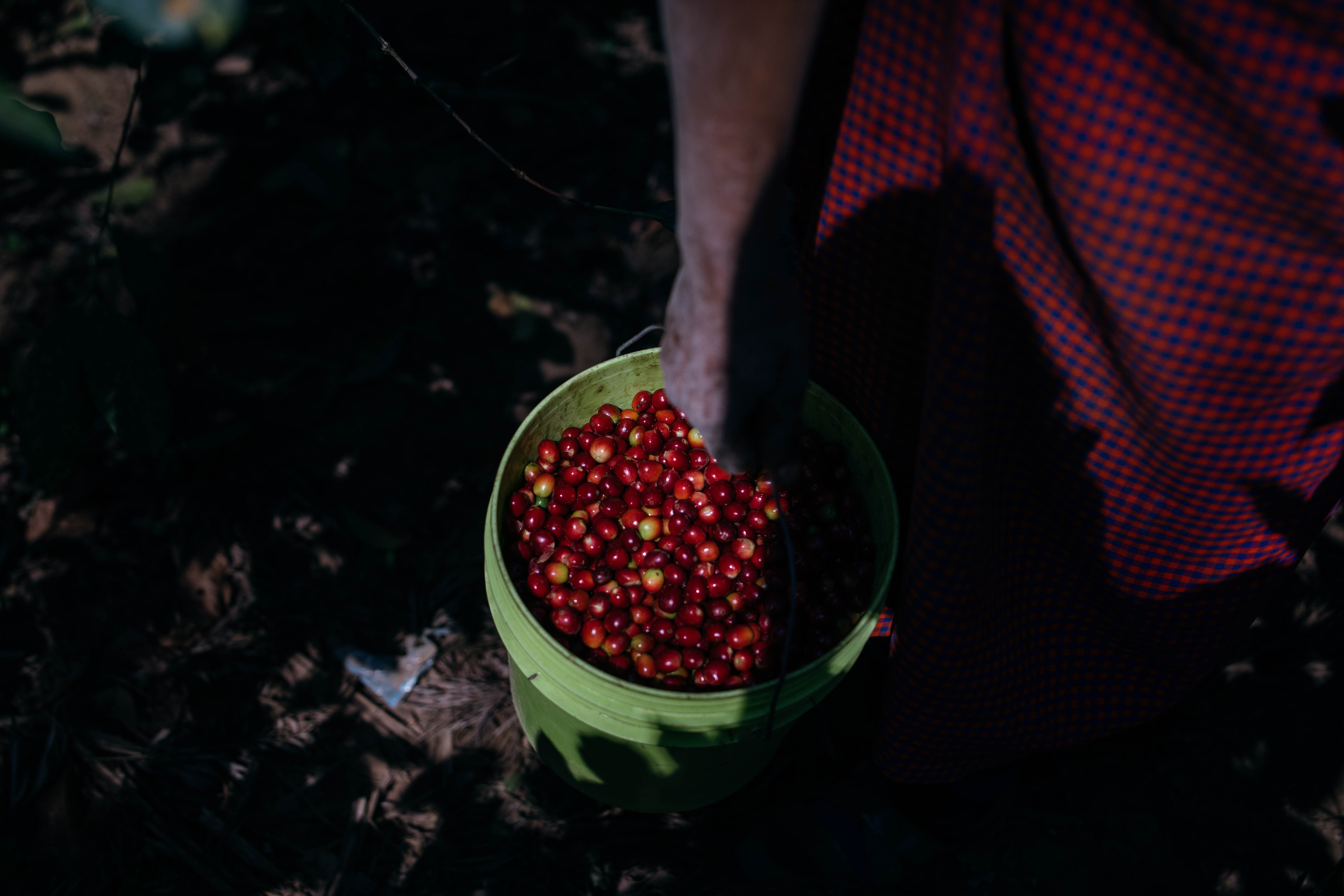
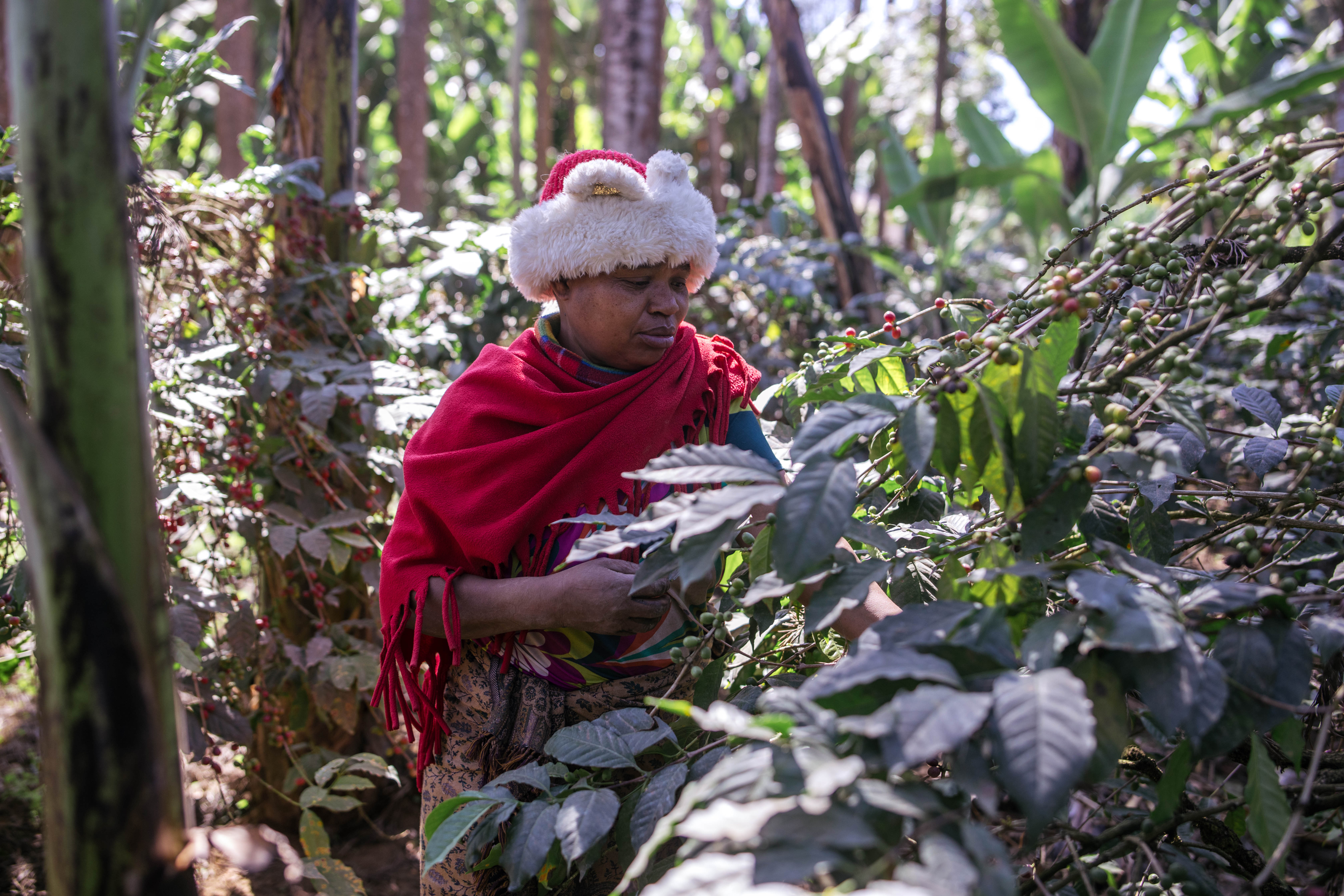
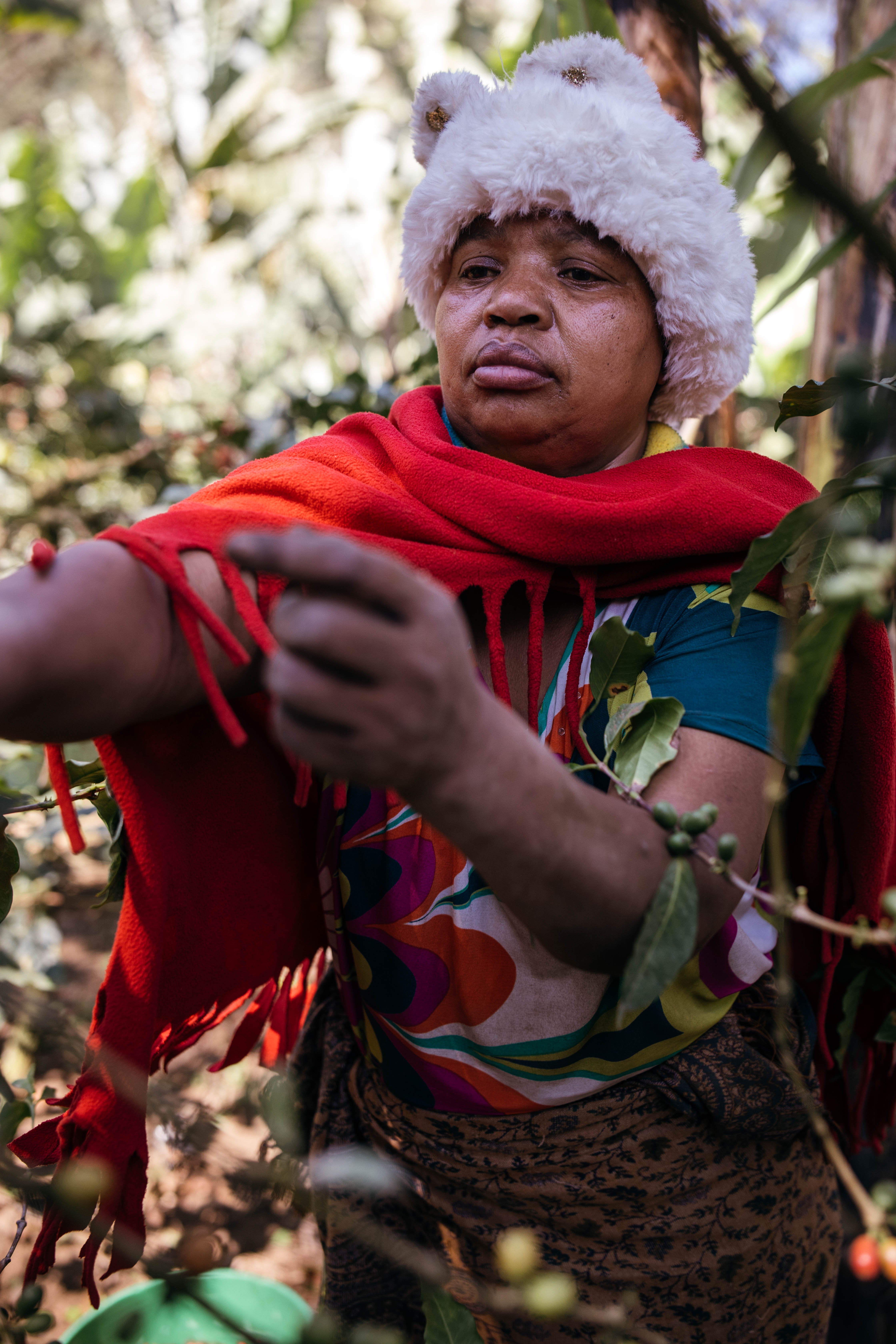
43-year-old Veronica Laizer is a seasonal coffee berry picker at Baraka Coffee Farm in Sokon II Ward near the base of Mount Meru, Tanzania’s second-highest summit. A mother of four, her hands do not stop moving as she glides shrub to shrub, the fruits pinging with soft thuds in a white plastic bucket.
Baraka Thomas Mbalakai, 53, is the farm’s namesake––his father established this farm more than four decades ago. At present, they hire day labourers to pick ripe berries every couple of weeks during the harvest season, which runs roughly from June to October or November in East Africa.
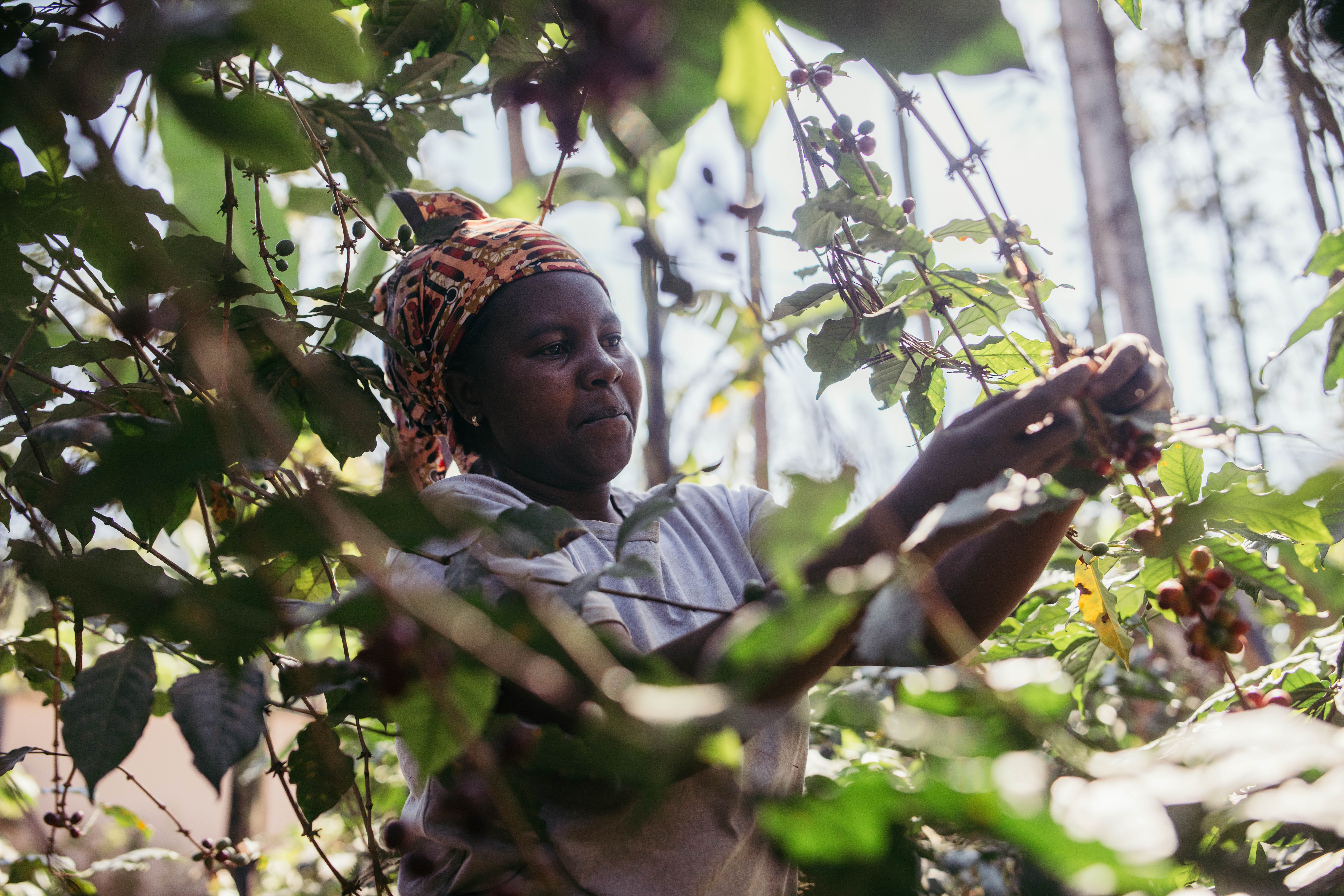
There can be a shortage of labor at times during harvest season, he explains, since the cherries all ripen around the same time. Laizer and the other dozen or so women and an adolescent boy at Baraka Farm work from dawn to dusk––nearly 12 hours––and are paid TSh7,500 (~$3USD) a day.
Their remarkably low wages make for a heady contrast to Tanzanian peabody coffee priced at $21.99 per 12 ounce (340 gram) packet in Brooklyn, New York, or a double cappuccino containing roughly 20 grams of coffee going for at least $6 at most third-wave coffee shops in North America.
A Heavy Colonial Heritage
Ujamaa, meaning ‘fraternity’ in Kiswahili––Tanzania’s national language––was the socialist ideology that founding president Julius Nyerere adopted for his country upon independence from the British colonial administration in 1961.
Scholars have described Ujamaa as ‘the most successful [post-colonial] attempt to dismantle the structure of indirect rule; while making strides in social development such as extending life expectancy, had certain catastrophic economic consequences such as declines in food production.
While the baseline of state control of agricultural industries (which accounts for more than a quarter of Tanzania’s GDP, employing the vast majority of the population) finds its roots in colonial control, state interventions continued melding the coffee industry’s trajectory under the Ujamaa policy’s ‘cooperative economics.’
According to Yustina Samwel Komba, a historian who completed a PhD at Stellenbosch University on the socio-economic history of coffee production in Tanzania, the 1930s colonial administration promoted cooperative societies under the claimed objective of protecting African coffee growers from exploitation by private middleman traders.
However, Komba indicates how cooperatives were wielded more as a tool of colonial governance rather than a mechanism for producer protection: enabling the state to discipline African producers, regulating production and quality, controlling marketing channels, and securing export revenues.

Rather than dismantling exploitative relations, the colonial cooperative system reconfigured them under bureaucratic state control. In the post-colonial period, these structures inherited and intensified: under Ujamaa, cooperative societies functioned even more explicitly as instruments of state monopoly over coffee production and sales.
Brad Weiss, an associate professor of anthropology at the College of William and Mary, argues that “The black market in coffee, then, is most effective in taking advantage of the need for ready cash.”
“Those who have access to cash are able to purchase the prospective coffee harvests of their clients who cannot wait for the state’s payments. In this way, control of the annual procedures (and proceeds) of coffee cultivation is cut short in favour of the immediate requirement of money,” he writes.
Only those like Laizer and her colleagues, who effectively hold no buying power, would take on temporary yet critical roles of seasonal coffee cherry picking.
The Birthplace of Coffee
Although Mbalaki is Maasai––one of the most internationally renowned pastoral communities from the African continent–– he has shifted from livestock herding to coffee farming, growing arabica coffee across 2 acres. He has a small green bean processing and roasting facility at his home, is in the process of building a brick and mortar shop, and intends on passing his farm and shop down to his children and grandchildren.
This part of the world is the birthplace of coffee. Around 850CE, a young Ethiopian goat herder named Kaldi noticed how his flock became extra sprightly after chewing on the crop. Somali merchants transported coffee east across the Gulf of Aden, where it became a cornerstone drink in Yemeni culture, before spreading throughout West Asia and beyond.
In the east, the bustling, coastal city of Dar es Salaam––Tanzania’s financial hub and largest city in East Africa by population with nearly 9 million people––is in its nascence of coffee drinking culture. Why is it that Tanzanians—the ones who grow the beans (which are mostly exported)––drink so little coffee themselves?
33-year-old Evance Malleo is committed to changing this. The winner of the national 2024 Kahawa Festival (meaning ‘coffee’ in Kiswahili), he is also the founder of Kahawa Studio Hub, an independent coffee shop in coastal Dar es Salaam. The son of coffee farmers from the Kilimanjaro area, he has labored in coffee fields since he could walk.
Yet his parents, like most East African farmers, do not drink coffee themselves, preferring chai. “Why is this the case,” says Malleo, “When Tanzania produces some of the best coffee in the world?”
Together with his wife, Hilda, they believe that by slowly introducing locals to the art of coffee to their community, they can not only bridge the extant cultural gap between foreigners and locals, but also inject orders of magnitude more income into the Tanzanian economy––upwards of 88%, according to Utengule Roasters, which has been roasting for two decades, and growing coffee since the early 20th century.
Wishful Thinking
According to the Tanzania Coffee Board (TCB), which oversees the regulation (e.g. compliance and quality control) of the nation’s coffee production, 70,000-80,000 tons of green beans are produced annually, with local consumption averaging a mere 3% of total production.
Primus Kimaryo, the director general of TCB, is an agricultural economist and has been involved with the board since 1999. Although Tanzania contributes less than 1% of the world’s coffee, the beans are of exceptional quality, mostly exported to Japan and Europe. “We want to increase production from 1.3-1.4 million bags (60kg each) to 5 million over the next 5 years,” he says on behalf of the TCB. They have embarked on their fourth year of arabica seedlings distribution to Tanzanian coffee farmers (400,000 smallholders on plots averaging 1-2 hectares comprise 95% of Tanzanian growers) to help achieve this mission, providing 20 million seedlings.
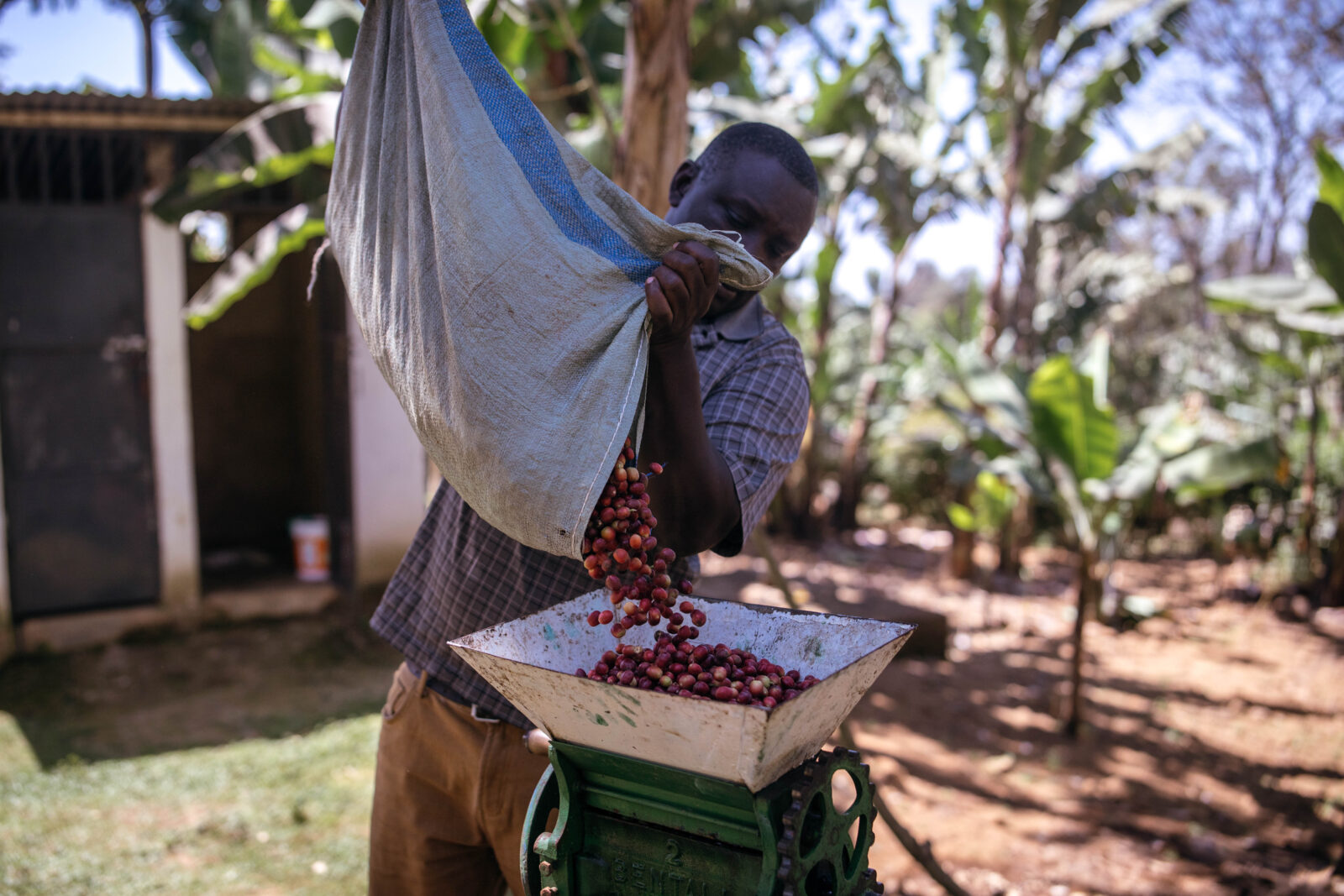
“Consumption is directly linked to income and livelihood,” he continues. If Tanzania’s standard of living can be boosted, the culture of coffee drinking may likely also grow, Kimaryo believes.
“But besides promoting mainstream coffee consumption, we are also working to expand into niche markets such as fairtrade, organic, rainforest friendly in alignment with Voluntary Sustainability Standards”, Kimaryo explains.
Kimaryo’s optimistic beliefs that simply increasing coffee consumption may be a marker of a more equitable Tanzanian economy, hides the unavoidable colonial shadows behind coffee making that trajectory anything but straightforward.
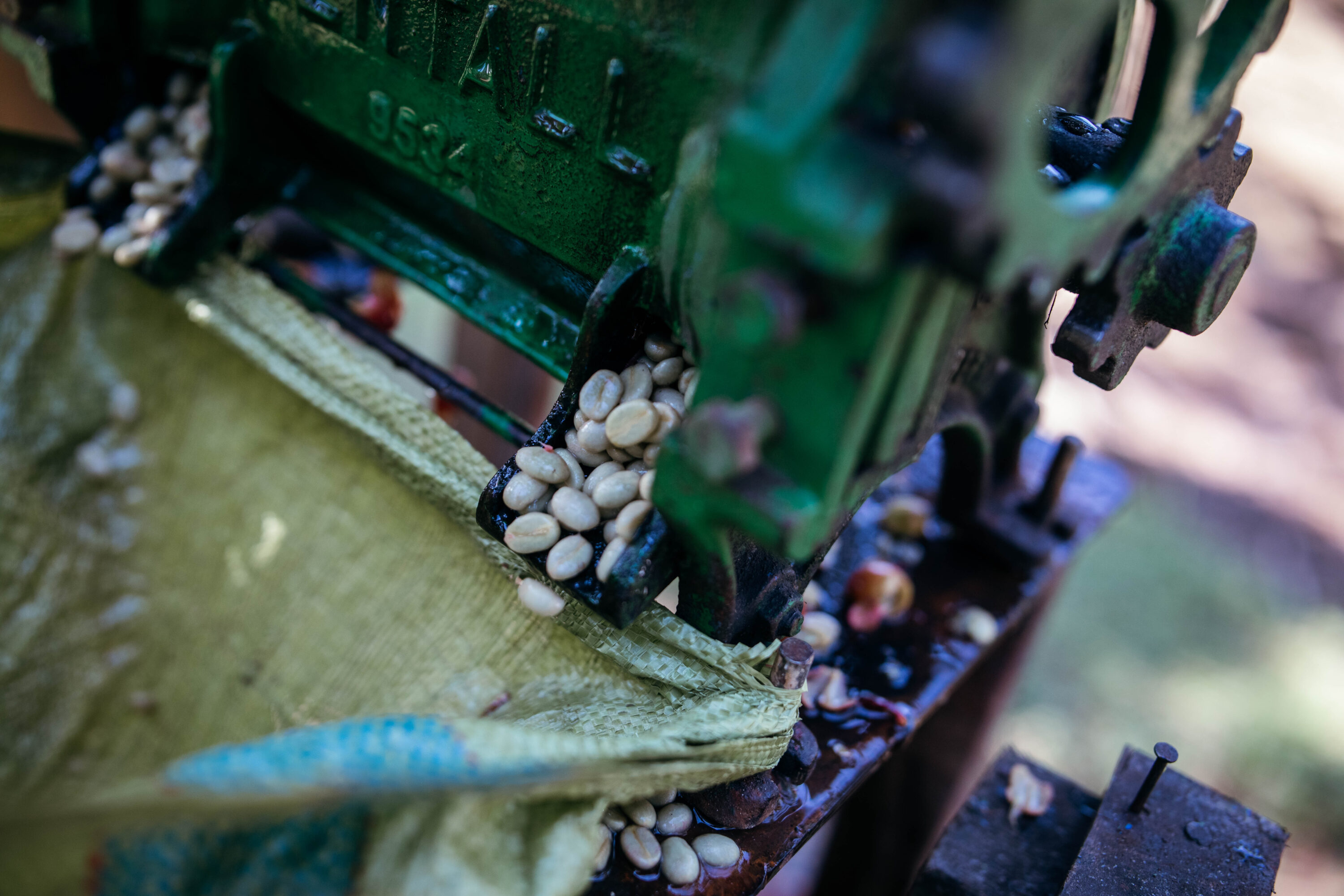
“Colonialism was as much about making the centre as it was about making the periphery,” Weiss quotes anthropologist John Comaroff, “Just as Haya (a Bantu ethnic group in northwestern Tanzania) farming communities use coffee to negotiate their local position in a global economy in ways that have been constrained, but never simply determined, by the forces of the global market, so, too has the presence of coffee.”
Weiss writes about how colonial and neo-colonial relations in Tanzania are inextricably intertwined. “Coffee is the original therapy for the micro-management of bourgeois personality,” he argues. “Coffee further permits these attitudes, motivations, and dispositions to be objectified in the capitalist reconstruction of time, as ‘coffee breaks’ become means of temporal reckoning that are routinized in labor practices.”

“Using coffee to mark and make time in this way thereby fulfils a capitalist fantasy, providing a respite from work undertaken for the sake of work itself––and thus the direct conversation of ‘leisure’ into ‘productivity’––made possible through the medium of a highly desired, commodified stimulant,” Weiss continues.
Deforestation, Climate Crisis, and Tariffs
The messiness of US tariffs has complicated business and logistics. Coffee from Brazil, constituting 30% of the global market, was being tariffed at 50% by the United States in July 2025, which ground US purchases of Brazilian coffee to a halt.
Other coffee buyers, notably China, seized this opportunity. “This forces the bags of coffee to move via different routes,” Kimaryo explains. “We’re going to see a lot of side selling, smuggling. Brazilian coffee might be rebranded as Peruvian coffee when it’s still from Brazil, just to navigate the new constraints.”
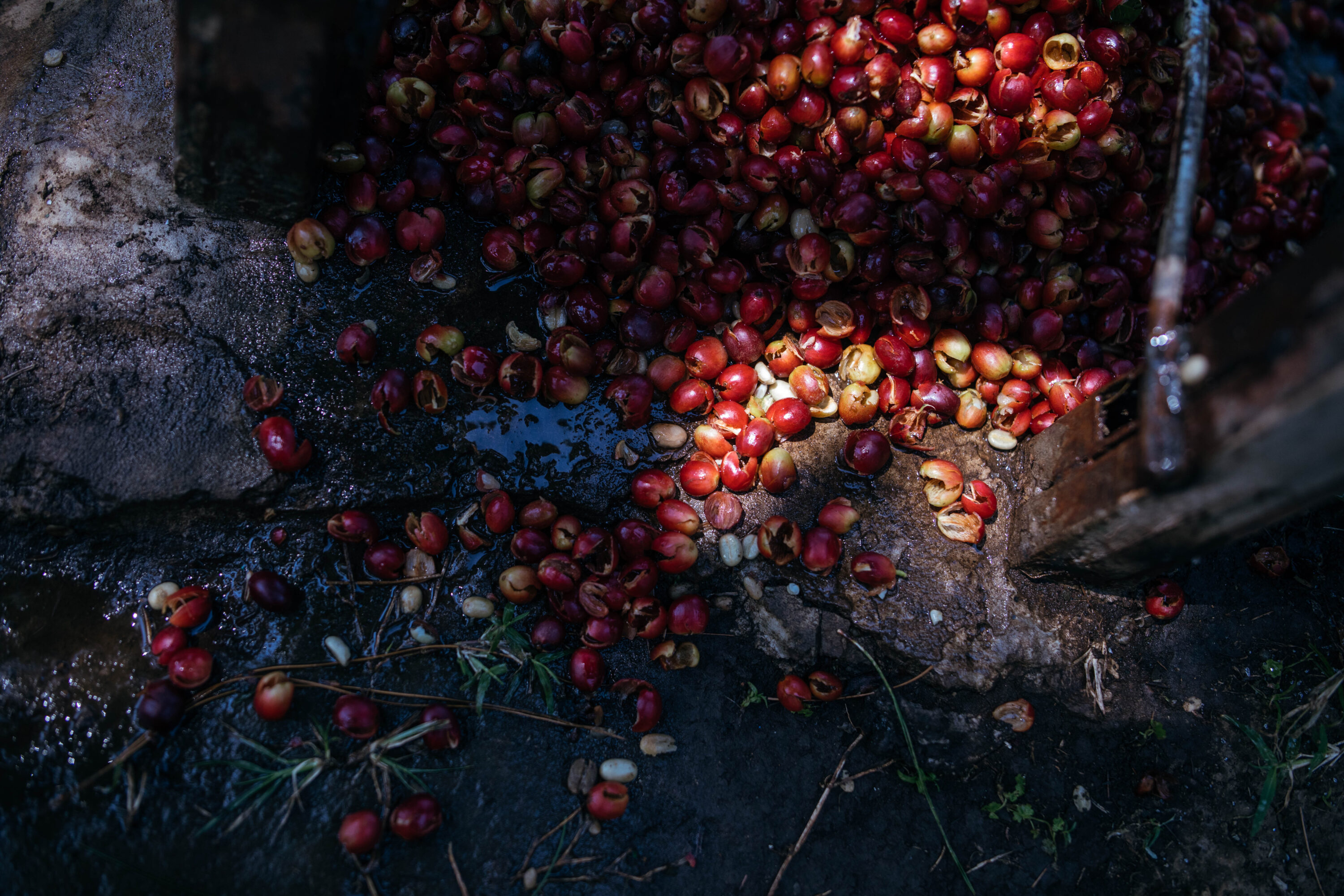
Meanwhile, erratic rainfall patterns and temperature from rapidly accelerating climate change impacts coffee shrubs particularly hard. As the most traded commodity on earth, and a major export cash crop for Tanzania, an understanding of how to cope with drought and warming trends will be critical to sustaining production.
Climate change has also heralded an onset of higher infestation rates of snails and borer pests.
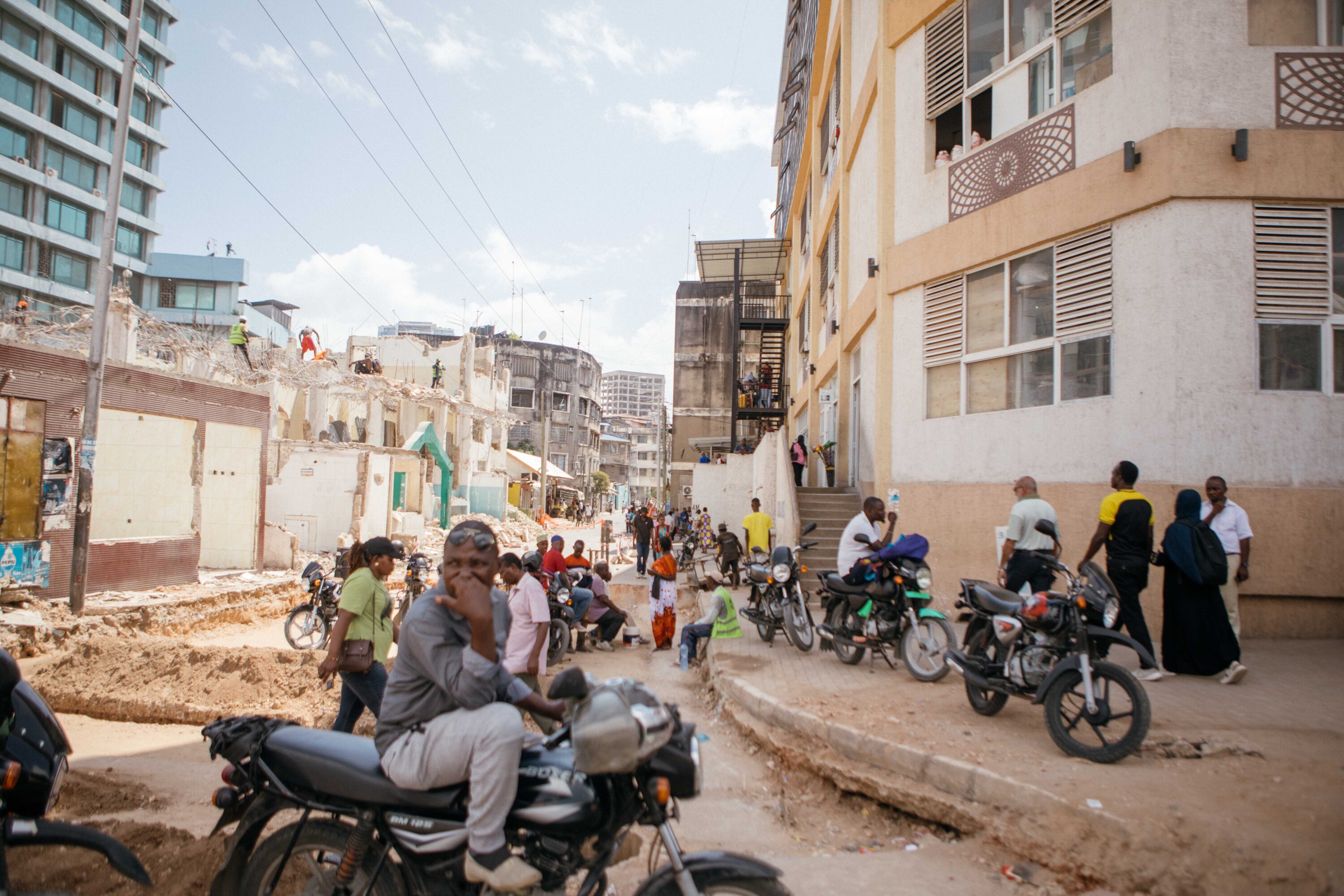
And with growing demand for coffee, both locally and globally, the need for land increases. The result is that across the continent, human activities––such as coffee cultivation––are driving the decline of forests, which in turn catalyze damages to ecosystem services and subsequent economic and social benefits from the environment, particularly for low-income communities.