



*This interview was originally published by Ham-Mihan newspaper in Farsi. It was translated with permission. You can read the original here.
The first image etched into eleven-year-old Aya’s mind was a dark, powerless room and women screaming over her uncle’s burned body—an airstrike by the U.S. left only a burnt limb the size of a palm. From that moment, she adapted her mind to the image of a shattered, grieving woman in Baghdad. Just like Fida from Palestine, Maya and Diana from Lebanon, Oula from Syria, and Mazda and Zoya from Afghanistan—these women are activists and journalists who spoke about the experiences of women in wartime. Although foreign forces claimed to be ‘liberating’ them, what these women received instead was devastation, occupation, and deep social divisions.
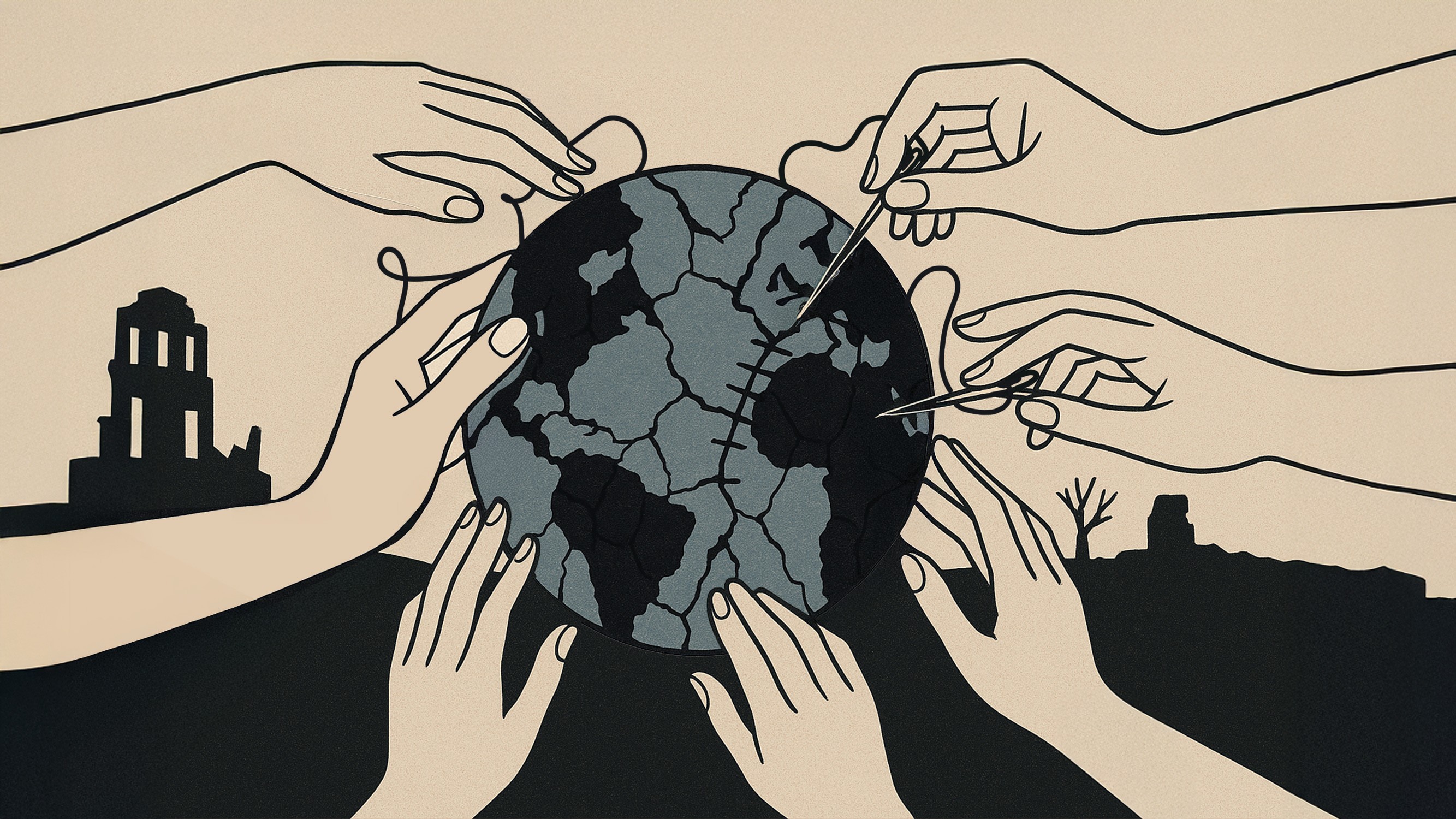
Now, one of the world’s most violent military leaders, Benjamin Netanyahu, is citing Jina Mahsa Amini and the slogan “Woman, Life, Freedom” to justify his attack on Iran with a cloak of justice, turning “women’s rights” into a weapon to legitimize war and occupation—the same leader responsible for killing thousands of women in Gaza over the past two years. An all-too-familiar pattern of imperialist exploitation repeated across the region.
For Aya and other Iraqi women, the US occupation was never a source of liberation. Women were arrested alongside their children, and husbands were killed in front of their families—often by soldiers who spoke of peace while carrying weapons. What occurred was not a rescue, but another form of devastation. Iraqi women were not freed; they were caught between tyranny and the foreign fire that arrived with empty promises. Today, each of these women activists who have emerged from war and destruction represents not only her personal experience but also a collective voice—the voice of women who have lived through resistance and have refused to be ‘liberated’ by bombs.
From Iraq: Fake liberation, real chains
Aya, an Iraqi journalist and women’s rights activist, once tried counting how many women she had lost over the years—but gave up quickly, fearing her heart might collapse from grief. Her childhood began with the memory of her uncle’s burned limb and the women’s cries in that powerless room. From then on, the image of the broken woman was etched in her mind: a woman forced to bear the burdens of war, execution, disappearances, and discrimination in an oppressive system.
Under Saddam Hussein, young boys might be executed in front of their mothers for having a religious or communist book. After 2003, the scene didn’t change—only the methods did. Men were executed or disappeared; many never returned, not even as bodies. What mothers received was their absence.
Aya says that after the US invasion in 2003, that violent system against women did not collapse—it grew stronger: “Saddam needed to go, but the way he left only deepened the destruction. The US decided how Iraq would ‘change,’ chose new rulers, and imposed priorities with no link to the wishes of the people. Iraq was neither liberated nor secure; it was another form of prison—and remains so.”
Aya believes that the US not only failed to free Iraqi women but handed power to men who hate women: “The laws allow child brides, men kill women in the name of ‘manhood’ and escape punishment. What we have is legalized violence against women, not reform.”
She says the rhetoric of ‘education for women’ and ‘civil society’ during occupation was simply a facade for failure: “On the surface, workshops and seminars happened, but in practice, women remained vulnerable in a patriarchal society. Women activists, translators, and journalists were all labeled as traitors or collaborators. We received neither support nor voice.”
Aya says this pattern of deception is a familiar US tactic: “The slogans remain the same: freedom, human rights, saving women. Yet behind these words always lies a political agenda. Deprived of hope, we sometimes fall into believing them.” She is certain that occupation never leads to liberation: “The only real resistance is refusing to let our suffering be exploited as a weapon. When foreign powers invoke feminist slogans, they strip them of meaning and turn them into war propaganda; this is not rescue—it’s a takeover.”
When Netanyahu speaks of “Woman, Life, Freedom,” Aya says it serves only as a façade for atrocity—the same recurring pattern, the same slogan, the same lie: “They present us as symbols rather than human beings. They showcase us at strategic moments to legitimise a policy, only to abandon us when we cease to be of use.”
She expresses her unwavering solidarity with women in Iran, Syria, and Afghanistan: “My solidarity is unconditional. I urge the women of Iran: do not let anyone dictate your story. These narratives are our invaluable assets. But today they’re being taken from us; we are being used, without any concern for our lives.” She warns: “When we ask the international community to acknowledge our plight, the response is often ‘it’s an internal matter.’ But if it suits their interests, all of a sudden, our lives matter to them. This selective approach to our suffering is the worst form of exploitation.”
From Gaza: “We know how to resist ourselves”
Fida is a woman forged by war—a gender studies researcher born and raised in Gaza. She has lived through the horrors of war for as long as she can remember, constantly overshadowed by bombs and occupation. However, the devastation of the past two years marks a profound escalation: complete destruction, profound loss of friends and loved ones, and even erasure of her hometown. For her, women suffer the most amidst the rubble.
When Fida heard Netanyahu invoke “Woman, Life, Freedom” to justify attacks on Iran, she was not surprised—“this is what the Israeli regime has always done: instrumentalize the suffering of others to legitimize its own violence. This reflects a colonial, racist mindset that dehumanizes others,” she says.
Fida places Netanyahu alongside politicians like Donald Trump—figures who only acknowledge movements they can co-opt: “Whenever a movement can feed their war machine, economy, or geopolitical interests, they seize it. Saying ‘we bomb to free women’ is nothing new—Afghanistan, Iraq—and now Iran. This discourse is acceptable in the West because Islamophobia, white supremacy, and racism are entrenched.”
In response, she emphasizes a simple but vital truth: “Yes, women in our region are oppressed, but this is our struggle. We know how to resist, organize, and fight. No state responsible for war, occupation, or resource plunder has the moral standing to speak of freedom.”
She warns many progressive movements risk being hijacked by imperial projects, shifting focus from justice and transgression to mere token representation in corrupt institutions: “That is dangerous—because countries like the US, Israel, and Germany use moral slogans to conceal their expansionist agendas.”
Fida argues that a common tactic employed by Western powers is to depict West Asian women solely as passive victims—figures presumed to be awaiting rescue by the so-called “civilized” white man. “This portrayal is not only demeaning,” she explains, “but also strategically useful, as it allows these actors to obscure their own roles in constructing systems of occupation and domination, while shifting responsibility onto ‘culture’ or ‘religion.’”
Fida has never looked to foreign governments for support in achieving liberation, and she contends that such expectations are misplaced. “When these states invoke ‘women’s rights,’ it is often not out of genuine concern or solidarity, but rather to legitimize military interventions.”
Importantly, her critique extends beyond the context of Palestine or Gaza. Fida warns that feminist movements in Iran must likewise be vigilant against the risk of co-optation. In her words, a movement rooted in popular struggle can only retain its authenticity and strength if it is led from within, not by the intervention of foreign powers. “We must have full autonomy over our movements. No state with a legacy of colonialism, violence, and war possesses the ethical authority to dictate the terms of our emancipation.”
From Lebanon: The same old tactic
For years, Lebanese women have borne the burden of violence, crisis, and poverty—women like Maya, who are not just storytellers of war but have lived it. A journalist and feminist who lived the crisis from within, she now speaks with experience and resilience of women who became the pillars of families amid destruction.
Maya describes her home in southern Lebanon—recently bombed again by Israel—where thousands of families lost homes and land. Many cannot return: “In crisis moments, these women cared for those around them. In crowded shelters, with bare hands they built kitchens, made play and learning spaces for children. They prevented families from falling apart.”
By late 2024, more than 50% of Lebanon’s 1.2 million internally displaced were women and children, including some 12,000 pregnant women without access to basic medical services. Economic and financial collapse since 2019, the COVID pandemic, and the Beirut port blast intensified pressure—especially on women in informal, small-scale work.
Lebanon, she notes, is a “country of consecutive crises.” Since the outbreak of the civil war in 1975, five successive generations have endured at least one major security or economic crisis. “Each generation held onto the hope that the next would live in peace,” she reflects, “but we have learned to remain in a constant state of readiness—always anticipating the next blow.” These protracted crises unfold within deeply patriarchal structures and legal frameworks that systematically marginalize women.
She describes a form of latent violence—one that does not destroy the body, but gradually erodes the spirit: “If the bullets don’t kill you, war finds a way to break you from within. Many older women continue to live with psychological trauma and a persistent sense of entrapment in the city. They are unable to return to their homes, lands, and gardens in the South; their sense of belonging has been violently severed. It is as if Israel seeks to erase women’s connection to the land through hostility.”
Maya recounts that until the early 2000s when the Israeli-occupied southern Lebanon was liberated, she was not even permitted to visit her birthplace. Against this backdrop, Netanyahu’s invocation of the slogan “Woman, Life, Freedom” to justify aggression toward Iran strikes her as yet another iteration of a familiar strategy: “It’s the same old tactic powerful states have used for years—washing women’s rights. They claim to champion freedom, but in reality, they instrumentalize such slogans to legitimize war, intervention, and the expansion of their [geopolitical] influence.”
She cites examples: Afghanistan, Saudi Arabia, Palestine, now Iran: “Whenever real decisions need to be made, these governments sideline women- unless they conform to official narratives. This selective use of women shows their real intent: they use women not to liberate them, but to advance military-political goals.”
For Maya, Netanyahu is the epitome of this hypocrisy—a politician directly responsible for killing women and children in Palestine, Lebanon, Syria: “For someone like him, responsible for so many crimes, to invoke the name of Mahsa (Jina) Amini—it’s a moral affront. If anyone still believes that Israel will liberate Iranian women, they need only look at Gaza or post-occupation Afghanistan.”
Her message to Iranian women is clear: “As long as war machines are active and driven by militarized men, women’s suffering will be instrumentalized. We must remain vigilant—liberation cannot begin with bombs.”
Diana, a Lebanese journalist, emphasizes how the layered realities of war have fundamentally reshaped women’s lives in Lebanon. Under what she refers to as “patriarchal peace,” survival has become a multi-generational struggle:: “Grandmothers managing homes amid bombardment, mothers rebuilding after displacement, daughters facing economic collapse and mass migration. Despite everything, women have held society together, yet structural transformation in laws and political representation remains elusive.”
She notes that women’s roles shifted significantly during the civil war and subsequent occupation—taking on responsibilities as caretakers, fighters, smugglers, and negotiators—often under duress. “In the occupied South, women played key roles in sustaining social life and participated in resistance networks, especially secular ones. But war left them vulnerable to violence from ‘the enemy’ and their own communities. As [Lebanese anthropologist] Souad Joseph puts it, war not only creates widows and mothers of martyrs, but deepens patriarchal norms that restrict women even after the weapons fall silent.”
Diana believes Netanyahu’s rhetoric about women in Iran mirrors Lebanon’s experience: powerful actors borrowing feminist language to conceal violence. “As some foreign institutions or politicians have used women’s rights to justify unrelated agendas. When feminism becomes propaganda, it becomes part of the war machine—not a means to peace.”
She argues that such appropriations deplete feminism, reducing struggles for justice to hollow marketing slogans and silencing the voices of real feminists on the frontlines whose language has been co-opted. Her message to women in other crisis zones, such as Iran, is clear: “You are not alone, and you are not merely victims. Your struggle is part of a broader, global movement—but its direction and meaning must be defined by you. Do not allow others to instrumentalize your suffering to justify further violence.”
From Syria: Patriarchy fights on there too
Oula, a Syrian feminist researcher, offers a one-word answer to why foreign armed forces invoke women’s rights during wartime: “Patriarchy.”
“Whether it’s a regime, militia, or state, they all reproduce the same logic: that they know better than we do what is good for women, what rights we should have, what problems we face, and what our future ought to be.”
As the author of the study Paths of the Feminist Movement after 2011, Oula argues that speaking about women is easy—but truly listening would require relinquishing power, something patriarchy is rarely willing to do. “When Syrians rose up in 2011, they demanded dignity, freedom, and human rights. That was a revolution for dignity—and dignity without full women’s rights is meaningless.”
Despite war, displacement, and repression, feminist organizing in Syria not only persisted but flourished. Women led local initiatives, supported survivors, and created feminist spaces both within Syria and in exile—spaces rooted not in traditional institutions, but in solidarity, care, and everyday resistance.
Yet at the critical turning points, these same women were once again pushed to the margins. Oula, with a critical view of the political process in Syria after the beginning of the transitional period, says: “Despite years of activism and feminist leadership, out of 23 ministries in the transitional government, only one was assigned to a woman. These achievements are real, but fragile. These victories were not the result of the war, but were achieved in spite of it.” According to her, 14 years of war and displacement, while painful for all Syrians, brought specific forms of violence upon women: “From rape and sexual violence in detention centers to forced disappearances, public punishments by extremist groups, and the use of women’s bodies as weapons on the battlefield.”
Despite this harsh reality, Oula’s account of Syrian women is one of resistance in the heart of the fire. In ISIS-controlled areas, women resisted forced disappearances, taught secretly, built support networks, stood against brainwashing. In areas under foreign or local militia control, documenting abuses, coordinating humanitarian aid, and creating safe spaces—even under bombardment—became everyday acts. To Oula, survival was also rebuilding, envisioning alternatives: “Resistance wasn’t always grand demonstrations—it was keeping society together and asserting women’s presence in shaping the country’s future.”
Asked whether she sees parallels between how women are used in Syria and the global portrayal of Iranian women’s struggles, Oula responds firmly: “Absolutely. War criminals and occupiers have long used our fights for their own goals. From the French in Algeria to the US Americans in Afghanistan, colonialism always posed as ‘saving women’ to legitimize violence. Today the pattern repeats—when Netanyahu uses Iranian women’s protests to justify aggression, it’s a continuation of that violent history.”
Afghanistan: Only the color of chains changed
In 2001, the US invaded Afghanistan, promising to “free Afghan women”—a slogan that became the banner of the campaign, casting Afghan women as symbols of “salvation” from Taliban darkness. But the lived experience of women during 20 years of “the republic” tells a bleaker story.
Mazda, an Afghan women’s rights activist, speaks from that experience—from shiny storefronts whose veneer couldn’t mask the stench of obsolescence and violence. She says that freedom in Afghanistan was inflated and hollow, a balloon that popped. Over those 20 years, only a limited group of urban women accessed universities and jobs, but the societal reception remained sexist: “Appearances changed; women were no longer whipped in the street for not wearing the hijab, but abuse continued—verbal harassment, groping, unwanted touching—from street to presidential palace. Laws seemingly protecting women weren’t enforced, and the underpinning structure remained misogynistic.”
As she puts it, the US removed the Taliban’s beard from the streets, but left misogynistic structures intact: “The real voices of Afghan women were never the occupiers’ priority—not in politics, not in reconstruction plans.” Mazda says that the voices of the people—whether women or men—meant nothing to the occupying powers; they only listened to themselves and silenced everyone else with bombs, bullets, and violence: “We protested, we demonstrated, but the response was always the same: violence.”
What distinguishes indigenous feminism from imported versions is agency, Mazda says: “In local feminism, women are subjects, decision-makers—not objects for international institutions and armies to decide for.” The US‑NATO package of “democracy” implemented at Bonn conferences included a definition of women’s rights—but this was symbolic window dressing to legitimize occupation.” she says, with derision: “There was no real liberation—only the color of our chains was changed.”
She speaks about personal and collective experiences of the Afghan woman’s body as a battlefield and symbol of power, where women are blamed even when assaulted: “Society blamed her for her clothing, the law didn’t protect her; the police became perpetrators. In an environment without legal mechanisms to address femicide or sexual assault, any man in the street could act as an enforcer. The republic might have removed official hijab patrols—but patriarchy permeated society, controlling women’s bodies.”
There, Mazda says, women’s bodies became banners for regimes—republicans branded them as democratic symbols, the Taliban used them for “political Islam.” In both cases, women remain symbolic objects for legitimizing regimes. She asks: “Why do states speak so much about women in wars but never listen to them? Because women are seen as ‘honor,’ not humans. Political power always seeks means to reinforce dominance, not autonomous agents who can disrupt the status quo.”
When Netanyahu wields “Woman, Life, Freedom” to justify attacking Iran, Mazda sees a continuation of the same scenario that used Afghan women to justify occupation: “It’s laughable to think bombs bring freedom—amid bodies left in our hands. It’s absurd to consider child-killers as saviors.”
She has lived the experience of “imported freedom”: “Today millions of Afghan women have gained nothing but depression, isolation, and bans from that exported democracy. The danger of exploiting women’s suffering is more than disrespect—it gives excuses to warmongers and normalizes violence against women.”
Mazda’s message to Iranian women and others whose voices may be hijacked: “Be careful not to be used as tools. Peace is born from awareness, not bombs. No country has been liberated by bombing. All that changes is just the color of our chains.”
Zoya, a member of the AfgactivistCollective—a group of first- and second-generation Afghans aligned with the Global South movement—opposes both the US occupation and the Taliban. The collective works to link Afghan struggles with broader regional movements.
Calm yet confident, Zoya speaks of the West’s invasion under the banner of “saving Afghan women,” wryly remarking: “Twenty years of war just to replace Taliban with Taliban.”
For Zoya, the rhetoric of salvation served as a cover for economic and geopolitical interests—not women’s rights, but access to natural resources and Afghanistan’s strategic position. As she puts it, the hypocrisy was plain to see: “Everything happened in front of our eyes.” The Doha Agreement, she says, confirmed that behind the veil of liberation lay nothing but self-interest.
She states: “Our land is full of resources needed for capitalist war machines. Women’s bodies were just propaganda tools.” In her narrative, Afghan women’s resistance arose from within—from houses turned into secret classrooms, hands building progress uncontested by funding or support: “With all the money that flowed into Afghanistan, what was visible was our own effort—not international NGOs.”
She describes corrupt development models that dispossessed farmers, bought homes, forced dependence on processed food—food that created health and pharmaceutical markets for international profit. “Today’s Afghan crisis is the result of this profit logic,” Zoya says.
With the Taliban’s return, new forms of suppression emerged—religiously justified but without real basis: “From closing girls’ schools after sixth grade, banning women’s baths, to even requiring covered kitchen windows—these are all pretexts to distract us from resource extraction.”
She clenches anger at the question: “Who arms the Taliban? How did they gain power during 20 years of ‘struggle’? The same forces preaching freedom also profit from Afghan suffering—through pharmaceuticals, military, electronics industries.”
She doesn’t spare “white feminism,” openly criticizing Germany’s so-called feminist foreign policy: “Afghan women are ignored, Palestinian women are nonexistent, and Iranian women must be saved.” To her, this brand of feminism is colonialism dressed in progressive language: “They offer a false feminism—one that neither dismantles patriarchy nor challenges oppressive structures.”
Her answer? Amplify grounded, authentic voices. “Only true narratives can withstand purple-washing—the use of feminist slogans to camouflage war and domination.” Her message to Iranian women—and to any women whose movements risk being co-opted—is clear: “We in Afghanistan, Palestine, Iran, Kurdistan, Congo, Somalia, Balochistan—we all share one struggle: against patriarchy, imperialism, and capitalism.”
The narratives of war-affected women across the region may differ in detail, but they speak in unison: liberation does not arrive through occupation or bombs, and slogans like “Woman, Life, Freedom” must not be turned into tools by powers that are themselves among the main violators of all three.
In a world where structural violence and imperialism continue to target societies of the Global South under the mask of “rescue” or “freedom,” it is more urgent than ever to listen to the voices of real women from within these communities.
They do not need saviors.