



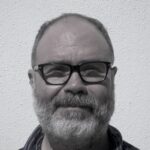
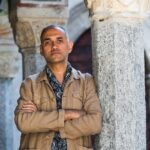
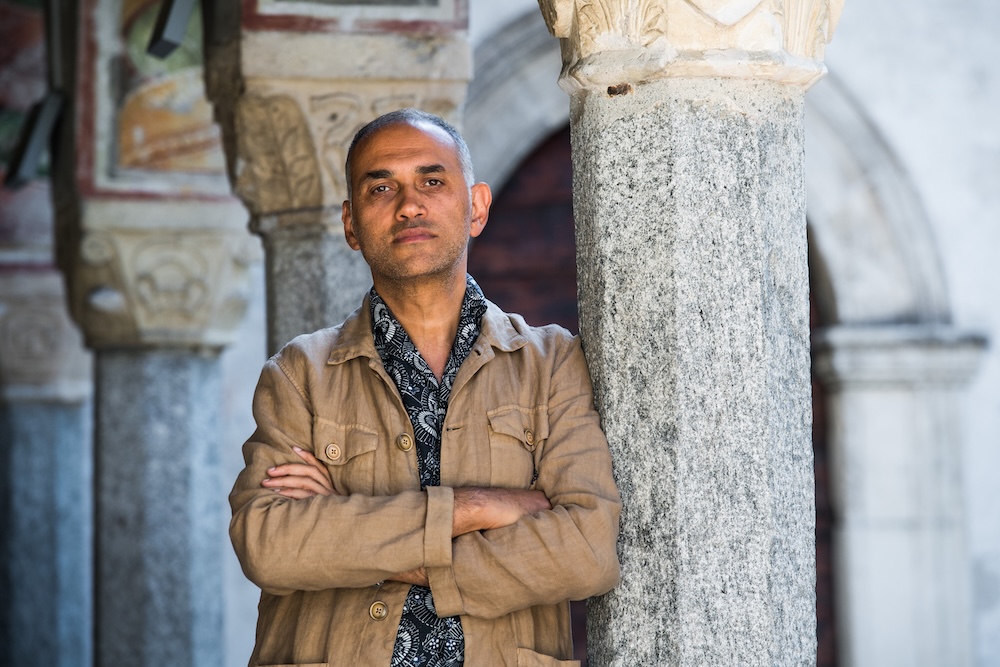
In this long conversation, Palestinian film director Kamal Aljafari (Recollection, A Fidai Film) and Italian film curator Davide Oberto discuss the drive behind Kamal’s cinema, its origin, and the strong relationship with family, places, and history.
Davide Oberto: Kamal, can you tell us how you encountered cinema and how you started to make films?
Kamal Aljafari: When I was a Palestinian student in Jerusalem, I wasn’t really interested in art and cinema – in the sense that it wasn’t something that I aspired to pursue.
At that time, I was mostly an activist at the university, a member of a left-wing student group.
Within that context, I began working with the (editorial) team of a magazine, where I learned how to investigate the different issues I wanted to write about.
At that point, almost by chance, I started going to the cinemathéque in Jerusalem – mainly because everybody seemed to be going there. You could get a membership and then watch films. And I really enjoyed watching films!
But the idea of studying and making films only came later, when I started thinking about creating something to express things that I couldn’t articulate in other ways.
This desire coincided with my growing urge to leave the country. I was involved in a kind of Marxist group – it was almost like a sect – and it was really difficult to break away. So for me, making art and wanting to express myself differently and artistically became a way to escape that situation and eventually to leave the country.
I ended up going to Germany because someone told me about the school in Cologne and offered to let me stay at their place.
I was 26 when I left. That was already many years ago – my God!
I think things often happen by coincidence. In the end, I could have ended up doing something completely different, not necessarily filmmaking.
D.: What about your first films?
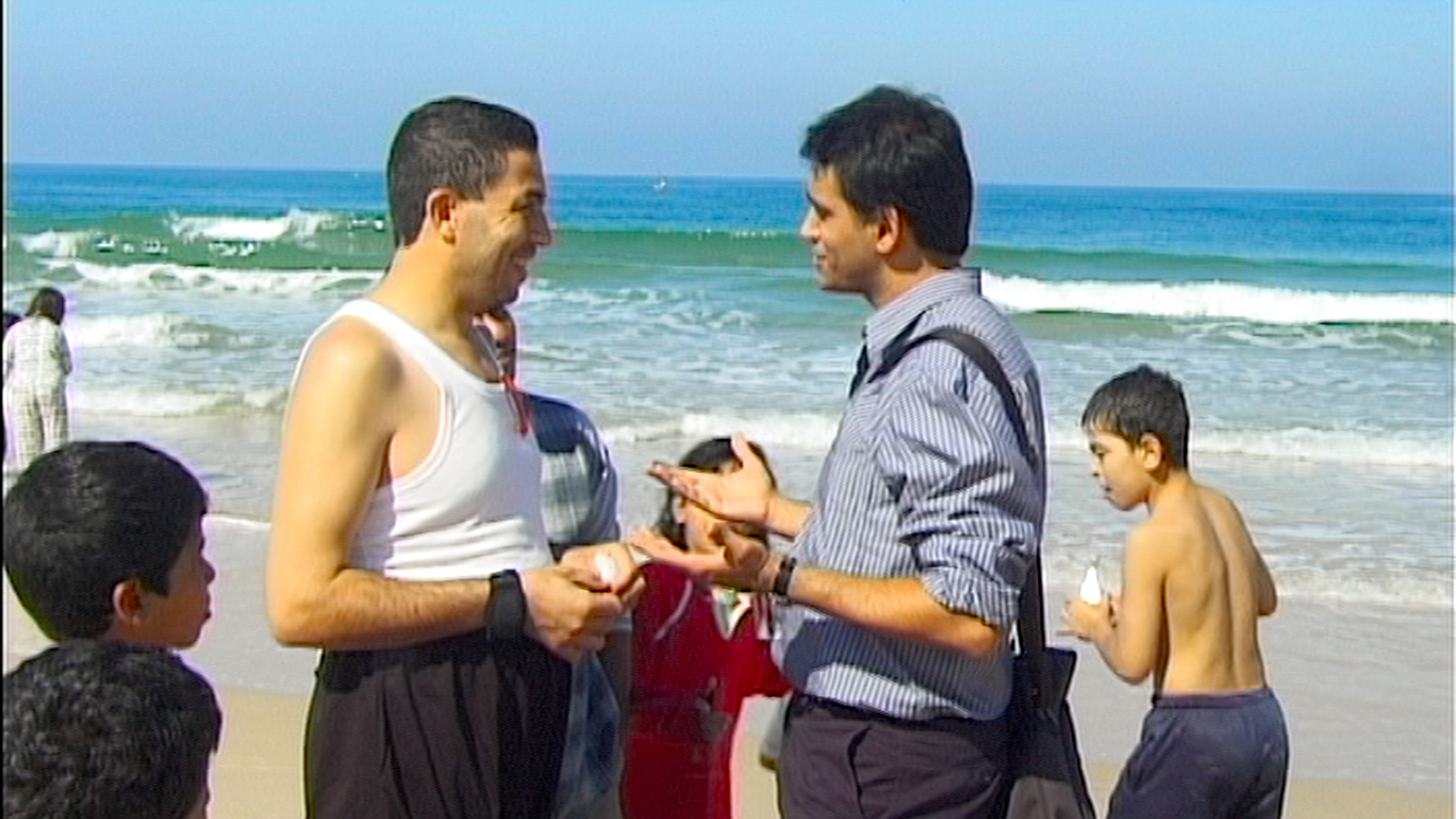
K.: Well, the first film I made was at film school – the one I did in Geneva- Visit Iraq (2003, 25’). I’m not sure if I’ve already told you this: recently I wanted to digitize some old miniDV tapes of my earlier films like The Roof (2006, 61’) and others. While going through the tapes, I found three labeled “Gaza”. I had no idea what they were, I didn’t even remember ever filming in Gaza. Really, I had no recollection.
I watched the tapes, and they turned out to be footage from a visit that I made to Gaza when I was 28. At that time, I was already living in Germany. I had taken a camera from my school, returned to Palestine, and filmed for three days. And incredibly, I never watched the material. I never digitized those tapes, so I never saw them until now. I am even in the footage myself because I had asked someone to film me while I was talking to people.
This might be the first thing I ever filmed. You know, it just happened after my first year at film school. I had learned a bit how to use the camera, and then I went to film that. My idea back then was to make a film about my experience in prison. I was looking for someone in Gaza who was imprisoned with me. I didn’t find him, but I filmed that search, and then never watched the material. I’ve carried it with me for almost 25 years. Now that I’ve discovered it, I’m making a film from it called With Hasan in Gaza.
D.: When were you in prison?
K.: When I was 17. I talked a bit about that experience in The Roof.
D.: Have you already finished With Hasan in Gaza?
K.: (laughing) Not yet, not that fast!
What is interesting is that there’s a lot of great material in the footage, especially the people. I filmed many people, their faces…But what is also fascinating is that I had completely forgotten all of it.
D.: In fact I’m wondering how you will work with this material, with this footage… Since you forgot you even shot it, it could function for you almost like an archive.
K.: Exactly-like an archive!!
I could only remember because I watched the footage. Otherwise, the fact that I had gone there, that I had slept at that person’s place, was completely erased from my memory. It was around the year 2000. There were bombings around the house. And Hasan, the person who hosted me, said “Yeah…don’t worry, let’s watch TV. There is a basketball game”. So he turned on the TV and he started watching the basketball game, and I filmed that. Sometimes I would look and film out of the window, checking what was happening outside. But he kept saying: “Don’t worry, don’t worry. Just come and sit next to me”.
This time I want to approach the filmmaking process differently, because this footage brought back so many memories – about Gaza, about my time in prison. I’ve written the narration, and I’ll start working on it when I’m in Paris (Kamal received a one-year fellowship at The Institute for Ideas and Imagination, Columbia University in Paris).
With Hasan in Gaza is actually the first thing I ever shot, and it’s become a kind of archival footage. It’s crazy, because it has only now come to light. I carried it with me all these years, never watched it – and it’s really strange how things happen. That’s why I say: it’s not always about what we decide to do. It’s about what life brings us, how life carries us to places.
I could have ended up being a writer, instead of making films. I don’t want to say that I was born to make films. Sometimes, we start something, we enjoy it, we stay with it. We live, and life leads us.
D: Maybe cinema turned out to be the perfect language for expressing a necessity…
K.: In a way, yes.
I started by writing for the political magazine, doing reportages, but not only. I also expressed more poetic feelings, and I started taking photos for the magazine, too.
I think that filmmaking, in a way, was an accident – a good accident, but still an accident.
It could have completely failed. I went to study in Cologne, and it could have happened that I didn’t enjoy it. But in the end, I stayed, and I’m still making films. It might sound really crazy, but most of the people I studied with don’t make films anymore. No one! At some point, you start a family…I don’t know…You have to work…It becomes too hard to be a filmmaker…
It’s strange, because I didn’t plan it this way. I didn’t intend to make films with archival footage, and now even though there is a fiction film I want to make I find myself working in an archive again.
This time, it’s my own archive, but it really is an archive. I can watch myself at 28 years old. I still had a lot of hair, and I was very attentive and curious.
D: I think cinema, in your case – especially considering your early films like The Roof, Balconies (2007, 7’), Port of Memory (2009, 62’) – is a remarkable opportunity , or perhaps a serendipitous accident, to combine space and time. You went to this film school in Cologne, then returned to Ramleh (Kamal Aljafari’s hometown, Editor’s note) where you began intertwining the space around you with the personal (hi)story and the time of your family…
K.: For me, it was something natural and instinctive – to fill the environment I came from with meaning.
I grew up in a house where the second floor was left unfinished. So, for me, the sense of belonging to a certain sense of history was always there.
When I returned, I made my first feature-length film, The Roof, in 2004.
I was immediately attracted by this landscape, which was part of my story, part of what I wanted to express. I couldn’t do what I wanted to do without relating to that.
D.: Maybe you can tell us where your family lives.
K.: On my mother’s side, the family came from Jaffa; on my father’s side, from Ramleh. Both families were internally displaced, meaning they lost their homes, and were resettled to houses that belonged to other Palestinians. They couldn’t return to their original houses, because their neighborhoods were destroyed. After 1948, the Israeli army created ghettos for the Palestinians who remained in Israel.
In Jaffa, out of 120,000, only a tiny minority, about 2000, stayed. The same happened in Ramleh, only 100 remained out of around 30,000. The house where I was born had previously belonged to another Palestinian family. It was “given” to my family because this area had been designated as the area where all the Palestinians who stayed after 1948 were gathered. The house was unfinished – the second floor was never completed – and they lived there. It has remained the same ever since, because the municipality doesn’t give permission to build further. It’s been frozen in time for 76 years.
So, naturally, this space became part of my films. And this space is, of course, also intertwined with time. Generation after generation, you inherit a special sense of time. I think I tried to explain this spacetime idea in The Roof, where I said that my parents live on the ground floor, and the past lives above them, on the second floor.
D.: And then you move on to using archival material or, rather, creating your own archive.
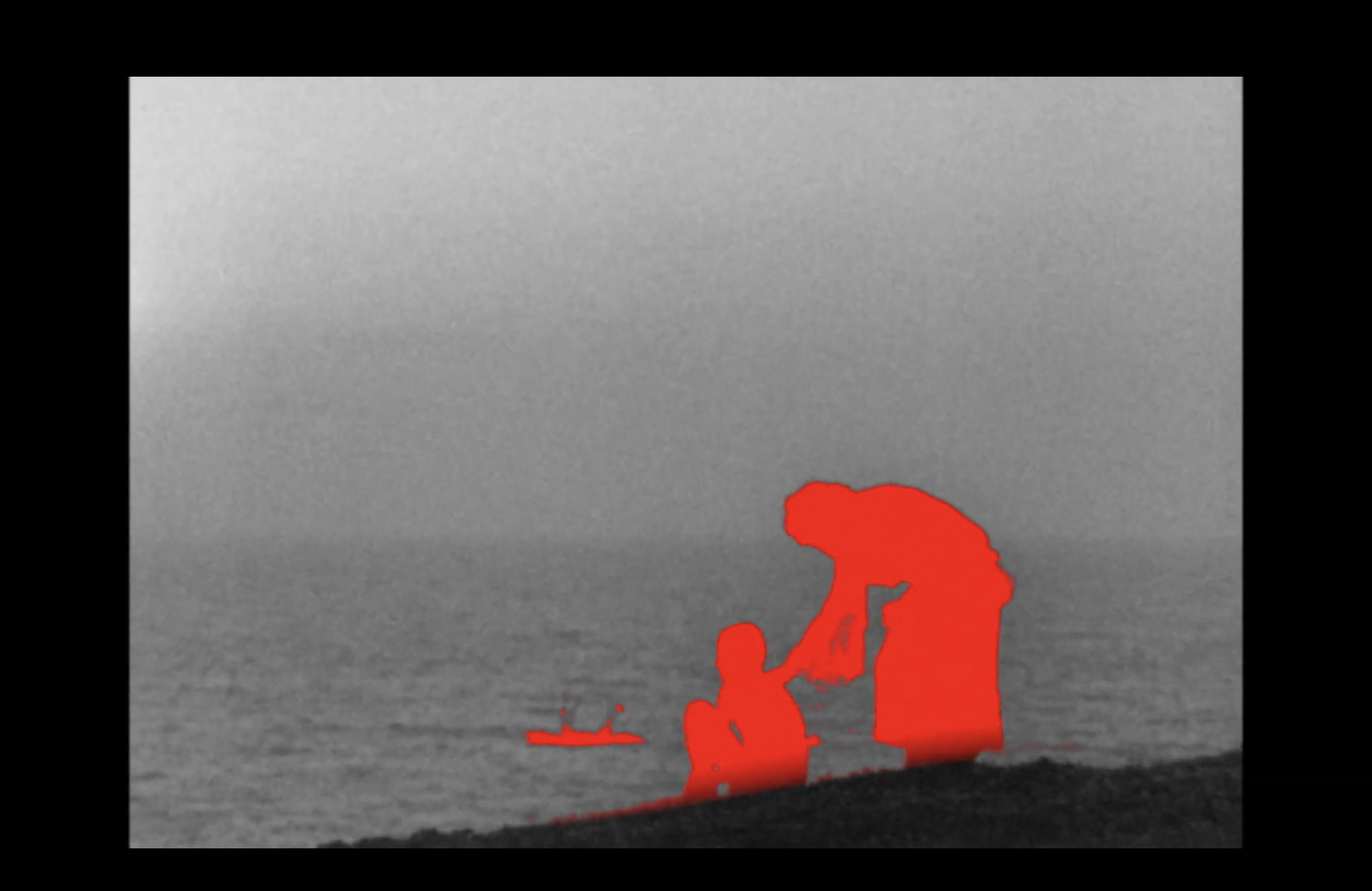
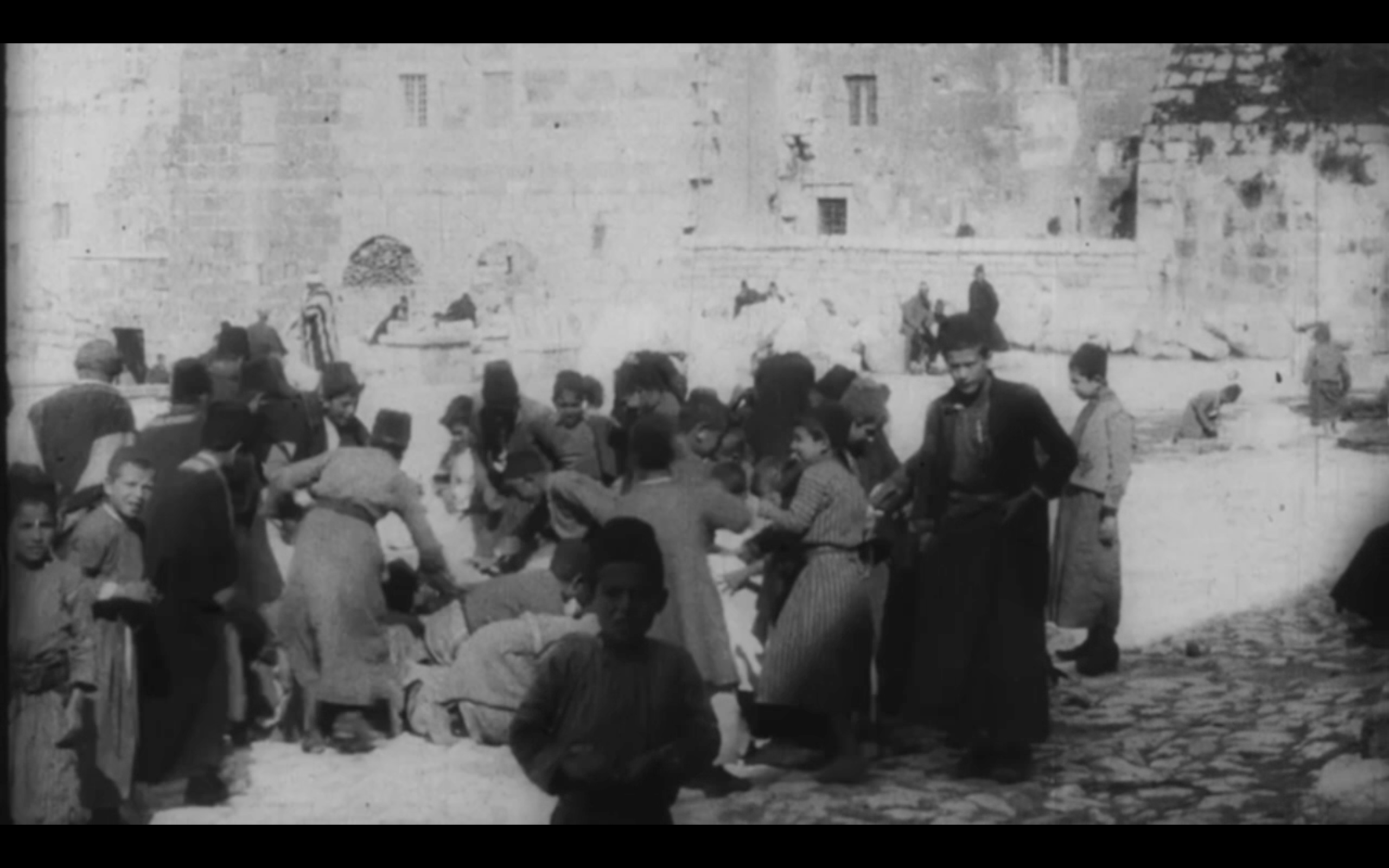
K.: I wanted to tell the story of where my mother came from and of the neighborhood where her family came from. It was a fisherman’s neighborhood, now part of Tel Aviv. By chance, I discovered that some Israeli films from the 60s had captured this place before it was completely destroyed. And that’s how I came up with the idea of making a film. Initially, I just wanted to collect images of the backgrounds from those Israeli films. But then, I found that there are many films shot in Jaffa in the ‘60s, ‘70s and ‘80s. I began a photographic project, taking snapshots of these backgrounds. I would project the films and focus on the details appearing in the background: houses, people and fragments of everyday life. At first, I didn’t intend to make a film, it was just mostly about collecting images. I was so thrilled to see and discover these places in the background of Israeli films.
That led to my decision to make Recollection (2015, 70’), a film about memory and the act of recollecting or remembering. I made it precisely because those places no longer exist physically: they survive only virtually, in images. And, as I mentioned earlier, one project leads to another.
D.: in Recollection and in An Unusual Summer (2020, 80’) you are no longer working with the footage you shot yourself. Especially in Recollection, you did something incredibly powerful politically too. You used these Israeli films shot in Jaffa and you deliberately erased the actors…
K.: I’ve always reworked the images to make them my own. I didn’t just take the archival footage as it is. I reworked these images and, by doing so, I created a different ownership. Altering these images is both an artistic and political act. In a way, by changing them, you liberate them and they become your own images.
D.: This might be the difference between a document and a documentary.
K.: I never think in terms of style or genre, like “Now I’m making a documentary…” . I just try to find the right way to express myself. I don’t set boundaries. I use whatever tools I think are necessary.
For example, in A Fidai film (2024, 78’) I also used some Israeli fiction films scenes, because they helped me express myself and show something. What I’m doing is, in a way, free-form art.
D.: In fact we can say that in A Fidai Film, your most recent work, you express your freedom to the fullest. Can you tell us about the genesis of the film? How did you discover the material?
K.: I’ve been collecting images for a long time, from many different places. During the COVID pandemic, the Israeli Cinema Archives began uploading a large amount of material online, and I’ve been watching these videos from the very beginning. I was particularly interested in what they had on Jaffa and Ramleh, and I started recording images that I found interesting.
Then, by chance, a friend sent me an article about what happened in 1982 during the Israeli invasion of Lebanon, when the Israeli army looted and destroyed the Palestinian Research Center in Beirut. That article sparked the idea of making a film – one where I would sabotage the material coming from Israeli archives. I came up with the title, A Fidai Film, because “Fidayin” refers to the Palestinian fighters who, in the early years, crossed the border and made actions not to harm people but to sabotage the Zionist project, such as planting a bomb in a factory.
In Hebrew, they were called “saboteurs”, a term still used today to describe Palestinian fighters. There is actually a very funny interview with Edward Said where he talks about this word. He recounts an incident from 1982, when the Israeli Army had captured a Palestinian fighter in Beirut. During the interrogation, they asked if he was a saboteur. Thinking to save his own life, he answered: “Yes, I’m a saboteur”. Then the interview took a surreal and absurd turn. They asked him what exactly he did as a saboteur and he answered: “I wake up in the morning and I think about sabotaging things”.
In some way, when I came up with this title, everything fell into place. I began downloading and capturing video materials online with the intention of ‘sabotaging’ the images.
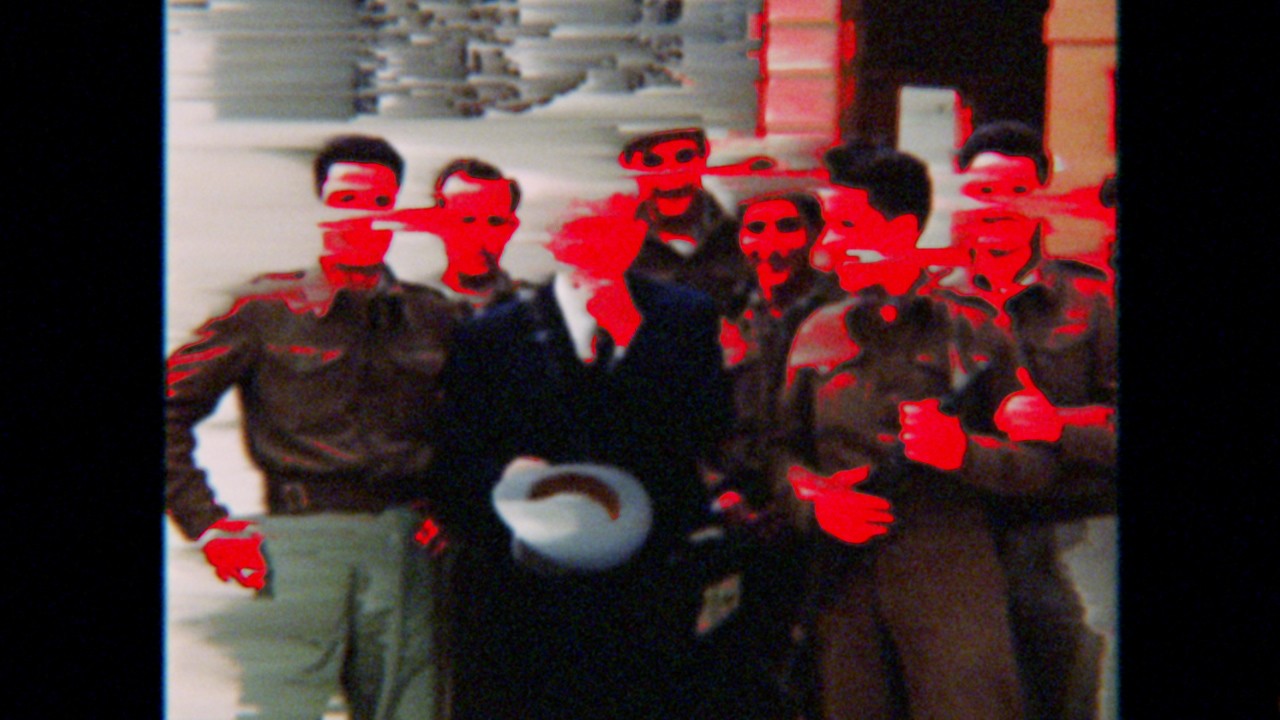
In many of the Israeli films that I captured, both documentary and fiction, Palestinian places and landscapes are used as visual backdrops during the opening and end credits. That was always deeply disturbing to me, and I felt the need to sabotage it, to literally scratch over the names of the titles. That’s how I started. Then I discovered footage taken by the Israeli army from the Palestinian Research Center, and I did the same to what they had written over the images at the beginning of each clip. So, sabotage by sabotage, the film came to life. The process itself became the film and that’s what makes the Fidai project so unusual and interesting.
The starting point is what happened in 1982, but the material comes from many different sources. I sabotage, I intervene, I disrupt, I remove people, I erase texts, I create a new meaning.
D.: I love the fiction scene with the two lovers on the beach. It feels like a French film from the ‘60s. You can almost imagine a Serge Gainsbourg song playing in the background. You can recognize the style, the period, and yet the effect you create feels so uncomfortable, so unheimlich, so unpleasant.
K.: That film actually screened in Cannes, as a short, sometime around 1965.
When I watched it, I couldn’t believe my eyes. The dialog, in all its banality, reflects exactly what they are doing to Palestine.
The man says: “I’m gonna go on and on like this. I can’t stop it”, and the woman replies: “It’s terrible, but we can’t stop it”. The scene, to me, captures the essence of the Zionist project: the recognition of the harm and yet an unwillingness or refusal to stop.
By covering their faces and sabotaging the image, you create this new meaning. Otherwise, it’s just a couple on the beach. Once you put on this mask, they become someone else. The scene becomes something else. It’s no longer about them. It becomes a metaphor for something much larger.
D.: How did you decide to include the text (Letter from Gaza, 1956) by Ghassan Kanafani? (Ghassan Kanafani was a Palestinian journalist, politician, and author. He developed the notion of “resistance literature”. Born in 1936 in Acre, he was assassinated by the Mossad along with his niece on 8th July 1972. A/N)
K.: I felt it was necessary to find references that convey a sense of history through personal stories. Kanafani always wrote about the stories of individuals.
When I was a teenager, my history teacher asked us to record some oral history. I interviewed an elderly neighbour who told me a story that, years later, I found again in Letter from Gaza. He spoke about the possibility of going to California and about a boy who had lost his leg.
It’s very likely that Kanafani had heard a similar story from someone in a refugee camp in Lebanon or in Jordan. I don’t know exactly where. In Letter from Gaza, he recounts a story from 1956, during the first major Israeli military attack on Gaza. He writes about the 13-year-old Nadia who has lost her leg during the attack.
Reading that text today, it becomes clear just how long this suffering has been going on. Including Letter from Gaza in the film could be seen as a response to what’s happening today, but it isn’t. I’m talking about 1956. And yet, it is about today, just on a different scale.
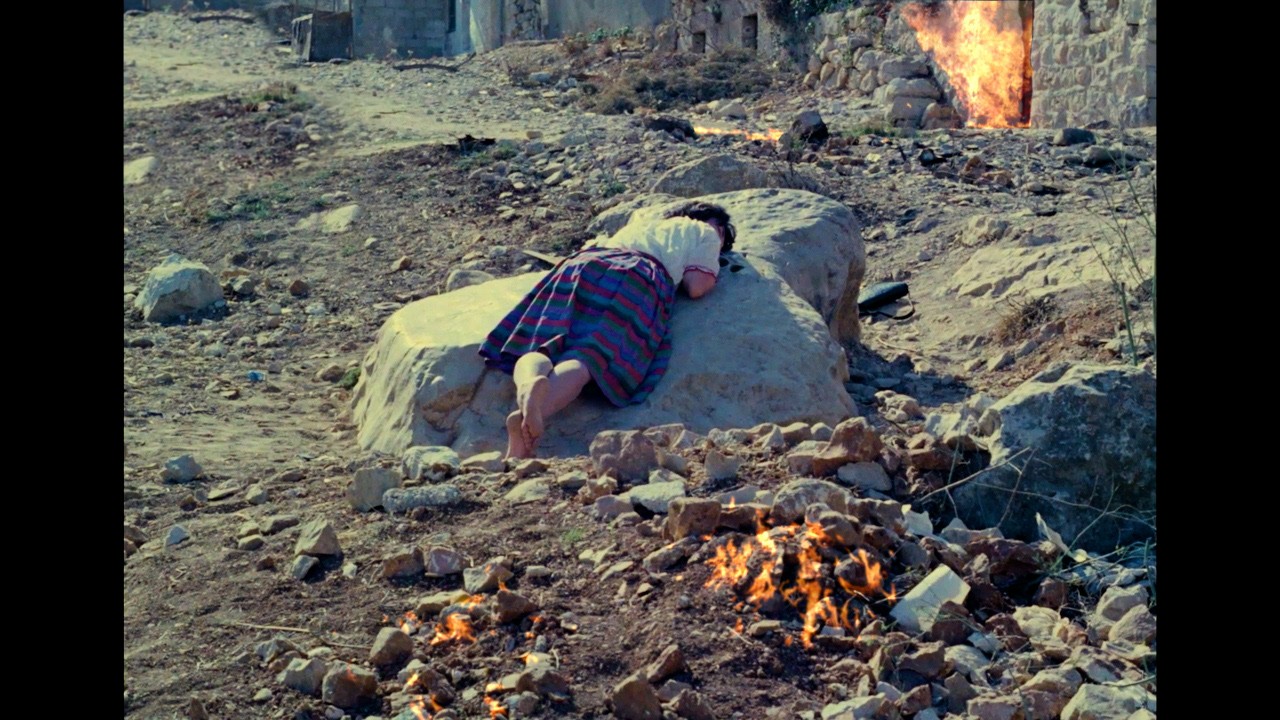
People watching the film now often think it’s a reaction to what happened in October. In reality, the film was finished between July and August 2023 – the final edit even earlier.
But it’s true that the film reveals the background of what is happening today.
D.: That’s probably why those in power always try to destroy archives.
The footage of the destruction of the Palestinian Research Center in 1983 is incredibly powerful and scary.
K.: Yes, those in power always try to erase evidence.
The story of the Center is both symbolic and, frankly, quite surreal. First, they tried to assassinate Anis Sayigh, the director of the Center. They sent him an envelope bomb, which exploded in his face. He nearly died, and lived the rest of his life with severe hearing damage and a constant, painful noise in his ears.
But he survived, and continued his work directing the Center. Later, the Israeli army looted the place. After the army withdrew from Beirut to South Lebanon, some of the Center’s staff came back to rebuild the library. But the army had planted a powerful bomb. Many people were killed, the street was completely destroyed, cars were incinerated.
The goal was clear: to put an end, once and for all, to the efforts of documenting Palestine. To permanently erase the archive. To destroy any attempt at building a historical record, a collective memory.
D.: What are your projects after With Hasan in Gaza? You mentioned working on a fiction film…
K.: Yes. I’ve written the script, but I don’t think I will shoot it in Palestine as I originally planned. I want to find a different way of doing it, to continue this tradition of working with something more virtual.
I’m still figuring it out. There are so many possibilities today with 3D technology: you can create anything. Of course, filming remains important to me, but I think I want to use the material differently. I want to create something that isn’t realistic, even in terms of place or setting. That’s the direction I want to pursue, but first, I want to finish the Gaza film.
D.: What you are saying about the impossibility of shooting in Palestine and the necessity to imagine and to build a virtual reality reminds me of a scene from Film Socialisme by Jean-Luc Godard. When the cruise ship arrives in front of Palestine, we don’t see the land itself.
Instead, we just see a Palestinian postcard with the words “défense d’entrer” (forbidden entry) written across it.
K.: Working with archives is directly tied to this feeling of inaccessibility. In theory, I could go there, but the place is inaccessible because it was destroyed. So I turned to archival films- images captured by others – because these destroyed places continue to exist only through these images.
But the inaccessibility is also deeply psychological. Today, I find it very difficult to imagine myself going back. I can’t picture myself landing there. It’s become such a psychological barrier, and that in itself forces me to rethink how I can make films.
I can’t just make a normal film now. The idea of simply going there and shooting, I can’t imagine myself doing that.
Avoiding that direct return has become a way to protect myself. I know it would be emotionally challenging. So I try to work differently, with distance and with layers. For this fiction film, I’ll probably return to archives again. Over the years, I have collected so much material, thousands of hours, stored in many hard-drives. Some of it I shot myself. I want to find a way to use all this material.
I have to work with limitations. Limitations force you to create something unexpected, which sometimes results in a much more powerful film.
Imagine this: I want to make a fiction film, but I can’t shoot it in the place where the story is set. Maybe, I’ll shoot it in a similar location, not pretending that it is Palestine. Perhaps in Palermo or in Lisbon. There is something of Jaffa in Palermo for sure. I might insert some shots from there and it will be clear that it is Palermo and not Jaffa, but it doesn’t matter to me. Palermo is also part of my history.
Ultimately, I’m speaking about a country that we have lost, a homeland that we have lost and I’m not trying to escape from that loss. Every film I’ve made -and every film I will make-, starts from that condition, from trying to find a way to relate to it.
D.: One last question about the beginning of A Fidai Film. The film opens with a giant red sun: a striking image. It reminds me of the postnuclear films from the 80s…Why did you choose to start the film with such a symbolic image?
K.: This idea came from the feeling that colonialism and the Zionist project want to block out the sun, and of course this image gives the sensation that a disaster is looming. But you can’t cover the sun forever, you can try, as I did in the film, but it won’t work. The sun always comes back, even after a disaster.