


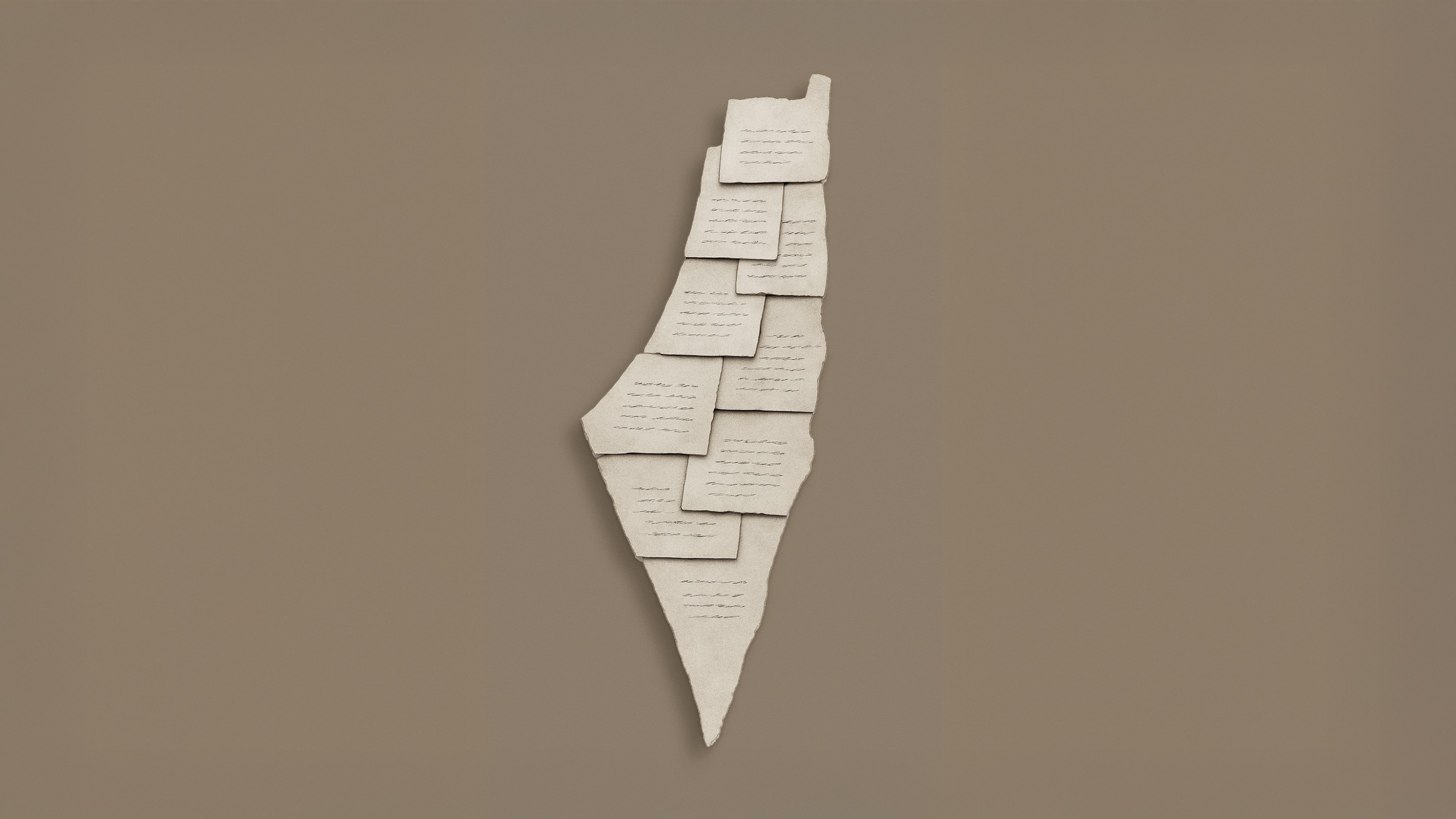
What happens to literature when a people are scattered, silenced, and rendered stateless? Country of Words: A Transnational Atlas for Palestinian Literature is a groundbreaking digital project that explores this very question. Conceived and led by Refqa Abu‑Remaileh, Associate Professor of Arab World Literary Studies at Northwestern University in Qatar, the project maps the literary production of Palestinians across the twentieth century—from the British Mandate period to the pre-Oslo years—through a dynamic, non-linear digital platform. The result is an interactive atlas that traces Palestinian literature across time and space, revealing its transnational connections, fragmented geographies, and powerful acts of cultural resilience.
Developed as part of the European Research Council–funded PalREAD project, the platform brings together archival material, podcasts, network visualizations, and thematic narratives to document a literature created under conditions of exile, occupation, and censorship. It offers a critical intervention against erasure—especially vital in a moment of genocidal violence against Palestinians and the systematic suppression of their voices.
In this interview, Refqa Abu‑Remaileh reflects on the origins and goals of the project, the challenges of building a literary history from fragments, and the urgency of documenting Palestinian cultural production in the face of historical and ongoing destruction. Through her work, she not only tells the story of Palestinian literature but also how we can learn from this rich creative history of defiance, resistance, and survival.
Walid El Houri: How would you describe this massive project? What made you decide to do it, and who do you believe it is for?
Refqa Abu‑Remaileh: One of the main reasons I started this project was to answer my own questions. I was struggling to understand how to read, write about, and make sense of Palestinian literature. There are many anomalies in this field—disconnections, gaps, scattered histories—and I kept hitting a ceiling. Even though the existing work was incredibly important, it felt like we couldn’t see the bigger picture: how everything connects, how the diaspora relates to the homeland, and how we make sense of a history shaped by fragmentation.
At some point, I became disillusioned with the limits of traditional literary analysis. It no longer felt sufficient to analyze texts in isolation. I felt the need for unconventional approaches to make sense of what is, in many ways, an unconventional literature.
I’m also a visual learner, so I wanted to create something that was visual and interactive. Simple facts, like whether Mahmoud Darwish and Ghassan Kanafani ever met were unclear. The canon of Palestinian literature has been reduced to a few major names, but even those figures lived in entirely different cities, cultural spheres, and political realities. We often treat them as though they belonged to a single, unified literary scene—which they didn’t. So, I wanted to build something that would allow us to explore these disconnections and interconnections more clearly.
This is how the idea of an atlas emerged—something that could show the motion of literature across geographies, a “literature in motion.” I realized that the best way to represent that was through a digital platform that allowed for textual, visual, and audio components. It had to be non-linear and participatory—something more democratic, that could reflect the fragmented and scattered nature of Palestinian literary history. I didn’t want to write a conventional, linear literary history.
The digital realm became essential not only for hosting the project but as a conceptual space—a virtual meeting ground for dispersed data and fragmented narratives. It helped me see Palestinian literature as a story of movement, elasticity, and rupture. I didn’t know all of this when I began, but the drive to answer these questions and see the bigger picture is what propelled the project forward.
WH: What defines Palestinian literature and what makes it special or particular? How is it different from other national literatures?
RA: This was one of the biggest challenges I faced—trying to define what is and isn’t part of Palestinian literature. Early on, I decided to adopt an inclusive approach inspired by the spirit of the Palestinian revolution, particularly the Beirut years. Many people I spoke to, including in our podcast interviews, emphasized that Palestinian identity—at least in the context of literature and culture—wasn’t strictly about nationality or ethnicity, but about belonging to a cause.
So, I made a conscious decision to include non-Palestinians in the project—writers, editors, thinkers—anyone who made a major contribution to Palestinian literature, regardless of their background. This wasn’t about gatekeeping based on origin but about contribution and connection. That inclusiveness felt essential to reflecting the spirit of the literature itself.
At the same time, I had to confront a recurring question: Is Palestinian literature really that different from other Arabic literatures? I remember meeting Salma Khadra Jayyusi, an incredibly important but underrecognized Palestinian poet and literary critic, who was already in her 90s when I interviewed her. She looked at me skeptically and said, “Why do you need a separate project for Palestinian literature? It’s no different from Arabic literature. It has the same genres, styles, movements.”
And she was right—on the level of the literary texts themselves, Palestinian literature is very much part of modern Arabic literature. It shares its genres—novels, short stories, poetry, plays—and it’s shaped by the same regional trends and intellectual currents. These writers were writing in, and part of, the broader Arab world.
But what makes Palestinian literature different is the context of its production and circulation. It’s a national literature without a nation-state—a literature that is unhoused, fragmented, scattered across geographies. Its writers, critics, readers, publishers, and archives are not located within a centralized, territorial state. This affects everything: how the literature is written, read, archived, and remembered.
Most national literatures emerge from relatively stable territorial entities. Palestinian literature doesn’t. Its very conditions of existence are shaped by displacement, exile, censorship, imprisonment, and erasure. These are not just background facts; they define the literature. There’s also a kind of latent transnationalism that has always been there, but we’ve tended to overlook it—perhaps because of a desire to normalize Palestinian literature within national literary frameworks.
So, we end up analyzing the canonical figures—Kanafani in Beirut, Emile Habibi in Haifa, Jabra Ibrahim Jabra in Baghdad—as though they were part of a unified literary tradition. But they were living in completely different political and cultural environments, and rarely, if ever, interacting directly. Ignoring that reality means ignoring what actually makes Palestinian literature distinct.
It’s also a literature that has been systematically targeted—through censorship, imprisonment, exile, and erasure—in ways that go beyond what’s typical in other Arab literatures. All of this contributes to its particularity: a decentralized, transnational, and constantly disrupted literary tradition that still manages to cohere around a sense of collective memory and struggle.
WH: Does Palestinian literature need to be in Arabic, or do you consider it a multilingual literature? Which other languages have you encountered and documented?
RA: Yes, Palestinian literature is multilingual. During the research, I encountered material in many languages—Spanish, Portuguese, Russian, German, English, French, among others. However, for the purposes of this project, I made the decision to focus primarily on Arabic-language sources. That wasn’t because the other languages aren’t important—they are—but because the vast majority of literary production, especially in the 20th century, has been in Arabic.
This sometimes frustrates people, but we can’t deny that Arabic is the dominant language of Palestinian literary expression. And the Arabic corpus is enormous—much of it still unexplored. I realized we’ve barely scratched the surface. When people think of literature, they often focus only on the major literary texts, but there’s so much more: criticism, editorials, letters, essays, manifestos, cultural commentary. All of this exists in Arabic, scattered across newspapers, magazines, private archives, and oral histories.
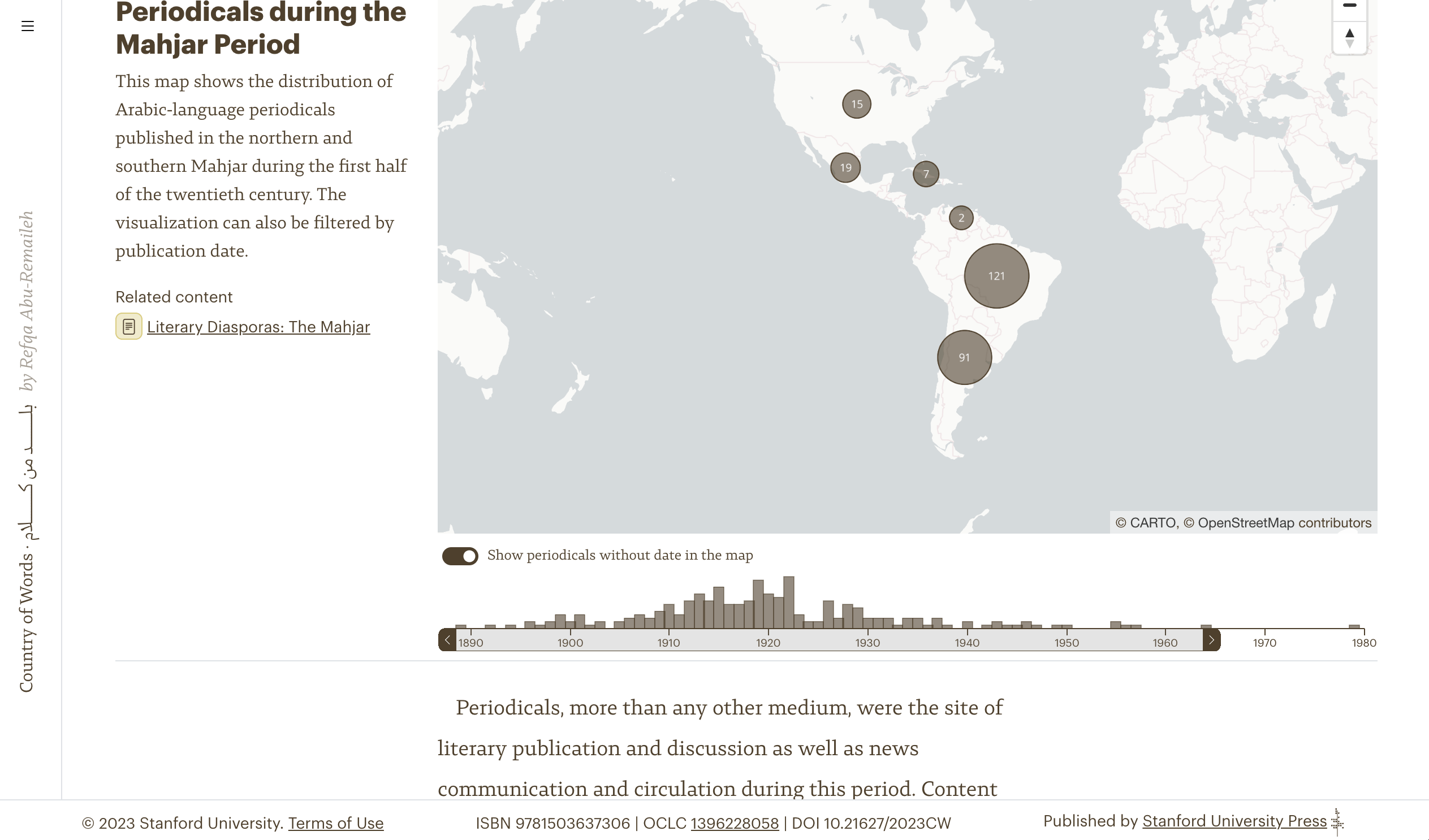
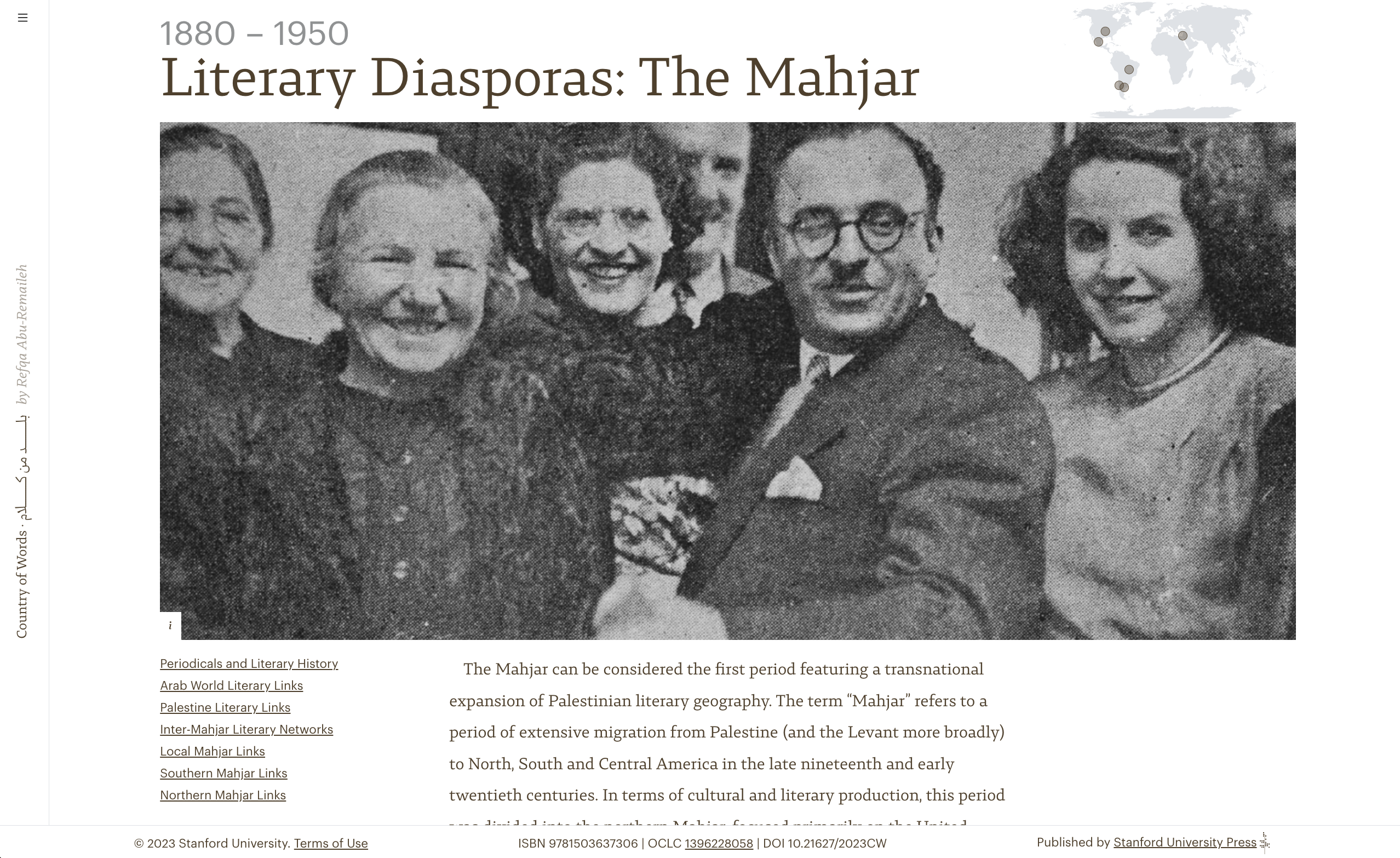
That said, the multilingual dimension is real, especially when we look at the diaspora—Latin America in particular. One of the surprises in my research was discovering just how much Arabic-language publishing was taking place there, starting in the early 20th century. Many of these publications eventually became bilingual—Arabic-Spanish or Arabic-Portuguese—and then fully Spanish or Portuguese. This history is often overshadowed by the emphasis on Arab migration to the United States, but in fact, Latin America has a rich and largely untapped archive of Palestinian and broader Arab cultural production.
I think we’ll see more work emerge around this in the coming years, and I hope others take up that research. My project doesn’t deny the multilingual nature of Palestinian literature—it simply focuses on Arabic because that’s where the core of the historical production is, and because it remains a massive field requiring further excavation.
WH: What is the importance of this type of documentation amid the genocidal destruction of all things Palestinian—communities, history, heritage, places, and more?
RA: This project was actually completed before the current genocide began—it just happened to be published a few days after October 7. At first, I couldn’t make sense of that timing. But slowly, everything started to click into place. The patterns I had traced over nearly a century of literary history—the erasures, the silences, the censorship, the imprisonments, the massacres—they all pointed toward what we’re witnessing now. This eruption of violence didn’t come out of nowhere. It’s a culmination.
Through the project, it became clear to me that there have been two forms of genocide at play: a slow, grinding genocide that has unfolded over decades, and a fast, spectacular one we are now witnessing. But both follow the same logic: erasure of Palestinian presence on the land, culture, memory, and people.
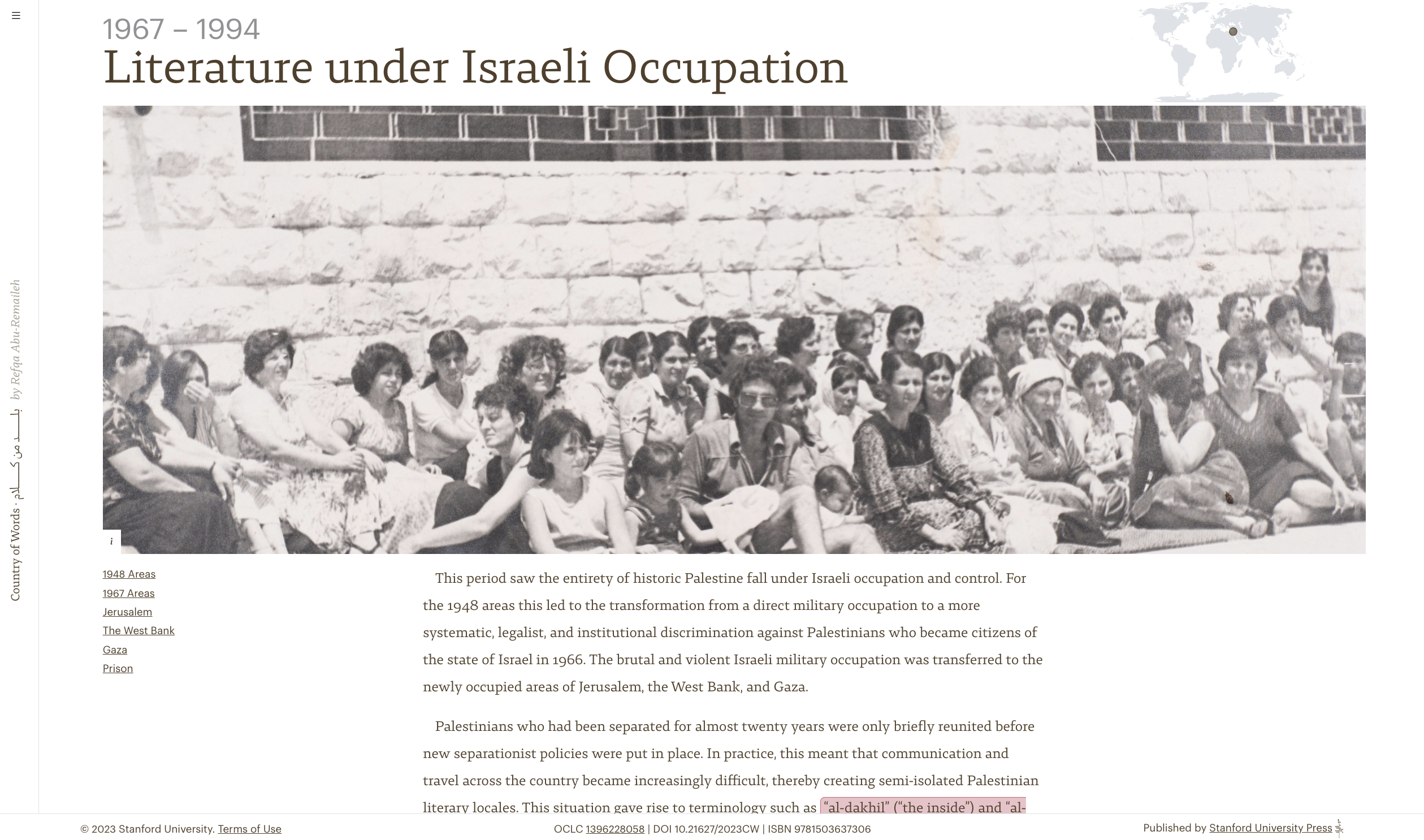
I didn’t expect to find what I found. When you write literary history, you don’t usually think you’ll be documenting prisons, massacres, and mass censorship. But these elements kept appearing in the sources—so often and so forcefully that I couldn’t ignore them. So I began highlighting them as themes in the project. These include imprisonment, censorship, and massacres—tools of suppression that have shaped the conditions of Palestinian literary production for over a century.
The sheer number of writers who were imprisoned, exiled, banned, or silenced is staggering—and unprecedented. These weren’t isolated incidents. They formed a pattern, and this pattern maps directly onto the political project of erasing Palestinian identity and culture.
And yet, even in times of catastrophe, people wrote. One example I highlight is a magazine published in East Jerusalem after 1948, where the editor, Amin Shunnar, proposed a new literary genre: “Adab al-Nakba”—the literature of catastrophe, or the literature of the Nakba. He believed Palestinians could contribute something unique to the Arab literary tradition by reflecting on how to write from the ruins—not just about destruction, but also about survival, hope, and the future.
We need your support to keep publishing content like this.
Keep UntoldMag alive with the price of a coffee
This kind of resilience is threaded through the entire history of Palestinian literature. Despite the attempts to destroy and silence, people kept writing, thinking, and imagining. There are precedents to draw on. There is a legacy of resistance—creative, intellectual, cultural—that didn’t emerge out of nowhere in the present moment. It’s been built over generations. This project is one attempt to document and preserve that legacy—not only for memory, but also as a resource for the present and future.
WH: At a time when there is violent erasure and suppression of Palestinian voices, what can the history of Palestinian literature and literary figures teach us about the present moment?
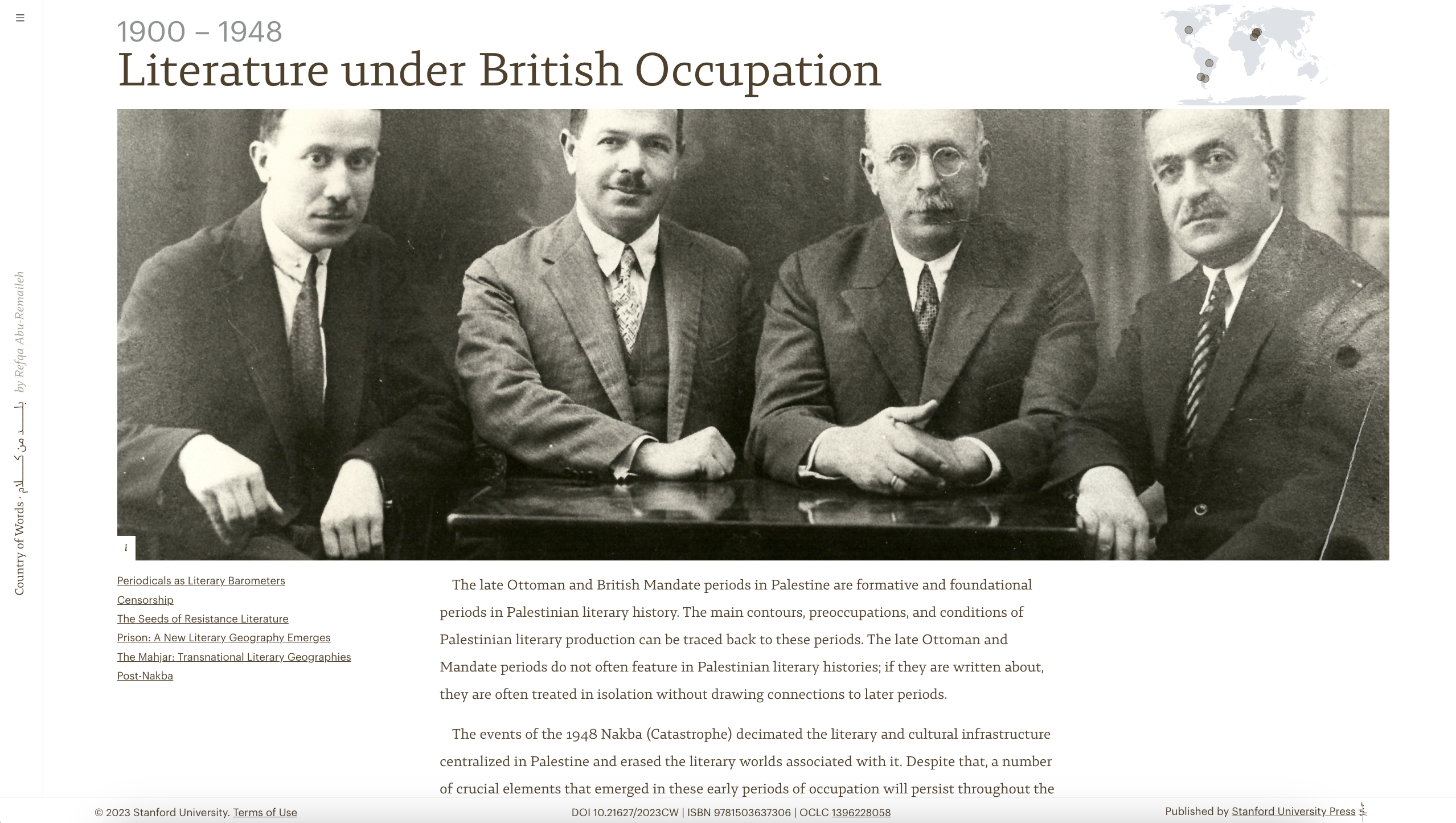
RA: One of the central themes I traced in this project is censorship—not just of Palestinians, but of anyone speaking about Palestine. What surprised me was how early this began. For example, I found Arabic newspapers published in Santiago, Chile, as early as 1920 reporting on events in Palestine, like the Nabi Musa uprising. These papers received Palestinian newspapers from the homeland, but they arrived heavily censored—entire sections blacked out. And the editors in Chile understood this as a systematic attempt to silence Palestinian voices and to decimate their political and cultural leadership.
That was under British colonial rule. What’s striking is how seamlessly the Israeli state inherited these tools—prison, censorship, bans—and expanded them. Palestinians themselves understood this continuity. The poet Tawfiq Zayyad, for example, explicitly said that his struggle inside Israel after 1948 was a direct continuation of the struggle of poets like Ibrahim Touqan under British colonialism. The colonial conditions hadn’t changed—only the rulers had.
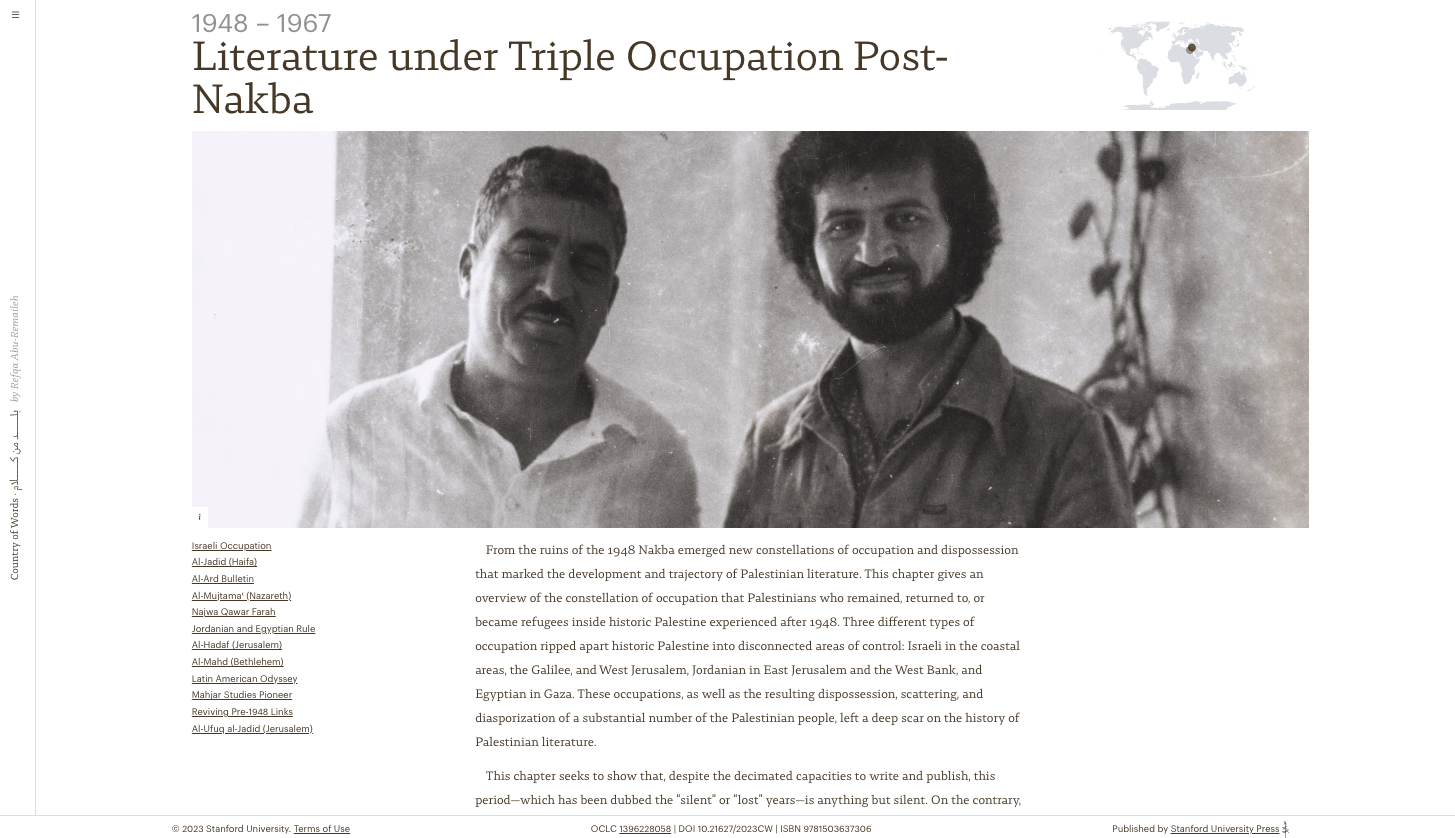
This suppression wasn’t limited to literary production. The writers I researched weren’t just writers—they were also teachers, journalists, organizers, activists. Their work spanned cultural and political spheres, and because of that, they were seen as threats. One powerful example is the Al-Ard movement, an anti-Zionist political group inside Israel after 1948. It was quickly banned, and when its members tried to publish a bulletin, they had to use a legal loophole from the British Mandate period that allowed for one-off publications without a license. They issued a series of underground bulletins, each under a different name, editor, and location—but always with “Al-Ard” in the title. It was a brilliant act of resistance using colonial legal mechanisms against the colonial state.
That example reminds me of what we see today with social media. Palestinian journalists and activists create multiple Instagram or Twitter accounts because once one gets taken down, they open another. This pattern of silencing and persistence goes all the way back to the early 20th century. Palestinians have had to fight media blackouts, censorship, and suppression for generations.
What this history teaches us is that Palestinians have always resisted erasure—and they’ve done so with incredible creativity and resilience. The erasure isn’t new, but neither is the resistance. What’s crucial now is to recover those histories—not just to honor them, but to learn from them. They remind us that we’re not starting from scratch. There is a long archive of creative defiance that can guide us through this moment.
WH: In your project to document this rich literature, what were the biggest challenges? And what were the biggest discoveries?
RA: The challenges were many—legal, logistical, emotional, conceptual. First, I had to accept that this project would never be comprehensive. Palestinian literary history is full of ruptures, silences, and missing pieces. I wasn’t dealing with a cohesive, well-preserved archive; I was working with fragments. That required a shift in mindset. I had to be okay with documenting what I could, knowing it would remain partial, interrupted, and unfinished.
There were also major logistical obstacles—accessing sources across geographies, finding rare materials, dealing with COVID travel restrictions. Much of the archive doesn’t exist in national libraries or formal institutions. It’s in people’s homes—private libraries, boxes in garages, basements, old community centers. You have to look in unexpected places.
As a literary scholar, I wasn’t trained in archival research or oral history. But I had to embrace those methods, because often there were no written records. Oral interviews became essential for filling the gaps—especially for capturing lived experiences and connecting dots that the written archive couldn’t provide.
Then there was the digital side. This was a team-based project, and it couldn’t have been done alone. We worked with researchers across the region—in Gaza, the West Bank, inside Israel, in Cairo, Beirut, Kuwait—and coordinated a small team in Berlin. Creating the project’s database was hugely labor-intensive. There are no pre-existing datasets for Palestinian literature. Everything had to be manually collected, coded, and entered—biographical data, periodical metadata, geographic information, thematic connections.
And because the digital infrastructure is geared toward Latin-script, left-to-right languages, we faced constant hurdles with Arabic—OCR (optical character recognition) is still inaccurate, right-to-left formatting is often buggy, and nothing could be automatically generated. Every node and connection you see in the platform had to be mapped manually in Word docs and Excel sheets.
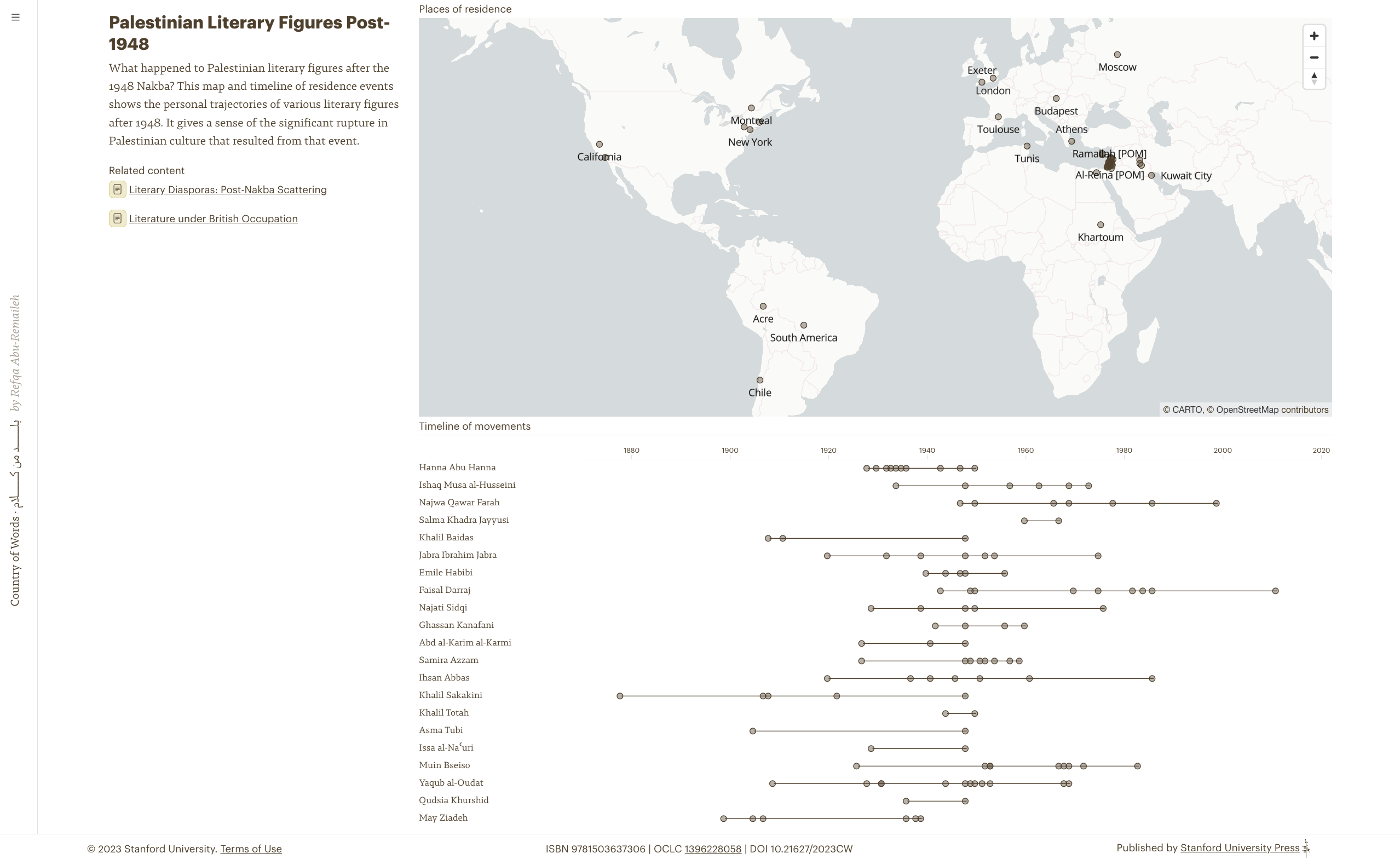
Conceptually, one of the most difficult questions was: how do I represent a fragmented, non-linear story in visual and textual form? Edward Said’s idea of “counterpoint” was key here—multiple narratives happening simultaneously, often in tension with each other. That’s why I created a timeline with overlapping geographies—showing events in the homeland and in the diaspora at the same time. Palestinian literature has never existed outside occupation. Whether in the homeland or abroad, it’s always responding to colonial pressure. Representing that contrapuntal history was a major challenge, but also one of the most meaningful parts of the work.
WH: What journey do you want the reader to take when navigating the site?
RA: This isn’t a conventional book. You don’t have to read it from beginning to end. The idea was to create multiple entry points so that readers—depending on their interests and background—could navigate the project in a non-linear, intuitive way.
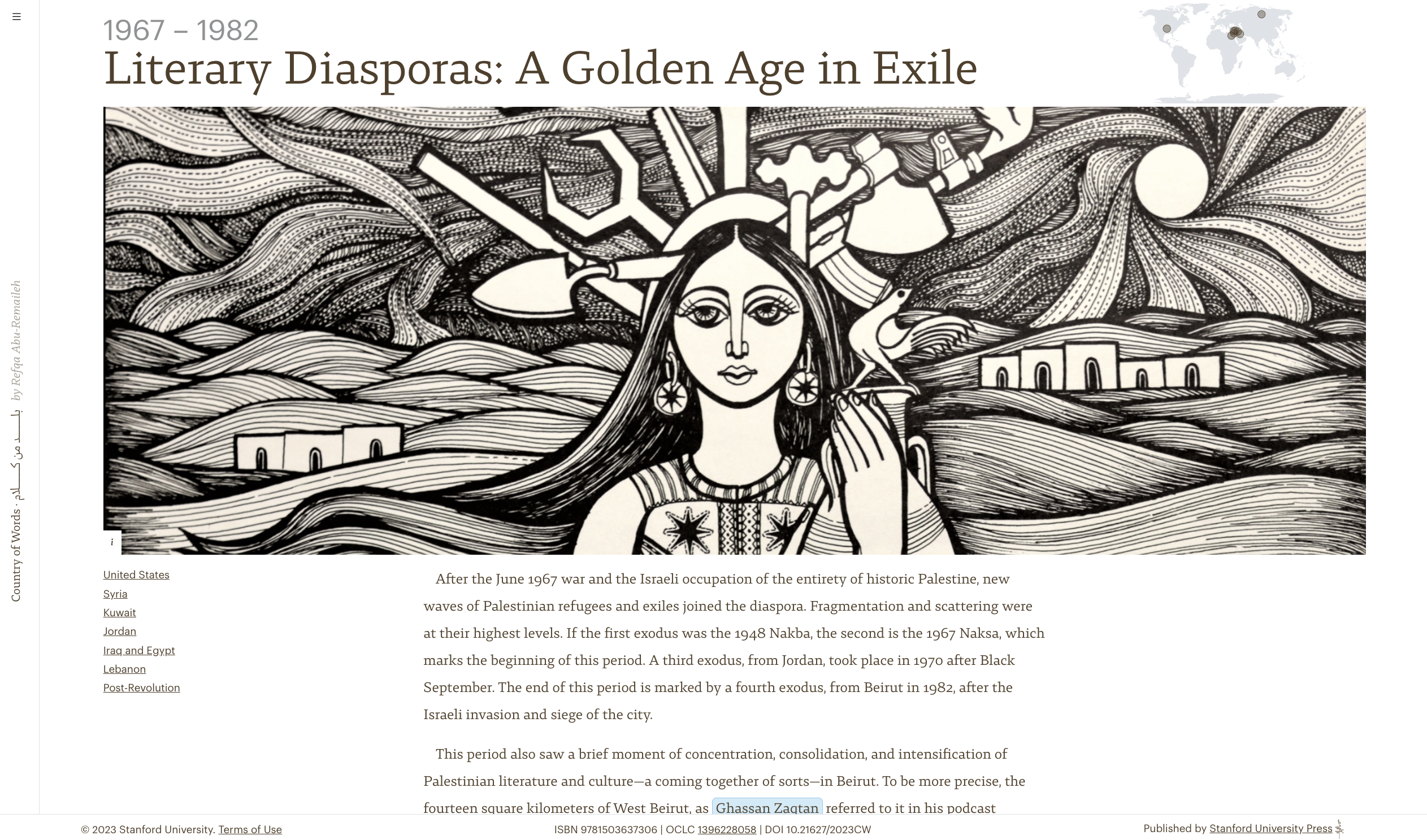
The heart of the project is the timeline, which is also the landing page. It doesn’t follow a single narrative but offers seven overlapping historical periods, each with its own geographic and political context. As you scroll through the timeline, you can literally see the geographies shift—dots move across the map to reflect changing centers of literary production. The idea is to make the fragmentation and movement of Palestinian literature visible.
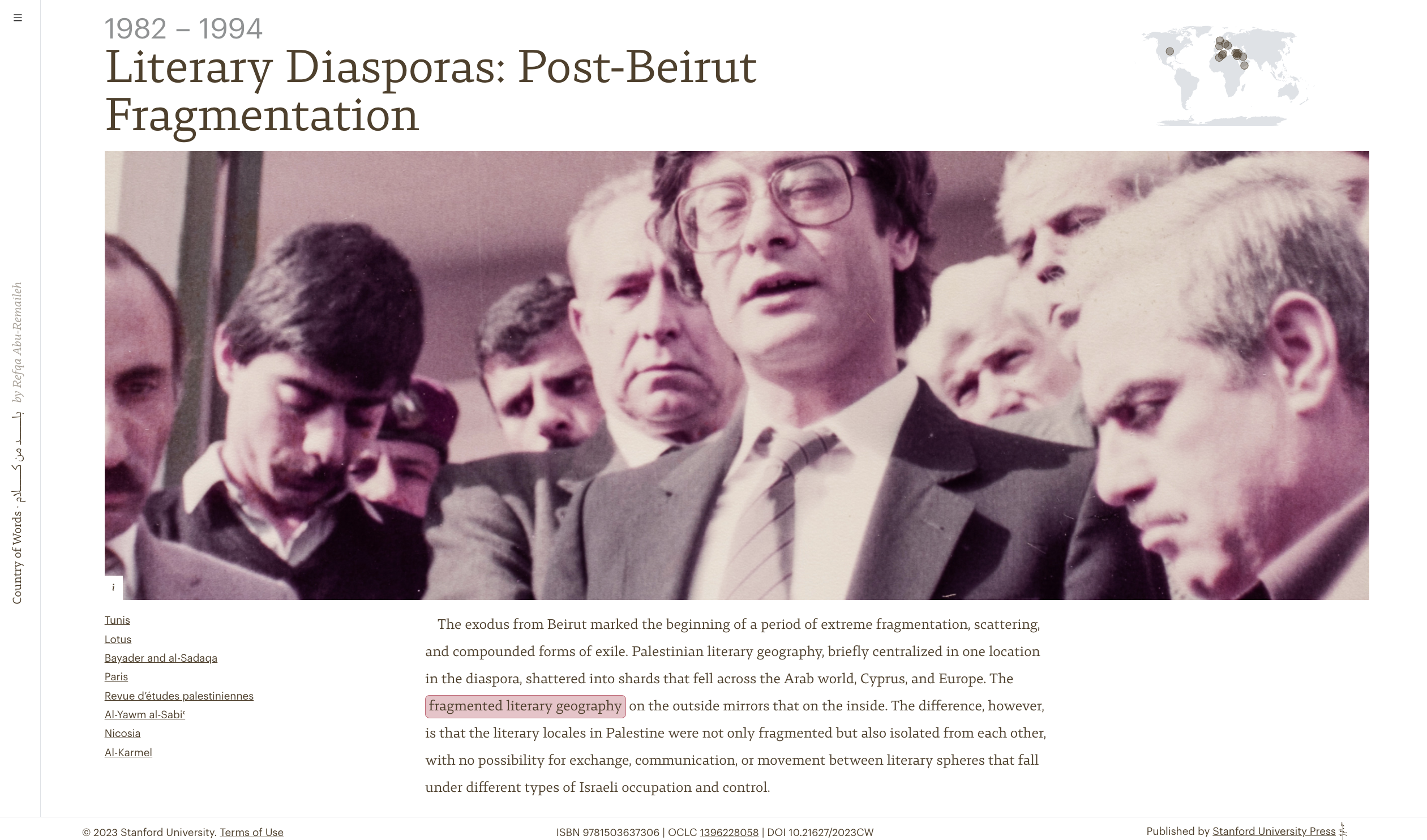
If you click into any period, you’ll find a narrative that includes highlighted elements. These highlights are color-coded: blue for literary figures, green for periodicals, and red for themes like censorship or exile. There are 94 highlighted figures, 35 periodicals, and 12 themes, all cross-referenced and pre-mapped to show how they connect.
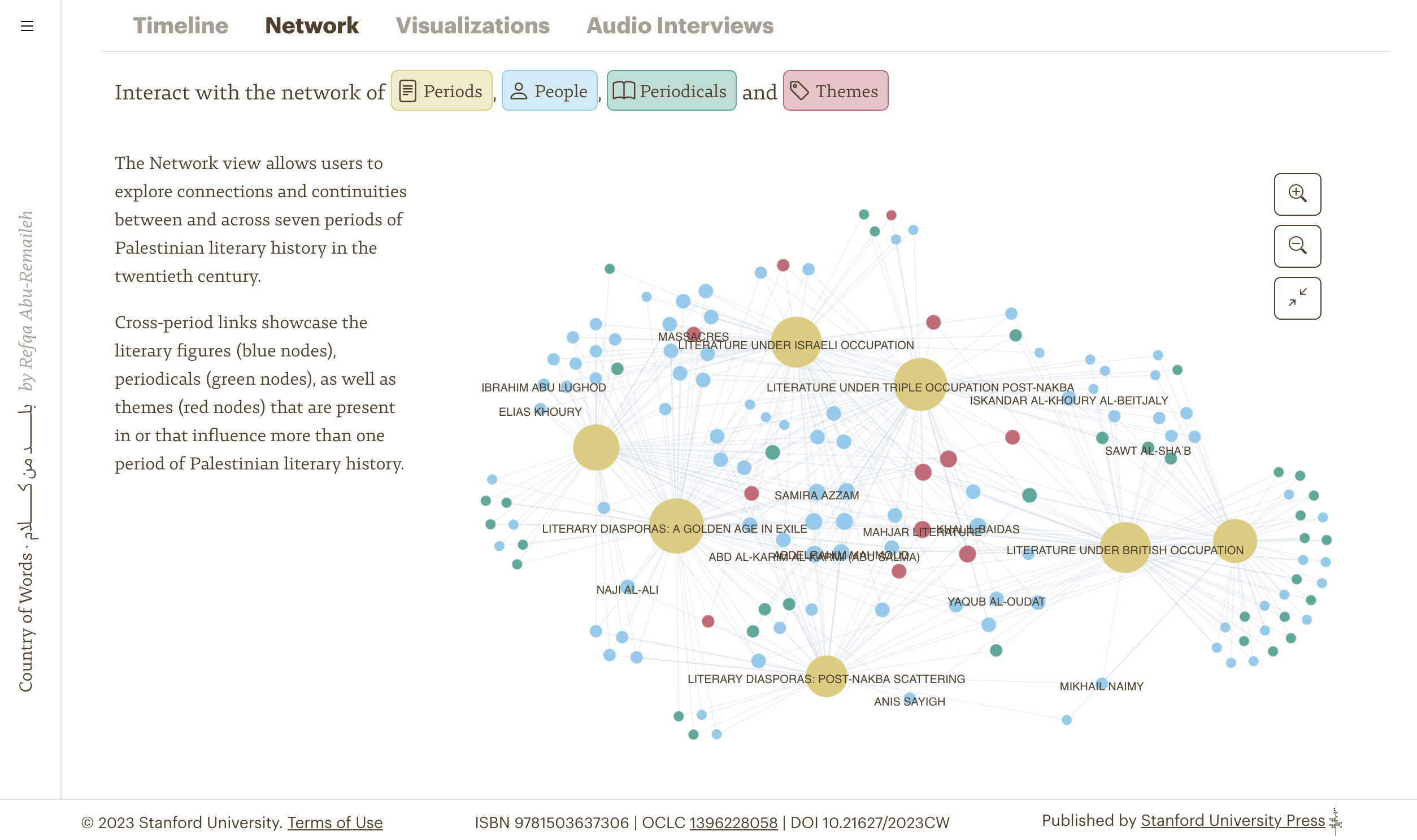
From there, readers can jump to the network view—a meta-perspective that shows the relationships between periods, people, periodicals, and themes across different periods. This was especially helpful for me while writing. I’m a visual thinker, and I often needed to draw connections by hand just to make sense of the data. The network view automates that, allowing readers to hover over nodes, follow links, and see unexpected connections emerge.
There’s also a visualization gallery, which serves as a standalone knowledge source. These graphs and charts are embedded in each chapter but are also available on their own because they contain far more data than I could write about in the text. For instance, someone might discover that a writer based in Tunis was publishing in a periodical in Paris—things I couldn’t always explore in depth, but the data is there for others to pursue.
Finally, we have the audio interviews, which became a podcast. These are also standalone, and they add personal and historical depth to the project. Many of the voices you hear there reflect on periods, people, and publications that are documented in the text or visualizations, but from lived experience.
So, the journey is really up to the reader. You can enter through the timeline, the network, the visualizations, or the audio. You can follow a theme, a writer, a periodical—whatever interests you. The goal was to create an experience that is interactive, non-linear, and generative, where readers can follow their curiosity and find their own path through the story.
WH: What’s next for the project? How do you see it—or wish it—to live on?
RA: The current version of the project is static. That was one of the conditions of publishing with the digital arm of Stanford University Press. I can’t add to or update it, but the upside is that they’ve committed to maintaining the infrastructure over time—keeping the site online, updating it as needed, and ensuring its longevity. That was really important to me. I didn’t want to build something this labor-intensive only for it to disappear once the funding ran out.
That said, I see this project as a foundation for future work—my own and hopefully others’. It was also a way for me to document everything I wished I had time to explore in more depth. I plan to return to many of these threads, starting with the Mahjar period, which is incredibly rich but still under-researched. There are several figures, texts, and publications I want to dive into further. The data I gathered points to so many pathways—Palestine and the Maghreb, Palestine and Latin America, Palestine and Europe—each deserving much more detailed study.
This atlas is also a map for my future research—articles, books, maybe even new collaborations. And I hope it will be the same for others. I wrote the texts in accessible language, without academic jargon, and it’s all open access. That was intentional. I wanted to break through the academic paywalls and make this resource usable for people outside the university—students, educators, cultural workers, or anyone interested in Palestinian literary history.
I’m also developing teaching tools based on the platform. During the project, I didn’t have time to build them, but I’ve started working with collaborators to create digital teaching modules—courses that can be used in schools, universities, or workshops. I’d like to expand that work further, especially with cultural centers and museums, so people can engage with this material outside of academic settings.
Some colleagues are already using the platform in their teaching, which is great to hear. I want to do the same with my students. The idea is for this to be more than a static archive—it’s meant to be a living, generative space where people can learn, research, and pursue their own questions. I hope others will take it in directions I haven’t imagined yet.