




As the Israeli army has partially reopened the Rafah crossing on the border with Egypt, very limited numbers of people are allowed to exit or enter at a time when Palestinian civilians in Gaza need this lifeline more than ever.
One of the latest victims of deliberate delays was seven-year-old Anwar Al-Ashi, who died on 4 February 2026 in his family’s tent due to an acute kidney infection.
Months before, on 18 September 2025, little Jana Ayyad also died awaiting evacuation. Having suffered severe malnutrition, she became a symbol of the starvation that is decimating Palestinian civilians in Gaza. “Jana was supposed to be evacuated outside of the strip a year before, but the COGAT prevented it”, according to Patrick Münz, an emergency response leader conducting evacuations in warzones.
COGAT is the Coordination of Government Activities in the Territories, an Israeli unit of the Israeli military responsible for Palestinian civilian affairs and one of the organizations enforcing the illegal siege on Gaza.
Münz says that after receiving messages from colleagues that Jana was still in Gaza, he contacted the WHO. Whilst initially Israel approved the mission, and they were able to get both Jana and her mother out of the North, on the second stage of the journey, they rejected exit permissions for the mother. “It is unthinkable for a 7-year-old child who needs intensive care to be allowed to leave without their caregiver”, Münz explains.
Münz, who spent 7 months on the ground in Gaza, estimates that 30%-40% of people treated in mass casualty events in Gaza were children under 12. Numbers vary, but UNICEF estimates that 64,000 children have been killed or injured in Gaza.
With the healthcare infrastructure decimated, Münz says, even before the March 2025 aid blockade, the conditions were already critical. “I can’t imagine how people managed to get on. There are thousands of cases similar to Jana’s where imminent death is very likely”.
Evacuations Denied
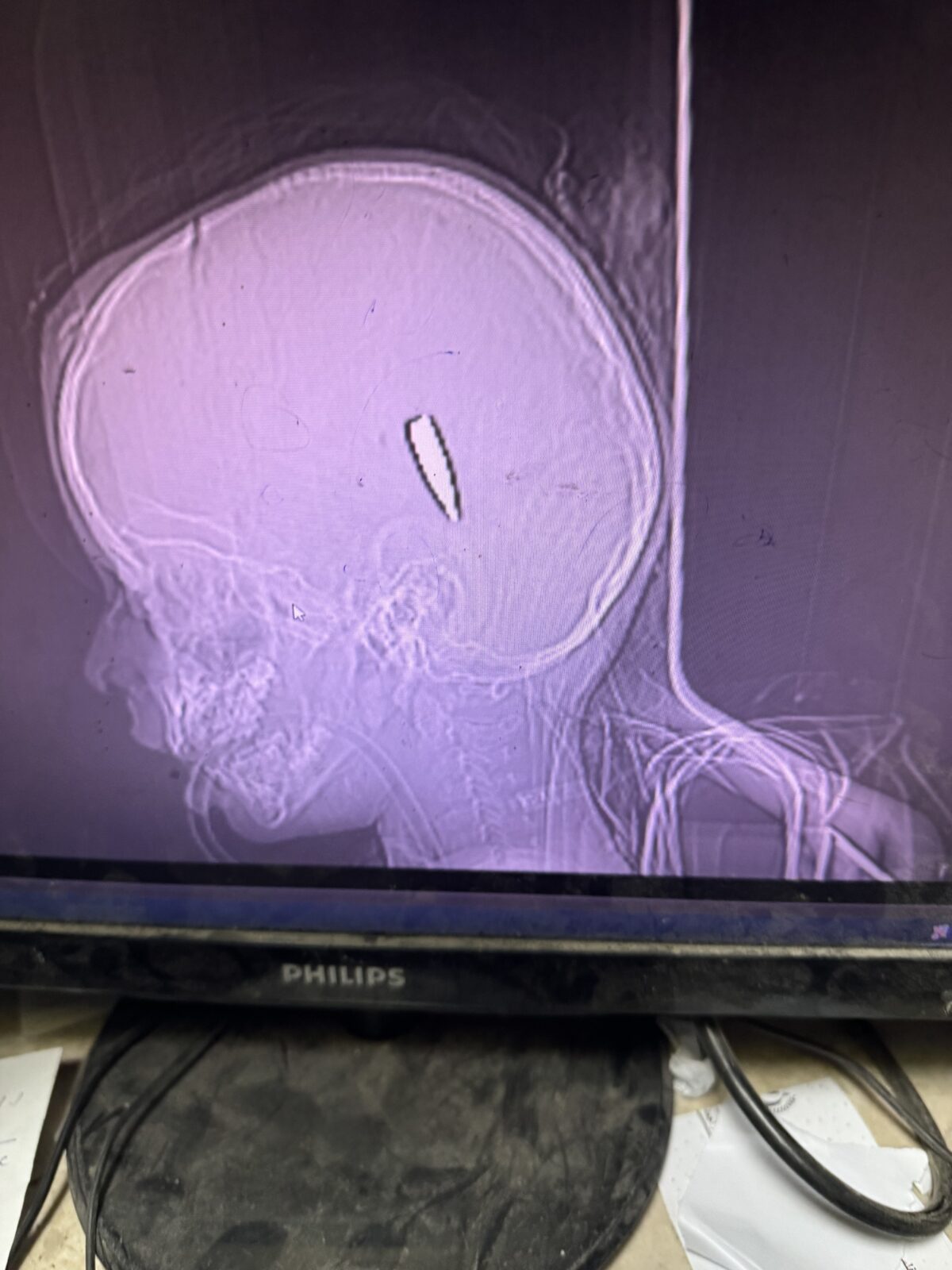
Five-year-old Mira suffered severe injuries from being shot in the head. She requires evacuation to receive specialist medical care. Yet, the case is “almost impossible to move forward”, according to Mimi Syed, an emergency doctor who went to Gaza in December and August of 2024 on humanitarian missions.
“She gets recurring infections as a result of her trauma, and it is difficult and dangerous for her parents to take her to the hospital for treatment, which makes the recovery process harder”, Syed explains. She has been trying to evacuate Mira with little success as no country has been willing to help the family. Her mother has also suffered a traumatic amputation. “The father will definitely not be allowed to exit as an able-bodied male”, Syed adds.
Before its closure in 2024, the Rafah crossing saw a few managing to evacuate to Egypt after paying large sums of money to get “visas”. The conditions under which they managed to reach Egypt could be considered as borderline trafficking, according to Münz, who says that these “evacuations” were handled by shady Egyptian organisations, possibly affiliated with the military.
According to data collected from the WHO, since October 2023, 7,672 patients have been evacuated from Gaza, including 5,332 children. The majority of whom were evacuated between January and March 2025, in the first ceasefire period. However, with the resumption of hostilities between March and September 2025, only 534 patients were let out.
Medical evacuations begin with the evaluation of the patient by doctors at the hospital, who then submit their case to a referral system. Each case is passed through the internal referral committee of the Gaza Ministry of Health. Then the approved patients’ list will be shared with the WHO, and the organisation will be responsible for finding a hosting country and liaising with the Cogat to ultimately allow exit.
Additionally, a network of a few NGOs on the ground and abroad that cooperate with the WHO is tasked with supporting evacuees by assisting in logistics, finding hosts, and advocating for their needs.
Münz explains that most evacuations were taking place from the North to the South of the strip, even though the very few facilities operating in the South were barely equipped, and the living conditions were no better. He also spoke of major delays. “When a mission is approved, we get allocated a date and hand over the data of all the patients and people involved. We get a route by the Israeli army. Yet, they often let us wait for several hours at their checkpoint. The checkpoint has specific opening times, so you have a cut-off time where you need to cancel the mission,” Münz adds.
Münz estimates that 80% – 90% of evacuees were denied by the Israeli army or were first approved and then denied exit. According to the WHO, 900 patients have already died awaiting evacuation as of 2025. By February 2026, this number had climbed to 1,286 people. “They rarely even let children, or other people who are clearly not a threat, out, even though it would be straightforward to coordinate with humanitarians on the ground”, says Münz.
According to the WHO, the top destinations for medical evacuations since 2023 were Egypt, the UAE, Qatar, Turkey, and EU countries. However, the international response has not matched the severity of the situation. Syed explains that a reason delaying life-saving evacuations is that there are not enough countries that would accept patients from Gaza. “More need to step up, especially when it comes to children”.
Cruel Barriers
Despite the international community’s lukewarm response and deliberate visa bans from countries like the US, the main stumbling block is Israeli authorities.
“Nobody is really doing enough, but unnecessarily cruel barriers imposed by Israel is the biggest impediment”, says Syed, explaining that the best and most ethical solution, as also advocated by the WHO, would be to allow patients to evacuate to the West Bank, where they would be able to get treatment by Palestinian doctors, in their own language and country.
In September 2025, several European countries called for Israel to establish a humanitarian corridor between the West Bank and Gaza, stating that they would fund the whole process so patients can receive treatment in East Jerusalem. The call was ignored, as not only did Israel refuse this arrangement, but it has also made plans to deport sick patients back to Gaza.

Humanitarians also struggle to create locally-led structures, and evacuations are still dependent on international organisations, says Münz.
Münz adds that local staff are being intimidated, targeted, and in danger of indefinite detention. Once, whilst accompanying a convoy, he witnessed an incident where a local Palestinian UN driver leading a convoy carrying supplies for a polio vaccination campaign had to stop at a checkpoint and was instructed not to leave the car, because if taken away by the Israeli soldiers, he would be at high risk of being forcibly disappeared. The operation was delayed until the soldiers gave up.
The Palestinian Red Crescent Society (PRCS) had to suspend evacuations in 2024 because its drivers were being constantly attacked. “We tried to take PRCS under our wing because these missions must be locally-led. We started chaperoning them in missions until PRCS was able to lead on its own again. This is a little success, but still difficult”, said Münz.
Coordination between international staff and their local colleagues is challenging. Münz says that he has struggled with deconflicting logistics for local staff. He explains that whilst his movements were all coordinated with Israeli army and the house and vehicles foreign humanitarians used were deconflicted, Palestinian staff are not allowed to use this system, even if they work with international organisations.
Münz explains, “These people are part of our team, and I cannot deconflict their movements because they are Palestinians. This is a blatant double standard”. In practice, it meant that local staff had to take long journeys on foot from their tents to the accommodation of the international staff to move together to their mission.
Evacuations are also extremely difficult due to ongoing massacres. Münz says that convoys were often held because the Israeli army didn’t want them to go through the checkpoint, which Münz describes as a ‘kill zone’ where they would witness the aftermath of their operations.
Münz also witnessed several incidents where people were killed by mortars close to their convoy. “Once, we waited at the holding point, and a man in a wheelchair carried by some other men passed us. Two hours later, we saw that the empty wheelchair had been blown up by a mortar. People like us who have experience in the field and know exactly what mortar holes look like could tell what happened”.
This reality was especially acute in February 2024 when Al Nasser and Al Amal hospitals in Khan Younis were besieged. Before Israel forcibly emptied the hospitals in March 2024, an evacuation was approved for the PRCS staff stuck in the Al-Amal hospital after UN pressure. Münz says that in the first attempt, the WHO-led convoy was followed by tanks and was stopped.

While the convoy was about 800 metres away from the medics, they were taken at gunpoint, and several soldiers and tanks surrounded them. “They told us they cannot let us proceed due to ongoing combat. That was clearly a lie, because I know how battle sounds, even from a great distance. It was completely silent, even though we were so close. So it was very obvious that they just didn’t want to let us go there because we would see the massacre that they had committed”.
Similar incidents happened later on in that month as humanitarians tried to evacuate civilians from Al-Amal. OCHA issued a statement vindicating the account that Israel deliberately impeded the evacuation convoy despite previous agreements. “Despite prior coordination with the Israeli side, the Israeli forces blocked the WHO-led convoy the moment it left the hospital. The Israeli military forced patients and staff out of ambulances and stripped all paramedics of their clothes. Three PRCS paramedics were subsequently detained”, reads the statement.
Foreign aid staff are subjected to censorship and refusal of re-admission if they speak out. Syed says that she was denied on a third medical mission in 2025. No reason was given, but she could speculate that it is because she was vocal about her experiences in Al-Amal and Al-Nasser hospitals. Syed adds that there are higher chances of getting permission to enter if going for the first time.
In her convoy, she and the other doctor, who had also been there, got denied; the nurse who got approved had never been. Münz also confirms that there are high denial rates of humanitarians: “Those who engaged in advocacy or testified to what they saw in Gaza were not allowed in again”.
Rising Death Toll
Since the ceasefire, the death toll continues to rise, and whilst some are anticipating returning to their homes, others with life-threatening conditions are still in need of finding appropriate care elsewhere.
When asked whether, based on their experience, they believe that this is a systematic approach, both Syed and Münz agree that there is evidence to suggest deliberation in the way the Israeli army addresses evacuations. Syed points to government officials in Israel who have made well-documented, corrosive statements. “These are orders coming from the very top, coupled with no accountability for individual commanders”, says Syed.

Münz says that the Israeli army always justifies the refusal or delay of exit with the same standard answer, which is citing security reasons or ongoing military operations. “The fact that evacuations are so hard to carry out despite all our efforts and readiness is clearly a political will”. He adds, “We have situations where children need immediate surgery to stop internal bleeding from shrapnel wounds, while all surgery rooms are full with more acute cases given a higher priority due to survival likelihood. So, we are forced to see a child bleed to death and at the same time have a fully-equipped ambulance that could be fetched, when the next Israeli hospital that could save their life is only 30 minutes away. Approving a mission like this is impossible, and this is by design”.
Evacuations, however, are not a secure option; they are rather a last resort. One of the main fears is whether Palestinians will be able to return from exile. WHO states that “The medical evacuation process takes place with the understanding by all parties and authorities that they can return to the Gaza Strip upon completion of their medical treatment. This is clearly stated in the official consent form, which patients sign”. However, for those who left in different ways, for example, through the Rafah border, uncertainty over their future reigns, and with the limited mandate of UNRWA, protracted displacement is a real threat.
Münz also notes that “the Israeli army had terms to allow this process that have nothing to do with any dignity for the people”. They were not allowed to take much with them other than a small backpack and often stripped of valuable possessions such as wedding bands. “It was very obvious for all of us that these people would likely never return”, says Münz.
Evacuations have also been weaponised. It was recently revealed that secret Israeli charter flights quietly transporting Palestinians out of Gaza, often without passengers knowing their destination, are raising fears of forced transfer disguised as humanitarian evacuation.
The number of those needing evacuations is still high. As many as 10,000 people are applying to leave due to deteriorating living conditions. Syed says, “Israel is obviously creating all of these problems. Everyone else is very reluctant to help, and those who suffer are the people in Gaza”.