


On 15 May 2025, I was running near my home in Stockholm in one of its natural reserves. I have adopted this habit to cope with the genocide in Gaza and its mental consequences. The running itself distracts me, but every time I run, I often imagine how peaceful the place where I am running is while bombs are being dropped on Gazans, including my family.
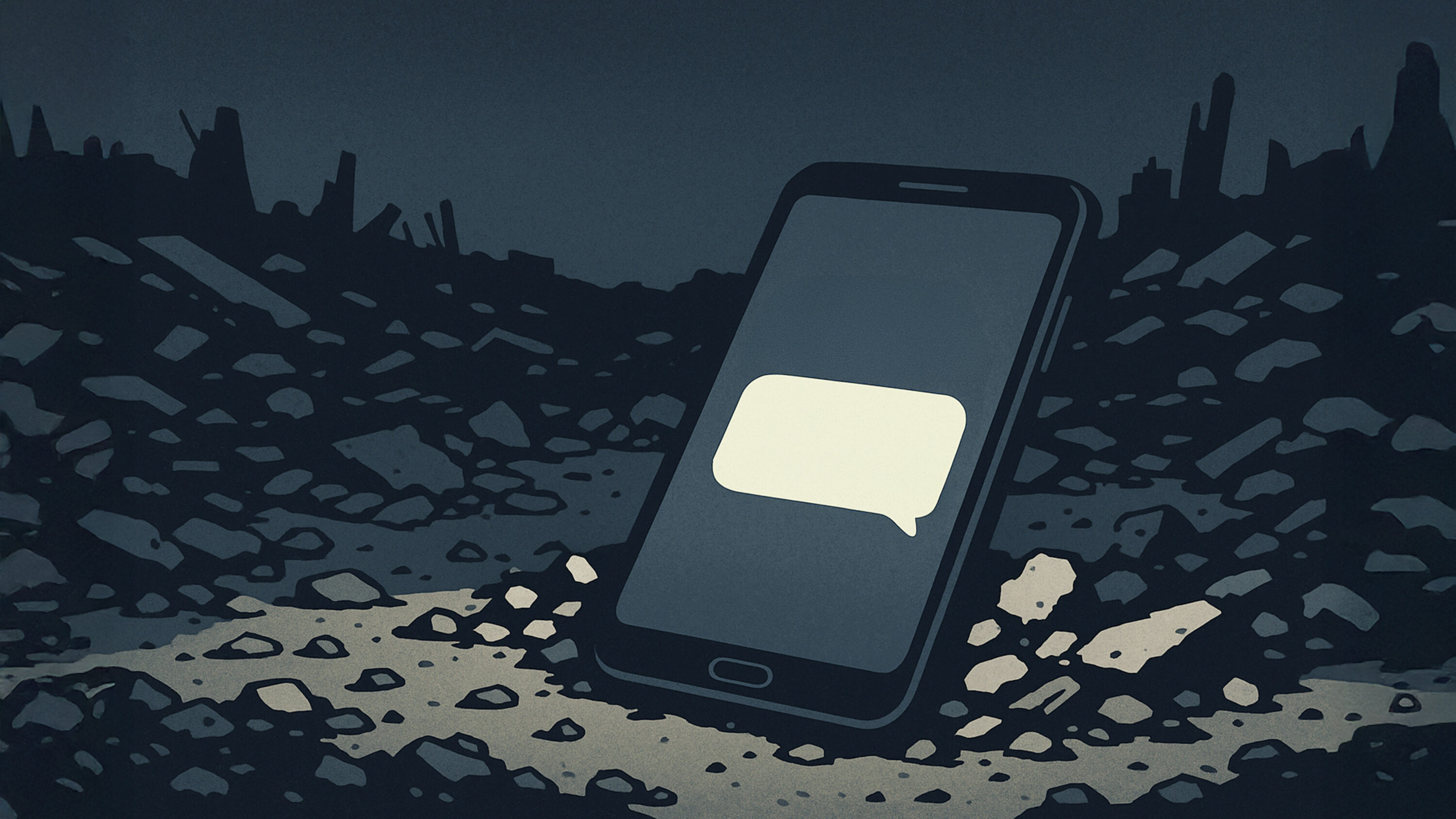
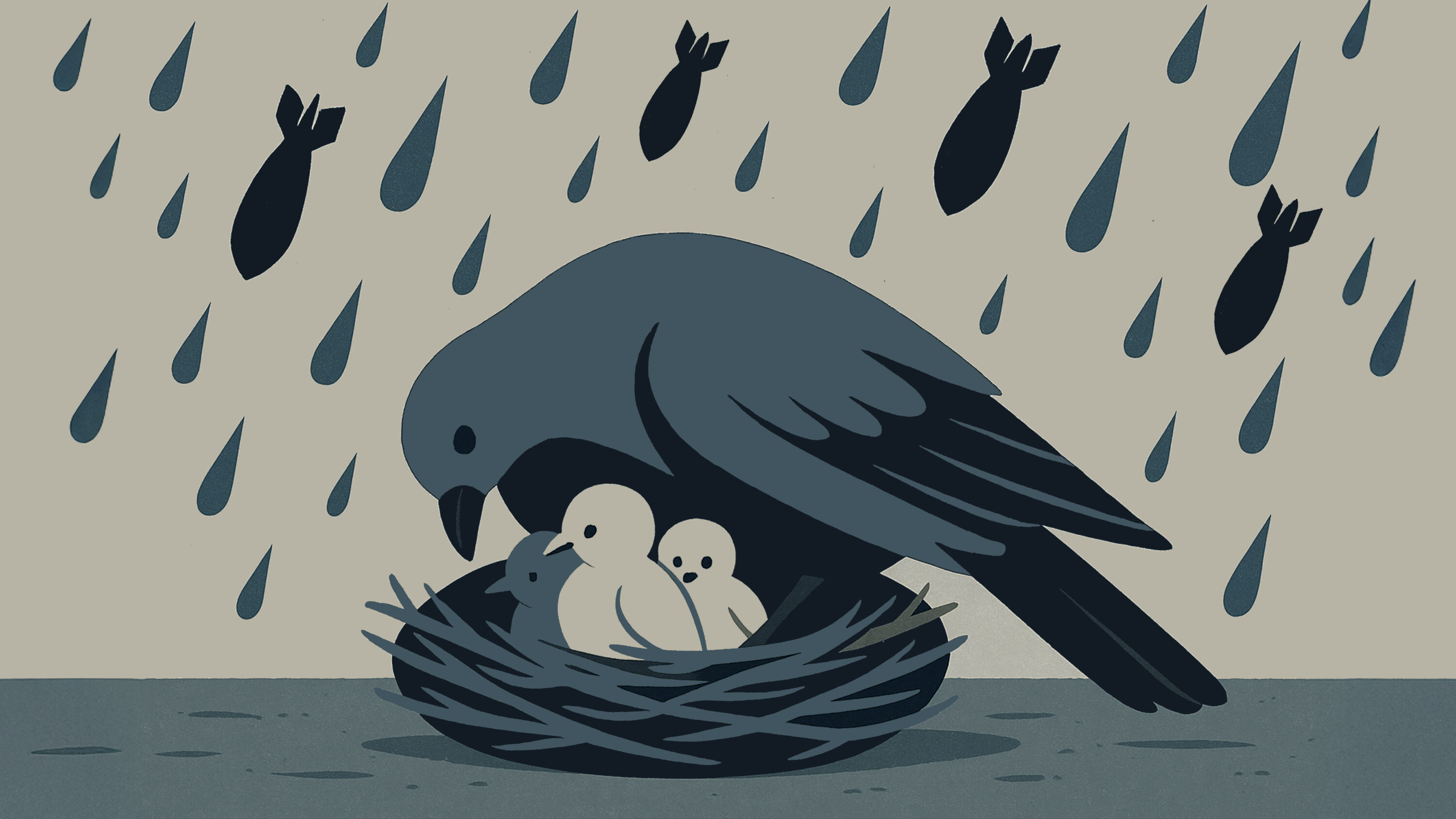
I try not to imagine my nephews or nieces because thinking of them under a barrage of bombs could break me even more. That day I received a WhatsApp message from my niece. It said, “Is my grandmother fine?” She sent it and then seemed to lose her internet connection. For the past two years, I have been doing everything I can to provide for my family in Gaza, hoping to give them a small sense of safety—like a bird sheltering its young in a nest.
I immediately knew something was serious. Why would my niece contact me and not my brother, who lives with my mother? I called her on her mobile and she said, ‘they say that my grandmother is very ill, and my mother has run to her.’ That day in Gaza, dozens were killed by Israeli drones and attacks. When I called my brother, he was crying. I knew that my mother died. I said to him, “God has chosen her. Be strong”. I hung up the phone and burst into cries.
I did not know that my mother was killed by Israeli drones. I imagined my mother had died naturally, having suffered from a lack of medication and malnutrition. She had lost a lot of weight. I continued running towards home, but tears were streaming down my face. My mother was gone. They had killed her.
Countless Loss
This was not the first time I had experienced loss during the genocide in Gaza. The year before my mother was killed, on December 4, 2023, I opened my Facebook account to see a picture of my niece and mourning messages for her. She was planning to apply for her PhD. She was killed in Deir Al Balah while displaced from her home. I felt devastated at that moment.
In summer 2024, I opened my eyes to dozens of messages and missed calls. I thought of the worst. But one message got my attention, “We are fine. Mother is fine”. It was from my brother. It happened that when I closed my eyes around 2am, Israel attacked a place where dozens of my family members live, killing 17 among them, and later, my aunt joined them.
I returned to news channels, and social media reports, it only said my family name. If I was awake, it would have caused me tremendous panic, considering the inability to reach my brother. Reflecting on this, and after twenty months, it seemed that death was just a matter of time, and my family was waiting as if they were standing on the gates of a human slaughterhouse, run by Israel.
How? Why? I lost more than 70 other members of my family in the recent twenty months, just in August and September 2025, I mourned one or two relatives every week. In between the first draft and the final one of this article, Israel killed two relatives. But this was not the first time I had lost loved ones to the Israeli occupation. I had experience of this at ages seven, 12, and 16.
Grieving Home
In December 2023, I learned to grieve not just people but my home and my physical memories. I was sitting at my desk in Stockholm at work when the Israeli propaganda machine shared videos of their attacks on Gaza City, claiming they were annihilating Hamas.
I had been advised to avoid constantly looking at my phone during the first few months. I still did – as I watched the video, my brain stopped working when I saw the Israeli army’s propaganda. There was an attack on the home where my family lived and where I grew up in the Shejaiya area. This place was filled with memories of my childhood. I ran in that street bare feet, I chased goats there, and there I sat with my father and walked along that street for years.
In the video, soldiers were running, shooting, and attacking our home. It was a shocking moment. I continued working that day, but I was devastated and lost concentration. Since the start of the Gaza genocide, I occasionally see friends being mourned and family members being announced dead. Every time, it feels more devastating, and it only makes me fear loss more.
Loss and trauma at the hands of Israel is part of being a Gazan. From the moment I took my first steps until my school years and then years later, I was a small, impressionable child caught in a society overwhelmed by soldiers, guns, pervasive fear, violence, and confusion. This reality was ingrained in me, as integral as my own skin, tightly woven into the very fabric of my existence and not easily shed even once I left Gaza and moved to another country.
Each day as a child, the sight of military jeeps in Gaza became intertwined with my childhood fantasies. They were so entrenched in our lives that we began to name these intruding vehicles of occupation after animals, drawing inspiration from their strange shapes and distinctive sounds. There was for example the cockroach for its noisy sound and its shape.
From a young age, I was familiar with not just violence, but death. I encountered it more closely than most. In 2000, an Israeli sniper shot a rubber bullet toward my head, and fortunately, it narrowly missed my right eye. If it had gone half a centimetre lower, I might have been dead or at least disabled, losing vision in one eye.
My life could have been extremely different. Our relative was assassinated during the First Intifada, and I cried for him, for the first time mourning someone’s death. My classmates were killed in the Second Intifada. I walked behind and carried their coffins. Since I left Gaza in 2007, I stopped counting how many of my classmates and childhood friends had been killed. I counted more than fifteen, and I stopped. Each name I counted felt like a hammer dropping on my chest, pounding it.
Scars of Trauma
Death suddenly became my friend. I thought I knew death, but not until the Gaza genocide started. I started to say that my life after 2007 is just a surplus, and an extra time was given to me.
My life has helped me to understand the meaning of loss amid a genocide, and what it means to grieve. Grief is a response to a specific event, such as the loss of a beloved person, losing a place, a memory, turning one’s thoughts to that person, and reflecting on their life, or thinking about memories and lost places that hold psychological and mental connections. Part of grief is learning to adjust to the loss.
For me, to adjust to my grief, it means that an emptiness arises, and this affects plans, activities, and even future vision. It can be a moment of refiguring one’s life and purpose. When we lose someone, we love and care about, we can lose the anchor that holds the family together. This is particularly the case when losing a father or mother. When we relate to a loved one, we create a bond, a memory, and an identity that surrounds them.
I formed an identity around my father as the carer and provider of our family, and that’s why when he died, I had to take over his position sometimes to check on and care about my siblings, before and after the genocide.
As the time passed, I thought about my niece, mother, aunt, relatives, friends, the city where I was born and grew up, and the memories we shared. I realised I couldn’t cry anymore. It felt like my entire world and my siblings were on the verge of dying, and my heart was frozen and crushed, yet I couldn’t find the power or time to weep. I just had to keep going with my life, because my first thoughts are that others are relying on me.
Even before the genocide, I had tried to be strong, knowing that as someone who had lost so much, I couldn’t afford to be weak or surrender. But this time was different – one memory after another had been destroyed, and there were no tears to be found. My eyes were dry, and I’d never felt my tears so dry.
When my mother passed away, I felt completely isolated. She was the one who would always check in on me, or so I thought. I wondered why I didn’t cry more for her, why I could hear my heart crying and my soul being crushed but I couldn’t seem to break down. Some might argue that it was because I grew up in a society that discouraged men from crying and encouraged women to weep. But I saw my father crying for his mother, and I saw many men, since I was a child, crying for their siblings and loved ones who were killed by Israel, just as I cried and wept alongside them as a child. Yet now, for my mother I couldn’t cry.
Everyone I’ve lost carried the scars of the trauma Israel has inflicted on them and on all Gazans. My father died in 2019 and I was not able to bid him farewell after 13 years in exile. My mother was murdered in the Gaza genocide. They were in their seventies, but their absence was sudden and unexpected. Our separation was inhumane and painful.
Beyond Stages
As Palestinians, we’ve known from a young age that life and death are not in our hands, but in the hands of the Israeli occupation. They can kill us, starve us, torture us, or let us live in inhumane conditions. We can do little to object. I remember my parents would say to us when we were in our forties, “There aren’t as many years left as many as we’ve already lived.” Or “When we’re gone, take care of your sisters.” The last words of my father when I left him in Gaza were “Make me proud, alive and dead.” Their words were tinged with the reality of living in Gaza where death is part of our life.
Elisabeth Kubler-Ross’s book, Death and Dying, describes five stages of the grieving process: denial, anger, bargaining, depression, and acceptance. These stages are essentially a progression of people’s emotions and may apply to certain cultures or typical death situations.
However, in my experience, and that of the Palestinian people, these stages merge and persist, overwhelming us every hour and minute. Even if they aren’t immediately apparent, they linger in the back of our minds and consciousness. For us, grief is a constant process of piecing together the shattered remnants of our lives and coping with the residual trauma.
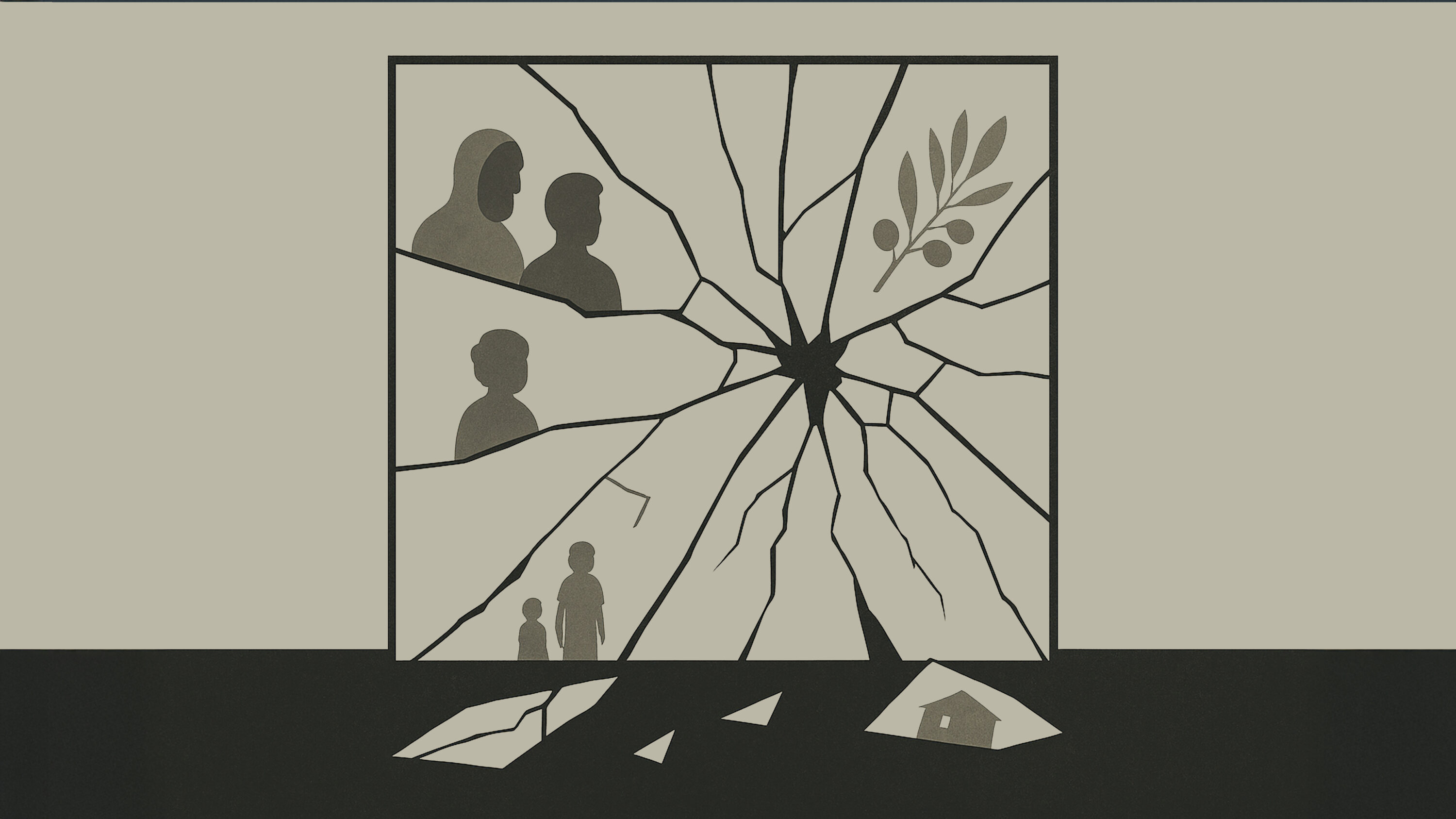
The grief we experience is compounded by multiple losses and griefs over time. It’s like being repeatedly cut by a shard of glass that shatters on our faces each morning, reminding us of the injustices, losses, and ongoing pain, as well as the unpredictability of what the next wave of grief might bring. Usually, grief in Western scholarly work focuses on specific processes and stages, which reflects how Western culture views grief and adapts the concept of the five stages. For Palestinians, it is more complex, and for Gazans, it is even more so, both individually and collectively.
Other studies concerning loss suggest that depression tends to lessen over time, but for me, anxiety, depression, feelings of loss and unsafety remain the same or even increase over time. This is because the conditions are still present and getting worse. The Israeli killing and destruction machine, a genocidal state, is like a ghoul waiting to harm more and more.
Dry Tears
When it comes to sleep, I barely slept more than five hours a day in the last twenty three months of the genocide. For some weeks and for many days, only three hours. However, when I began to sleep more, particularly after my mother was killed, as she was the one I felt I needed presence from, it reflected in my being, and I saw my mother in my dreams. I started seeing other dead people. I saw my father more often and many others whom the Israelis murdered. I would also dream of the war, of my childhood home back in Gaza. I would wake up and run to the internet to seek interpretations of my dreams. Usually, they are helpful, but sometimes they make me overthink and start calling my siblings in Gaza.
Such a dream would leave me reeling for two or three days, until a new one took over and I began to think about new challenges and what’s to come. These dreams make me take on even more responsibility – a social and religious one, where I feel like I must be a fitting legacy for my beloved, lost ones. And that grief would be on a different level altogether.
For me, death has become a barrier to life, not the end of our connection. But this loss isn’t a normal one; it was caused by a coloniser and oppressor, which makes it even harder to accept that someone has shattered part of me.
For Palestinians in general, and Gazans in particular, the uncertainty of life makes grief impossible and complicated. You need space and time to grieve. You need peace. In a genocide, just the thought of surviving day to day, and who might be lost is unbearable and takes up all your mental energy.
In a genocide, strikes are sudden, as perpetrators hunt people down, killing them with joy. When I try to grieve, the uncertainty of keeping the rest of my family safe haunts me, and I put my grief on hold, keeping the shattered pieces inside, leaving scars that continue to wound. However, this uncertainty takes a significant toll on one’s mental state. Research shows that people who struggle with uncertainty are more likely to develop depression, anxiety, and suicidal thoughts.
This explains why, with every attack on Gaza, I start tracking the attack and check in with my siblings who are nearby. I often glance at my phone, checking in every so often. Recent research showed that the Palestinians in Gaza who suffer from genocide suffer from fear of death, depression, and loss of life satisfaction. This illustrates why, during a meeting and a motivational moment at work when a colleague asked everyone who felt proud to stand, I did not feel proud. I wasn’t satisfied with my achievements, even after signing a contract for my childhood memoir.
Art dealers started to offer to buy my work—though I never saw myself as an artist—and I felt I was doing something for the Palestinians, yet none of this made me feel proud. Nothing makes sense when I’ve lost my mother, home, and my loved ones are being destroyed. This ongoing trauma and suffering are relentless.
Gaza Annihilation Traumatic Syndrome
The trauma experienced by Gazans should warrant a new term, ‘Gaza Annihilation Traumatic Syndrome’ (GATS), which would signify the destruction of individuals, memory, identity, and potentially their future. Persistent and complex grief can lead to mental disorders related to traumatic events. In 2018, the World Health Organization included a grief-specific mental disorder, known as prolonged grief disorder (6B42). This condition is characterized by intense longing, persistent preoccupation, and significant emotional distress—such as anxiety, denial, anger, feelings of having lost a part of oneself—and substantial impairment in daily functioning over time.
Unfortunately, mental health concerns and this disorder may become widespread in Gaza, requiring targeted attention. Including 6B42 in GATS could add complexity and highlight the need for effective interventions to address mental health impacts in affected populations.
After my mother’s death, challenges began to make sense. I was strong enough and had more strength to stay focused, but then things changed. Staying focused while working without watching the news became difficult. My psychological therapy was ineffective, and I started waking up around midnight to do things I never thought I would do. For example, I would wake up at three in the morning to paint or make coffee. I started to forget things, and my mind began to feel foggy inside.
Sleeping pills helped, but I felt tired most of the day. Running helped me to regain some sanity, but I occasionally felt sleepy, and my face lost its usual smile. I felt as though I had suddenly aged by 20 years. My perception of faces and the world around me changed.
My mother’s death occurred during the Gaza starvation, which made me look at food differently. I decided to eat only one meal a day as a gesture of solidarity and grief for my siblings in Gaza. I realised that I was unable to present a coherent face to the world, and my smile started to seem fake day after day. At times, I wanted to cry, but my eyes held back tears, while my heart continued to cry beneath my skin.
As someone who started running as a coping mechanism for depression and PTSD long before the ongoing Gaza genocide began, running has become a dangerous habit. Once I start running, I lose track of time, and when I begin walking, I lose track of time. I end up in the same places repeatedly. Of course, it is a way to minimise anxiety, but the scariest part is when news becomes overwhelming, especially when I read that Israel wants to ethnically cleanse Gaza.
I think of my father’s grave in Gaza, my mother before she was killed, and my siblings. It’s frightening to see how my city and loved ones can be erased, with no hope or help in sight. My name has been linked to Gaza; friends and colleagues in many places called me “the Gazan”. When I think of the city, my siblings, I feel like I am going crazy. I need to leave the office or set work aside and go wash my face or walk. The feeling of losing my mind thinking is indescribable.
According to Lisa Shulman, the brain acts as a filter, sensing the threshold of emotions and memories that we cannot handle. However, in a long process of genocide, daily killings, and constant fear and worry, the brain finds it difficult to function normally and work as a filter. Even if my brain may work generally, the trauma affects work performance.
Humans cannot change that, according to Shulman, we are, as humans, at the mercy of the process by which the brain handles emotions and memories, with grief occupying a significant portion of the brain’s bandwidth. This is worse for Gazans as they experience complicated, prolonged unending grief.
Other studies have found that grief alters the brain size and its activities. A study found that individuals experiencing prolonged grief had a smaller left hippocampus, a brain region essential for memory formation. Researchers suggest that grief may indirectly reduce the size of this area due to increased stress. Changes in memory function have been observed following significant losses and during periods of heightened stress. Other research indicates that prolonged severe grief may permanently reduce an individual’s capacity to learn, use language, and manage thoughts. This is thought to occur because grief affects two areas of the brain: the amygdala, which determines significance and manages anxiety, and the paraventricular thalamic nucleus, which influences responses to long-term emotional memories.
I am terrified about the potential development of complicated, prolonged, severe grief, as I call it: GATS, both for myself and for members of the Gazan diaspora who have endured prolonged periods of mourning. Research indicates that individuals who have experienced the loss of loved ones due to violence are at greater risk for complicated grief.
The symptoms overlap with depression, PTSD, and anxiety, and may also involve cognitive decline. Although individuals with complicated grief often appear to manage daily life, they typically alternate between intense mourning and fulfilling routine responsibilities. This has been my experience; I find myself compelled to continue with daily tasks while processing my grief.
Moments of remembrance involving my parents sometimes occur unexpectedly during professional activities such as moderating sessions, writing emails, or attending meetings. This became more frequent following my mother’s killing, evolving from occasional recollections of my father to regular, sometimes hourly, experiences. Despite these challenges, I strive to manage feelings of despair and maintain resilience. I run, I smile, I paint, I write, and I cook. But behind all of this is a weight of mountains on my heart and shoulders.
While reading about grief, as a coping mechanism and experiencing it myself, I have found that grief is a complicated journey, and it can take a long time. According to a study, grief can last up to fifteen years if not forever. One of the symptoms that persists for a long time is lower satisfaction with life.
One day, I may come to accept the fact of loss as shattered, sharp glass that hits me every day but that reminds me that I’m alive and breathing and how lucky I am to carry the legacy of those I’ve lost.
For Palestinians, grief is one-of-a-kind, and nothing resembles it. It should be respected and acknowledged as such.