


My grandmother’s story is one of resilience—braided through sorrow, love, and loud persistence. I could write books about the 90 years teta (grandmother) lived and the experiences she went through, but for now, I choose to write about the intricacies of her hair—a story woven in thick, dark curls.
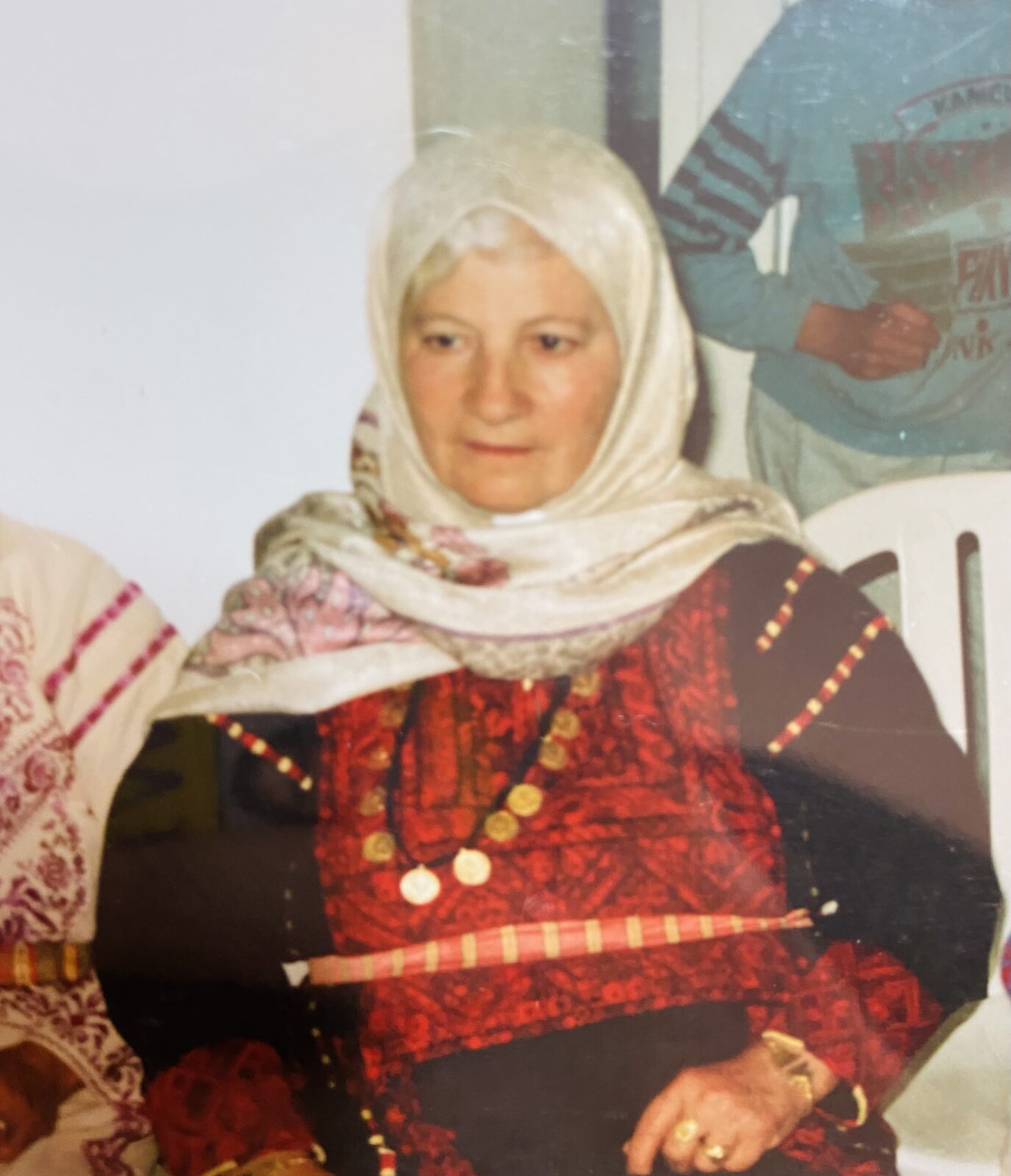
For much of teta’s life, she covered her hair with a headscarf, mostly white in color, beige, but also black after the death of her husband and then son. She preserved it underneath the colorful soft fabric because hair is sacred and needs to be protected.
When I was little, my grandmother’s hair had already begun its transformation—streaked with white, though sometimes, she coaxed it back to brown with henna before she moved to modern dyes, leaving the roots pale and the ends burning copper in the sun.
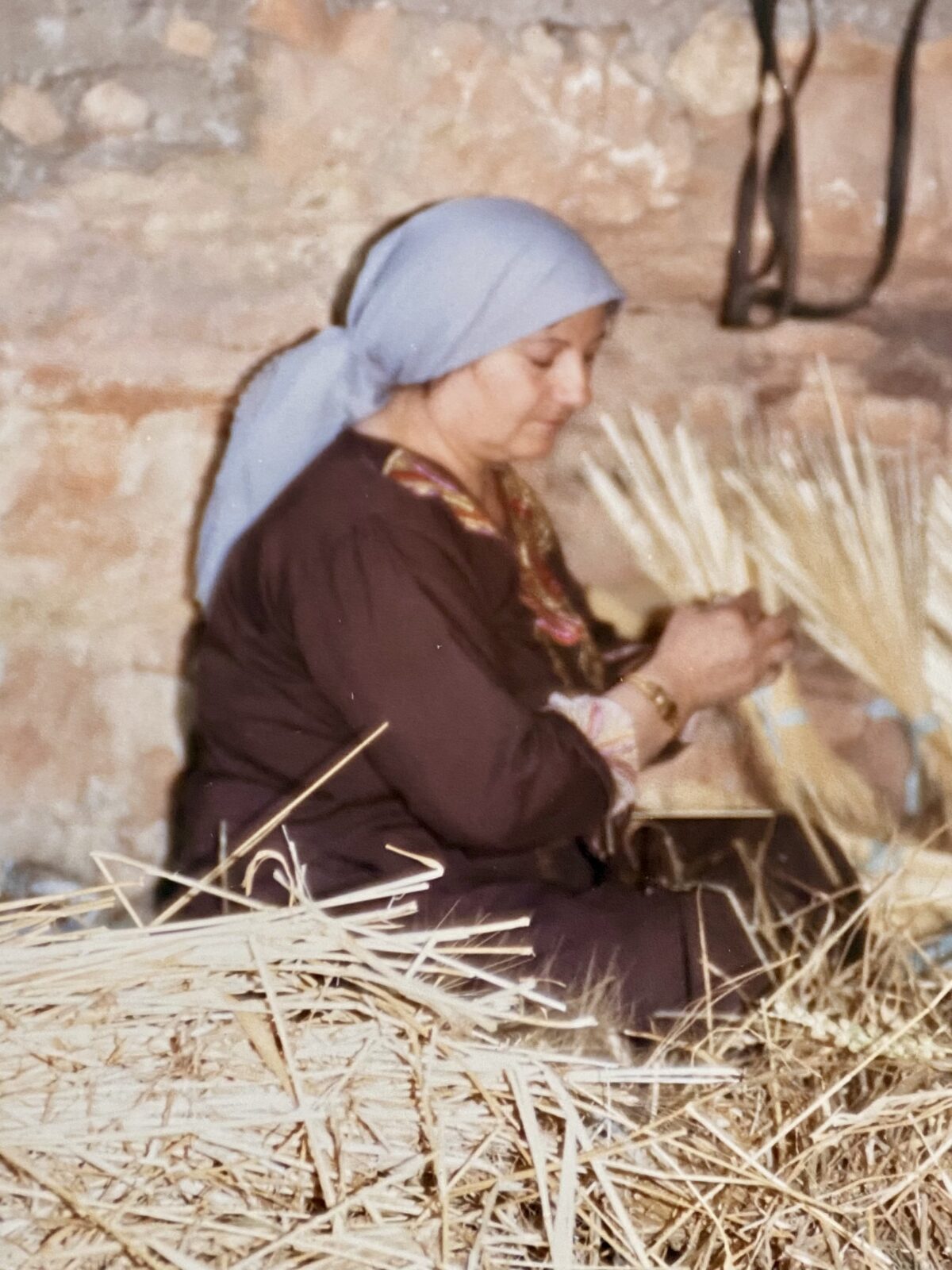
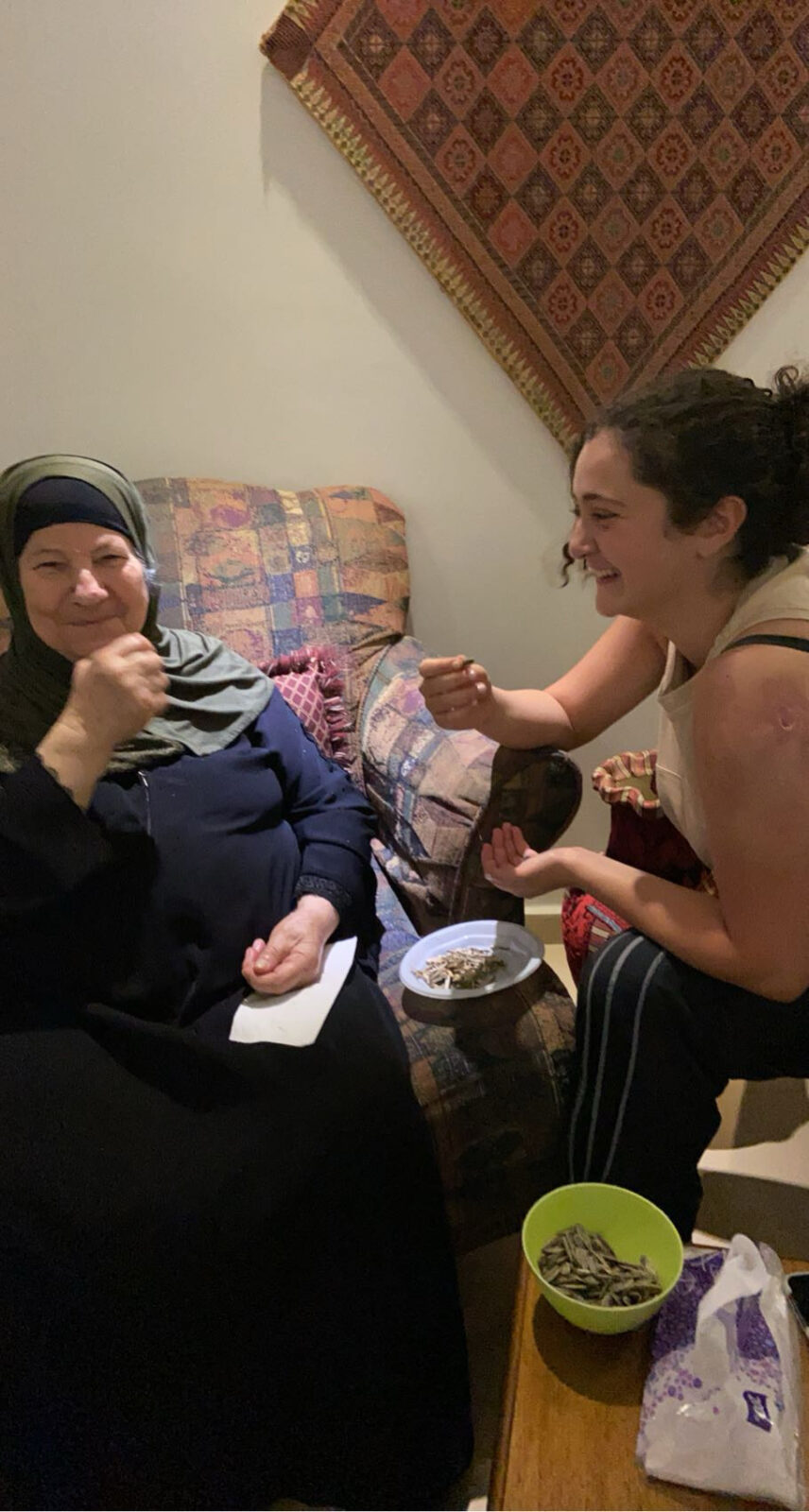
Like many Palestinian women before her, she washed it with olive oil soap, worked warm oil through it with her fingers. And despite the wildness of her hair, it was always soft, almost as soft as the creases in her palms. She braided it back before heading to the land, her hands busy with watering the soil beneath her, planting another pomegranate tree, or plunging them into soapy water, scrubbing clothes clean.
She smelled of home, of earth, of olive trees and time.
Inherited Threads
My mother, aunts, and older cousins inherited traces of her stubborn hair, echoes of its texture, but never quite the same. There was always something missing, something altered—until me. I believe I was her 18th grandchild, the first she wanted named after her. But it didn’t happen. Her name, Sadika, was deemed too heavy, too old-fashioned, and was set aside by my sister.
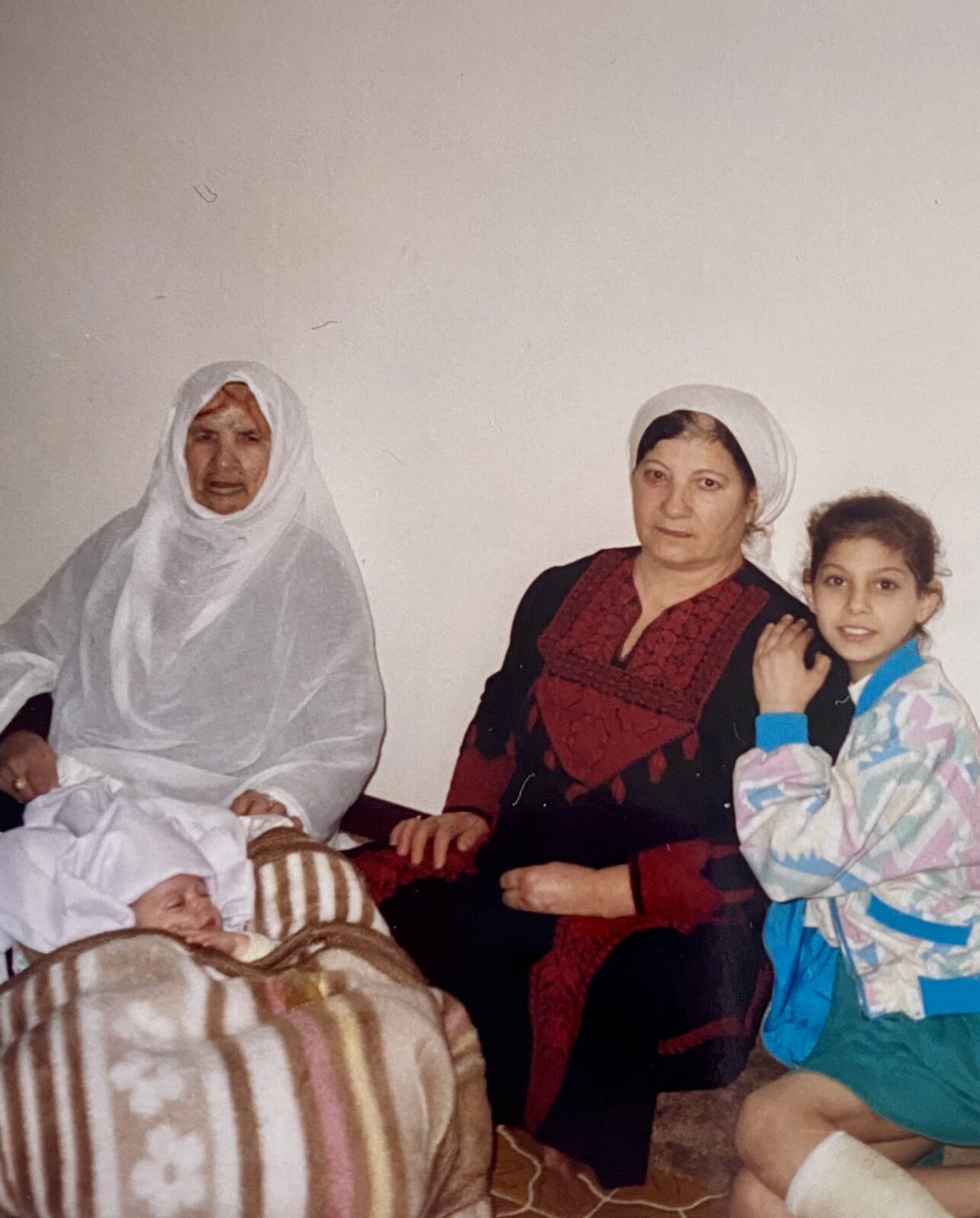
Yet she lived on in me—in my despise of tomatoes, in my grumpiness, and indeed, in my curls. In the way I carried them, untamed and bold. A crown I had to learn to control, but never to diminish.
The knowledge of tending to hair was passed down, from my grandmother to my mother, and from my mother to me—an act of love, nourishment, and quiet resilience. My mother carried the ritual forward—scrubbing my scalp with steady hands, cultivating strength and growth. After washing, she worked olive oil into my scalp with tenderness and patience. As she braided my hair each morning before school, I felt the comfort and power of womanhood flowing through her touch.
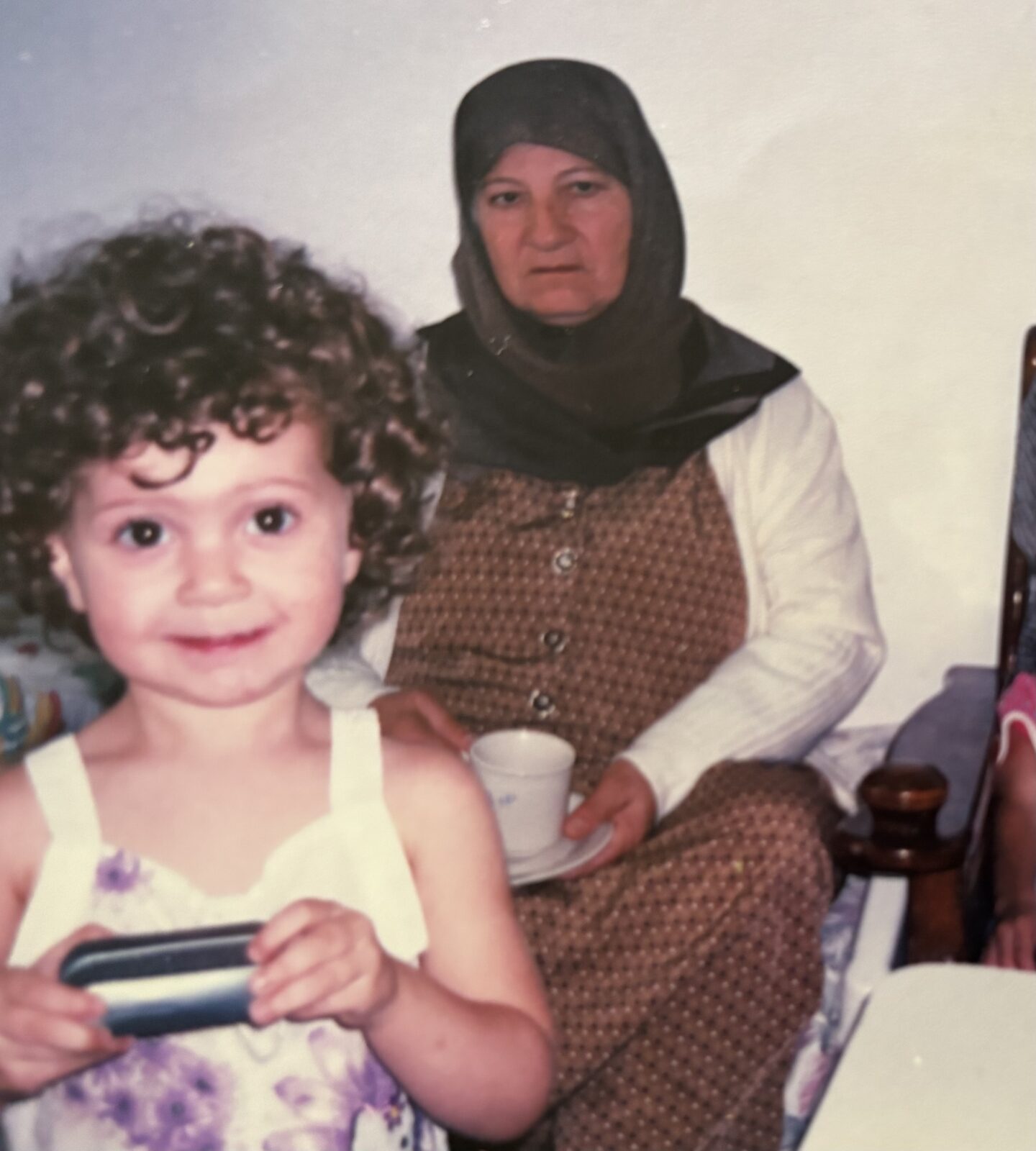
When my grandma was diagnosed with breast cancer in 2018, her hair began to change. When I was diagnosed with a desmoid tumor in 2020, mine did too. Her curls loosened; mine abandoned me altogether. At one point, we found ourselves on the same hormonal drug—tamoxifen.
I was a fraction of her age, yet walking a path that mirrored hers. She recovered, though her hair thinned and turned completely white. I would look at her and think: At least one of us is still holding onto the curls. That, of course, until mine slowly grew back in 2021.
We were bound by more than blood. By loss. By renewal.
Living Memory
On 8 April 2024, as a great total solar eclipse darkened the sky and Ramadan neared its end, Teta, who had been bedbound for some time, took her final breath. When she passed, my father’s voice on the phone was heavy, my mother’s cries trailing behind him. I ran my fingers through my curls, tracing their shape, feeling her there in every strand.
There are a thousand ways to remember her, a thousand stories I could tell, but my hair will always be ours alone. A thread spun through generations, a gift from the women before me. It is wild, fearless, unapologetic—stubborn and beautiful, just like her.
Palestinian women have always braided their hair in devotion and defiance. They have combed olive oil through the strands, just as they have tended their trees—both symbols of resilience, of roots that refuse to be displaced. Hair loss comes with autumn, like leaves surrendering to the wind. Even as a child, I noticed how much more hair I shed in the fall, a quiet reminder that I am part of nature, that the weak strands must fall away to make room for stronger ones.
In the spring, cutting the ends is essential, like pruning branches so they may bloom again. Every February, we would trim our hair, trusting that it would grow back healthier, fuller—another lesson in patience and renewal.
Resistance, Return
However, right now, as I write this piece, I am once again losing my hair from chemotherapy. This time, my Teta is not here to witness it. She is not here to brush her hands over my head, to whisper prayers, to remind me that what falls will grow again. She has passed, and with her, the stories she carried, her braid falling down her head, her wrinkly hands and face, and the quiet strength of a woman who lived, endured, and gave.
I refuse to believe she’s completely gone. I carry her story now. Every curl that grows back is a verse, every strand a memory woven into my being. I carry her with me, in my hair, in my roots, in the land that shaped us both, and in the soil in which her body currently inhabits. But my grandmother’s loss was not just personal—it was woven into a greater history of displacement.
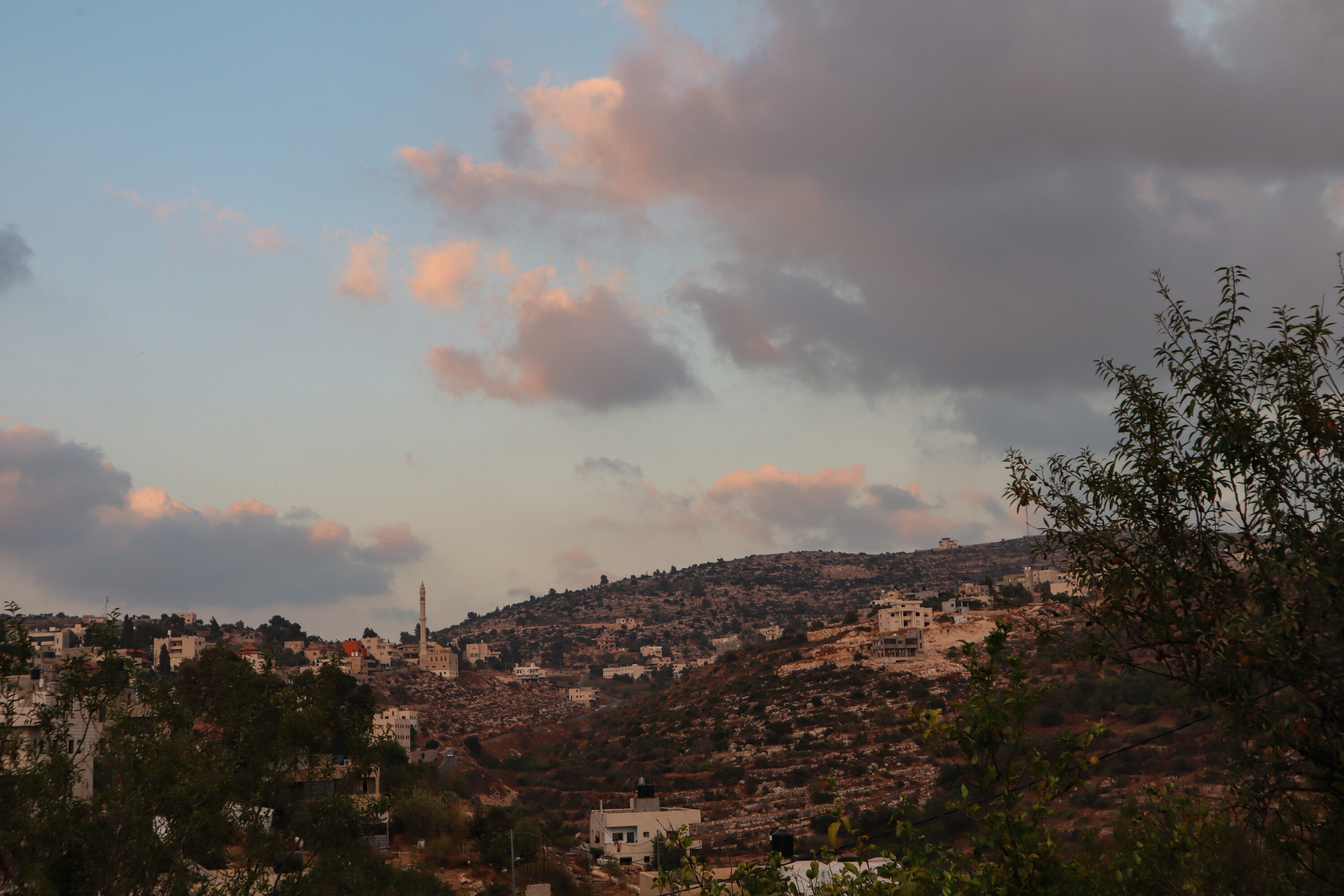
Like countless Palestinian women, my grandmother carried both personal and collective grief. She was fourteen when her family was forced to flee their home in the village of El-Mzer’a during the Nakba of 1948. They walked for days, searching for refuge after their land was taken and their village destroyed. She witnessed a world she once knew crumble before her eyes–the orange orchards, the narrow pathways of her village, and the old structures. Today, only one remains: a Roman mausoleum, later converted to a mosque dedicated to Al-Nabi Yahya (John the Baptist).
We need your support to keep publishing content like this.
Keep UntoldMag alive with the price of a coffee
But even after all that devastation, teta held onto traditions—farming, embroidery, and careful rituals of hair and skin care. These were not just acts of survival but acts of defiance, of persistence, of love.
Occupation, like cancer, has robbed us of our identity, land, and parts of ourselves. But we persevere. We persist, filled with resilience, finding other parts of ourselves connecting us to our land, heritage, bodies, and ancestors.
My hair will return, stronger than ever—a promise to my grandmother, to the women before her, and those yet to come.
Allah yerhamik ya Teta.