





Fatima’s eight-year-old son coughed through another sleepless night in Mediouna, a neighborhood southeast of Casablanca where the air carries something heavier than dust.
“I only worry about my child,” she said, unfolding medical records worn soft from handling respiratory problems. “The doctor told me I had to move. But we don’t have any place to go.”
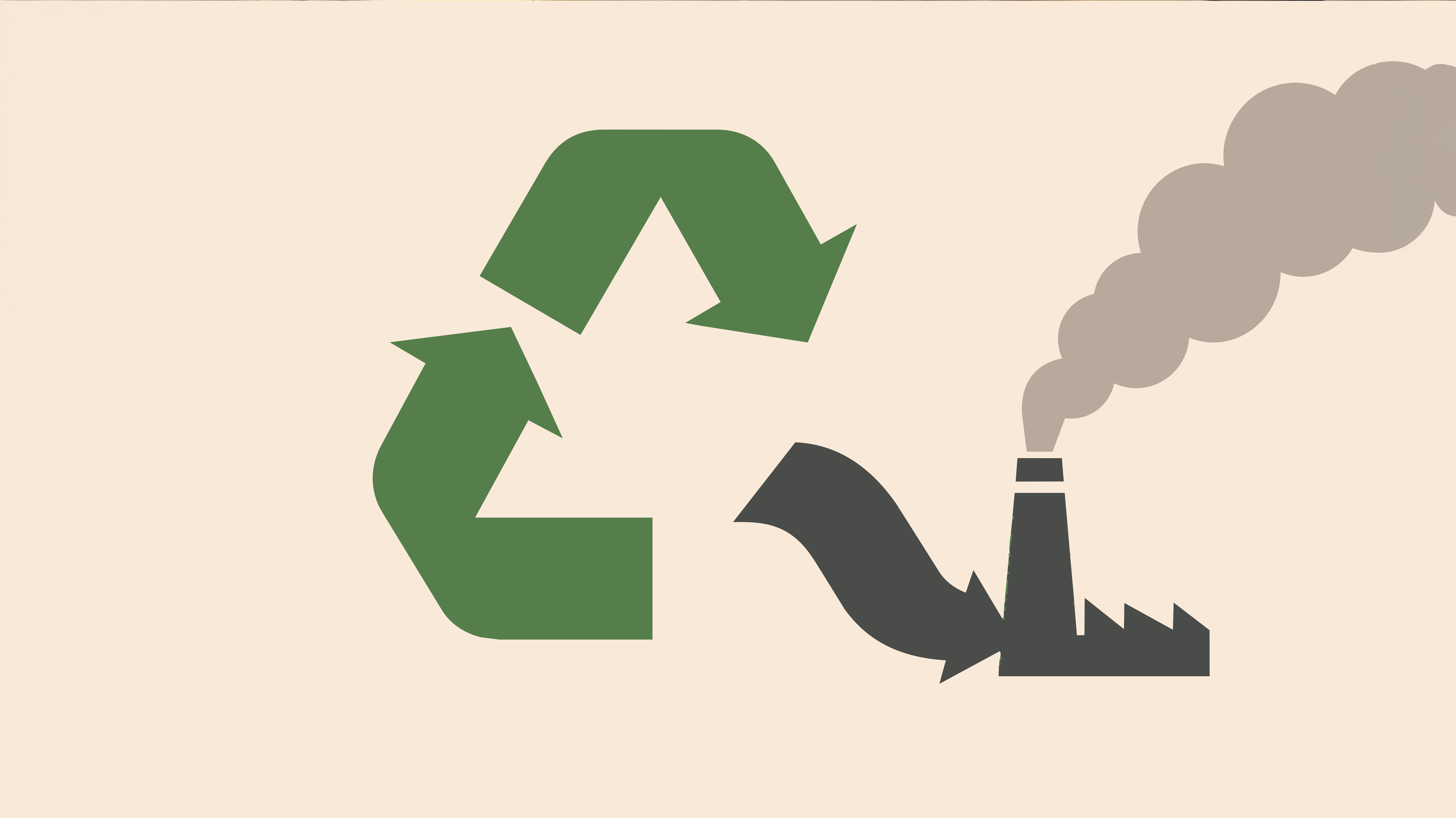
Morocco’s government has issued 416 permits authorising the import of European waste — clothes, rubber tires, industrial byproducts — burned as fuel in cement kilns across the Casablanca-Settat region, including within 15 kilometers of her home. In 2024 alone, actual imports reached 821,500 tonnes, nearly triple the annual average of the previous three years, a surge consistent with companies racing to ship before the approaching EU export ban. European corporations save over $52 million every year by shipping their waste here instead of processing it at home.
Fatima doesn’t know all of that, what she does know is that her son can’t breathe, and that some nights the smell reaches dozens of kilometers from the landfill.
An investigation, based on exclusive trade data from the Basel Action Network, customs records, and Freedom of Information responses, found that European countries shipped at least 36,611 tons of waste to Morocco in a single year — 93 percent of it classified as “reusable” despite declared values as low as €0.10 per kilogram, a price that suggests disposal, not resale.
The Economics of Dumping
Understanding why European waste ends up in Moroccan communities requires following the money. The arithmetic is brutally simple.
Treating waste properly in Europe costs estimated conservatively about $100 per ton. Shipping it to Morocco and burning it in cement kilns costs approximately $36 to $39. For a company processing 100,000 tons annually, the savings exceed $6 million a year. Across the entire waste trade, European corporations pocket more than $52 million annually — calculated from the roughly $62 gap between European treatment costs and Moroccan processing costs, applied across the 821,500 tonnes imported in 2024.

Data obtained from the Basel Action Network (BAN) covering September 2024 through September 2025, reveals how the pipeline operates. In that 12 month period alone, European countries shipped 36,611 tons of documented waste to Morocco, including clothing, plastics, paper, and electronics. The real volume is likely higher; this figure represents only what was officially recorded under waste codes. Shipments reclassified as “secondary raw materials,” “reusable goods,” or “alternative fuel” before leaving Europe drop out of waste tracking entirely.
Spain emerges as Europe’s primary waste gateway to Morocco, handling nearly 80 percent of clothing exports and two-thirds of plastic waste, 73 tons of worn clothing shipped daily from a single country. Spanish waste management companies profit from both low transport costs across the Mediterranean and Morocco’s minimal environmental oversight.
The declared values tell their own story. Romania declares clothing at €0.10 per kilogram. Poland declares identical goods at €1.02, a tenfold difference for the same customs code. Industry sale prices for sorted reusable clothing run between €0.50 and €1.50 per kilogram; Poland’s declaration sits inside that band, Romania’s far below it.
The gap suggests not just different markets but different goods—genuinely reusable clothing commands higher prices, while low declared values indicate material destined for disposal rather than resale.
According to the European Environment Agency, the fate of used textiles exported from the EU is “highly uncertain,” with material unfit for reuse mostly ending up in open landfills and informal waste streams.
Ninety-three percent of waste in the Basel data is classified as “worn clothing.” But industry estimates suggest only half or less of such shipments actually reach secondhand markets. The rest becomes Morocco’s problem—feeding the cement kilns at Jorf Lasfar, Morocco’s largest industrial port zone 120 kilometers south of Casablanca, entering industrial facilities across the Casablanca-Settat region, disappearing into a system with no transparency about what happens next.
Major corporate players are embedded in this supply chain. The French firm CHIMIREC established a Moroccan subsidiary in 2020 to produce “Energy Substitution Fuel” (ESF) for cement manufacturers. When contacted, CHIMIREC Maroc denied any involvement in European waste imports and exports, stating it processes exclusively domestic waste. LafargeHolcim’s Ecoval subsidiary is the country’s primary industrial waste treatment provider. Ciments du Maroc, owned by Germany’s Heidelberg Materials, operates a grinding center near the Jorf Lasfar port, a documented entry point for European waste shipments. LafargeHolcim and Ciments du Maroc did not respond to requests for comment.
Since 2016, the Ministry of Energy Transition and Sustainable Development has issued 416 permits for waste imports, authorizing more than 2.5 million tons of European waste to enter the country. In 2024 alone, imports reached 821,500 tons—nearly a third of the entire decade’s total in a single year, a surge consistent with the approaching EU ban deadline.
The Moroccan total is larger than the 36,611 tonnes recorded by BAN because the two datasets measure different stages of the same pipeline: BAN tracks European shipments still declared under waste codes — clothing, plastics, paper, electronics — while Morocco’s ministry counts everything that arrives as “recyclable raw materials”.
The gap between the two figures is essentially the volume reclassified out of the waste category before it leaves Europe. The ministry has described the program as a strategic pillar of Morocco’s circular economy, projecting 60,000 jobs by 2030. The government frames waste as a valuable resource essential for industrial energy, a narrative that obscures the health costs borne by communities like those in Mediouna.
The Loopholes
International law nominally restricts wealthy nations from dumping hazardous waste on poorer ones. The Basel Convention, ratified by over 190 countries, requires “Prior Informed Consent” for transboundary movements of hazardous materials. But that consent, as the convention is written, operates between governments — not between governments and residents who live downwind.
In practice, the regulations contain loopholes large enough to drive a container ship through.
Reclassified materials require none of these protections. A single word change on a customs form, from “waste” to “secondary raw material”, transforms a regulated substance into an unregulated commodity.
Trade records obtained for this investigation reveal the scale of the fiction. 93 percent of waste shipped to Morocco is classified as “reusable clothing” or “secondary materials,” but declared values of €0.10 per kilogram suggest these shipments are waste destined for disposal, not genuine merchandise.

According to data collected through a Freedom of Information Request, the Italian Institute for Environmental Protection and Research (ISPRA) told us that between 2020 and 2023, no Italian waste was registered as having been sent to Morocco “for disposal purposes” — but, in the same response, acknowledged that “small quantities” were shipped during 2021, 2022 and 2023 “for the purpose of material recovery.”
UN Comtrade records for 2023 show approximately 817 tonnes of Italian rubber waste reaching Morocco that year, worth around $427,000. The following year, in August 2024 alone, Morocco’s Ministry of Energy Transition authorised the import of 20,000 tonnes of waste specifically from Italy.
This glaring contradiction could be the result of a regulatory loophole in how Europe counts what leaves its ports: under EU law, burning waste in a cement kiln is officially classified as “energy recovery” rather than “disposal” .
Through labeling their exported garbage as alternative fuel for Moroccan kilns or misclassifying it as reusable merchandise at customs, European countries can legally erase millions of tons of waste from their disposal ledgers, outsourcing their pollution while keeping their domestic recycling statistics pristine.
Cristina Guarda, Italian MPE from the Greens/EFA, confirms that the topic is on the European agenda. “The goal is to reduce the areas where opacity can take root, clarify responsibilities throughout the supply chain, and establish the principle that exports are acceptable only if companies can genuinely demonstrate environmentally sound management, with equivalent and verifiable standards”
The Human Cost
One hundred twenty kilometers south of Casablanca, the industrial zone at Jorf Lasfar stretches along Morocco’s Atlantic coast. Container ships dock at a port with 37-million-ton annual capacity. Cement plants rise in silhouette against the sky. Trucks move constantly between the port and processing facilities, carrying material that began its journey in European cities and will end it in Moroccan furnaces.
The health impacts accumulate invisibly. Communities living near Moroccan cement plants face an excess risk of respiratory disease, cancer incidence and mortality, predominantly affecting the respiratory tract in both children and adults.
Research consistently finds that people living near cement plants are up to nearly five times more likely to report respiratory symptoms than those with no such exposure. In Morocco specifically, occupational cement exposure has been directly linked to Chronic Obstructive Pulmonary Disease, one of the leading causes of respiratory mortality.

When rubber tires burn in cement kilns without adequate emission controls, they release dioxins and furans, among the most toxic substances known to science, along with heavy metals including lead, mercury, and cadmium. A peer-reviewed study measuring emissions from cement kilns burning hazardous waste found dioxin levels more than four times higher than baseline (1.57 vs. 6.49 nanograms per cubic metre) — and rising further as more hazardous waste was added to the fuel mix, with emissions rising further as the co-processing ratio increases.
A synthesis by Lawrence Berkeley National Laboratory has documented that where emissions controls on such kilns are inadequate, surrounding communities show elevated rates of respiratory, skin, and gastrointestinal illness.
Morocco cannot yet manage its own domestic waste crisis. The Mediouna landfill alone receives 1.2 million tonnes a year and is approaching saturation. In November 2024, the World Bank approved a $250 million programme to upgrade the country’s landfills — a tacit acknowledgement that existing capacity is inadequate before any additional burden from imports. Casablanca cannot absorb more pollution, let alone safely process hundreds of thousands of tons shipped from Europe each year.
When the government approved more than two million tons of new waste imports from various European countries in August 2024, activist Mohamed Benata of the Environmental Assembly of Northern Morocco called it “incompatible with the spirit of citizenship” and unconstitutional. In 2016, similar outrage over Italian waste imports sparked widespread protests and social media campaigns, forcing the government to suspend the imports. Yet despite this resistance, the waste continues to arrive.
European corporate accountability law, for its part, does not reach far enough to catch what happens after the shipments leave port. The Corporate Sustainability Due Diligence Directive, adopted by the EU in 2024 to oblige large companies to police human rights and environmental harms across their supply chains, stops at the point of sale.
“CSDDD ends with handing over the goods more or less,” Miriam Saage-Maaß, legal director at the European Center for Constitutional and Human Rights, said of the directive’s reach. Whether European exporters bear any legal responsibility for what happens to their waste inside Moroccan cement kilns, she added, “depends on how direct EU exporters are connected to the waste burning.”
“The EU is strengthening controls and obligations,” says Guarda, while mentioning the new 2024 Waste Shipment Regulation that sets out stricter rules on the export of waste to non-EU countries. “But the real leap forward must be cultural and industrial,” she adds. “Circularity cannot become an elegant way to outsource health and environmental impacts to other communities. We need a pathway that reduces the problem at the source, increases producer responsibility and leads to waste management that is consistent with climate and health protection objectives, without creating ‘sacrifice zones’ outside Europe.”
Time is running out, but not for the reasons Fatima might hope. From 21 November 2026, the EU will ban all plastic waste exports to non-OECD countries like Morocco, with no approved-list escape route for plastics. For other non-hazardous waste such as metals and paper, exports will be banned from May 2027 unless a country is on an approved list; Morocco submitted its application to be included by the 21 February 2025 deadline.
Whether that ban will actually stop the flow, or simply push it through new classification channels, is contested. When the regulation was adopted in 2024, the Environmental Investigation Agency, an international environmental NGO, warned that its real effect on waste exports would depend on how strictly EU member states transpose and enforce it, and on whether the remaining loopholes are closed.
One such channel is already emerging inside EU policy itself, in December 2025, the European Commission proposed Union-wide end-of-waste criteria for mechanically recycled plastics, which would allow such materials to circulate across the bloc without being classified as waste at all.
“The longer the chain of parties involved, the shorter the chain of enforcement: controls on thousands of containers travelling through ports are extremely complex. The official data we have on Morocco could be not everything that it’s actually exported, but unofficial flows are undetectable”, says Paola Ficco, environmental lawyer and director of the magazine Rivista Rifiuti.
Back in Mediouna, Fatima remains caught in the middle. While Europe celebrates its recycling milestones and Morocco counts the jobs and greens its image, she and families like hers in Casablanca are plagued by air and soil pollution from domestic and exported waste.
This story was developed with the support of Journalismfund Europe