




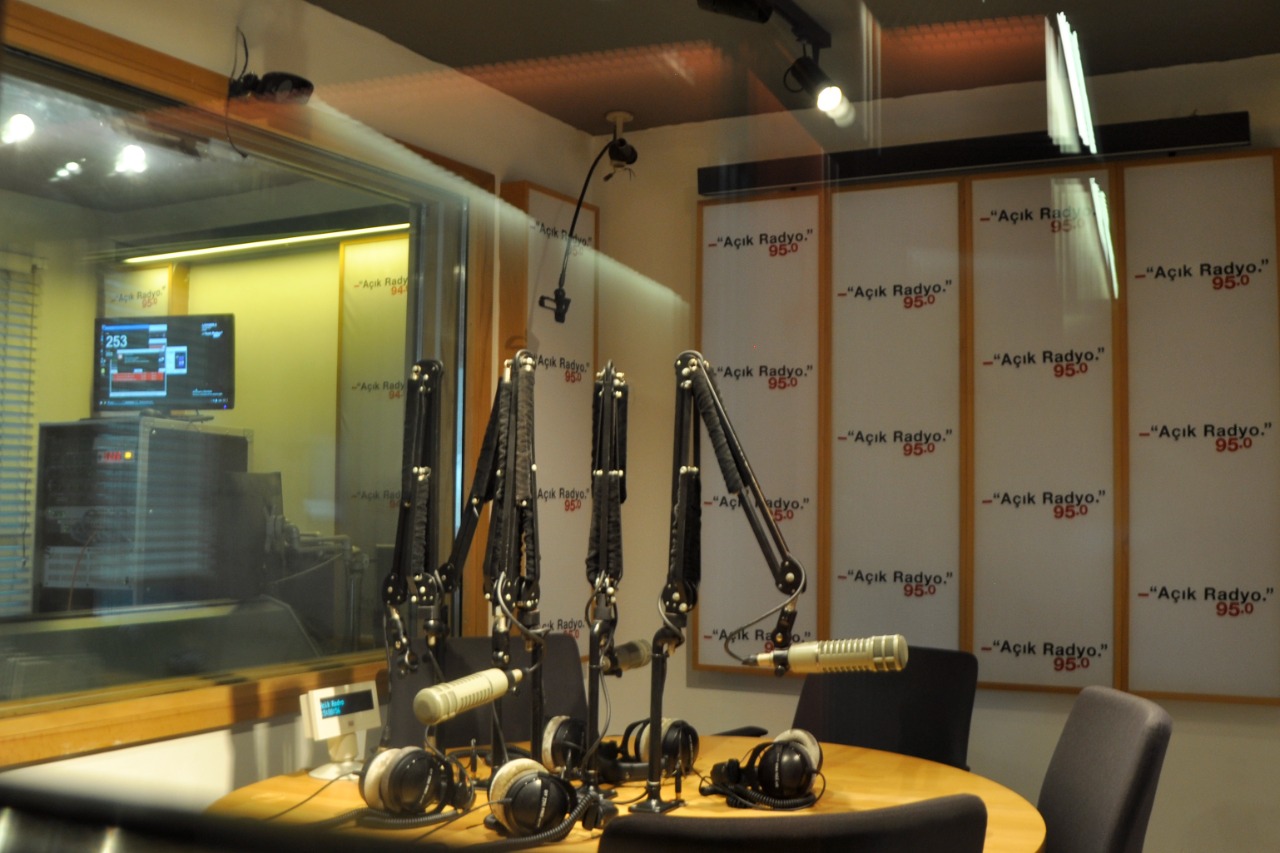
With the song “Good Vibrations” by The Beach Boys, Açık Radyo (Open Radio)—an independent station based in Istanbul was forced to interrupt its FM broadcast.
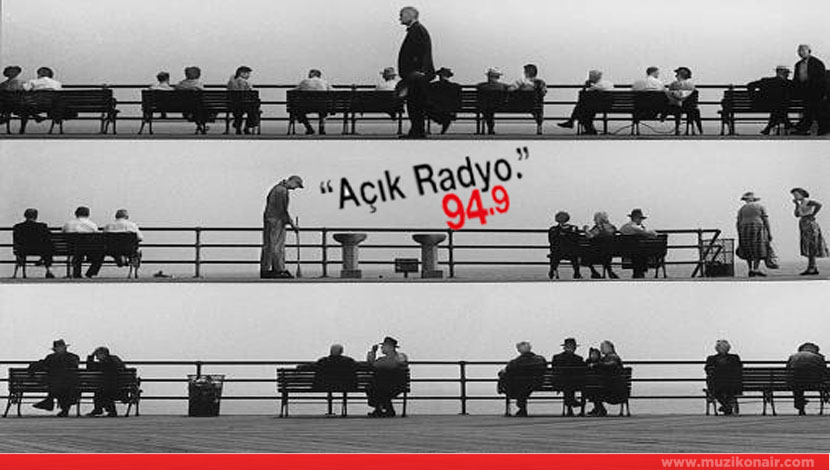
Known for its motto, “a radio open to all the sounds, colours, and vibrations of the universe,” Açık Radyo has been on air since 1995 and has long been a pillar of freedom of thought and speech in Turkey, producing thousands of programs across journalism, culture, science, and the arts.
The story of Açık Radyo exemplifies how, over thirty years of activity, independent journalism has consistently challenged dominant nationalist and state-centric narratives, providing a space for emancipation from various forms of oppression. Throughout these uninterrupted decades of broadcasting, Açık Radyo has documented Turkey’s sociopolitical transformations, internal and geopolitical transitions, and the rise of government repression—which, on 11 October 2024, led to the revocation of its FM broadcast license by RTÜK (Turkey’s Radio and Television Supreme Council), the state media regulator, and the beginning of a still-ongoing legal process.
The reason one of Turkey’s most important independent radio stations was shut down was its use of the word genocide in a program about the Ottoman-era discussing the events affecting the Armenian population in 1915. This incident highlights how censorship against independent media outlets has intensified in recent years in Turkey; how history is often instrumentalized in contemporary politics; and how, even in the most repressive historical periods, censorship has never fully succeeded in silencing voices of dissent.
In fact, soon after the revocation, Açık Radyo transitioned to streaming, renaming itself Apaçık Radyo (“Wide Open Radio”).
Thirty Years of Programming
Conceived by Ömer Madra, a well-known intellectual in Turkey, Açık Radyo was founded in 1995 as a private company by 92 shareholders. The intellectual formation and professional careers of its founders often followed similar paths. Most had started their academic careers in the universities of Istanbul or Ankara during times when campuses were central to student politicization. After witnessing the violent suppression of revolutionary leftist ideology following the 1980s coup, many of these individuals began to embrace a new culture of denouncing threats to democratic principles and supporting emerging social movements.
The ban on all political activities following the harsh repression of the coup forced many intellectuals—some formerly affiliated with political organizations—to rethink their strategies for collective action. Publishing, civil activism, demonstrations and petitions allowed a different model of critical culture to emerge. Thanks to numerous initiatives that grew increasingly popular in subsequent years, a different experience of political engagement became possible—one that questioned Turkey’s state-centric apparatus in favour of promoting a pluralistic society.
The founding of Açık Radyo is a sign of this transition to a new phase of collective political engagement, structured within the logic of cultural and associative public outreach projects. Following the end of the state monopoly on broadcasting in the 1990s and the legalization of private stations, the idea was to create a space that went beyond information—serving as a channel for cultural dissemination and as a forum for expression and dialogue among various local and international associations and initiatives.
In the 1990s, Açık Radyo was the first station to support emerging LGBTQ+ movements. It monitored and denounced rapid urban transformation, real estate speculation, and the severe socio-environmental consequences of the mega-projects launched during the AKP (Justice and Development Party)’s 23-year rule. It also served as a coordination hub for aid and information from earthquake-affected regions, both during the Marmara earthquake in 1999 and during the more recent 2023 earthquakes in Maraş (which also impacted northern Syria).
With a constant focus on public protests—from environmental movements to Pride marches, from feminist struggles to the well-known 2013 Gezi Park protests— Açık Radyo has hosted vibrant debates that, while often limited to specific metropolitan circles, consistently condemned arrests, police brutality, and growing repression against dissent.
“Açık Radyo was not just a radio station. It was—and still is—a commons. A place where the world and Turkey could speak to each other through poetry, dissent, music, mourning, resistance, and care,” İlksen Mavituna, the current editor-in-chief of the radio, explains.
Similarly, Sevilay Çelenk, Member of Parliament for Diyarbakır told the Grand National Assembly: “Açık Radyo continued to broadcast with a public service ethos in a radio landscape that had lost its power and importance in the face of new media. It did so with very rich content and set an example of radio broadcasting on a global scale, inspiring the world”.
Its 30 years of broadcasting have produced an alternative historical archive of Turkey—one that has consistently promoted dialogue, respect, and collective and individual dignity, both locally and internationally. This material reveals the vitality of grassroots initiatives and everyday acts of resistance that depict a far more dynamic society than the one often represented abroad through purely institutional lenses.
License Revocation
It is no coincidence that Açık Radyo was targeted over a historically charged topic. This is one of many examples of how history is increasingly weaponized to promote nationalist narratives and policies. Nor is it coincidental that the revocation occurred during a peak of repression against media, social networks, publishing, and independent journalism.
Those involved in these sectors in Turkey are acutely aware of the power of words—every phrase or rhetorical choice can be used by censors to justify prosecution. Even drawings or cartoons addressing sensitive issues—especially related to religion or nationalism—can trigger hate campaigns. Moreover, these repressive conditions foster self-censorship, further shrinking spaces for criticism.
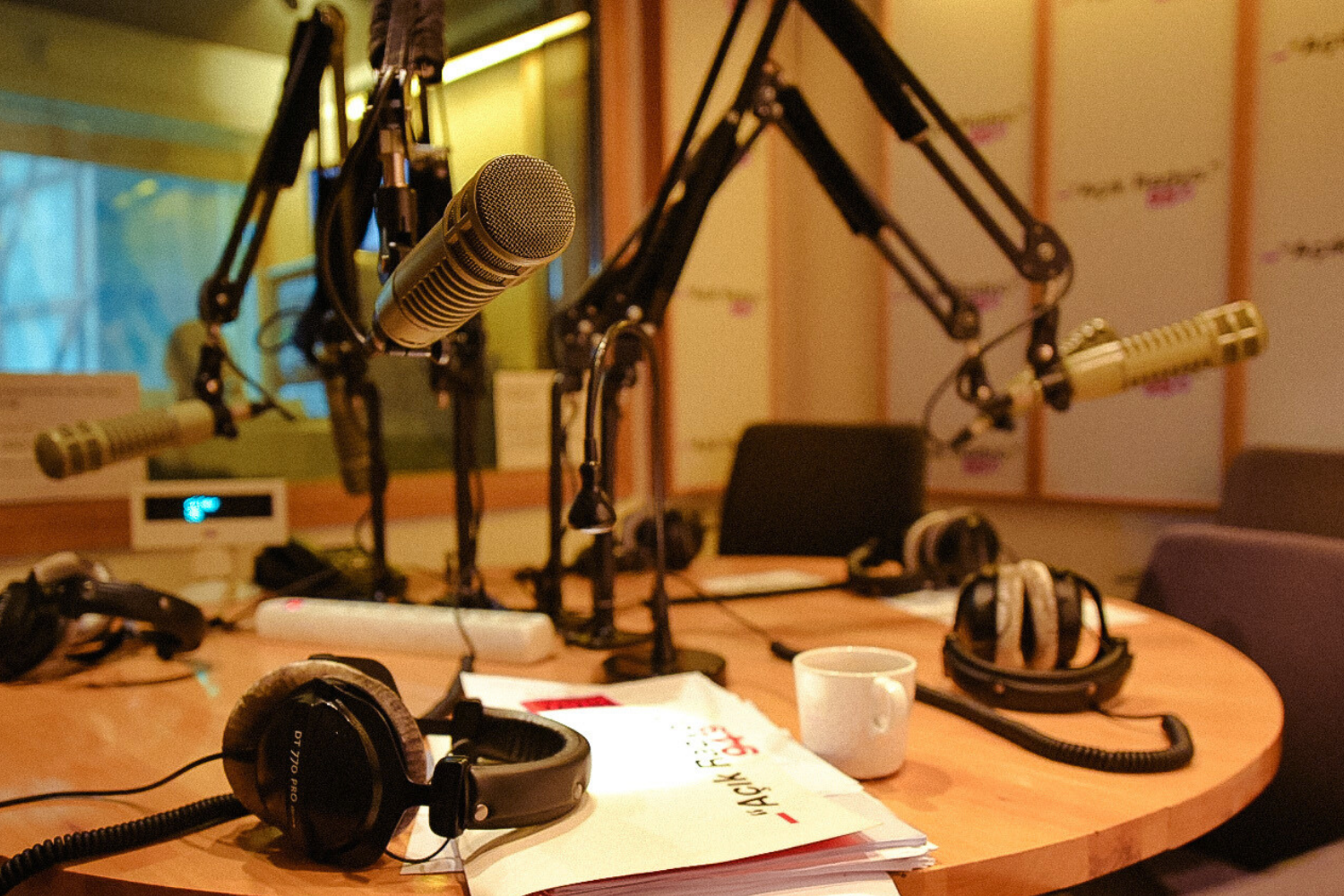
There is no manual for learning how to defend against censorship; only experience teaches this. But when repression intensifies, even experience may not be enough. What becomes essential for independent journalism in such contexts is to be represented by highly competent lawyers, to have a strong structure and to have sustained public support.
Over 30 years, Açık Radyo has built such a foundation. Around 1,400 people—aged between 8 and 88, from various social backgrounds—have produced more than 1,200 radio programs. Broadcasting 24/7, the structure of Açık Radyo is entirely volunteer-based, with its programming renewed every four months around core columns on information and culture. Beyond its listeners, the figures achieved by this radio station reflect a community that actively makes radio—thus producing its content.
This large community also ensures the project’s financial independence—not only from the state but also from corporate holdings that dominate Turkey’s media sector and facilitate political interference. To remain independent, Açık Radyo developed a model based primarily on sponsorships, advertising, and especially listener support, which in recent years has covered 70% of annual expenses. This represents an unprecedented model of grassroots sustainability in Turkish broadcasting history.
Following the revocation announcement, this community rallied in support. In the six months after the FM interruption, Açık Radyo has received numerous awards and was featured in hundreds of print publications and TV programs, and thousands of online articles both domestically and internationally. Public statements outside the station drew large crowds, while thousands joined the #açıkradyoaçıkkalmalı (“Açık Radyo must remain open”) campaign.
And so it remained: after the FM ban, the station—renamed Apaçık Radyo (“Wide Open Radio”)—continues its programming via streaming. With the same motto, “open to all sounds, colours and vibrations of the universe,” Apaçık Radyo preserved its structure and spirit while transitioning to digital broadcasting. Thus, it continues to represent a network and a space for its community of listeners even though it can no longer be heard on the radio.
However, moving online required new technical and financial strategies, already challenged by the government’s ongoing legal actions. Securing long-term sponsors becomes difficult when facing state censorship, as few wish to fund projects in political dispute with authorities. Açık Radyo’s open support for Palestine has further deterred some private funding. In these situations, defending against direct censorship is not enough; one must also anticipate the broader economic consequences—both micro and macro—affecting sustainability and open support.
More than a year after the FM license ban, as media attention fades, the long-term challenges remain. Açık Radyo continues to face trial for allegedly violating laws against “inciting hatred and hostility” or “creating feelings of hate” based on race, language, religion, gender, class, region, or religious order. We know well the historical and political weight of words like genocide—not only in Turkey but globally. Yet we must also reflect on the words of accusation, the words of censorship, the words of repression. When these words lose connection with reality—when, as in this case, they are applied beyond their semantic boundaries—they become arbitrary, and dangerous.