



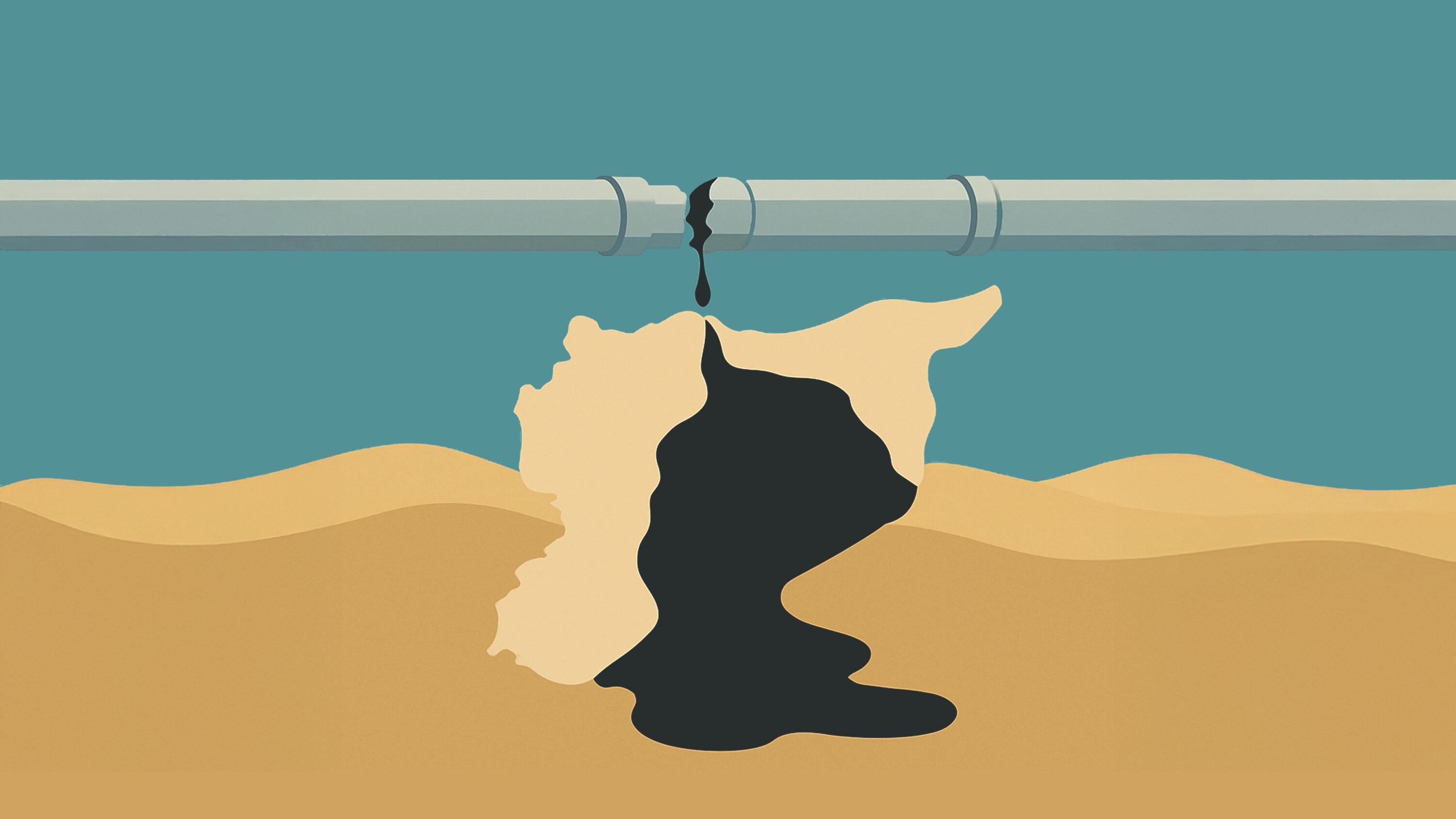
While large-scale combat in Syria has seen a reduction, a new battle has begun for the resources that lie beneath the soil in one of West Asia’s smaller oil and gas producers.
Croatian oil and gas company INA, who stopped work in 2012 following European Union and U.S. sanctions against Bashar al Assad’s regime, are one of several international players that may be eager to capitalize on the renewed economic potential within the West Asian state.
Since Assad’s fall, the international community has been gradually integrating the new president of the country’s transitional government, Ahmed al-Sharaa. He’s received condemnation for his past association with the al-Qaeda affiliate and Islamist group Hayat Tahrir al-Sham (HTS).
Despite concern over his previous ties, he’s managed several successful foreign engagements, beginning with when he was received in France by President Emmanuel Macron and shortly thereafter when he met U.S. President Donald Trump in Riyadh, with Saudi Crown Prince Mohammed bin Salman also attending.
Following the diplomatic engagements, both the EU and the U.S. lifted sanctions on Syria, a continuation of a policy that has seen Western leaders eager to begin a process of economic rehabilitation. A White House statement highlighted the importance of “giving Syria a chance to succeed … but not at the expense of U.S. interests.”
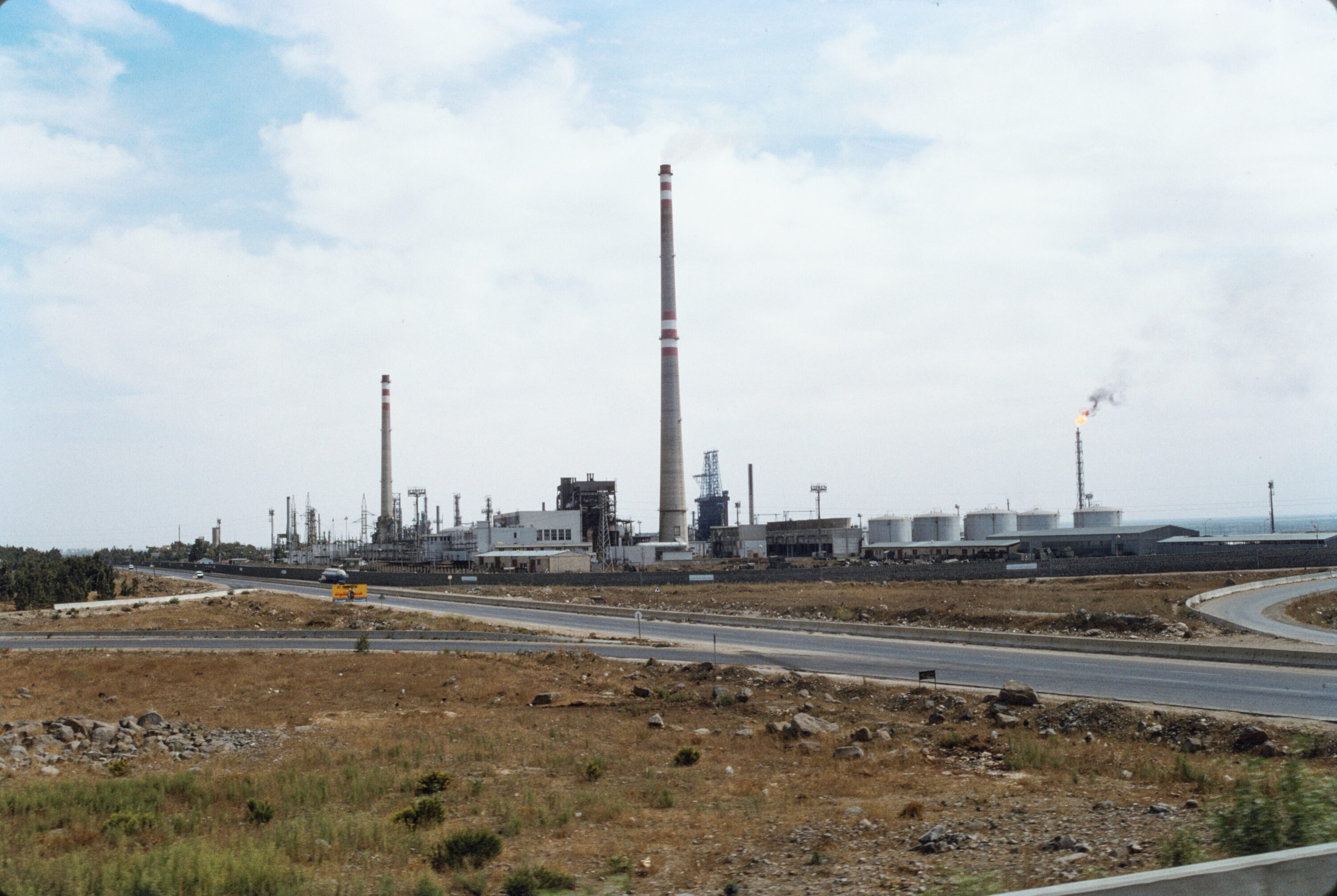
The easing of sanctions has quickly realized a new capital injection, including multi-billion dollar energy and infrastructure investment deals with Saudi Arabia and Qatar.
On the 10th of September, Croatia’s Minister of Foreign and European Affairs, Goran Grlić-Radman, met with his Syrian counterpart, Asaad Al-Shaibani, to discuss the reestablishment of bilateral relations as well as areas of cooperation, including the economy, energy, post-war reconstruction and knowledge sharing. “We see Croatia as a key partner in the reconstruction of our homeland” said Al-Shaibani, while Grlić-Radman expressed Croatia’s readiness to open an embassy in Damascus. Joining Croatia’s delegation were representatives from INA and the Croatian Hydrocarbon Agency (AZU).
Although unable to match the financial power of its competitors, INA’s presence in Syria dates back to 1965, when the then Yugoslav state-owned company provided technical training to local staff on deep drilling. From this began the start of a unique business relationship that is almost unheard of in the modern oil trade.
Under an independent Croatia, the company began operations in Syria in 1998 and gained attention for their exploration and development activities in the Hayan Block, which lies west of Homs. They made key discoveries, including the Al Muhr, Jazar, Jihar, and Palmyra fields.

Exploration was handled by an INA branch office, while production was the responsibility of the Hayan Petroleum Company, a joint venture involving INA and the government-owned Syrian Petroleum Company (now GPC). By the early 2010s, INA had invested almost 1.7 billion USD, and Syrian energy made up a significant portion of their yearly profit.
At the height of operations, INA was extracting around 350,000 barrels per day. Today, because of conflict-affected infrastructure or general neglect, Syria’s total crude production sits somewhere between 80,000 and 100,000. Gas was equally lucrative, with the Jihar field producing 3,000,000 cubic meters per day. ISIS later destroyed the infrastructure at Jihar, claiming it was being used to finance the government.
Syria was a substantial investment vehicle for a company that, as part of a relatively new diplomatic entity in Croatia, was competing to establish itself among bigger industry names like Shell, Suncor, and TotalEnergies.
In 2011, they had begun exploration in the Aphamia Block before withdrawing the next year under political pressure due to Croatia’s upcoming EU accession. The decision was part of a larger policy of aligning strategic goals with the rest of the EU member states that had imposed sanctions on Assad following the horrific violence he unleashed on his own people.
The deterioration of infrastructure is believed to be a key factor in the reluctance of foreign investors to devote capital to a country, as they often expect a relatively quick return on their investment.
In the years that followed the withdrawal of INA and other major energy companies, the vacuum of uncertainty has raised ongoing suggestions from both the former Syrian government and private enterprise that the relationships could be rekindled upon stabilizing the situation on the ground. A press release in early 2016, which outlined the previous year’s fiscal achievements and challenges revealed that “[INA] has kept a smaller part of its assets in case geopolitical circumstances change and enable a return to Syria.”
Today, INA’s operations remain chiefly situated in Croatia with projects also underway in Angola and Egypt. While the ownership of the energy facilities in Syria is uncertain, the situation is changing rapidly day-to-day, and clarification would be expected by year’s end.
Dirty Energy Is Not Connected to Climate Change
The history behind INA’s ownership could be described as slightly convoluted. The words ‘It’s complicated’ can only function to open a Pandora’s box of history that muddles diplomacy and the inextricably linked public and private sectors.
Technically, INA is jointly-owned with the Hungarian oil giant MOL Group, controlling 49%, the Croatian government around 45% and the rest split between private investors and institutions. During the Yugoslav period, the company built up a robust profile – becoming the nation’s market leader and constituting around 10% of Croatia’s economy. This status enabled them to make investments and discoveries in Syria before MOL entered the picture.
After the breakup of Yugoslavia, INA needed to remain competitive and sought to move towards privatization, a position shared by many former state-owned companies within post-communist societies. They went private in 2003 after selling a 25% stake to MOL for 505 million euros (811 when adjusted for inflation). MOL continued to gradually increase their stake in INA until it reached 47.16% in 2008.
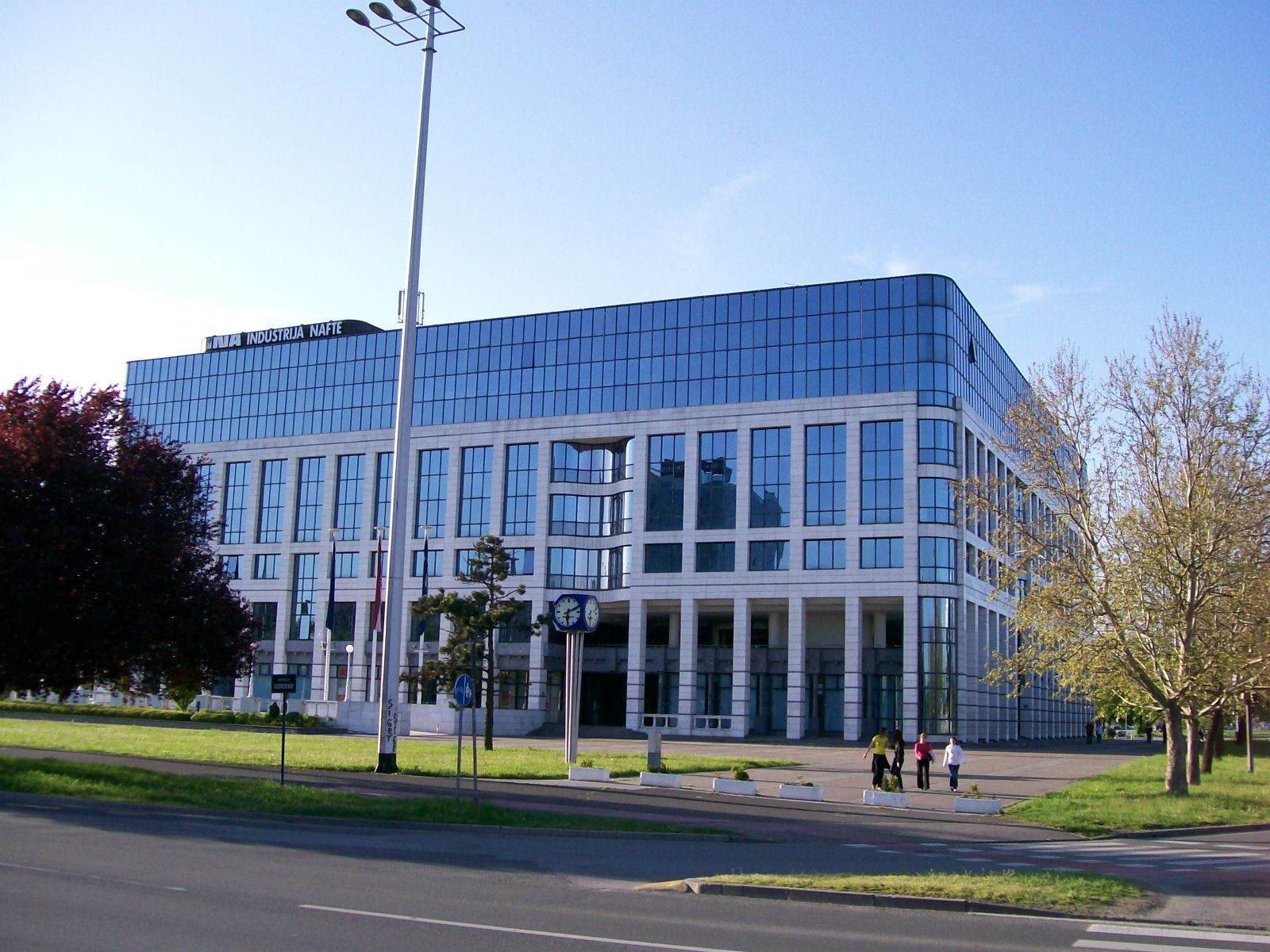
The following year, an amendment was made to INA’s shareholder agreement, which gave management control to MOL. This decision was a major component of the arrest of Ivo Sanader, who was Croatia’s Prime Minister at the time of the investment and shareholder amendment.
Sanader was accused of accepting a bribe of 10 million euros from MOL’s chairman Zsolt Hernádi in exchange for giving up control of INA. A near decade-long legal drama ensued where Sanader saw his conviction quashed, upheld by the Supreme Court, quashed again by the Constitutional Court before, ultimately in 2019, receiving six years for his role in the bribery case. Hernádi was tried in absentia and received two years, whereas his prosecution in Hungary found him innocent. Since the beginning of the scandal, Hernádi and MOL Group have denied any wrongdoing and rejected efforts to cooperate in the prosecution from the Croatian Government.
After a refusal to comply with a European arrest warrant, Interpol reissued a Red Notice for Hernádi. The dispute between MOL and the Croatian Government has led to several arbitration processes, with all finding in favour of MOL. The most recent was at the International Centre for Settlement of Investment Disputes (ICSID), a World Bank Court, where MOL was awarded $235 million.
Today, MOL’s ownership of INA still stands at 49.08%. The dispute and its subsequent arbitration are viewed as deeply interesting sagas among legal process analysts. On July 31st, Ivo Sanader was controversially released from prison eight years sooner than expected. His total sentence of 18 years for bribery and running a slush fund, among other crimes, was expected to keep him in prison until at least 2033. The presiding judge claimed he “fulfilled the requirements for an early release.”
What does International Law say?
Despite the business relationship between INA and the Syrian government, there is yet to be clarification on how ownership of the wells and infrastructure will be resolved. INA retains a strong degree of credibility not only due to their discoveries, but also the confidence they had in Syria’s energy potential. In the 1990s, as many foreign investors abandoned their business interests because of increasing costs and dry wells, INA persisted and made breakthroughs, which resulted in a net benefit for all stakeholders.
Due to sanctions compliance, INA invoked the force majeure clause in their contract, which stipulates that they were ‘unable to fulfill their contract due to unforeseen circumstances’. They later maintained that ownership of the oil and gas rights should remain theirs.

Analysts including Davor Štern, who was formerly the Chairman and CEO of INA, advised Croatian leadership to use diplomatic means to prevent the conflict between Israel and Syria from spilling over and inadvertently damaging INA’s remaining assets. “It would be good for Croatian diplomacy [to warn Israel to spare any sites designated as targets] as [INA] intends to exploit their previous investments.” Israel said its latest strikes were in defence of the Druze, a small religious community who lives primarily in rural regions and faced persecution in Syria.
Dr. Jamal Assad, a physician and representative of the Syrian National Coalition – who’ve now declared allegiance to President al-Sharaa, has lived and worked in Zagreb for many years. Regarding ownership he said: “everyone who has a right must get their right; there are others too [friendly and hostile countries], especially Croatia. When it was needed most, Croatia helped.”
The question over whether the previous oil rights contracts remain valid has yet to be resolved. Christina Abi, an energy consultant and attorney, suggested, “The terms of the contract have [by default] changed because they don’t apply to the situation anymore.” She suggested that returning the sites to an operational status would be costly but that the force majeure clause could spark attempts to tie up loose ends in the current agreement.
Other foreign energy companies have shown an impetus to address the new political situation in Syria. U.K.-based Gulfsands Petroleum PLC, who, with their Chinese partner Sinochem, jointly controls Block 26 in the country’s northeast, said in a comment to Syria Report that “there are no material restrictions that would prevent our return to operations.” Gulfsands representative also iterated that they are “working with the Syrian government [to resolve remaining issues related to ‘force majeure’].”
Oil Rights and Human Rights
Hopes that large-scale sectarian violence would end under the transitional leadership were degraded by the mass killing of over 1,500 Alawites in March by government militias.
The ethnoreligious group was supposedly targeted because Bashar al-Assad is a member, and as revenge for ambush attacks carried out by armed groups loyal to the former president. When asked for a response to acts of violence, President al-Sharaa responded, saying: “We won’t accept that any blood be shed unjustly … even among those closest to us.”
Outside the communities themselves, many local and foreign observers are worried the fragile situation could delve even further into agonizing acts of depraved indifference to human suffering and casualty. Especially after similar attacks on Druze communities in the southern city of Suweida in July and August which left thousands dead and extended to clashes between the Druze and Bedouins aligned with the transitional government.
UN Syria Envoy Geir Pedersen explained his office had received reports detailing abuses of women, arbitrary killings, kidnappings and summary executions. His statements occurred shortly after a briefing he gave to the Security Council explaining the volatility with which the July 19 ceasefire was holding. The briefing later describes humanitarian needs as ‘acute’ and that, despite the Syrian government “inheriting a landscape ravaged by 14 years of war and decades of misrule,” it must hold itself to a higher standard and “act with discipline, even when under attack.”
We need your support to keep publishing content like this.
Keep UntoldMag alive with the price of a coffee
Safeguarding Syrian Prosperity
While several governments have released statements advocating for Syria to be able to develop free of interference, few observers expect the plan to be that straightforward. Controversial Parliamentary elections – which will see an appointed electoral committee chosen by the new government, vote for representatives will take place in September and could provide clarity over what kind of Syria we will see, not just regionally but in the wider international community.
Individuals facing daily threats of harm and government policies, which fail to guarantee the safety of minorities, are not conducive to building a Syria that works for all. A May report by the Norwegian Refugee Council, which interviewed refugee returnees and internally displaced Syrians (IDPs) put a spotlight on the perilous situation for citizens. Damaged or ruined infrastructure goes well beyond the energy sector, with 43% of respondents stating their homes were either virtually uninhabitable or completely destroyed.
Such an enormous development task needs to encompass more than rebuilding government and private infrastructure. The aim of providing support to refugees should not be to create a replacement existence within the boundaries of a safe country. It should be to provide support so that one day they may return to their land, their homes, and their lives.
When asked for comment on the content discussed, INA’s response was that the company “is continuously monitoring the situation in Syria,” and that, at this time, they are “unable to share additional information on this topic.”