




*Photos by Michele Lapini
“Almost all rivers in Europe have been regulated, impounded, and channelised. In the Alps, the largest free-flowing river section still preserving its natural dynamics lies along the Tagliamento,” explains Professor Klement Tockner, Director General of the Senckenberg Institute for Climate and Biodiversity in Frankfurt.
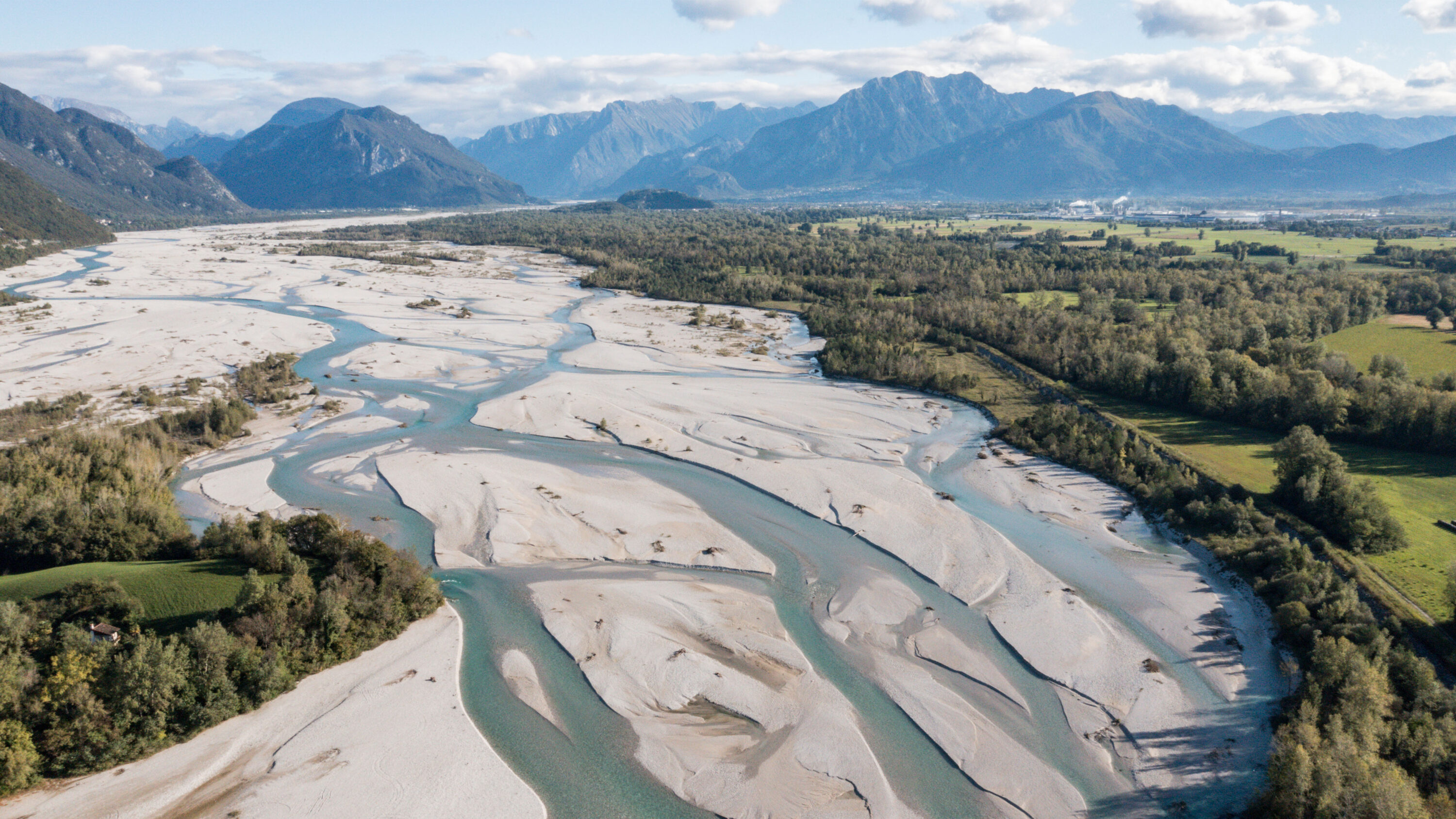
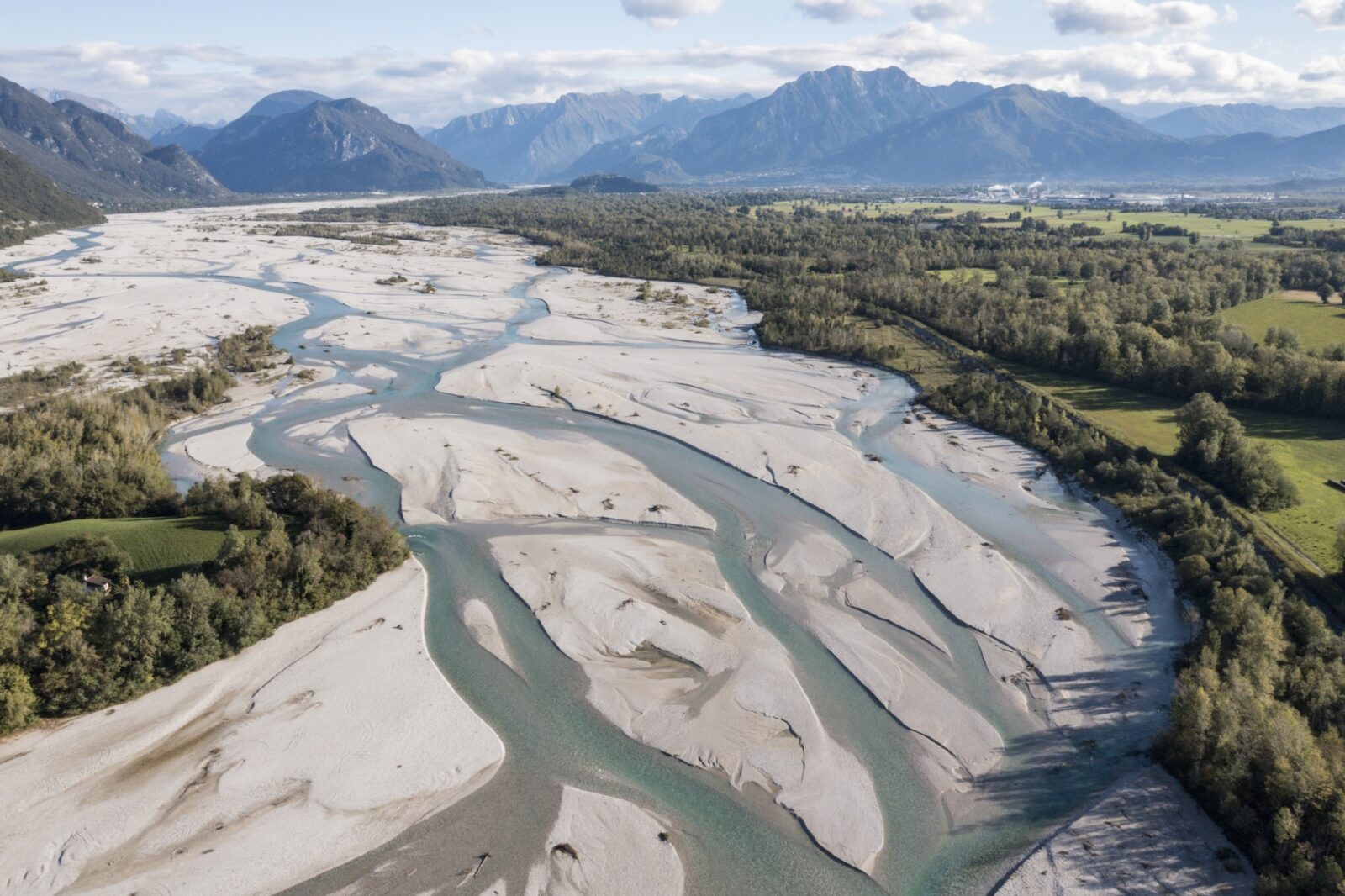
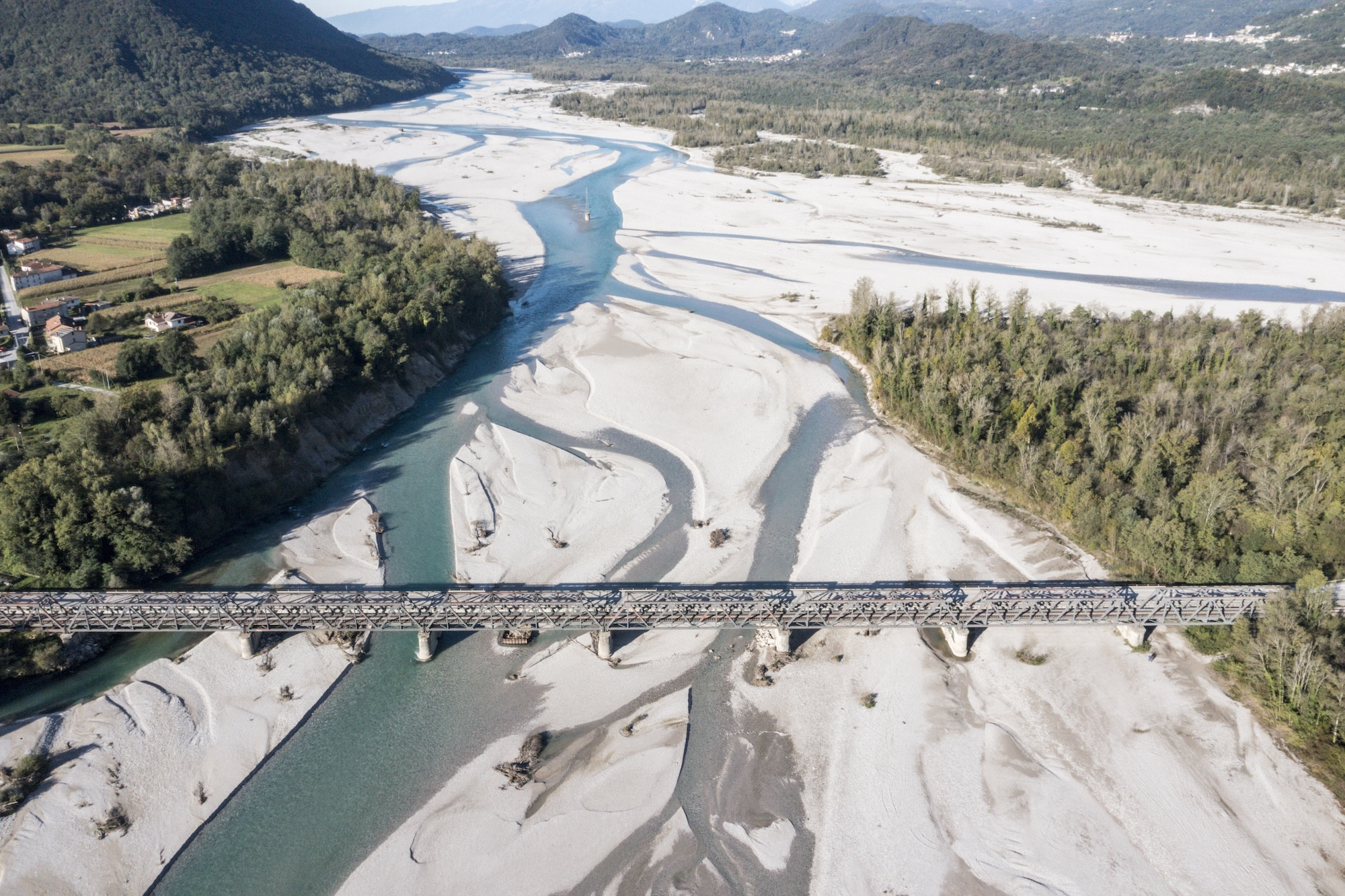
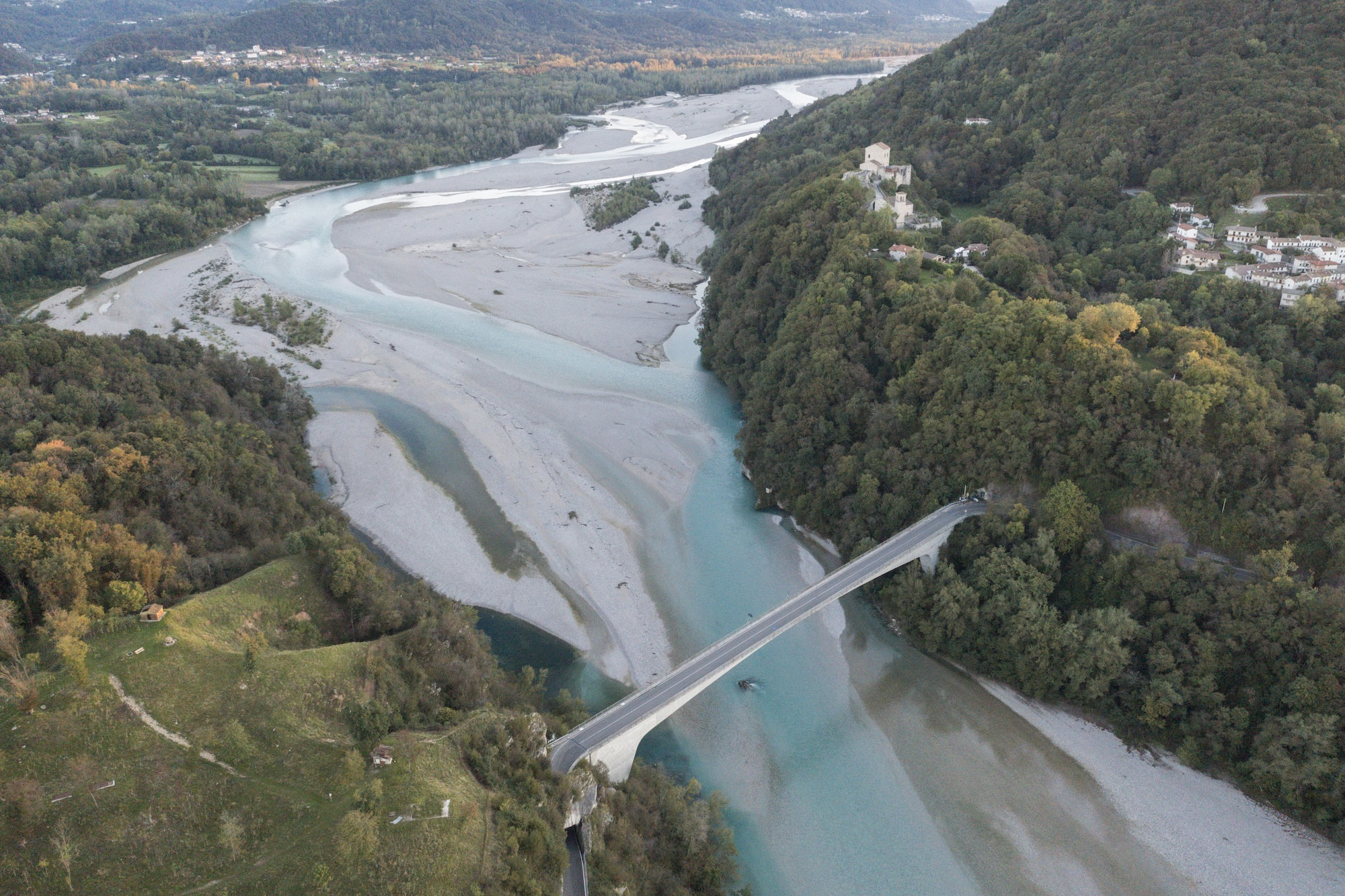
For decades, Tockner has studied the Tagliamento, which flows from the Carnic Alps to the Upper Adriatic Sea in northeastern Italy, near the Slovenian border, as a living model of river restoration. Its wide, shifting gravel bed and braided channels preserve the ecological dynamics that once characterised many Alpine rivers. This is what makes it, according to Tockner, “the most valuable river in the Alpine Arc.”
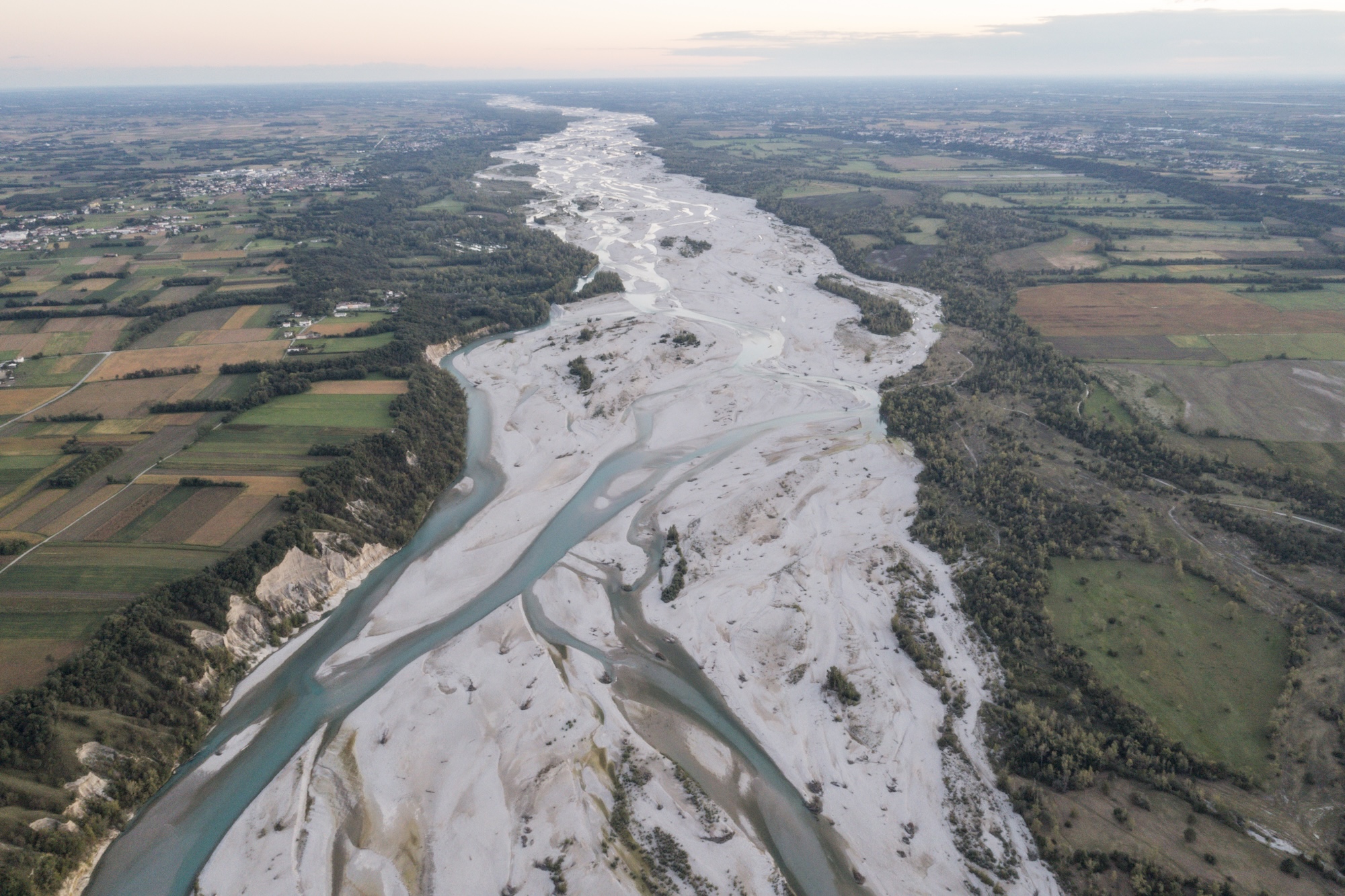
Today, the Tagliamento is under threat. In spring 2024, the regional government of Friuli Venezia Giulia approved plans for a €200 million flood-control barrier between the towns of Dignano and Spilimbergo, as part of its Flood Risk Management Plan.
“For us, the Tagliamento is identity. It’s the symbol of beauty,” says Valentina Sovran. She is one of the residents of Dignano (Udine) who, in September 2025, travelled to Brussels to submit two petitions calling for the protection of the Tagliamento.
Strolling on the vast sandy riverbed, where emerging braided channels form small streams and islets, Valentina Sovran and other elder residents recall stories dating back generations, with the Tagliamento always as a protagonist: a grandmother who washed the clothes on the pebbled banks at dusk, the only free moment amid the duties of a large family; a great-grandfather who worked as a boatman before the construction of the bridge of Dignano; or the kilometers walked as young boys from the mountains to swim and play with friends in the gravel beaches.
A Unique Ecosystem Under Threat
The scientific community has also mobilised: Professor Tockner is among the first signatories of an appeal signed by more than 800 international scientists warning that the proposed infrastructure would have a destructive impact on this unique ecosystem. In addition, it would violate multiple EU directives, including the Water Framework Directive, the Birds and Habitats Directives, and the Nature Restoration Law.
The latter, approved in July 2024 as a key element of the EU Biodiversity Strategy, requires Member States to remove obsolete or non-functional barriers and restore free-flowing conditions to at least 25,000 kilometres of rivers by 2030. As Foivos Mouchlianitis from Dam Removal Europe explains, removing barriers improves river connectivity, supports fish populations, and increases resilience to both droughts and floods.
At the time, Italy opposed the measure, together with Hungary, the Netherlands, Poland, Finland, and Sweden. Now, member states have until September 2026 to draw up a National Restoration Plan. Italy’s approach, however, has yet to change course.
The Friuli Venezia Giulia regional government and the Italian Ministry for the Environment and Energy Security have already allocated €30 million for infrastructure works on the Tagliamento and designated the proposed ‘lamination barrier’ as a strategic project for flood risk management, which is especially high in the lower Friulian plain, classified as high risk by the Italian Institute for Environmental Protection and Research (ISPRA).
So Beautiful, Yet So Frightening
While residents in the middle and upper reaches of the Tagliamento River have organised into various committees fighting to preserve the river’s naturality, the situation downstream is markedly different.
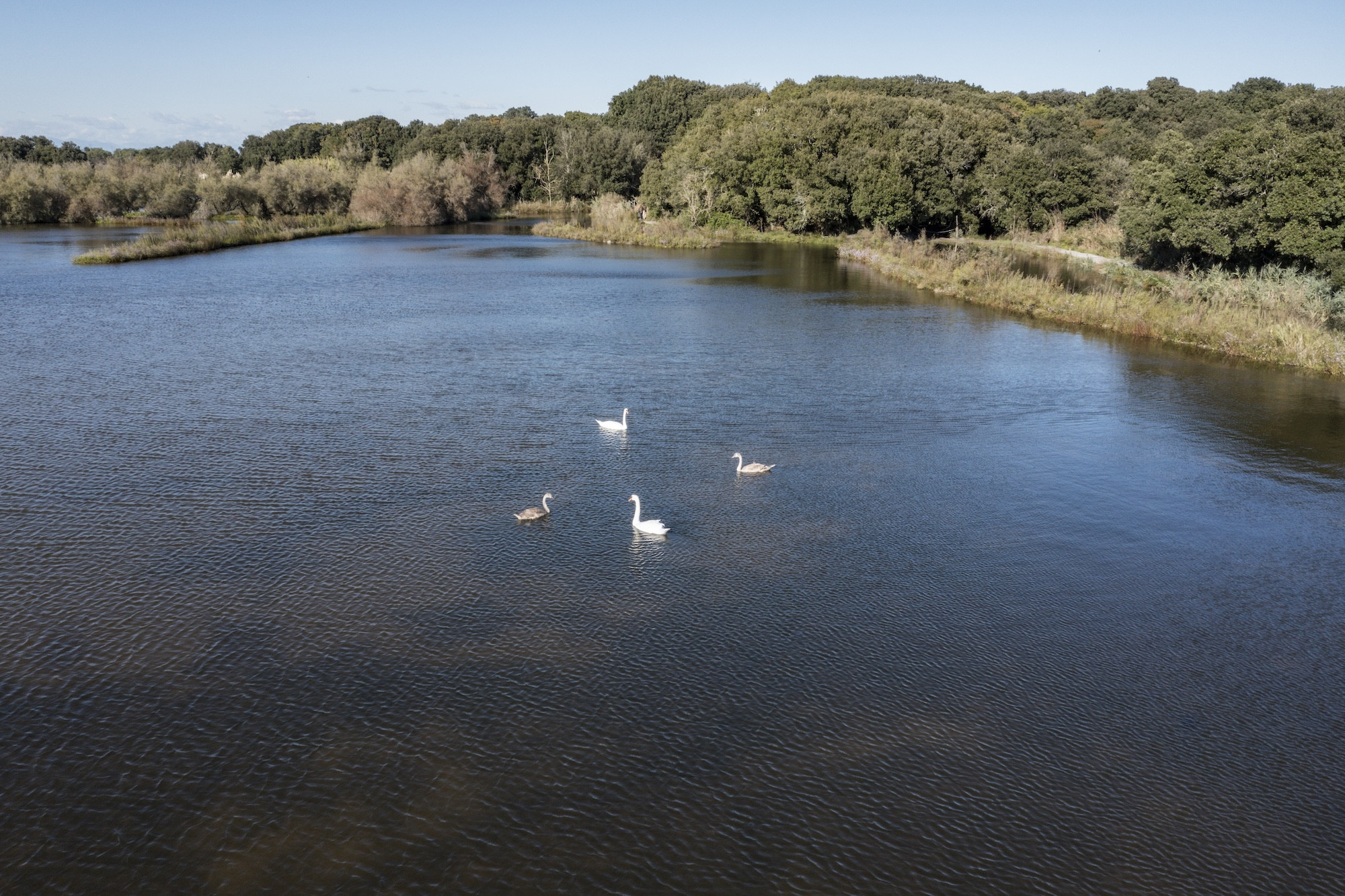
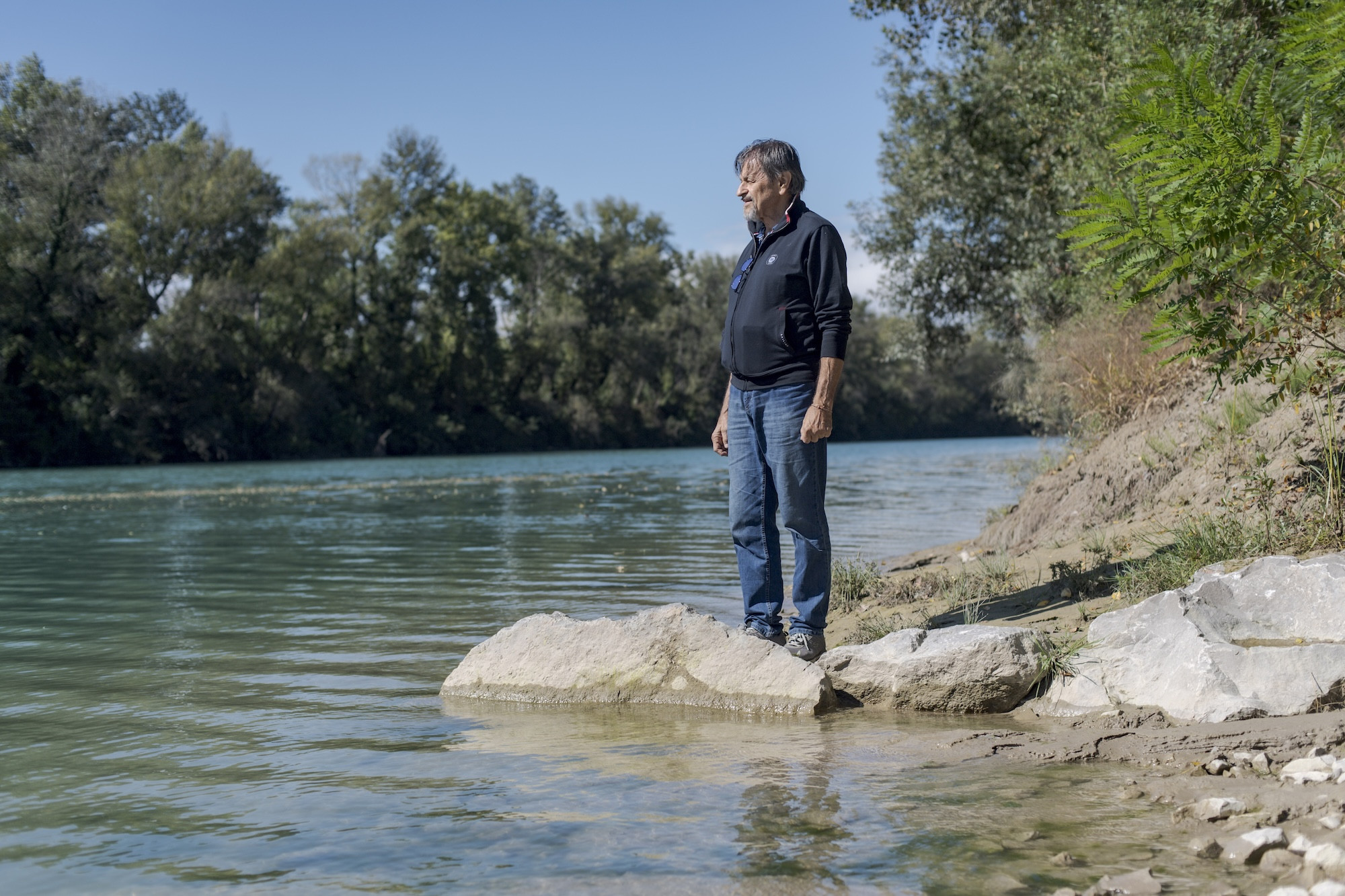
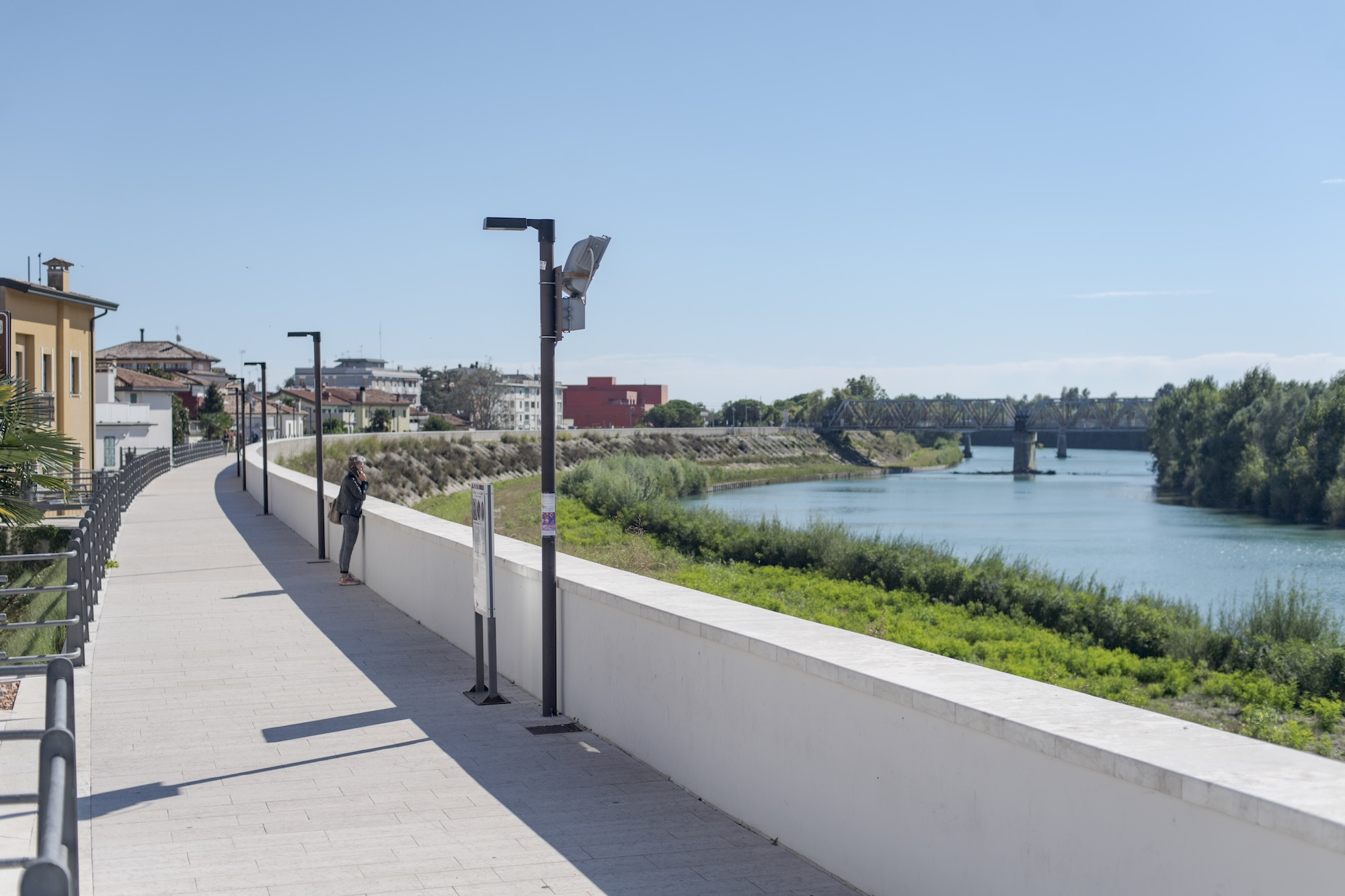
The Tagliamento in Latisana, 45km south of Spilimbergo, appears as a more regulated waterway. The first row of houses along its banks and the historic port – a key hub of trade with Venice as early as the 12th century – no longer exist; in their place stand high concrete embankments built to protect the town. ‘The Tagliamento is so beautiful, yet so frightening,’ says resident Giorgio Mattassi, now retired, as he walks along the river banks.
“We need substantial infrastructural interventions upstream for our safety,” states Sandro Vignotto, a councillor in Latisana. “We don’t care where or what they are; we simply want the process to move forward.” In 2025, Latisana commemorated the devastating floods which hit the town in September 1965, followed by an even more destructive event the following year.
“People upstream don’t understand that flooding is a tragedy. It destroys lives, animals, and homes; the economy collapses, and people are forced to migrate,” says Giorgio Mattassi, who experienced the floods of the 1960s in Latisana as a child.
In November 2025, a series of floods, caused by abnormally heavy rainfall, struck a nearby area in Friuli Venezia Giulia, producing an estimated €80 million in damages, two deaths, and the displacement of hundreds of people.
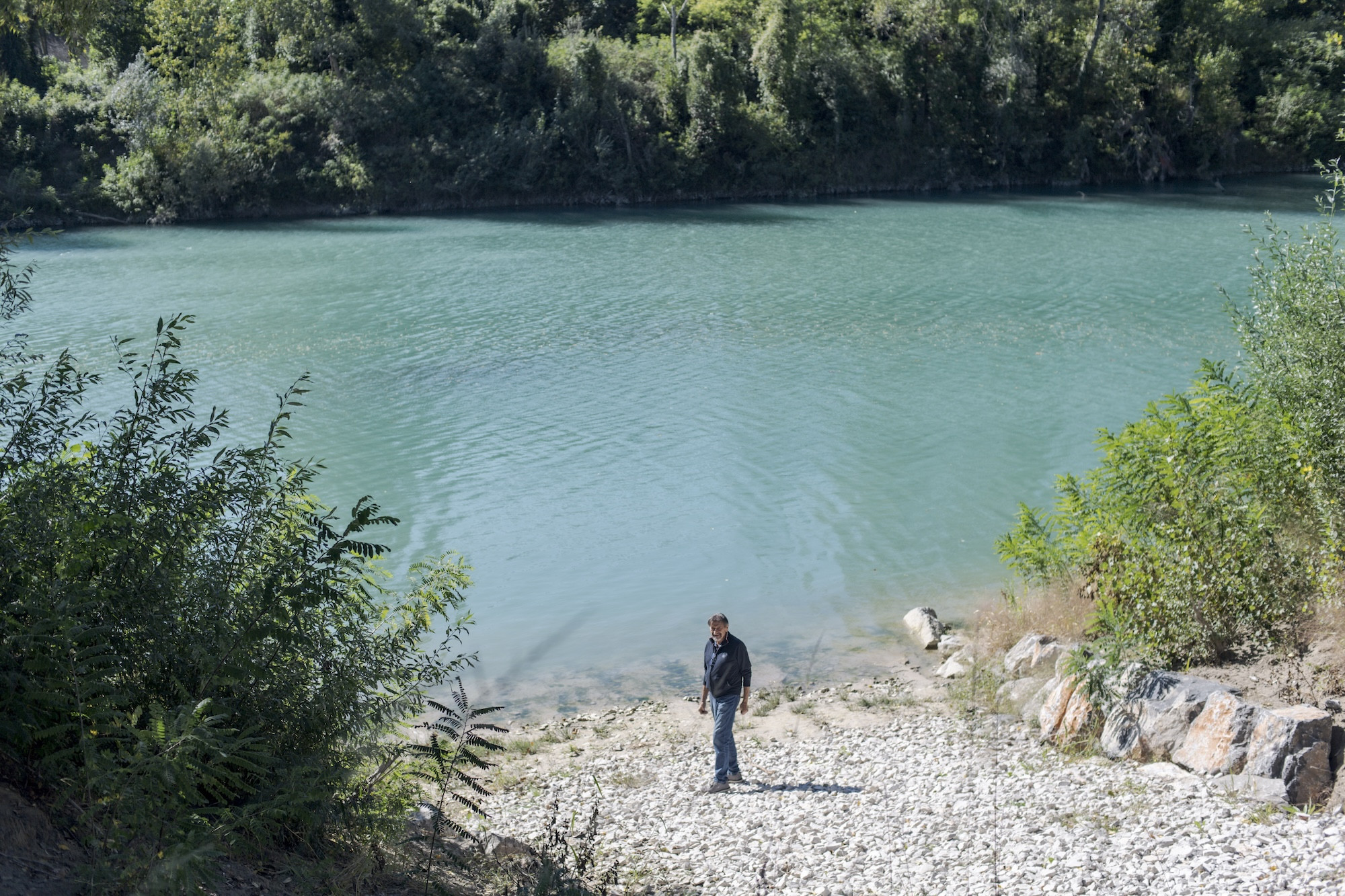
“We recognise the importance of flood prevention,” says Fabio Masotti, a regular visitor to the Tagliamento. A passionate photographer, he loves observing how the braided channels change course and colour depending on their depth and the sunlight.

He comes to walk on the riverbed with his children and to go canoeing. “But flood prevention solutions should be nature-based and work with nature, not against it. In our territory extreme weather events are increasing due to climate change, aggravated by excessive urbanisation and the overexploitation of rivers, for example, through aggressive gravel extraction. The Tagliamento provides vital ecosystem services and plays a key regenerative role,” he adds.
Propaganda and Polarisation
Fabio is one of the most active members of the organisation Noi siamo Tagliamento (We are the Tagliamento). Alongside other committees, they organise events, conferences and public meetings to inform the local population.
According to them, political propaganda has polarised the discussion around the Tagliamento, pitting residents of the valley against those in the middle course. “For reasons of political opportunism, the Region is pushing for large engineering works that would supposedly protect them permanently from future floods. They want the votes from the valley, since those areas are wealthier and more populated.” Fabio Masotti adds.
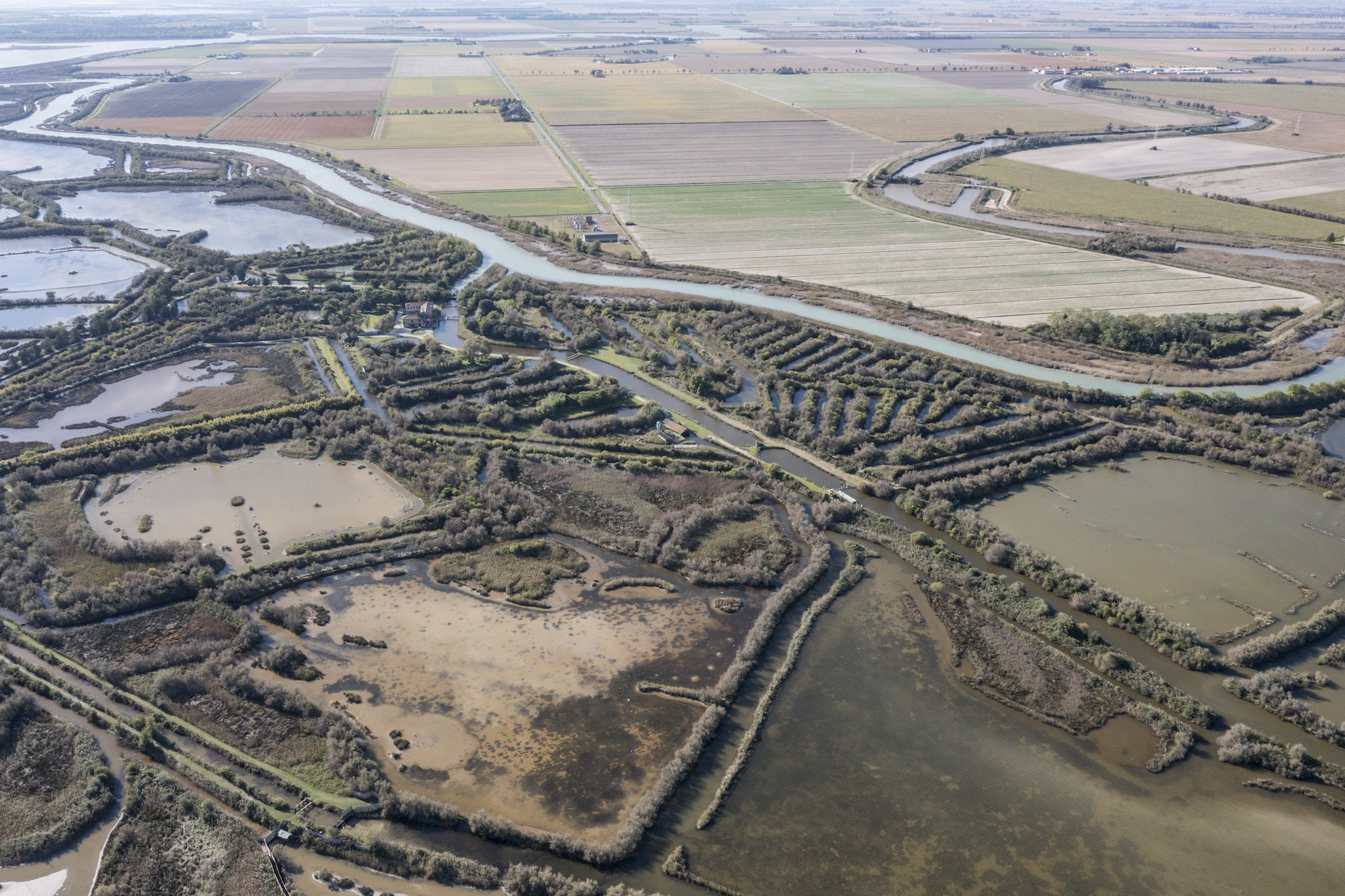
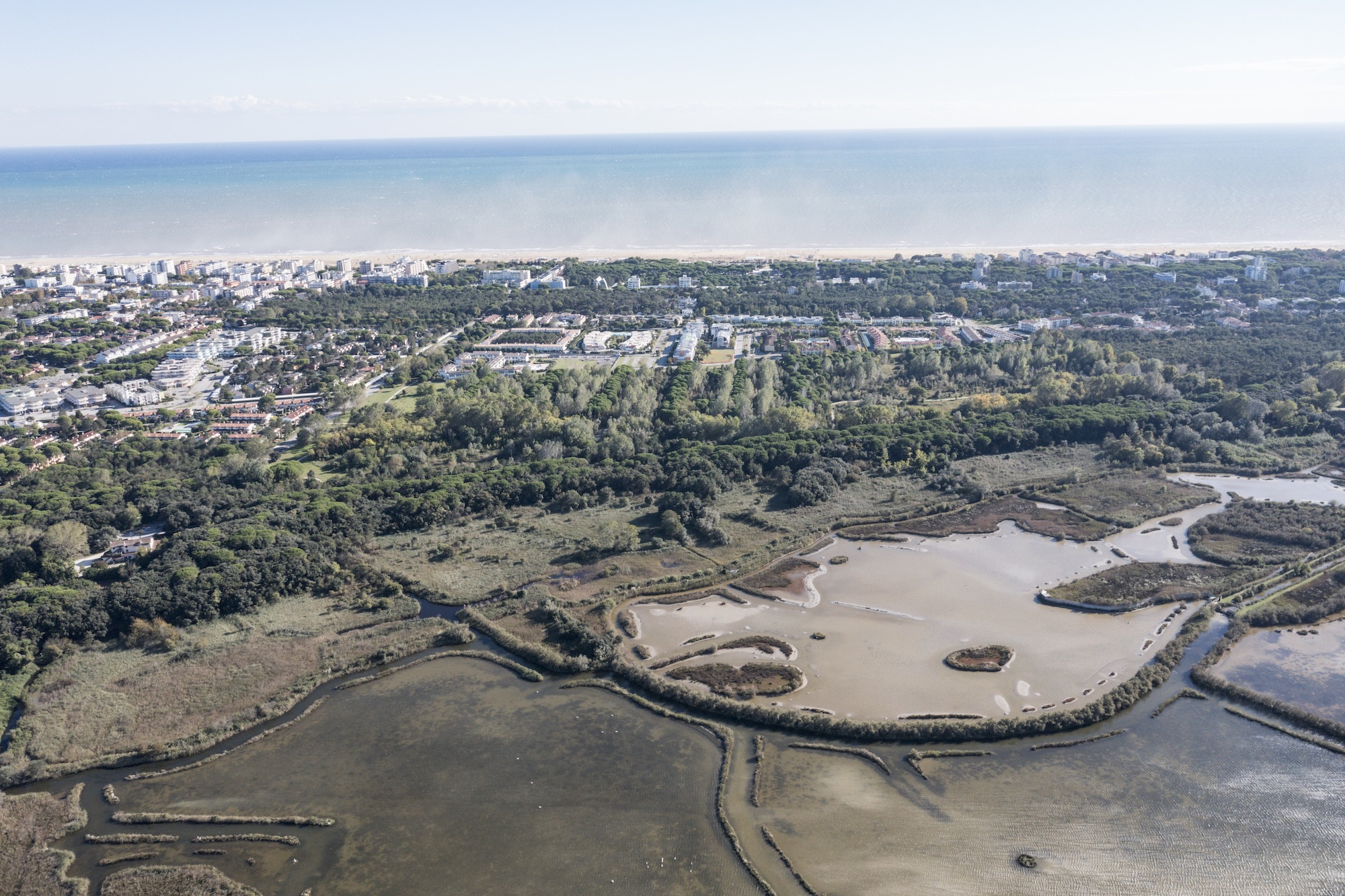
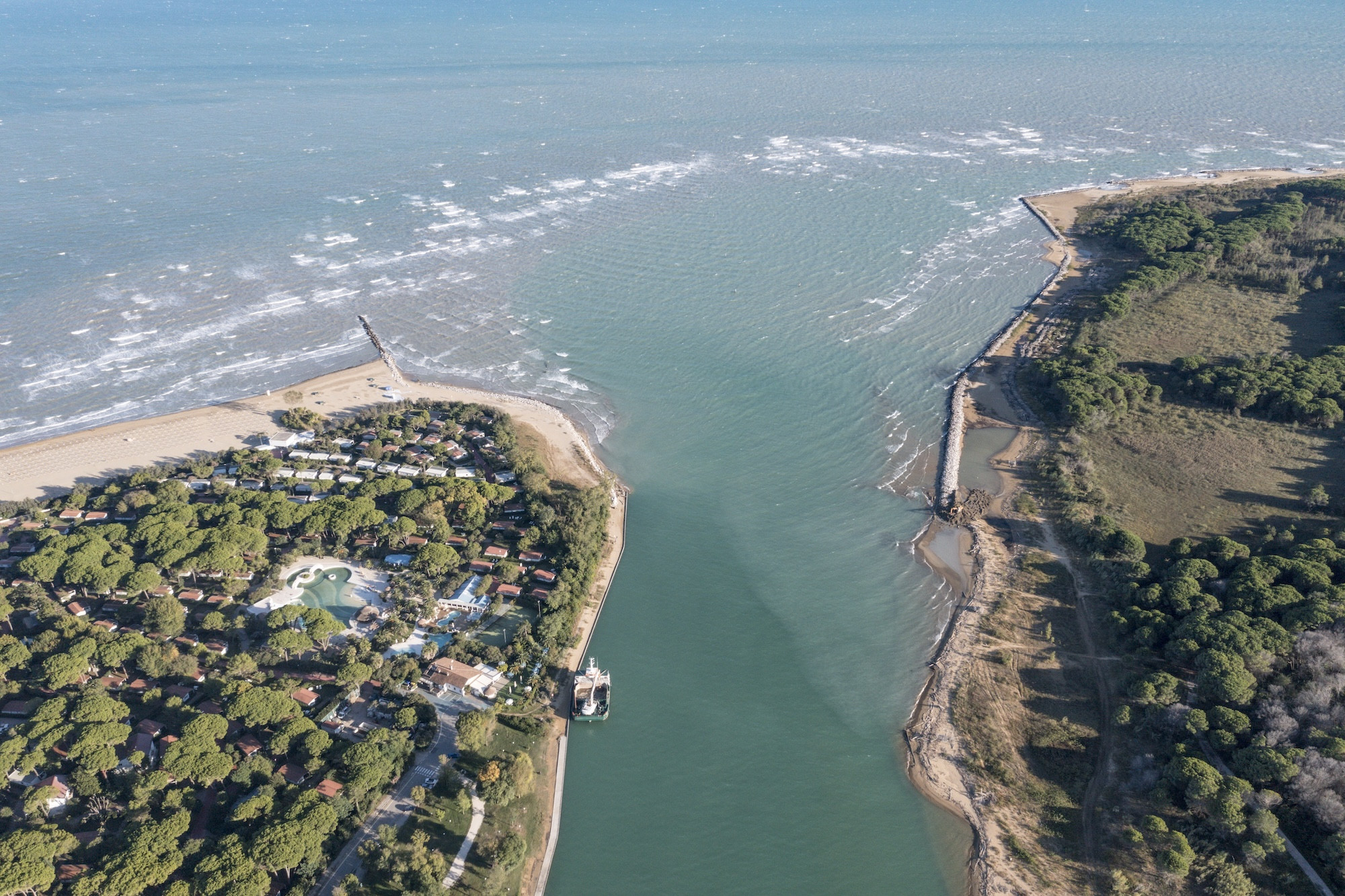
The Tagliamento flows into the Adriatic near some of Northern Italy’s most intensively developed tourist areas, including Bibione and Lignano Sabbiadoro, coastal towns that host millions of visitors every year and rely heavily on seasonal tourism. However, scientists warn that flood protection can never be absolute. Instead, efforts must focus on reducing vulnerability, mitigating potential damage, waterproofing buildings, and relocating where necessary.
After months of stagnation and a lack of transparency regarding the Region’s plans for the Tagliamento, the tender for evaluating alternative project designs, as required by law, will be officially launched in February 2026.
Pirates of Tagliamento
“The priority should be to consider what we call a systemic or integrated solution,” Professor Tockner argues. “Instead of a barrier, alternative solutions could include enlarging the river section downstream of Cornino and increasing natural retention capacity there,” he adds. “You could achieve similar flood control while improving, rather than deteriorating, ecological conditions. Protecting nature means protecting people.”
Professor Marco Petti from the University of Udine, who studied the Tagliamento for decades from a hydraulic perspective, also underlines the necessity of an integrated solution. “As an engineer, I don’t think nature-based solutions are not naturalising the river alone is enough,” he says. “But it would be better to distribute water volumes management along the entire river through smaller, less invasive interventions. Relying on a single mega-structure would be damaging.”
Professor Tockner suggests that designating the Tagliamento as a UNESCO Biosphere Reserve could offer a way to recognise the inseparable link between nature and culture. “If we are not able to protect the last free-flowing rivers in Europe,” he warns, “then promoting restoration of degraded ecosystems risks becoming obsolete.”
“In ancient times, the pirates of the Tagliamento would go raiding on rafts,” recalls Fabio Masotti. “Today, we feel a bit like pirates too, adventurers and guardians of our River. We need to fight to protect it. We cannot delegate this responsibility to anyone else.”
 *This reporting was carried out with the support of Journalismfund Europe