




As a second-year media student at Damascus University in 2007 or 2008, I first encountered the Anecdotal Lead, or Wall Street Journal Formula. It captivated me, especially compared to the dull Arabic newspaper reports, whose sentences were like carvings in wood.
By 2011, however, the technique had lost its novelty through overuse.
The Wall Street Journal-style anecdotal lead began as a journalistic technique to clarify complex ideas by focusing on a single personal story, making distant crises more emotionally relatable. However, over time, what was originally meant to enhance clarity has, in many situations, become a widely used and often overapplied narrative method.
In countries such as Syria, Palestine, Lebanon, Sudan, and Yemen, victims often proclaim: ‘We are human beings—not statistics’. But are we truly?
The Anecdotal Lead was originally intended to show how major events influence individuals by giving war or disaster a human face and genuine identity.
Early in the Syrian uprising, attention focused on Hamza Al-Khatib, a 13-year-old who died in Ba’athist Syrian government custody in Daraa on 25 May 2011. Later, Syria became synonymous with ‘Alan Kurdi,’ a two-year-old found dead on a beach in 2015. Other names—Bassel Shehadeh, Mazen al-Hamada, Rami Hanawi, Zaki Cordello—also humanised the crisis from different viewpoints. Yet despite these stories, violence persisted, and the flood of accounts became overwhelming.
The Anecdotal Lead encountered a significant challenge: Does humanising tragedies genuinely succeed in making others care or act?
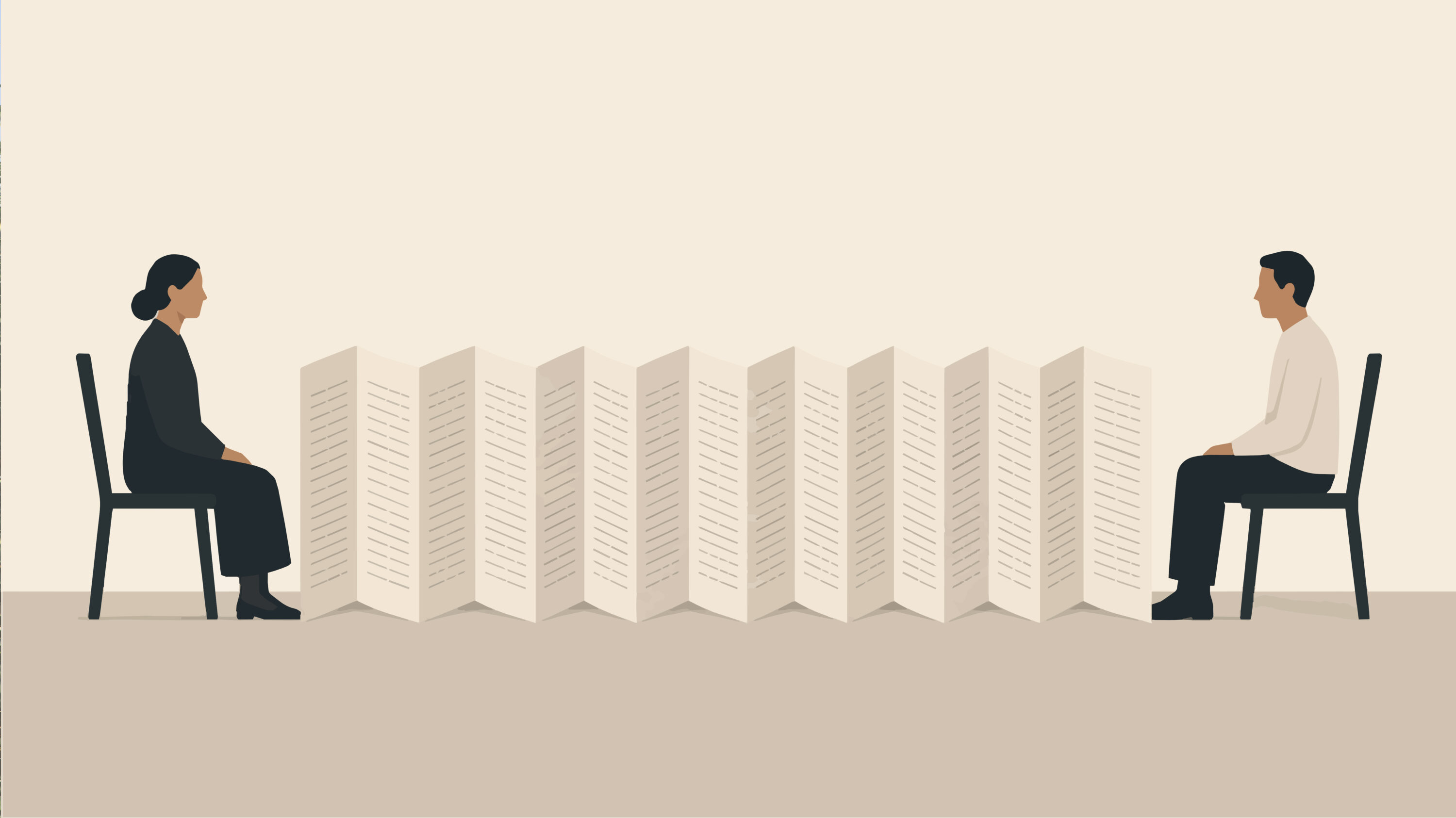
The central problem is not the absence of human stories, but their overwhelming number. This surplus may paradoxically blunt the intended impact, weakening the connection between journalist, subject, and audience. But which factors affect whether a personal story motivates meaningful empathy or simply fades into the background?
War Has a Vibe
Stories from war zones are shared and celebrated for inspiring qualities. Listeners in ‘safe zones’ react—sometimes with tears or sympathy. These stories are not ignored; they are repeated so often that their impact diminishes with each retelling.
Because these stories are dark and shocking, listeners often distance themselves, seeing them as ‘the stories of others’. Empathy does not prompt listeners to claim these experiences as their own or to accept that such realities could be theirs. War is not a fate reserved for specific people, yet it is framed as such.
This distancing turns stories into spaces of isolation, keeping listeners and storytellers apart due to their differing experiences. Common responses include, ‘I can’t imagine what you’ve gone through,’ or ‘this is unbelievable!’
But what if I responded, ‘Try to imagine yourself as the hero instead of me; try to claim my story as your own’?
Nataly Aukar, a Lebanese comedian, once joked, ‘People don’t believe I experienced war; war has a vibe, and I don’t have it.’
Aukar’s humour reveals how suffering is sometimes treated today as a performance, with storytelling at its core. I recall reading Maxim Gorky’s “The Mother” as a child. I wasn’t a mother, Russian, or communist, but I easily entered the story’s world. That night, I understood how storytelling and translation connect us. However, it’s often easier to relate to fictional characters than real people.
Ironically, audiences often find raw stories about real individuals hard to handle, yet eagerly consume the same stories when dramatised and artistically shaped. Art, in a way, creates a safe space between the viewer and the subject, allowing the former to emotionally distance themself when the story feels too real.
Imagine War Happening to You
In 2014, Save the Children launched a powerful campaign titled “Most Shocking Second a Day.” The video follows a British girl over the course of a year. At first, she celebrates her birthday, attends school, and enjoys everyday moments with friends and family. Gradually, however, her world begins to collapse. Background news reports hint at escalating conflict, explosions reach her neighbourhood, and she is eventually forced to flee with her family. The film ends in a refugee camp, where she celebrates her birthday once more, but making a wish is not enough to fix her reality.
The campaign’s power lay in a simple reversal. Rather than showing a distant child from a conflict zone, it invites Western audiences to imagine war happening to someone who looks like their own daughter, neighbour, or classmate. For a brief moment, the distance between “us” and “them” disappears. The viewer is no longer observing another child’s suffering but confronting the possibility that such a story could become their own.
I sometimes wonder why Save the Children never repeated this campaign. Perhaps it was too emotionally intense, or perhaps there were practical reasons that I am unaware of. What made it powerful was not simply that it shows the effects of war on a child. It asks viewers to imagine that child as someone familiar—a daughter, a neighbour, or a classmate.
Ironically, the campaign explicitly highlights the suffering of children in Lebanon and Gaza more than a decade ago, long before the televised Gaza genocide and the recent Israeli attacks on Lebanon. This perhaps suggests that changing the storytelling approach is not always enough to change reality on the ground. One decade later, we have accumulated even more stories of Palestinian and Lebanese children—reported, translated, documented, and retold in every possible way. Yet the stories multiplied faster than the solutions. The number of stories that failed to save children seems to have statistically exceeded the successful ones
In its more recent campaigns, Save the Children has largely returned to a safer approach, using slogans such as “change a child’s future for good?” to encourage donations, urging people to email ‘your MP’ or write to the Foreign Secretary. This offers the audience a different role to identify with: not the victim, but the potential saviour.
Listening to Our Own Stories
When someone from a war zone shares their story, they must consider not just their audience but also themselves—the first listener. Retelling the story can lead to self-othering, distance from the past self, and entrapment in a victim identity. Over time, the sense of self may shift, even if the story does not change.
This indirect tension between narrator and listener is not limited to war stories. It spans any vulnerable narrative that makes listeners confront emotional or psychological barriers. Similar dynamics become clearer when the story concerns a danger that many people still perceive as happening only to others.
For example, when I think of rape stories, I realise I’ve never been raped—YET. Such crimes remind me of three stories from different contexts: Monica Bellucci in the film, Irréversible (2002), which takes place across various locations—from a private apartment to streets and bars, culminating in the tube where the rape occurs.
There are also regional stories, such as those I heard while working as a journalist—stories of Yazidi women in Kocho village, who hurriedly prepared lunch when their world changed instantly—they were taken as hostages, traded among ISIS fighters, and enslaved.
A third version involves similar stories of rape and disappearance occurring weekly in various Syrian cities, including my hometown, which are rarely told due to shame. These examples illustrate why I use ‘YET’—positionality in storytelling influences how stories are perceived. As a Syrian woman living in the UK, these stories remind me that rape is not merely a dramatic narrative device or a distant possibility. It remains a reality that could intrude into almost any life, including my own.
Seeing Ourselves in Other People’s Stories
Stories of sadness or misfortune can be contagious, prompting some to distance themselves for protection. Having analysed stories about disability in the Syrian context for some time, I notice a paradox: people often share these stories without genuinely engaging with them. Being born with a disability differs from having a disability due to accidents or war injuries. The latter stories evoke a different response because they remind those with healthy bodies that disability can happen to anyone at any time, making it harder to see people with disabilities as ‘others.’
During interviews for a journalist guide, I spoke to people with various disabilities. Many expressed frustration that their stories stay within their own community. If shared more widely, their impact might blur.
In Arab societies, people with disabilities are often seen as inspirational or as objects of pity, with little room for their full identities. I recall a blind man telling our focus group how a journalist left him on the street after an interview, without helping him home. Sometimes, our stories seem to overtake our identities, making us believe our value is measured by them.
Stories do not necessarily bring people together. They can just as easily reinforce the distance between those who tell them and those who hear them. In light of these reflections, the purpose here is not to discourage storytelling or suggest that emotion should give way to detached reporting. Rather, it is to recognise how the position from which a story is told—and received—shapes its meaning and impact.
Genuine connection requires a willingness to see ourselves in others’ stories and to resist reducing people to their suffering. Each story, then, is more than a record of trauma; it is a thread in a shared and unfinished narrative, one that continues to evolve with each retelling.