





After two years working on public policy at Pinterest, Ifeoma Ozoma resigned and spoke about the gender and race discrimination she experienced at the company. She subsequently began a consulting firm called Earthseed and has worked to advocate for whistleblower protection legislation and other worker protections in the technology industry. At Earthseed, she co-sponsored the Silenced No More Act in California, which prohibits employers from enforcing confidentiality and non-disparagement clauses in settlement or employment agreements that prevent workers from disclosing facts about workplace harassment, discrimination, or retaliation based on protected characteristics under the Fair Employment and Housing Act (FEHA).
In this conversation, Ozoma discusses her work, the current political situation in the US, how to bring change in the tech industry, and her sources of inspiration.
Enrico De Angelis: You mentioned in your conversation with Tammarian Rogers that today it would be even more difficult to speak out loud for people who want to denounce cases of discrimination, harassment, or problematic behaviours in the tech industry in the US. Can you elaborate on that, and tell us about the general atmosphere today in your country?
Ifeoma Ozoma: The reason why I said that is because of what we’ve seen already in the US with our federal government, the State Department, and the White House, taking very targeted retaliatory measures against even green card holders, threatening citizens with the revocation of their passports. So none of the retaliation from the government is hypothetical anymore. We’re seeing it happen all the time. And we’re only hearing about the cases with people who have access to media.
There are so many more cases that I’m sure we haven’t heard about and we may never hear about because they’re people who are less resourced, which is exactly what authoritarian regimes do: They go after the people who have the least ability to fight back or have their stories told.

And then, on the tech company side, both anecdotally and in the data, we’re seeing tens of thousands and cumulatively hundreds of thousands of people laid off. I have no doubt that many of those folks who are being laid off are people who have spoken up at some point, and they’re just added to the numbers of folks who are let go as part of a reduction in force.
And so, especially in a society with zero social safety net, when your job is tied to your health insurance, tied to your ability to live, your ability to pay your rent or your mortgage and to provide for your family, what we’re seeing are not theoretical risks for people speaking up. They’re real immediate and long term risks for people. And so I think just overall, it’s so much harder for people to speak up.
EDA: The situation is getting worse despite some substantial legal improvements you also advocated for (in 2022, in California the “Silenced no More Act”, a law that places restrictions to confidentiality provisions in work agreements, was approved). How do you explain these developments? Is it the general political atmosphere, or rather other factors more related to the tech industry?
IO: It’s all of it. The law that I worked on was at the state level. We still don’t have federal protections that actually cover people to the same extent that the law in California and in Washington and a number of other states do. So, in the event that you’re working for a company, and you happen to be in one of those states, you have some legal protections. But of course, they hire people all over the country and all over the world. So unless you are in a jurisdiction where you are covered, you are totally left on your own.
Moreover, the few measures that we used to have in the United States, like the “Equal Employment Opportunity Act” (EEOC), the Commission and other federal agencies that are supposed to deal with labor issues are now much weaker, as many of their lawyers have been fired by this administration.
The people in charge are not folks who are aligned with workers anymore. And so you have a much worse case even if your situation is heard or taken up. If you file at the federal level now, you’re just as likely to have them make a ruling in favor of your employer.
And I think from our perspective as advocates, we have to be understanding of that and careful not to ask people to martyr themselves.
EDA: During the last two years, the role of tech companies in wars, as we have seen particularly in Gaza, has come to the surface as never before. Is there a direct connection between your work in terms of protection of workers’ rights in tech companies and this aspect in particular? In other words, does protecting the rights of tech workers in the US have an impact on tech companies’ complicity with human rights violations abroad?
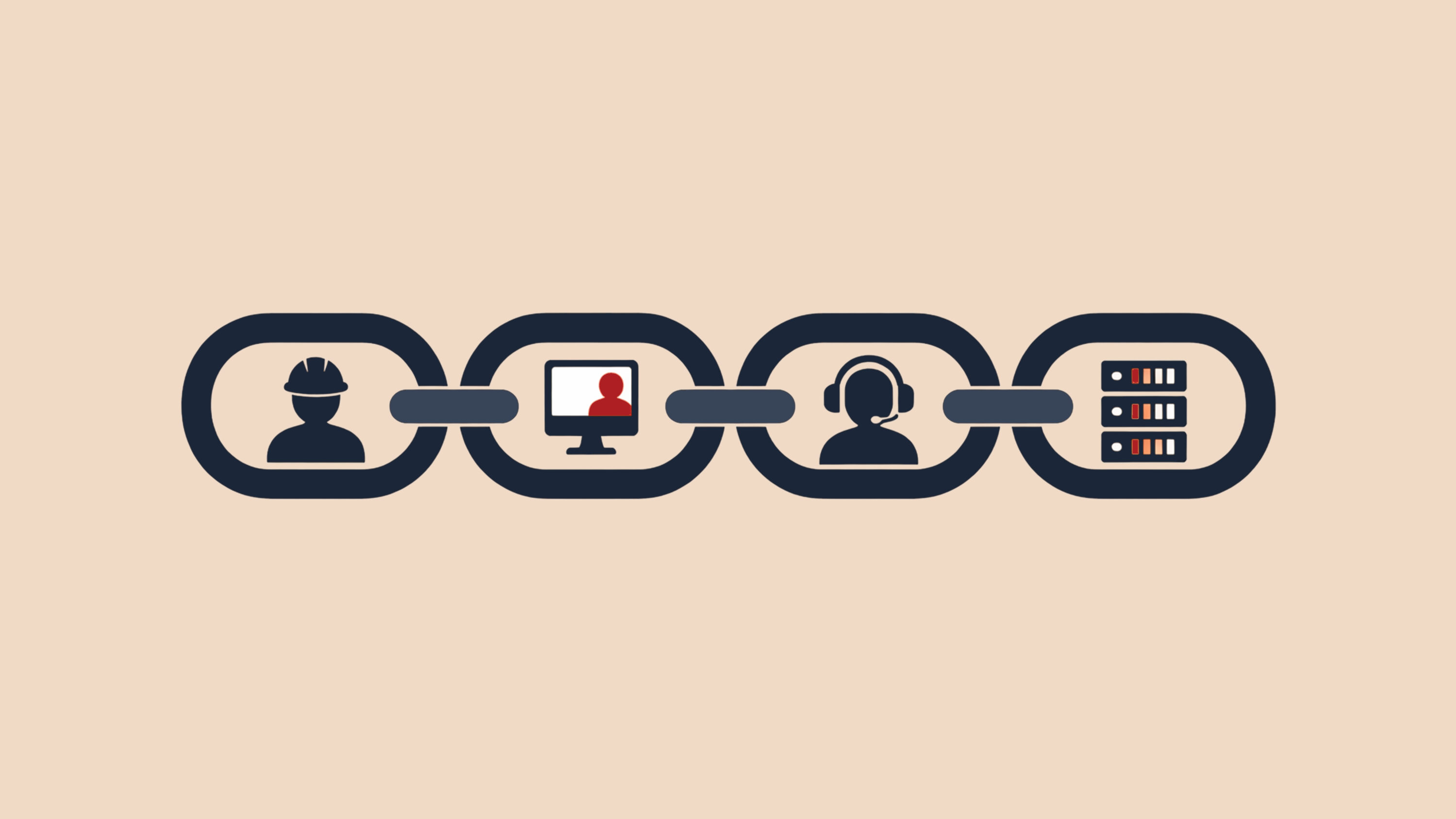
IO: It’s absolutely connected because those who are working in the kinds of positions that I used to work in, in these tech companies, are the most privileged folks in the tech worker ecosystem. And so if companies are successful in silencing their ‘white collar’ workers in the United States who have the most means, the most money, and the most access to lawyers, then what of the folks who are doing labeling in East Africa and in Southern Europe and in Southeast Asia?
And what of the folks even further down the chain who are in mines and basically in slave labor conditions in Congo and in other areas? So it’s all very, very connected to me. If you’re able to silence people in your offices on issues that are already settled in law, then you’re making sure that no one is able to speak up about what they’re seeing when they’re being told to program things for drones that will end up killing people in Ukraine, in Gaza, in Sudan, and wherever else, because all of it is connected.
EDA: You mentioned the importance of adopting pragmatic approaches in order to bring change and avoid what you call the typical analysis/paralysis many activists suffer from. In the context of the US, you say you were inspired by the strategies of the environmental movement, like exerting pressures on shareholders in order to force companies to change their behaviours. You stressed also that we should accept that we live in a capitalist society and recognise its power balances, and act accordingly. Do you think this type of approach is effective also when it comes to addressing the relationships between tech giants and weapons industries? I ask this especially since you said that in your case the leverage was money (as shareholders have to pay lawsuits for example) and not racism or gender discrimination. In other words: what if that economic leverage doesn’t exist? Or, as you mentioned, when the wider political atmosphere is particularly hostile, as it is today?
IO: I think it depends on where you are, but certainly in the United States, in Germany, in the UK, you’re not going to be very successful when the government is also supportive of arming folks who are carrying out genocide. And so if you don’t even have leverage with your own government, then you’re not going to have the kind of leverage you need with shareholders.
You certainly aren’t going to have leverage inside the companies with the individuals who are making money off by arming attackers in a genocide and arming those like the Israeli government, like the Russian government, like the UAE that is operating in Sudan.
Yeah, it’s all really terrible and so I think part of why there has to be global engagement and global connections between activists is that even though we’re not able to do much in the US, our folks who are in Ireland and able to put pressure on a government that actually agrees that genocide is wrong is then able to leverage pressure. Because many of these companies have international headquarters in Dublin. All of it is connected and so we have to be working together to figure out where there’s the ability and where’s the political space to put pressure on the companies, even if it’s not directly from the US, directly from the UK, directly from Germany.
EDA: You said that one of the lessons we should learn in Europe while observing the US is that things can indeed get worse from one day to another. But trends are quite clear. Things are already getting worse here too: far right parties are winning or at least gaining consensus; freedom of speech is being repressed, and welfare eroded. In this context, how would you think your practical approach should be adapted?
IO: The answer is always the same: to diversify the approach. And I think it also means working with different types of activists. So I think in the advocacy space, we’re so good at siloing ourselves. Like: ‘oh, I’m the group that works on human rights’, ‘I’m the group that works on immigration issues’, ‘I’m the environmental advocate’, when all of these things are connected.
And so folks need to be working together. If a labor action is able to get things moving in France, then that’s the type of action you need to do. If environmental issues are more salient in Germany, then you can use different parts of the activism ecosystem to target the same companies and to target the government in different ways.
You know It’s so interesting that World War II was not that long ago. So in theory, it shouldn’t be curious to people that fascism can take over in Europe in general, country by country and very quickly. History is not that separated from us and yet two generations past people completely forget what happened in their own countries, even if some of the people who witnessed those events are still alive.
And so for me it is really infuriating that we can be so close to it and people can still act like, oh, there’s no way that it could happen here.
EDA: During the conversation with Tammarrian Rogers, I really liked when you said that change in tech companies doesn’t pass only through those who are strictly “tech workers” but also other worker figures, with smaller wages and rights. So here are two separated questions: where are we in terms of organising across different types of workers in the tech industry? And, second: across different countries?
IO: I think the companies understand exactly how important it is, and that’s the reason why they’ve worked so hard to silo groups. So that, even in one company, you may literally not be able to reach out to and communicate or engage with folks who are doing work for the same company because they’re using countless different contracting agencies.
The primary mechanism that they’ve used was to ensure that their engineers aren’t able to be in communication with even the data labelers who are ensuring that they’re able to feed all of this information into a large language model. So it is incredibly important that folks working on the coding of these systems understand that their work would be impossible without the people making cents a day, cents an hour in Kenya and in Bangladesh and in other places to label the information.

But the companies have ensured that there isn’t the ability to directly communicate. And that’s where I think journalists actually have a huge role to play because they’re the ones who help to tell these stories. Like Time Magazine did a huge series on the Kenyan data labelers who have been doing both content moderation for companies like Meta and then the ones who are now doing a lot of the labeling for Large Language Models (LLMs).
And the same for folks in Venezuela and in South America who are doing a lot of the labeling for these systems and looking at really horrific content because the companies know that no one would be willing to do it in Western Europe or in the United States, and certainly not at the pay that they’re able to exploit people with in these other countries.
EDA: Are there no more traditional initiatives from below, like labor unions?
IO: Not organizing, unfortunately, but I do know that there are a number of organizations like Tech Equity in the United States and others who have been doing reports. And they actually worked with a large labor union in the United States to do a report on how people in this chain of work are being exploited.
But it’s next to impossible to do old school organizing because they’re not even at the same company. So the way that the companies have set up this work is you may work for OpenAI, but the people doing the data labeling are at 10 different contracted agencies so that the company can state legally that they never actually hired these people. They were just hiring the work through a contract with X, Y, Z agency.
EDA: I want to finish the interview asking you about sci-fi writer Octavia Butler. In 2020 you founded a consulting firm, Earthseed, whose name is inspired by a political-religious movement in the novel “Parable of the Sower”. What place does she have in your work?
IO: When you read Octavia Butler, it looks like she knew it all. I mean, if I believed in time traveling, she is surely an example of someone who has time traveled because she knew exactly what would happen and how it would happen. And that’s why her work moved me so much. But the core tenant of Earthseed in the books is that God is ‘change’. If anything is true, it is that things will change and we have our own role to play in changing things.
And so that really is what I have believed in, that like so many of us can feel overwhelmed by the fact that so many horrible things are happening all of the time and what power do we have as individuals to change it. And what I really took away from her writing and what I try to live with day to day is that I can’t change absolutely everything but I can change small things that I have the ability to touch.
So in my case, I have a background in political science and public policy and I know how laws are made. That is one thing that I can do. Can I change Hollywood? No. I have no experience in that. Can I go and change who becomes the president? I don’t have billions of dollars, so I don’t have the ability to buy the next president, unlike someone else.
But where I can, in my own small space with my own expertise and my own networks, make changes, that is what I’m committed to.
We all need to step up because I feel a lot of the power of authoritarians is in making people feel powerless. That there’s absolutely nothing that individuals have the ability to do, so they might as well just go along with what is happening to them and around them.