


I was born in 1958 in Algeria during colonialism, while my mother was running to hide from French bombings. I was born in a country that France had called “its” for 132 years, even though my family had lived there for millennia.
Albert Camus, the great intellectual who loved “Algeria,” wrote that same year that independence was “a purely passionate formula.”
He saw the sea of Algiers, the colors of Tipaza, the Mediterranean sun. He didn’t see us. He didn’t want to see us.
He saw his Algeria. The one where enlightened Europeans would teach the “Algerians” how to live together, under the French flag, of course. Because, of course, we weren’t ready. We had no state structures. We didn’t have an autonomous economy. We would have fallen into chaos.
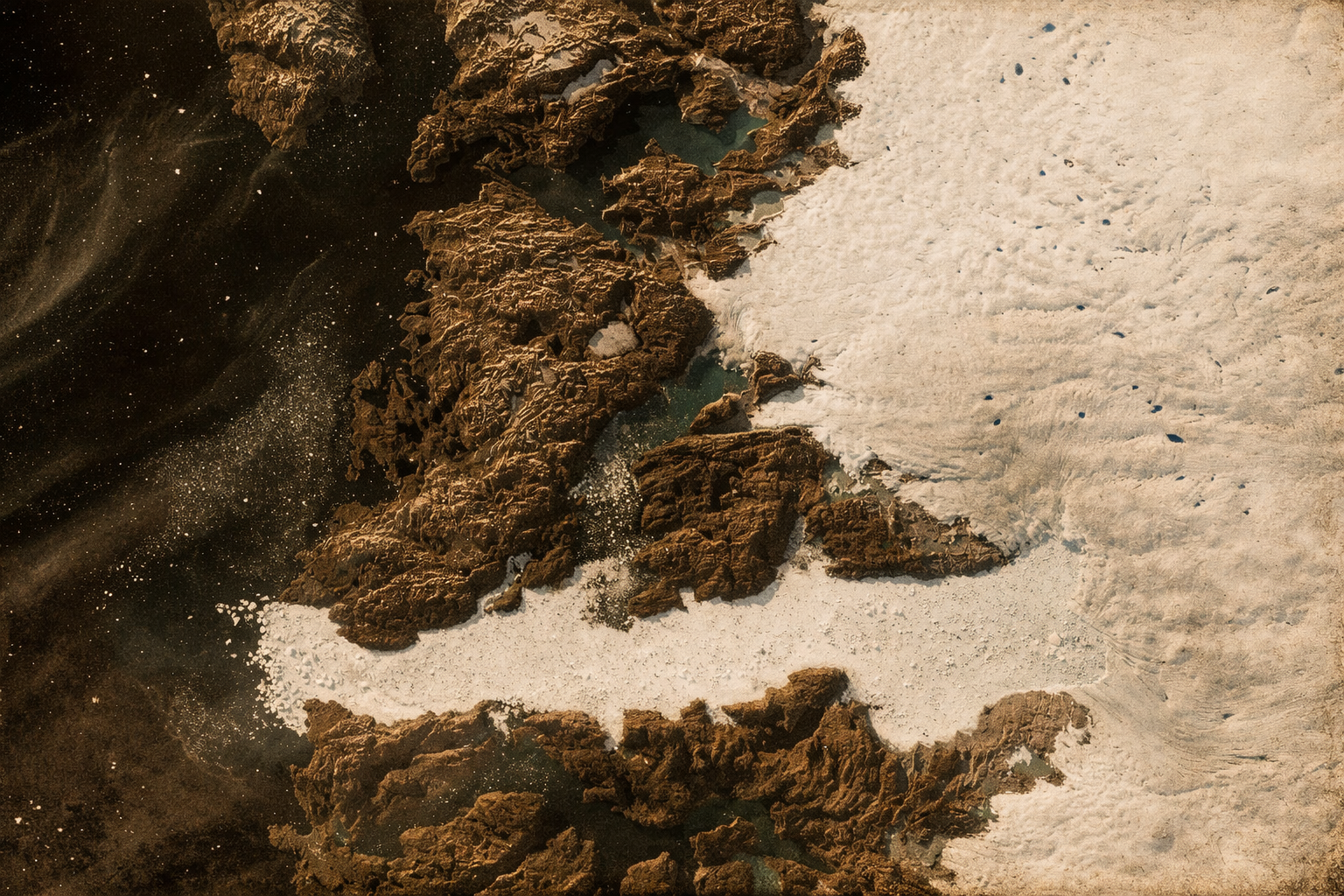
Today I watch Italian news talk about Greenland. They talk about Donald Trump. They talk about Denmark. They talk about NATO, the Arctic strategy, rare earths.
They don’t talk about the Inuit. Just as they didn’t talk about us then. The colonized are always absent from conversations about their own land.
Then I read Björk—an Icelander, who comes from a people who experienced Danish rule, who saw their language and culture survive centuries of interference—who simply writes:
“Dear Greenlanders, declare independence!”
View this post on Instagram
And immediately the explanations arrive. Italian intellectuals who explain history, geopolitics, economic sustainability. They explain that the Inuit could not have preserved their language without Danish scholars. They explain that independence is “political romanticism.” They explain that we must be “realists.”
The same arguments. Word for word. As if they had copied from the French colonial posters of 1958.
What these explanations don’t understand—can’t understand, don’t want to understand—is that Björk isn’t making a geopolitical analysis. She’s doing what we colonized people have always done among ourselves: recognizing each other. Seeing each other.
When Björk says “declare independence,” she’s not presenting a five-year economic plan. She’s saying, “I see you. I know what it means when someone decides what’s best for you. I know what it means when they explain to you that your freedom is ‘too complicated.'”
The colonized sees the colonized.
We see each other across centuries, across oceans. The Algerian sees the Inuit. The Icelander sees the Greenlander. The Palestinian sees everyone. We recognize ourselves in the gaze of those who have always told us: “You’re not ready, not yet, maybe never.”
And then there are other Italians who write, “I’m on the sled.” As if being “on the sled” were a political option. As if the Inuit were picturesque folkloric accessories and not a people with political will. Even solidarity becomes paternalism when it comes from those who have never suffered.
Camus chose his mother over justice. Italian intellectuals choose “complexity” over self-determination. They always choose something—stability, realism, geopolitics—as long as it’s not the simplest thing: letting people decide for themselves.
We, the colonized, know something they will never know: that independence is not a formula of passion. It’s the only formula. The only one that restores dignity. The only one that allows you to wake up in the morning and not have to ask permission to exist in your own land.
Björk knows it. The Inuit know it.
The rest is just the noise of those who have always been able to decide, who now explain to those who never could why they should keep waiting.
We, the colonized, have learned a truth that the Camuses of the world will never learn: you are never “ready” for freedom in the eyes of those who dominate you. You are ready only when you stop asking permission and take it.
I’m sure the Greenlanders will understand this too, when their time comes. And we, the colonized of the world, will be there to see them. Because we always see each other.