


Why do I still read books like this? Each time a text arrives from a place already saturated with images, commentary, and moral certainty, I feel a small hesitation that precedes the first page. The same hesitation I feel before opening another article, another thread, another statement that claims to “explain” Gaza while, somehow, leaving Gaza absent.
For the better part of the past two years, we have read study over study detailing the manifold forms of violence inflicted on the population of this tiny strip of land – maybe to compensate for the screaming silence on or relativization of these horrors by so many colleagues and institutions.
Yet most of these readings only reiterate to what we already know. We know the casualty counts, the satellite images, the story of Hind Rajab. We all know them and what they are symptoms of. At least, those of us who want to know.
There is an exhaustion that is not only emotional but epistemic: the sense that Gaza’s archive of horrors has become so heavy, so routinised, that it no longer clarifies anything. It merely accumulates. And in that accumulation, the place and its people risk dissolving into function – into a screen for moral and political performances and a symbol for the erosion of rights-based global order that, let’s be honest, never truly served those now paying its highest price.
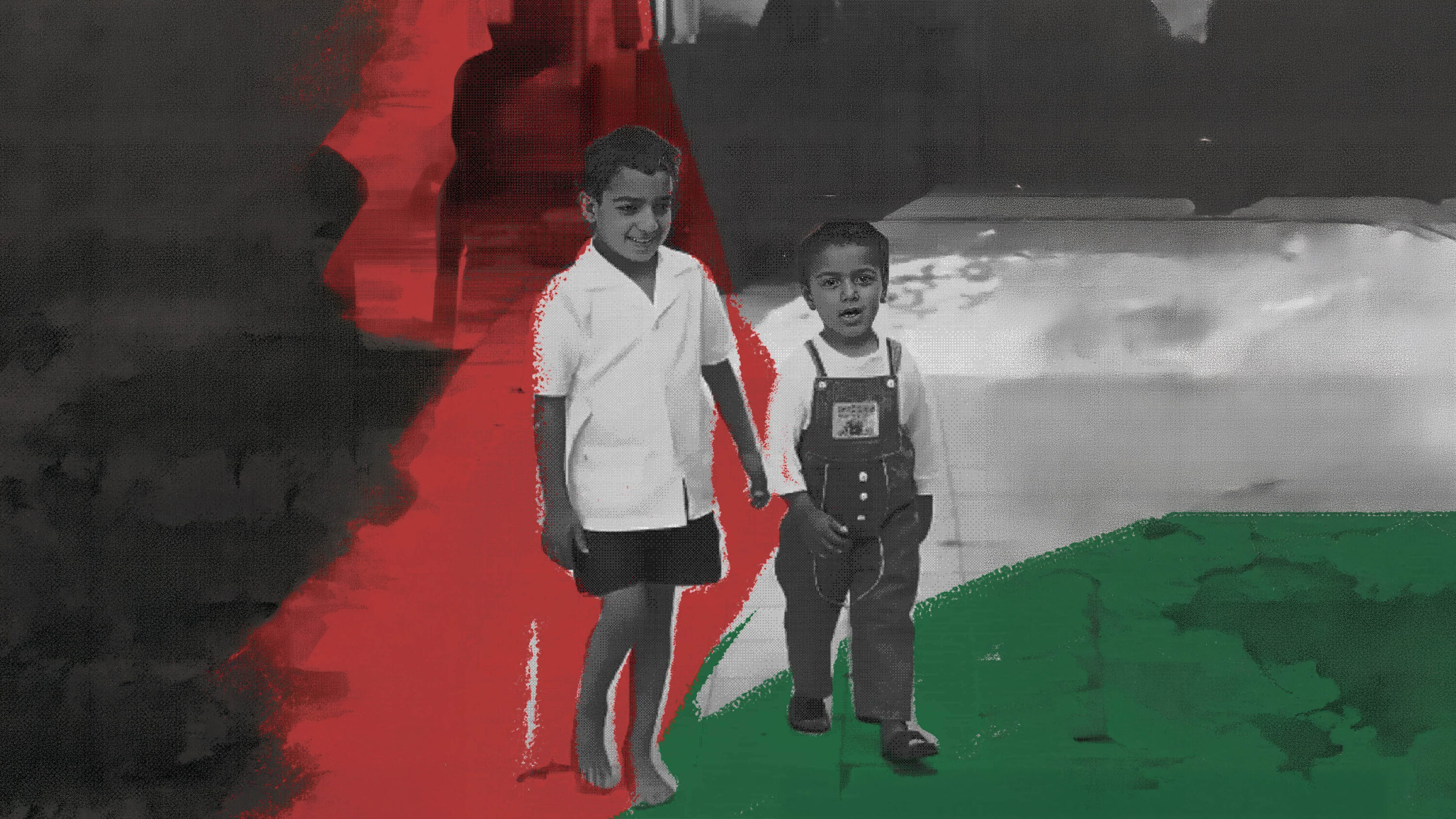
Abdalhadi Alijla’s Fearful in Gaza does not accept this economy. It does not offer Gaza as piecemeal material for a political lesson. It refuses the familiar rhetorical contract in which the reader is permitted to feel only if the text supplies the requisite volume of shock, and in which the writer is expected to translate lived reality into the idiom of an international audience.
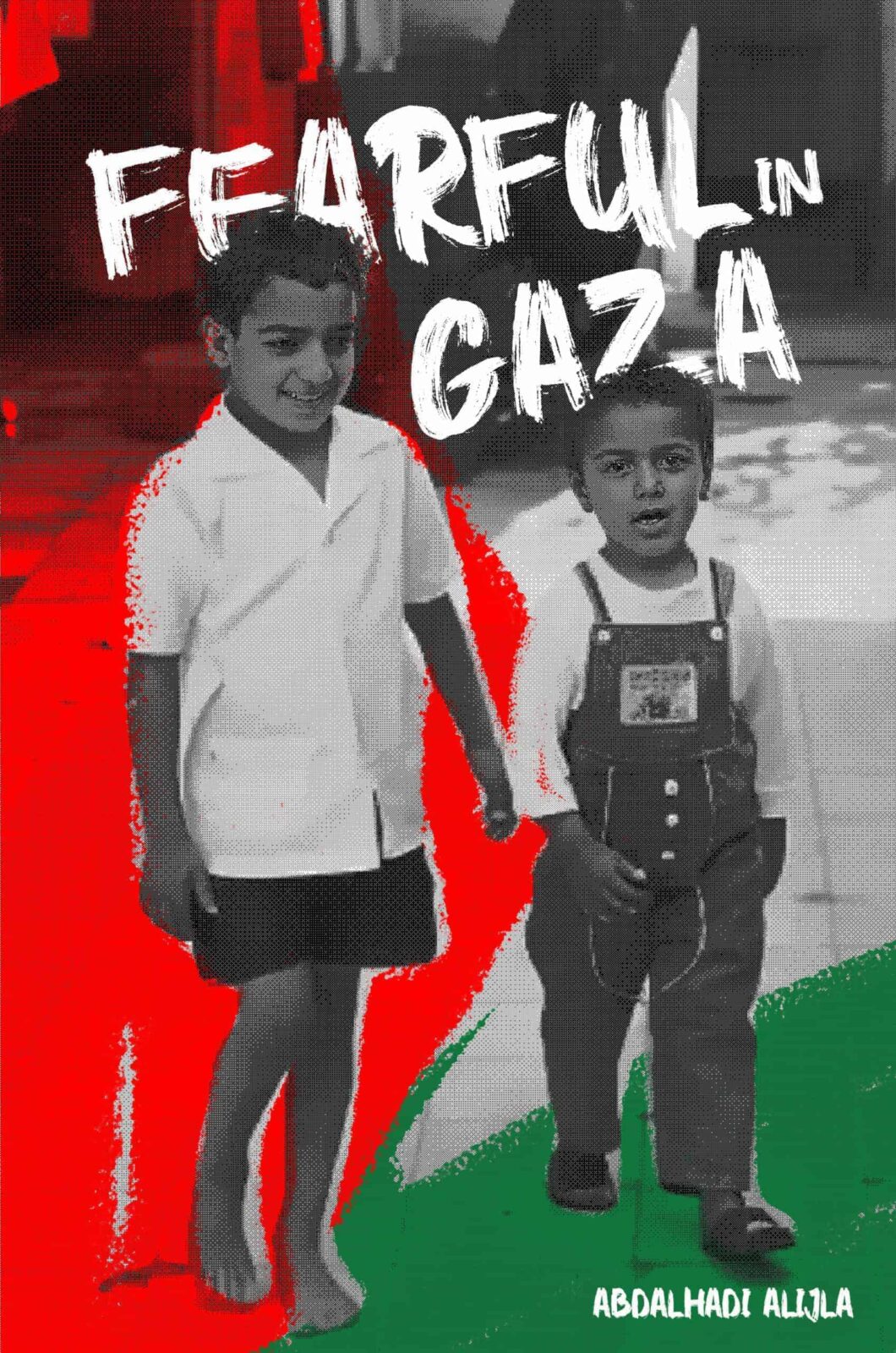
I finished Fearful in Gaza with the distinct feeling one sometimes has after reading a work that is neither “extraordinary” nor “representative”, and yet more unsettling than either category. In fact, the book stays with me to date precisely because it does not contain something shocking in the way the world expects writing on Gaza to shock. Instead, it trusts in being taken seriously in its own, very quiet way.
Alijla insists, with remarkable discipline, in the irreducible seriousness of the ordinary. He writes about growing up in Gaza with an honesty that is strikingly frank and unsparing. “Ungeschönt” (unvarnished?) we say in Germany, where we seem to have a precise word for everything but for the brutal Israel occupation and the genocidal violence deployed in Gaza.
Contrasting with the semantic acrobatics of German officials or media in trying to avoid certain terminologies, Fearful in Gaza comes with a sobering clarity. In fact, its language is almost plain and precisely for that reason it is deeply affecting. Everyday routines, small pleasures, and moments of intimacy and care are described with the same clarity and in the same breath as moments of shame, humiliation, and the slow sedimentation of fear into the biographies of every protagonist of the book.
But most importantly they are presented without moral staging for a specific audience. Unlike so many recent publications, Gaza appears here not as a metaphor or a case study, but as a real place of home, with all the contradictions that implies.
Two Voices, One Childhood, No Setting
Formally, the book is written in two voices: “The Son” and “The Mother.” While the son, Ayk, carries the main line, his mother interrupts, mirrors, adds weight, and often presses down on the same memory from another angle. What results from this structure is a family memoir that does not seek harmony but remains fragmentary dissonant.
The son’s narrative registers the world through the eyes of a child and without full comprehension, the mother’s narrative registers the same world as a horizon of responsibility and vigilance. However, the mother’s interventions do not function as explanatory commentary. Alijla does a great job portraying the mother as an authority in her own right, with her exhaustion, anger, tenderness, and practical intelligence. Through her testimony, he makes visible the labor of keeping a child alive in Gaza, without ever romanticizing or lionizing this task.
Violence enters into this relationship of mother and son not as a spectacular event that can be easily morally consumed, but as a persistent atmospheric condition that reorganizes the child’s and the mother’s cognitive and emotional architectures.
As a pressure that seeps into the logic of childhood and quietly deforms it. There is the children’s fascination with military jeeps, and their instinct to domesticate them by giving them animal names, as if naming could tame the terror. The gesture is, on the surface, playful, a small act of imagination. But it is also a way how a child makes fear manageable by giving it a known shape.
Effectively it is also a technique of survival in a context of constant uncertainty: In one moment, school is school. In the next, it is no longer just school – when the teacher distributes pieces of onion because its smell helps against tear gas or when children are marched across the schoolyard at gunpoint and with their hands up.
This scene that illustrates the carceral nature of a child’s life under occupation is described without theatrical punctuation, which is precisely why it becomes difficult to forget. One feels, reading it, the thinness of the wall that is supposed to separate childhood from coercion and harm, and how quickly that wall is pierced. In another passage, the mother describes waking her son at the first sound of military engines, because she is afraid his heart could stop during a nightly raid.
There are passages that are even more difficult because they do not offer interpretive scaffolding. A scene of sexual violence against children is observed through the eyes of a six-year-old who cannot yet name what he sees but carries the fear from this incident for years, as if the body understood something that language could not yet organize. The description does not force emotion, though. Alijla refrains from converting the scene into a moral exhibit. He merely describes, and the description itself is what unsettles.
Home, Not Symbol
The comparison to other recent books produced under conditions of war and siege is unavoidable, not because they are the same, but because they share an ethic of focusing on the ordinary. That is what makes Fearful in Gaza feel closer, in spirit, to books like Tijan Sila’s Radio Sarajevo or Tony Doherty’s This Man’s Wee Boy than to much of what is marketed as “Middle East” conflict literature.
This kinship that has less to do with geography than with scale. Sila’s Sarajevo is not presented as a grand theatre for questions of belonging amid ethnic conflict. It is a toilet where the family sleeps, crude jokes, and the brittle bonds of boyhood. Likewise, Doherty’s Derry at the onset of civil war in Northern Ireland is made intelligible by being rendered small and specific through the joys and tribulations of childhood and a son’s fragmentary recollections of his father, shot dead on Bloody Sunday.
Alijla does something similar, but with his own temperature. Through his recollections of everyday kitchen situations, quarrels over schoolwork, neighbourhood routes, and the stubborn persistence of habits even when these habits become risky, he gives the domestic and the routine a dignity that public talk about Gaza rarely allows. That matters because so much writing and commentary in Europe and North America treats Gaza as a symbol first and as a lived world second.
Since 7 October 2023, this symbolic reflex has only intensified. Gaza is increasingly made to carry debates that are, in practice, not about Gaza at all, and more about the moral self-positioning of distant audiences: about legitimacy, about the right vocabulary, about whose grief is permissible and what forms of violence are justifiable.
In Germany, where public debate has largely concentrated on a self-referential struggle over the country’s historic responsibility, this dynamic has been particularly stark, with the effect that Palestinians appear, at best, as a footnote to someone else’s ethical drama. In this climate, Gaza functions like a floating signifier, a symbolic container filled with meaning ascriptions that harden moral frontiers, prevent empathy, and criminalise solidarity, policing what can be said and who is cast as decent or dangerous.
Alijla’s refusal to write Gaza as allegory matters here. By returning again and again to the small things, to the mother’s vigilance, to the child’s strategies of coping, to routines disrupted and reassembled, Fearful in Gaza withdraws Gaza from the role of rhetorical object and gives it back its status as a place where people live, remember, disagree, and endure.
Gaza is presented as home in the literal sense, that is, a place where your life happens, where you learn tenderness and cruelty in the same day, where you absorb contradictions because you have no choice. In the end, this is how the book becomes political: It trusts the reader to feel the humanness of its protagonists without being pushed to do so.
This is, for me, the central reminder the book carries: Sometimes the most powerful political writing is precisely that which simply tells what it is like, without the implicit bargain that the reader will only pay attention if suffering is presented at maximum volume.
Exile as Aftersound
The frame of the book is also a story of later, of what comes after the spectacle. Towards the end of the book, Alijla describes his cumbersome relocation Sweden, where he lives and writes today. From this exile, he was forced to witness from afar Israel’s destruction of the very home he remembers so affectionately and the death of the people who populate his memories: Of the Shuja’iyya neighbourhood, located East of the so-called “Yellow Line” drawn by Israel straight across the Gaza Strip, where nothing but rubble remains. Abdalhadi’s mother, whose voice structures the book and anchors many of its most intimate passages, was killed in an Israeli drone strike in May 2025.
Against this backdrop, Fearful in Gaza has become something it never meant to be: A record of places and voices that have been violently disappeared. The book’s closing movement thus performs a subtle shift. What started as memory becomes preservation. In this sense, the memoir holds a powerful truth. Namely that neither geographical nor temporal distance, neither occupation nor physical destruction can erase what we hold dear. They only alter the modalities.
Sleeplessness, sensory echoes, the sea as an unexpected trigger may puncture the author’s everyday life in exile. But these punctuations are not just reverberations of trauma. They testify to the continued presence of a world that did not end simply because the narrator left it. In Fearful in Gaza, the mother’s voice offers the vocabulary of Ghourba, longing and estrangement, and with that the sense that “after” is not a clean temporal category but a different kind of living with the same thing.
When I closed the book, I did not feel better informed. Nor did I feel morally validated in my political position. Instead, there was a quieter recognition, bordering on embarrassment, of how often we mistake information for understanding. And so the introductory question returns, but changed slightly in tone: Why do I still read books like this?
Because every now and then a book refuses the roles assigned to it and, by doing so, leaves an even deeper mark.