



From Beirut in 1970, the Palestinian writer Ghassan Kanafani predicted that Israel would expand its campaign of regional destruction to such an extent that the colony itself would be reduced to “mere barracks.” [1] Over a half century later, Israel is still bulldozing large swathes of the region into a giant military fort as part of its colonial project: 25 kilometers of earthen ramparts inside Gaza, an even greater corridor of moat-like trenches in Syria, and an entirely new surface area in South Lebanon sculpted from the rubble of some 20,000 demolished homes.
Lebanon in particular figures as the vanishing point of indistinction between colonial state and military camp. Nowhere is Israel’s reduction to “mere barracks” more clearly visible than in the media spectacle of Hezbollah’s guerilla footage, sweeping over the Israel Ocupation Forces (IOF) bunkers, earthen forts, and bombed out villages that compose a vast architecture of genocide in Lebanon’s Jabal Amel.
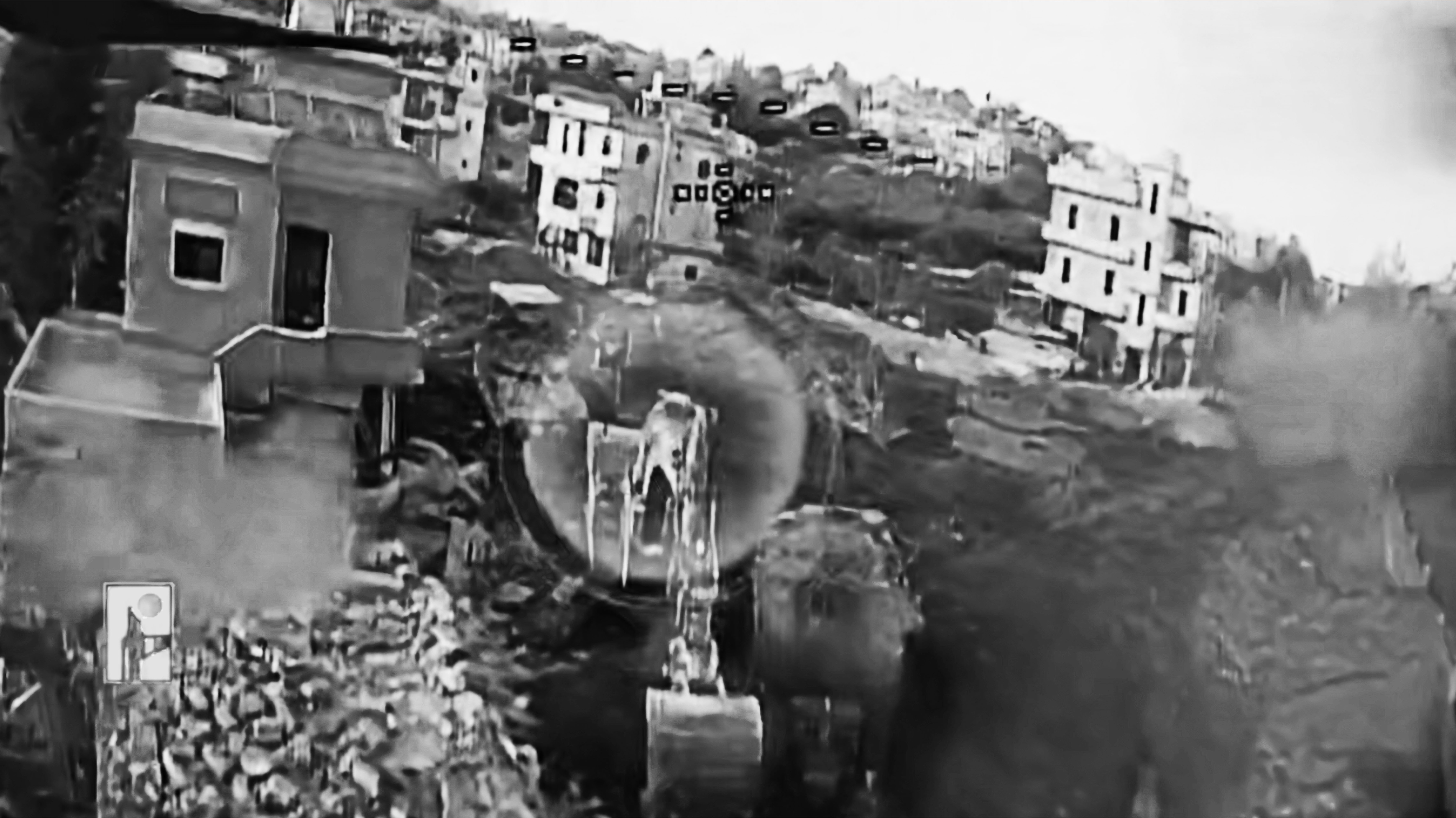
In Western media, Hezbollah’s first-person-view (FPV) drone footage has been sensationalized as a novel “threat” to Israeli domination. Occupation soldiers caught in Hezbollah’s crosshairs are framed as victims rather than invaders. But this footage rightly belongs to a digital archive of anti-colonialism.

Armed with a single anti-tank warhead and controlled via a fiber-optic spool, Hezbollah’s Ababil quadcopters simultaneously document and disrupt ongoing Zionist invasion in one fell swoop, as it were, often targeting the very engines of destruction. As a counter-archive, moreover, insurgent media re-frames resistance itself, offering a visual narrative for why armed struggle against colonial domination is both inevitable and enduring.
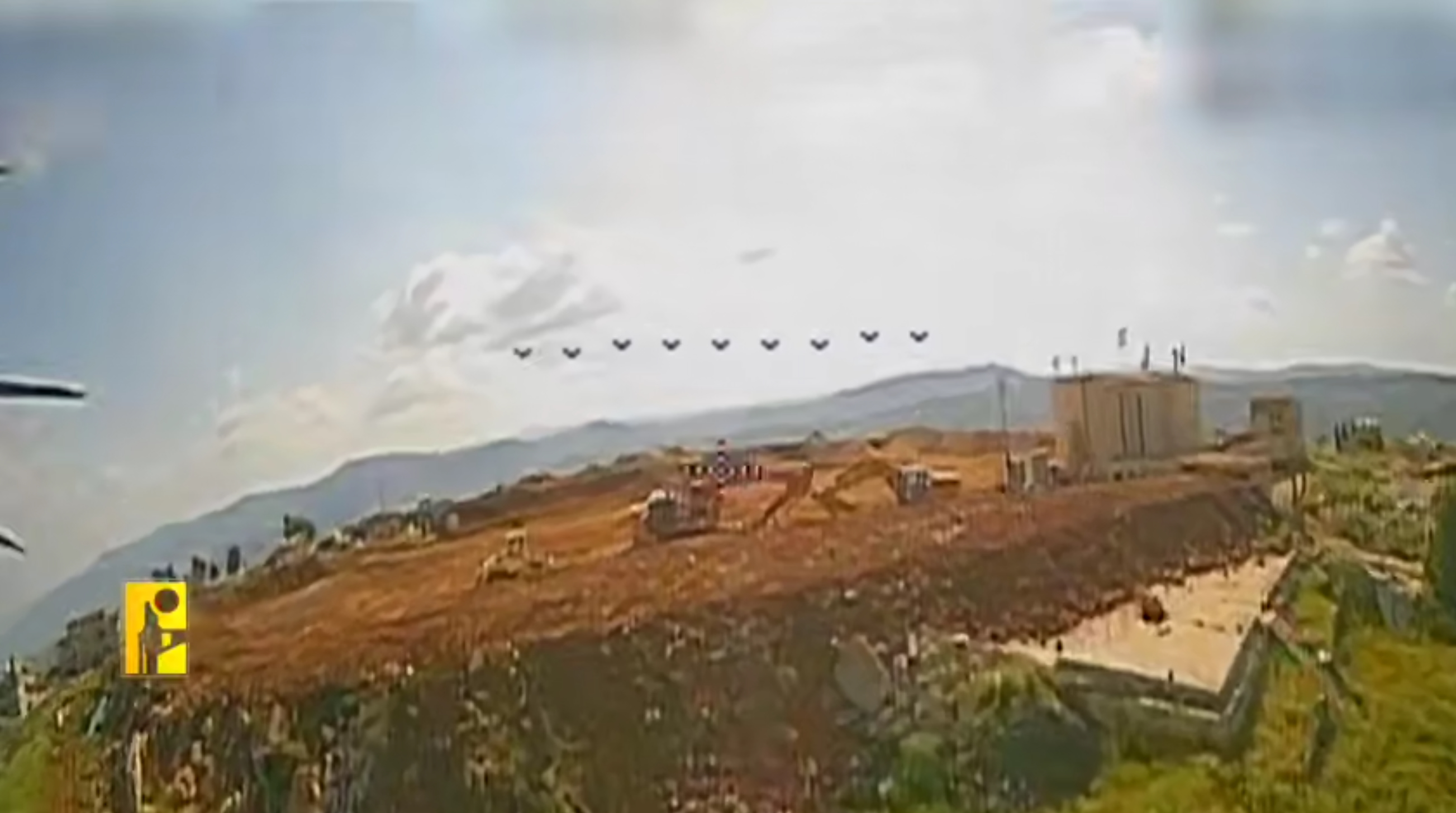
That narrative is grounded in the soil of South Lebanon. Hezbollah’s earliest resistance reels document the scale of Zionist demolition and fortification activities carried out inside Lebanese territory under the cover of the November 2024 “ceasefire.” Footage taken from forested cover in early March 2026 reveals a new topography of occupation at massively terraformed sites like Jabal Balat, an ancient and archetypical form of frontier violence.
Set on a strategic highpoint of some 800 meters, about a kilometer north of the U.N. Blue Line, Jabal Balat was built to enforce the ethnic cleansing of frontline villages like Marwahin, Ramiyah, and Aita ash-Sha’b and surveil a wide sweep of emptied land. By broadcasting its first strike on the site on 8 March 2026, Hezbollah also provided videographic evidence of the infrastructural and ecological warfare licensed by the “ceasefire.”

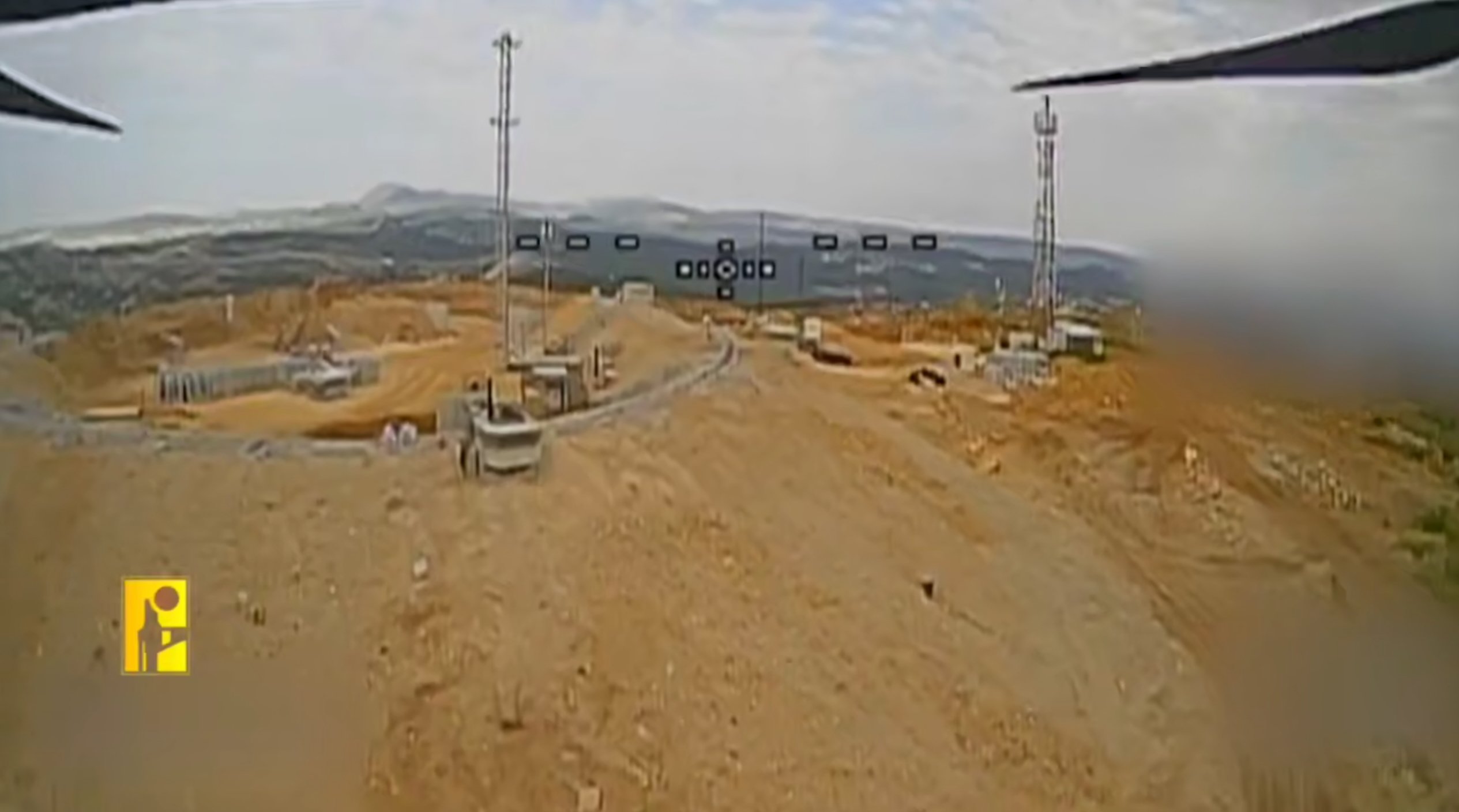
Resistance fighters returned to Jabal Balat again in May and June 2026, now with a bird’s-eye-view of vast military installations that give lie to ongoing negotiations with the Lebanese government and announce the Zionist intent of permanent occupation.
As at other sites inside Lebanon, which Hezbollah describes as “newly established”—al-Abbad, Markaba, Tallet al-Hamames, Jal al-Deir—FPV footage provided a unique view of concrete bunkers, artillery and tank emplacements, radio towers, and surveillance equipment: a whole apparatus of techno-spatial control installed months before the resistance fired its first rockets on 2 March 2026.


In other words, these reels bear witness to the ceasefire’s function as part of the groundwork for invasion and genocide: They archive the very aggression that makes resistance necessary in the first place. With unprecedented immediacy and reach, insurgent media makes clear that colonial wars are “borderless wars,” operating outside of law and without end. [2]
But whereas mainstream media projects Zionism’s permanence as a territorial entity, insurgent media exposes the essential fragility of its colonial architecture, as “barracks surrounded and attacked from every side” in Kanafani’s prognosis. [3]
That Jabal Balat and other “newly established” forts were in fact built on the ruins of decades-old Israeli artillery positions is highly revealing. Visiting the Jabal Balat site in 2022, archivist Amani Rammal recovered fragments of Israeli ammunition crates used to shell Lebanese villages within an 8 kilometer radius, like Majdal Zoun, Zibqin, and Yatar in 1999 and 2000. In Rammal’s Withaqeyya Archive, such artefacts show a 22-year occupation (1978-2000) reduced to archaeology, fragments of colonial force thrown into sharp relief against the “enduring Indigeneity” [4] and collective memory of Jabal Amel.
The ink had not yet dried from the November 2024 “ceasefire,” when the Zionist military began to re-fortify the ruins of its failed occupation, the same that galvanized Hezbollah as a resistance movement in Lebanon. Conversely, the construction of five high-ground forts inside Lebanese territory testify to the iterative, always-insecure, and as yet unsuccessful nature of settler-colonial domination.

These forts became the epicenters of a sprawling ecological war by which Israel attempted to strip frontline Lebanese villages of all life with toxic herbicides, widespread domicide, flammable munitions, and US-supplied armored bulldozers.
But in doing so, the Zionist military merely reinscribed a doctrine of devastation that has proven to be the most fertile ground of resistance. Hezbollah fighters said as much in a 20 May 2026 letter to Secretary General, Sheikh Naim Qassem, re-articulating Israel’s fortified dead zone as an insurgent ecology: “a battlefield from which it [the occupation] will harvest nothing but the limbs of its dead and wounded, after we have sown it with gunpowder and fire.” And so, the bunkers of Jabal Balat, built to project colonial power over South Lebanon, were re-framed to show an invader all the more exposed for its aggression.

Armed resistance is thus also a counter-narrative, not a narrative of choice but one that contests a colonial reality of violence. From this perspective, violence is documentary, “a means of reclaiming agency within a structure that denies even the most basic forms of recognition,” as Abdaljawad Omar writes. Resistance reels from Lebanon recognize the region’s destruction in spectacular ways that turn global audiences into virtual witnesses. FPV footage in particular documented the vast deployment of Israeli engineering vehicles across South Lebanon and unmasked its military as little more than a demolition unit.
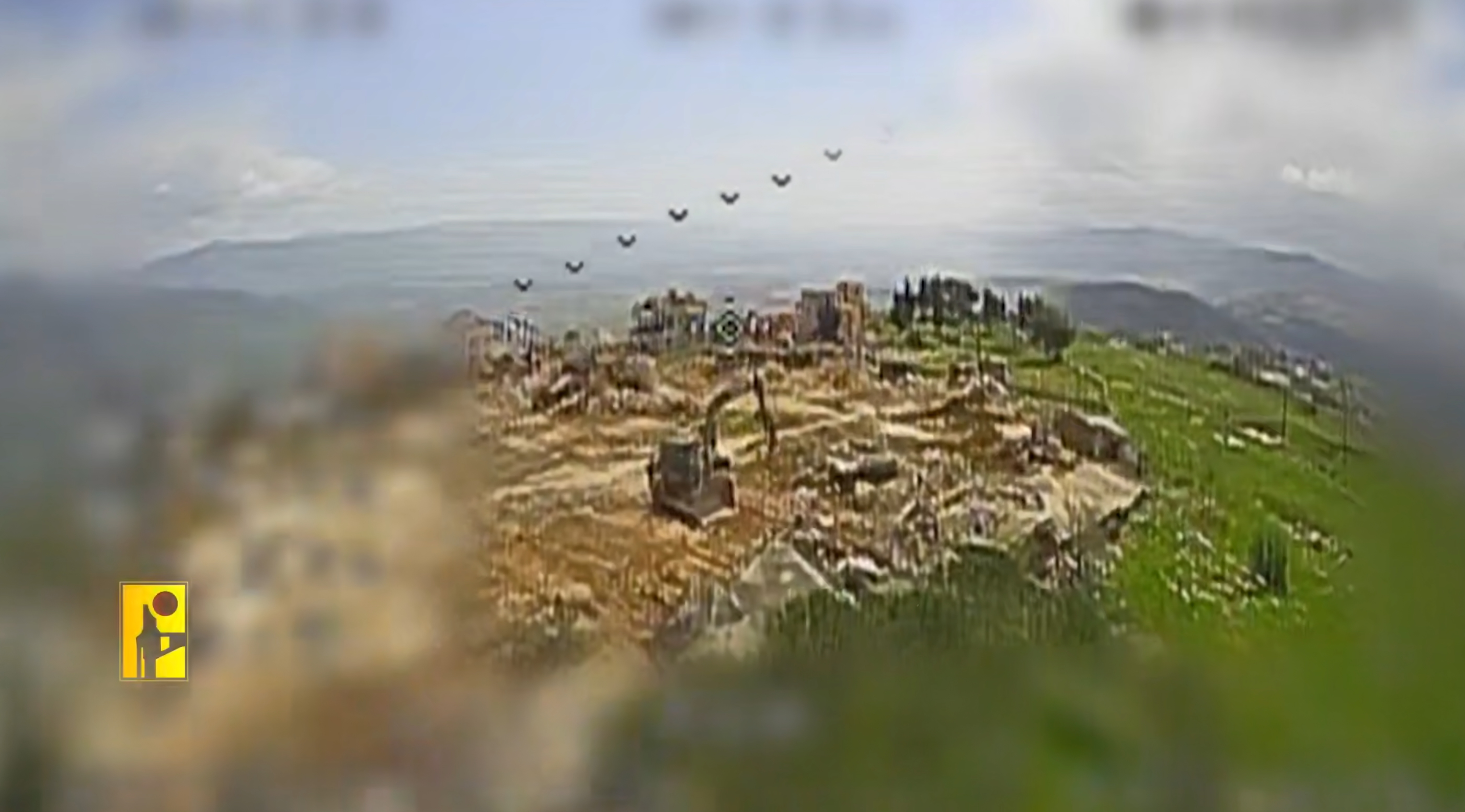
As Israel ramped up its slaughter of Lebanese journalists on the ground in late March 2026, Hezbollah’s FPV footage effectively launched a “live-stream” from above. The first FPV clips, posted to social media on 26 March 2026, surveyed the destruction of Taybeh’s town square and the fortified Markaba site, near Houla. These clips testified to the creation of a colonial deathscape whose total impunity is at once South Lebanon’s right to resist.
For some three months thereafter, dozens of videos each week documented an infrastructural onslaught tantamount to genocide, calculated to destroy the very possibility of life for the Shi’a community in South Lebanon.
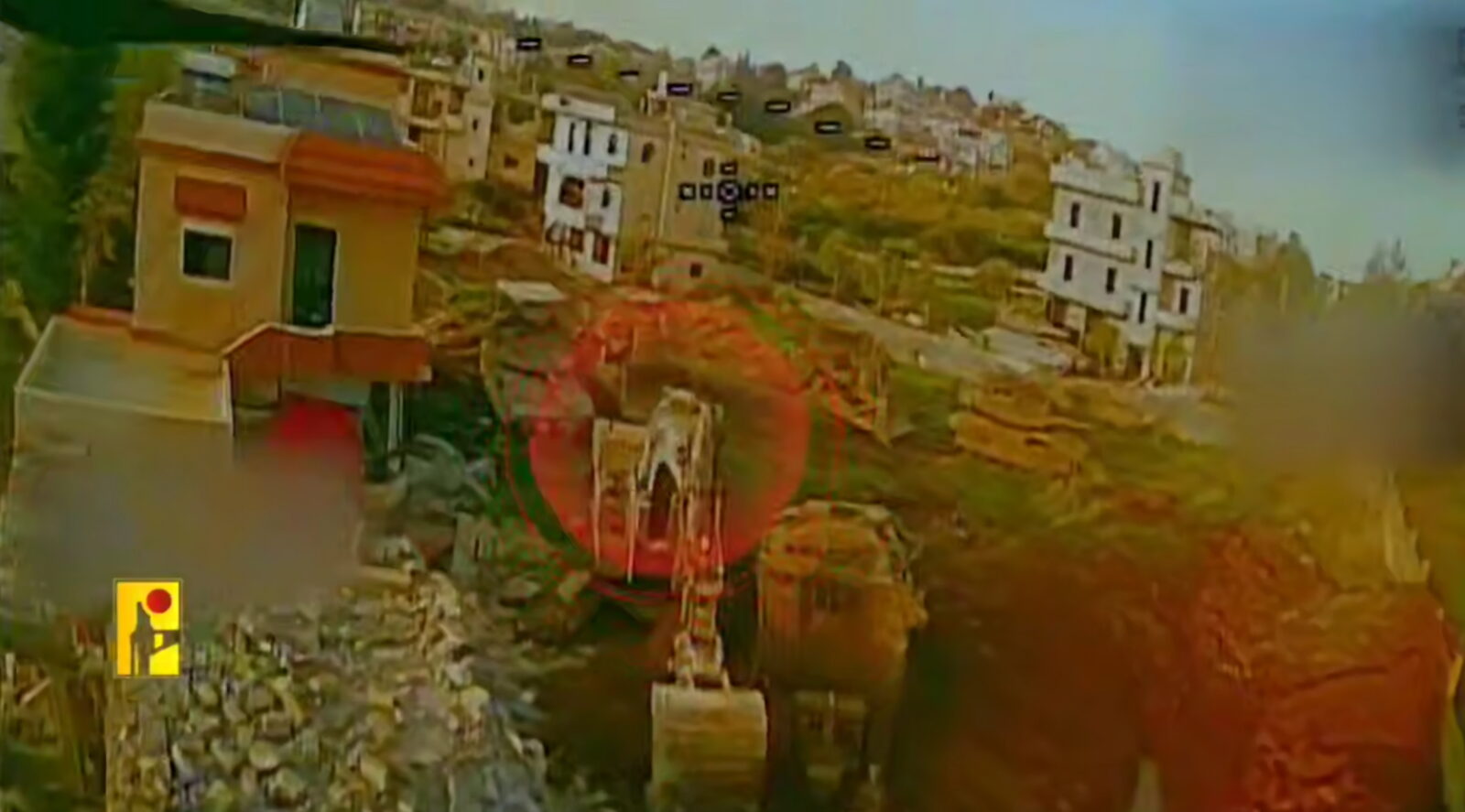

Insurgent media showed precisely how settler-colonial violence is concentrated at the threshold of the earth. Global audiences watched as the heights around Khiam and Taybeh, for example, were scarred and sculpted into hilltop forts. Near-daily clips from villages like Bint Jbeil, Houla, Tayr Hafa, al-Bayadda, and Rashaf showed homes, schools, and streets deconstructed into elemental forms, then plowed into a new urban ecology of IOF tank emplacements and looting stations. The engines of destruction—excavators, D9 bulldozers, fuel tankers, and logistical equipment—became primary targets, with Hezbollah striking 30 bulldozers in one 30-day period.
It’s been said that visuals of colonial violence are pedagogical, and that the Zionist military in particular has spent decades producing “signature injuries” of settler-colonial rule—the maimed Palestinian, the phosphorous-scarred Lebanese—to calibrate global audiences for the next phase of genocide. What, then, is the lesson of insurgent media, shot in direct confrontation with an army practiced in genocide and an audience tutored to accept it?
Among other things, resistance reels from Lebanon are a study in the nature of armed struggle. As the Zionist military inscribes its “signature” in toxified topsoil and bulldozed towns from Rafah to Rashaf, so Indigenous resistance answers in the language of the land and soil they defend. Hezbollah’s video feeds invoke a right to resist foreign military occupation that is consistent with, but also endures the failures of, the international legal order.

The unintended consequence of Israel’s information blockade and massacre of journalists is to hand narrative power to the military resistance, in Gaza as in South Lebanon. Hezbollah’s technicians are thus able to narrativize the reality on the ground, powerfully shaping the digital archive of destruction in South Lebanon.
Indeed, Hezbollah authored a “signature” strike of its own to meet the child-maiming, earth-scorching rampage of the Zionist military: a self-described “swooping attack” that re-frames resistance in a visual language entwining elements of Islam, indigenous sovereignty, and international law.
As a visual language, the FPV media spectacle also overwrites the landscape of destruction authored by invaders. With nearly a quarter of the Lebanese population displaced by early June, Hezbollah’s Ababils flew time and again to the same scarred hilltops, the same stolen homes, imparting upon a landscape of ruin a defiant optics of return.
[1] Ghassan Kanafani, “The Resistance and its Challenges: The View of the PFLP (1970),” in Louis Brehony and Tahrir Hambi, eds., Ghassan Kanafani: Selected Political Writings (London: Pluto Press, 2024), 156.
[2] Achille Mbembe, Necropolitics, trans. Steven Corcoran (Durham and London: Duke University Press), 26.
[3] Kanafani, “The Resistance and its Challenges,” 156.
[4] J. Kēhaulani Kauanui, “‘A Structure, not an Event’: Settler Colonialism and Enduring Indigeneity,” Lateral 5, no. 1 (2016).