
This article is part of the dossier “What is to be Done?“, edited by Himmat Zoubi and Diana Abbani. The dossier, explores the role of academic, artistic, activist, and media practices amid ongoing genocide and the possibilities for action, solidarity, and resistance in Germany and beyond.
***
For decades, and particularly over the past two years, analyses of Western mainstream media coverage have highlighted a predominance of Israeli narratives. This pattern appears in the decontextualisation of events and in language choices that shape perceptions of Palestinians, like using passive language when describing their death, as Palestinians merely “die” as if by accident and unrelated to the violence that kills them.
In another example, Palestinian children are sometimes referred to as ‘people under 18’ rather than as children, which might not reflect their actual vulnerability in their childhood. This type of reporting can reflect a broader political framing, captured in the concept of ‘unchilding’, developed by Palestinian scholar from Haifa, Nadera Shalhoub-Kevorkian as she describes how Israel’s military regime strips Palestinian children of their childhood.
“Unchilding” is the eviction of children from childhood for political goals, removing them from the realm of childhood, positioning them as threats to be controlled, criminalised, or eliminated, thus enabling and justifying violence and oppression against them.
For almost two years of intense Israeli attacks on Gaza, the mainstream media have focused on the general human toll of Palestinian lives without depth. Coverage diverts attention to political actors, while the daily suffering of millions of Palestinians receives limited attention. Palestinians are reduced to numbers, erased of names and faces, and historical context is systematically ignored, with the occupation, apartheid, and foundational trauma of the Nakba absent from the coverage.
This article seeks to examine how Palestinians have used social media as a tool of activism to document realities on the ground and challenge dominant media narratives. It also explores the systematic digital censorship they face, the infrastructure behind that suppression, and the pressing questions for the future of Palestine’s digital memory.
Digital Censorship: “We Went Back a Million Steps”
Social media has the potential to be a powerful tool for empowerment and resistance. challenging biased narratives about Palestinians in Western mainstream news outlets; however, it still faces systematic censorship, especially when it comes to Palestinian voices and content.
In a conversation with Jalal Abu Khater, Advocacy Director at the Arab Center for the Advancement of Social Media-7amleh, he explains how, during Israel’s 2021 invasion of the Palestinian city of Sheikh Jarrah in Jerusalem and the brutal war against Gaza, Palestinians witnessed a collective power that manifested in a wave of social media activism, which began on TikTok, where videos documenting scenes of resilience and solidarity went viral. This TikTok wave revealed the power of digital platforms to amplify the voice of Palestinians and reclaim the Palestinian narrative.
We need your support to keep publishing content like this.
Keep UntoldMag alive with the price of a coffee
This momentum was quickly followed by increased censorship and suppression, particularly on Facebook and Instagram, owned by Meta, where Palestinian content was consistently hidden, deleted, or shadow banned. Palestinians living in the 1948 territories also faced arrests, intimidation, and surveillance by Israeli forces, with task forces targeting those who used social media to speak out.
A report published by 7amleh examines the impact of biometric monitoring and digital surveillance in Jerusalem through interviews with Palestinian Jerusalemites. Those interviewed reported that Israeli CCTV and digital surveillance increased following the violence in April and May of 2021. This intensified monitoring has severely undermined Palestinians’ civil and political rights, restricting their movement, violating their privacy, and limiting their freedom of expression both online and offline.
Describing the current state of censorship, Abu Khater says, “We went back a million steps.” Since October 7, efforts to restrain censorship of pro-Palestinian content have seen a sharp decline, despite prior pressure on large digital companies and their pledges not to silence pro-Palestinian voices. Meta platforms, such as Instagram and Facebook, have reimposed restrictive practices, monitoring and suppressing pro-Palestinian content, with content being systematically removed, shadow banned, or hidden, even when it included common language such as the word “Palestine”.
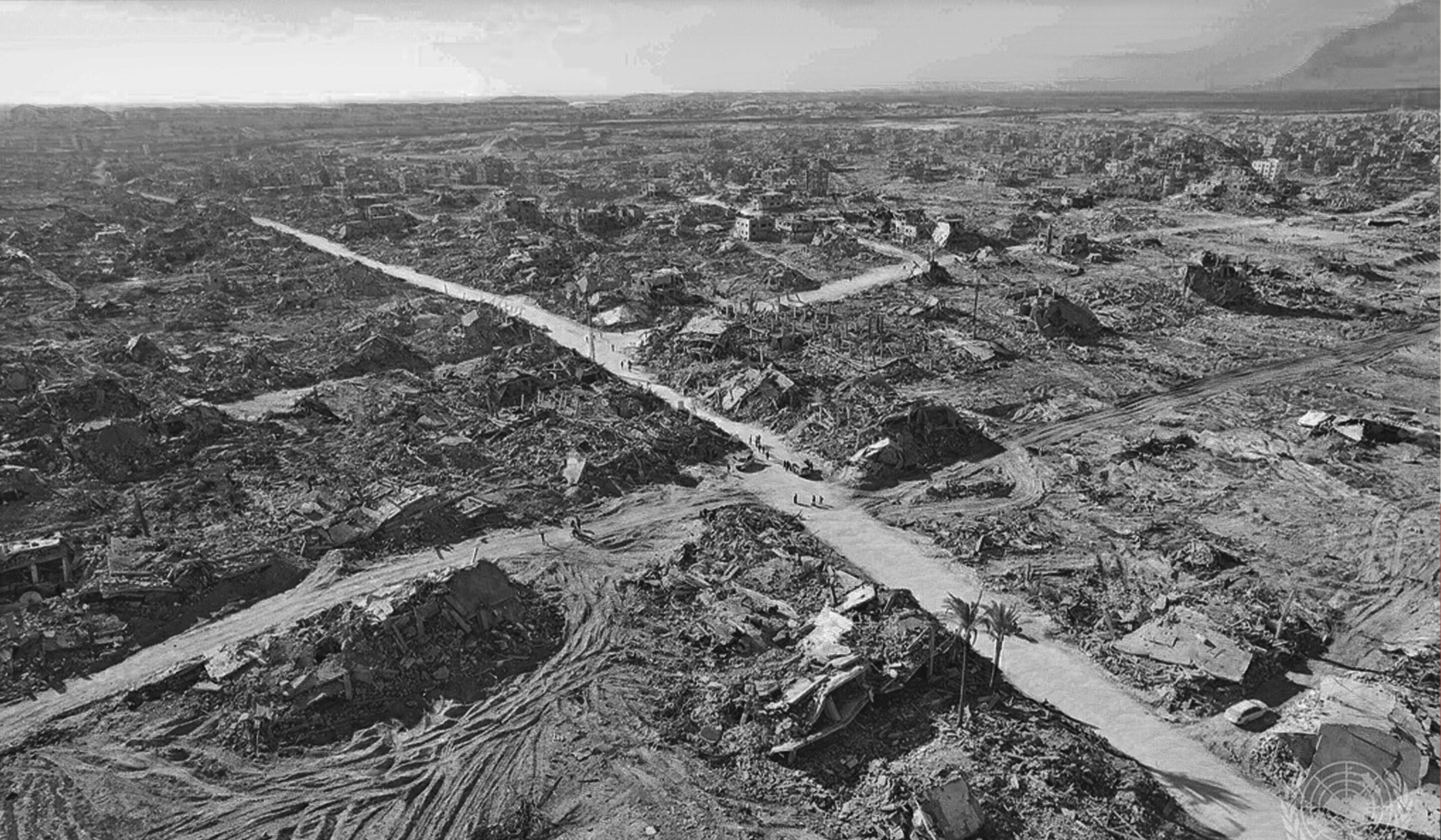
Palestinians living within the 1948 territories face a multilayered form of censorship that includes a lack of digital safety, intensified surveillance, and systematic intimidation. There are Israeli task forces dedicated to monitoring and targeting those who use social media to speak out, leading to arrests, threats, and ongoing harassment.
In contrast, as Abu Khater explains, hate speech in Hebrew, often targeted at Palestinians, continued to spread almost freely without any significant censorship. On March 12, 2025, 7amleh released its annual report, Racism and Incitement 2024, documenting an alarming increase in digital hate speech and incitement against Palestinians, particularly on X (previously Twitter) and Facebook. According to the findings, 12,482,041 pieces of content in Hebrew, identified as violent or hateful, were documented throughout 2024, demonstrating the increasing use of digital spaces as tools for hostility and incitement.
Recent reports by DropSite News have confirmed long-standing concerns raised by 7amleh indicating a high rate of content removal requests from Israeli authorities and a corresponding suppression of pro-Palestinian content on Meta platforms. Leaked internal data reveals that since October 7, 2023, Meta has complied with 94% of Israeli government takedown requests, leading to over 90,000 removals and the suppression of tens of millions more through automated systems.
With social media having the potential to be a tool for empowerment and resistance, in reality it still faces coordinated attempts to silence Palestinian and pro-Palestinian voices, which is alarming. However, many Pro-Palestinian social media users have found creative ways to bypass censorship, which was intensified when speaking politics, often by tricking the algorithm with coded language by swapping letters for numbers and symbols, like “G@za” or “P@l3st1ne”, or by mixing English with Arabic letters, while many use other symbols and emojis like the watermelon emoji, which has become a global symbol of Palestinian solidarity.
Seeing Gaza Through The Eyes of Palestinians
In Gaza, Palestinians have used platforms like Instagram and TikTok to document the destruction, hunger, and loss, exposing atrocities that might otherwise be buried beneath the headlines. At the same time, they shared moments of resilience, community, and fleeting joy, putting a human face to statistics and reminding the world that behind every number is a life.
Fatima Hassouna, a photographer and storyteller, once wrote on her social media: “If I die, I want a loud death. I don’t want to be just breaking news or a number in a group; I want a death that the world will hear, an impact that will remain through time, and a timeless image that cannot be buried by time or place.”
Tragically, in April 2025, Fatima and ten family members were killed in an Israeli airstrike that hit their home in northern Gaza.
Since the beginning of Israel’s genocide in Gaza, many Palestinian voices on social media have gained hundreds of thousands of followers, building strong connections with audiences worldwide. One powerful example is Bisan Owda, whose videos provide firsthand accounts from Gaza and have become a key source of information for international audiences. As one of the key voices recording this genocide, Bisan won the News and Documentary Emmy Awards for her work, which became a symbol of activism and survival. In her own words, Bisan highlights how, despite attempts to silence Palestinians, those telling their own stories can now reach the world through multiple means of broadcasting.
Other content creators, such as ten-year-old Renad Atallah, offered a different glimpse into life under siege and war. Renad, who dreams of becoming a professional chef, shares videos of herself preparing “donated” food outside her family’s tent. Despite the brutal conditions around her, she smiles as she demonstrates how to cook her favorite dishes with the limited ingredients available.
On another front, journalists and citizen journalists are on-the-ground witnesses who have taken it upon themselves to document the horrors of genocide as it unfolds. Through their lenses, they are archiving, documenting truth, exposing injustice, and demanding that the world bear witness.
This is not an attempt to romanticize the tragedy or soften the brutality of war. Rather, it is a reflection on the complexity and depth of Palestinian life, shared by Palestinians themselves, on their own terms. While mainstream media often frames Palestinians through the lens of “conflict” and “complexity”, Palestinians on social media show themselves simply and powerfully: raw, unfiltered, and undeniably human. They are not statistics. They are not political talking points. They are simply humans!
Over the past two years, despite the systemic censorship, these digital spaces have made Palestinians more visible, creating a sense of collective intimacy and shared burden that connects people worldwide in solidarity with Palestine. Social media has become a platform for real-time updates and human connection, driving global empathy and fueling activism that has translated into boycott campaigns, student encampments across the United States, and calls for justice, an end to violence, and long-term structural change. Much of this momentum has been driven by Gen Z.
In his study “Connecting the Dots: How Gen-Z Is Re-establishing the True Story of Palestine”, scholar Mohamed Buheji explains how Gen-Z, the primary social media audience, is reshaping the narrative. For many in this generation, the Palestinian cause is inseparable from wider global justice struggles—from anti-apartheid South Africa and Black Lives Matter to Indigenous rights movements. Those who stand with Palestine often see it as part of a larger fight for self-determination, liberation, and human rights.
With this framing, the Palestinian cause becomes what African-American activist Angela Davis once described as a “moral litmus test for the world.” This perspective helps global audiences recognize familiar patterns and situates Palestine within a broader moral and political struggle for justice. Solidarity with Palestinians is not symbolic or exceptional; it is solidarity against recurring systems, structures, and histories of oppression. What happened to Indigenous peoples in North America centuries ago, through war, forced displacement, disease, cultural erasure, and genocide, should never happen again. Today, it is the Palestinians who face these same attempts at erasure.
Palestine’s Digital Memory… What next?
As time passes, a persistent question remains: what comes next? Hundreds of pieces of digital content from Palestine are scattered across online platforms, vulnerable to deletion, distortion, or disappearance. How do we preserve this archive? How do we protect it, organize it, and ensure it grows rather than fades?
Preserving this digital history is a collective responsibility. It requires coordinated efforts to build an organized online archive supported by libraries, universities, research centers, and institutions committed to documenting war crimes and historical memory. Each piece of content must be catalogued with intention so that the documentation of war, survival, and daily life under occupation remains accessible and meaningful.
These digital records are a form of witness, echoing Fatima Hassouna’s call for a “loud death”. A story that should not be buried by time or place. By preserving and sharing these experiences, we honor those who lived through this moment and ensure their stories are not lost but remembered, seen, and acted upon.