


This article is part of the dossier “Plural Archives, Cultural Practices, and Political Imaginaries in Syria and Lebanon” curated by Ettijahat. The article below is a summarised script curated by UntoldMag. The PDF of the entire essay can be downloaded here. You can read the original essay in Arabic here.
This text is co-authored by Israa Abu Eid, Enas Abu Eid, Zahraa Abu Eid, Shaima Abu Eid, Fatima Abu Eid, Maryam Abu Eid.
My interest in the Bedouin community in the Bekaa developed over several years and through previous engagement with the community. In 2022, my master’s thesis explored the use of a visual storytelling method called Photovoice while considering the cultural sensitivities of the Bedouin context. That experience brought me closer to the community but also raised a deeper question: what does it mean to be Bedouin today when younger generations have never experienced the nomadic life traditionally associated with Bedouin identity? Young Bedouins are born and raised within contemporary Lebanese society, yet many continue to strongly identify as Bedouins. I became particularly interested in how young women negotiate this identity across different spaces, relationships, expectations, and generations.
These negotiations can be seen in everyday life. Young women may shift between Lebanese and Bedouin dialects depending on who they are speaking with or adapt their clothing and behavior according to different social settings. At the same time, older generations may maintain more visible cultural markers, such as traditional clothing, facial tattoos, and the Bedouin dialect. These differences raise questions about whether cultural identity disappears when traditional practices change, or whether identity can survive by taking on new forms.
To explore these questions, in my research I adopted Photovoice, a participatory methodology grounded in feminist, anti-colonial, and intersectional lenses which laid the ground for collective and bottom-up narrative production against extractivist models of documentation and research. Photography was particularly meaningful because it allowed the women to communicate experiences that might be difficult to express through words while giving them control over the production and interpretation of their own images. Six young Bedouin women became co-researchers in the project. The research began through an existing relationship of trust within the community and developed through meetings with participants and their families, where consent, expectations, and cultural considerations were discussed.
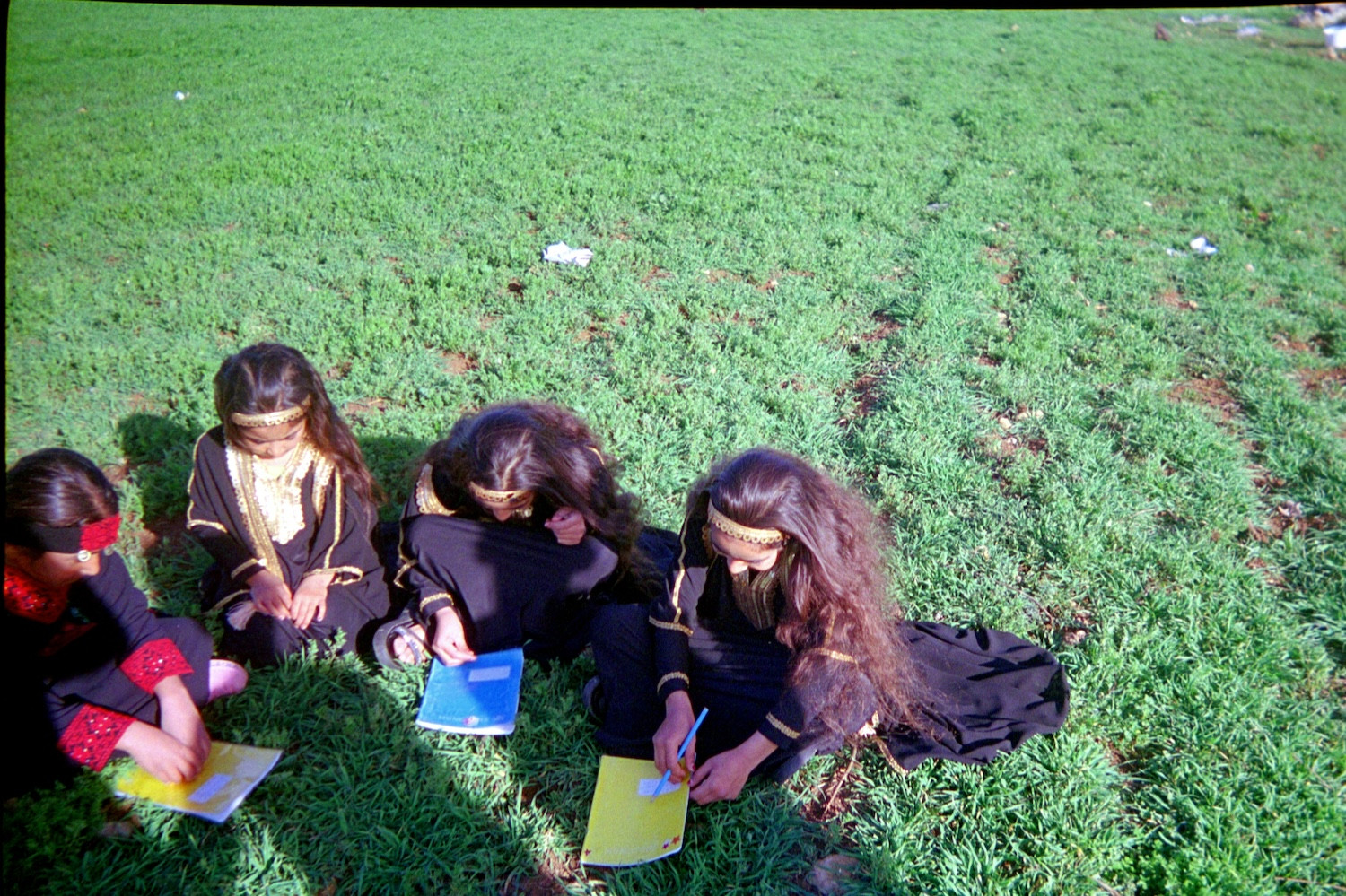
The process was intentionally collective and flexible. Together, we developed the research question and began with six themes: identity and intersectionality, modernity and traditions, family and society, gender roles, education and opportunities, and hopes and dreams. Using analog cameras, the women photographed aspects of their everyday lives that they considered meaningful, positive or negative, while also having the freedom to photograph something outside the predefined themes. Field sessions allowed us to learn and experiment with photography together rather than treating technical knowledge as something simply transferred from researcher to participant. The photographs were later captioned and discussed collectively, with the women’s interpretations providing the meaning behind the images.
Later, it became clear that the original themes could not be understood separately. Tradition and modernity, for example, were similarly intertwined with identity, belonging, and gender. Through collective reflection, the six initial themes were therefore brought together into broader areas of understanding, while a new theme emerged unexpectedly: identity negotiation between public and private spheres. This process demonstrated that the women’s experiences could not be contained within fixed categories. Their identities were shaped through the continuous interaction of different multilayered factors.

The findings show young Bedouin women as active agents in negotiating their identities between the private and public spheres. Rather than simply preserving or rejecting inherited traditions, they selectively embrace, reinterpret, and reshape aspects of their culture while pursuing education, independence, equality, and personal aspirations. These negotiations, although shaped by social and gendered expectations, also become forms of agency through which the women decide what to preserve, challenge, or change. Through Photovoice, they were able to represent their experiences in their own words and images, challenging simplified portrayals of Bedouin women and revealing identities marked by pride, resistance, and self-awareness. Ultimately, the research shows Bedouin identity as a dynamic and evolving process, continually reshaped through the relationship between heritage, contemporary life, belonging, and the desire to shape one’s own future.
Six Bedouin women and their stories through photography
Photovoice was first developed by Caroline C. Wang and Mary Ann Burris in the 1990s. The method was inspired by their work with a community in Yunnan, China, where they were assessing the health, social, and economic conditions of rural women. They asked participants to document intangible concepts – such as love or anxiety – using their cameras. Initially, the method was called a “photo (image) novella (story).”
Photovoice is a method that employs photography as a data collection tool, allowing participants to capture images of their daily lives and narrate their stories through their lens. It grants them agency over their culture and heritage, helping to extract the essence of identity without imposing predefined meanings.
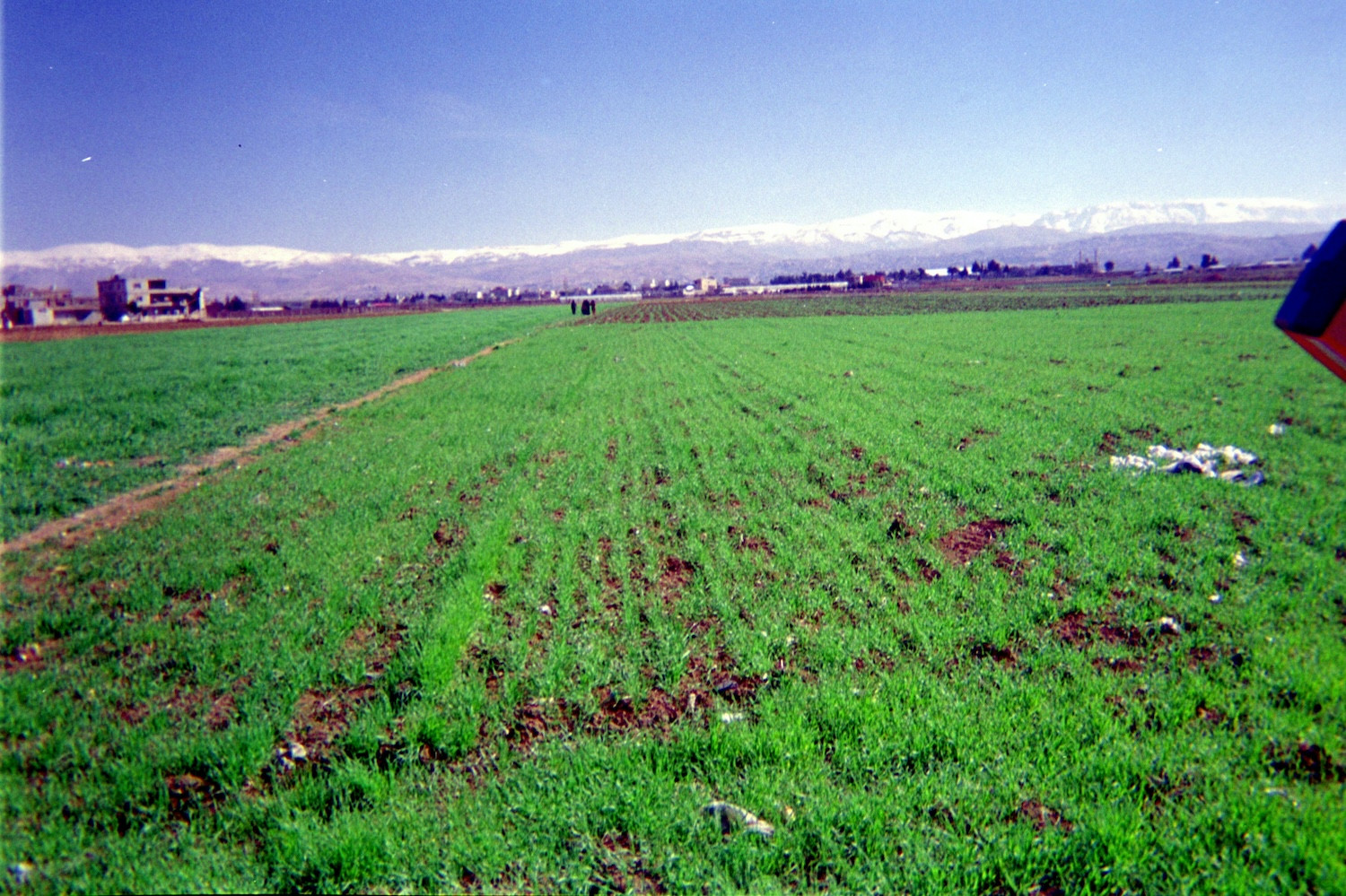
Six women participated in this study, ranging in age from 18 to 22. All were from the Abu Eid tribe – one of the largest in Lebanon’s Bekaa Valley. They all held Lebanese citizenship and resided in Housh al-Rafqa, also known as Housh al-Arab, an area known for agriculture and livestock. All were unmarried: one was divorced and the rest were single.
The co-researchers were invited to take photos and write down their stories in relation to themes that were agreed upon during dedicated meetings.
Here they are.
Enas Abu Eid
Enas is a Lebanese Bedouin woman who completed her schooling and now works at a nearby shop. She captured striking images that reflect the richness of traditional Bedouin life. Enas aspires to preserve the oral histories of the older generations.
All photos below were taken and are owned by Enas Abu Eid.
I am a Lebanese Bedouin girl. I was studying in a school and faced difficulties with classmates from civil society. I used to speak their dialect even though I hated speaking it, but they considered speaking in the Bedouin dialect something strange. When I spoke in my dialect, they would mock me, consider me from the “Nawar”, and diminish my worth among civil society. I was saddened by this treatment and adopted urban customs in order to become like them. After time passed and I matured, I came to understand the meaning of Bedouin culture, its beauty, customs, and traditions. I now speak it in front of all communities and I am happy – it is my mother tongue and I will not give it up.

I am a 20-year-old Lebanese Bedouin girl. A young man from outside our clan loved me. He told me so, and I agreed and asked him to inform my family. He did, but my father refused because he is an outsider, and they consider me not yet of the age for marriage and responsibility. I felt sad because I loved him and I wanted this to happen, but I couldn’t change it and didn’t have the courage to confront my father or discuss the matter with him, so I decided to remain silent and accept my fate. We come from a society that refuses to give a girl to outsiders – whether they are Bedouins from another tribe or from urban society. They have a law of “tajyīr,” meaning that her cousin or relatives have more right to her than a stranger. These beliefs upset me and somewhat restrict a girl’s freedom to choose her life partner. But most of them, including me, abide by my father’s decisions and consider what the family says to be in my best interest, and respecting them is important and necessary in our time.

I am a Lebanese Bedouin woman and I am proud of this identity. I love my country, Lebanon, and I love its beautiful customs and traditions that represent Bedouin life. What bothers me is the new generation’s loss of Bedouin customs and traditions such as clothing, culture, and the authentic Bedouin dialect due to the presence of technology and fashion.
I dream, as a Bedouin woman, and I wish for the return of the old way of life, the old food, clothing, and the customs and traditions our ancestors tell us about. Because with time, these customs will be forgotten with the presence of technology and fashion – and our ancestors die and these customs die with them. I wish for an end to conflicts between Bedouin families, such as revenge. In Bedouin families, they take revenge even after hundreds of years. Some of them forgive, and others take their revenge. I don’t like enmity – I like forgiveness.

Our customs and traditions – we Bedouins – since the old days, they used to embroider the cloaks by hand, and they used to churn milk in the shakwa (which no longer exists). They ate clarified butter (samn sāgh) and made shamandūr from the milk gum. Hospitality was with bitter coffee. They would move from one area to another, and at weddings, they wore cloaks (ʿabāʾ), headbands (ʿaṣaba), long shirts (qallābiyya), and ʿiqāl. Weddings used to last seven days (my grandmother told me hers lasted six), and the bride would be paraded on the hawdaj.
In our generation, many customs have changed. Customs, weddings, and food have evolved. Many Bedouins have forgotten the old Bedouin customs and traditions because they turned to urban society and followed modernization. In my opinion, I don’t like that these details are being forgotten because they were very beautiful – they came naturally, and people were different. Many things have changed, and life has changed and no longer resembles the past – there’s no longer blessing in time. In the past, they had a lot of sheep and would slaughter them, and it didn’t occur to them that they were spending or anything like that. A wedding would last fifteen days or seven days and it wasn’t a problem. But now, the wedding lasts two days at most, and the groom starts to feel like his budget has broken. So, many things have changed – even the clothing used to be very beautiful.
As for today – say I go to visit my sister – if I wore the old clothes, people around me would talk and ask what I was wearing, and I would feel like something is wrong, even though I am Bedouin. For example, we now wear those clothes only at weddings and on special occasions. So today, why would I wear them? There are elderly people who still wear them and have no problem with it.

I see that the Bedouin woman puts in double the effort – both for her children and her husband. She works hard to secure a promising future for her family and to ease the burden on her husband. In our neighborhood, there’s a determined woman who works at a nearby vegetable shop to provide for her children’s needs, their education, and to cover the cost of medicine for her sick husband, who is unable to work. She works day and night, and when she finishes, she returns home to complete her household duties – happily, without complaint or resentment.

Shaima Abu Eid
Shaima is a Lebanese Bedouin woman working toward her dream of becoming an architect. After searching, she was accepted into the Lebanese University, Faculty of Fine Arts, majoring in Architecture. I organized a small fundraiser to help cover her tuition fees and rent a room for her in the city. She is a proud Bedouin woman who previously contributed to another project led by the American University of Beirut and the British Council to safeguard Bedouin heritage in Lebanon.
All photos below were taken and are owned by Shaima Abu Eid
My grandmother always talks to me about her pride in her Bedouin identity, and that her generation preserved old customs and traditions as much as possible, such as cooking, clothing, and facial tattoos. To this day, she still wears the Bedouin dress, headband, and veil. Even though this draws everyone’s attention to her, she tells me that when she is in public places, everyone looks at her – some with disdain, some with surprise, and some with admiration.

The Bedouin identity sometimes harms those who carry it. I am a Bedouin girl integrated into urban communities. I carry out daily activities and have friends, but I hide from them the fact that I am originally Bedouin. This is because of their negative perception of this community – they fear it and consider it inferior. It is a community they do not know and do not want to get to know, because of the accumulation of ingrained prejudices passed down through generations. They are ignorant of who the Bedouins really are, and they avoid getting close, insisting on their view.
We, as a rising generation, don’t like explaining or getting into discussions, in order to avoid tension or disagreements, or to avoid seeing disgust in their eyes. I don’t say I’m Bedouin in front of my friends. Others don’t tell the van driver that their destination is Housh al-Arab, and others don’t speak our dialect in public.
This was during childhood. Now, after maturing and becoming aware of our culture and its depth, I no longer mind saying that I’m Bedouin and that I belong to this tribe. I’ve become fully convinced that in order for others to accept us, we have to accept ourselves first, understand the good sides of this culture, and work on improving the bad sides – so it can become better over time. It is an identity that should be cherished, its beauty introduced to others, and its authentic customs and traditions preserved. There is no future without a past for a person to hold onto and be proud of.


A photo showing the entrance to a hospital. This is what the Lebanese identity has given us – it allowed us to enjoy the rights of any Lebanese citizen, regardless of whether we are Bedouin or urban. It made us belong to a country where we must abide by its laws and systems, carry out our duties, and benefit from all the social services it provides, such as social security, education, healthcare… It gave us a symbolic value that affirms our existence, made us equal with other communities, and granted us the right to travel, move around, vote to make our voice heard, and work in government institutions.

In the picture, I am a Lebanese girl of Bedouin origin. I was able to succeed and excel in my studies and prove myself to my community and to civil society, which believes that Bedouins are not good for anything or capable of achieving – that they are from “the old days” and that their thinking is limited, their lives are simple, and their dreams capped. This is how I see their ideas and how they view us.
My identity will not affect my future or my dreams, and it is not an obstacle to my achievements or to giving, as some people think – including some from the Bedouin community itself. Most of them believe that a girl’s future is marriage and taking care of the home – so what is the point of education and work? And even if someone fails, that has nothing to do with being Bedouin. I wore the Bedouin dress at my graduation ceremony and I will keep wearing it on every occasion. This identity always accompanies me – to show everyone who sees me that I am Bedouin and proud of it, that I was able to achieve, and to reflect their image of us back to them – to show that Bedouin youth can learn, work, succeed, keep up with development, and be part of society.

I remember when I was young, in school, they used to distribute family registry extracts for certain procedures. I felt ashamed and afraid that my friends would see I was Sunni, as they assumed I belonged to the same sect. This was because of the discrimination and hatred ingrained since childhood between sects. So I added a stroke over the dot and turned the “ya’” into an “‘ayn”, so the word would read “Shi‘a” instead of “Sunni,” so they wouldn’t know my reality, distance themselves from me, or hate me for being from another sect. This might be due to general sectarian extremism in our country, Lebanon. I was young and unaware – all I wanted was not to be without friends. But I spent my school years without friends and didn’t get along much with my classmates.
Judging people based on things they can’t change or didn’t choose is wrong: it is a form of injustice. We are not the ones who choose who we belong to, who we are, or which religion or sect we follow – and we are not necessarily defined by the religion, sect, identity, or lineage we come from.

My mother: Her life is an expressive story that teaches and offers lessons. She was young, living in a Bedouin community that depended on a traditional way of life. Everyone worked to secure their daily sustenance – the father, the mother, and the children – some working with livestock, others trading milk or farming. My grandfather was one of the first people to work at the American University. He would see students and professors, and that became a motivation for him to educate his children, at a time when children were usually raised to help their parents in their work. He enrolled his children in school and instilled in them the importance of education.
My mother used to excel above all her classmates. The teachers and principals were amazed by her and her performance. Even her village was amazed by Hamra’s success – that she was a Bedouin girl who was studying and outperforming the other students. My grandfather encouraged her even more to persevere, and he was proud of her and her advancement. She reached the university level, and everyone looked at her with admiration and amazement – as someone who had changed all the existing perceptions and standards. Bedouins and non-Bedouins alike, young and old, loved and respected her and praised her achievements.
To this day, I still hear compliments when people find out I am her daughter. She entered university at a time when even urban communities barely had access to higher education. Only a small minority reached that level, while many Bedouins didn’t even know how to write their names or read. She formed strong friendships with people from urban communities and had no issue with being Bedouin – she was proud of it and expressed that pride openly. She had a strong personality and unwavering confidence in herself and her success. Her parents supported her and were proud of their daughter’s achievements. She was cherished, and everything about her was unique – her clothing, for example, followed a “civilian” style at a time when Bedouins considered that shameful or unacceptable.
She got married and continued her education at the Lebanese University. She took on the responsibilities of a wife, household duties, studies, and social life. She succeeded in being a mother, teacher, wife, student, and Bedouin woman. She worked on many projects with professors from the American University, discussing all things related to Bedouins. She wrote the book Suwalif al-Badiya, and she visited London and Jordan. I hope she spreads her message around the world. She was hosted on multiple television programs, where she spoke about herself and her identity – these were some of the most successful episodes. She partnered with UNICEF for literacy programs to help elderly people in her community who could not read or write. She studied nursing and now provides healthcare services thanks to the knowledge and experience she gained from those courses. She worked in trade and now works in agriculture. She remains, in the eyes of everyone – and in my eyes – the kind of woman who will not be repeated.
My mother’s choice of life path changed the course of my own life. She is aware, educated, and deeply concerned with me being better than her – that my paths and decisions are right, regardless of whether society accepts them. What matters to her is that I be a good, educated, and distinguished young woman. She is my role model and means a lot to many Bedouin girls who dream of learning and reaching a place in society.
My mother’s story sums up the Bedouin woman: educated, successful in her work, capable of balancing two identities, bearing responsibility for her family and its needs, embracing change over time, keeping up with what’s new, able to change how society sees the Bedouin identity and to present it in various ways. She is a bridge between communities, well-suited to build a modern family with deeply rooted Bedouin traditions. This contributes to raising a conscious generation and encouraging children to pursue education and reach the highest levels of learning.

Maryam Hamad Abu Eid
Maryam is the youngest woman who participated in this project. She does not like school and wants to be a mother and a housewife. During the research, the participants encouraged her to complete at least her secondary education, and she re-enrolled in school in the year following the study.
All photos below were taken and are owned by Maryam Hamad Abu Eid
The way I think and my taste are that I adore everything related to my old customs more than to modern things. For example, there are many kinds of ovens, but for me, as a Bedouin girl, I love the bread that we make in our own Bedouin way, where the fire hits the saj until it makes the most delicious loaf of golden bread – golden like the sun.

The Bedouin woman is a mother, a wife, and a woman of her clan. She has her status – she is the one who helps and carries out the work of the home, her children, and the members of the clan. Her opinion is the secondary one: any man gives his opinion first, and then the woman.
Her role in judging horse riding, managing the household, and organizing tent setups and childcare has value, but there is a weakness in how women’s rights are not recognized, in the lack of justice and values, and in the lack of full participation in society – even though she plays a fundamental role in it.


I had stopped going to school because I didn’t like it before. But my family kept encouraging me to continue my education, telling me I should study and get a job. I kept refusing – I didn’t want to study and just wanted to stay at home. I went back, but then stopped again because there were too many lessons that had piled up while I was away, and I couldn’t focus on what was being taught in school. Next year, I will go back, because now I want to learn, study, and eventually work and get a job.
Israa Al-Nazzal Abu Eid
Israa is a makeup artist. She loves makeup and works as a freelancer. She dreams of owning her own salon. She offered to do makeup for all the participants and the lead researcher free of charge whenever they have an event.
All photos below were taken and are owned by Israa Al-Nazzal Abu Eid
When we mention the words “Bedouin woman,” we sense the scent of the old, beautiful, and simple days. The Bedouin woman – there is nothing more beautiful said in this world – is strong and patient in enduring life’s hardships. These words bring to mind my grandmother, who endured a harsh Bedouin life. She is known as a “female with masculine muscles,” able to carry out all tasks under the weight of a harsh climate.
The life of the Bedouin woman was difficult. My grandmother worked tirelessly, without boredom, fatigue, or complaint. But anyone reflecting on that image might notice that her hands bear the marks of deep psychological suffering. The lines in her face carry all the pain and sorrows that the tongue cannot speak. Her life was limited. She divided her days between housework, raising livestock, caring for the children, and working the farmland – planting and harvesting livelihood to support her husband, building her own strength to carry the household on her shoulders and help him without adding to his burden. She gathered livelihood from sheep and poultry and worked in traditional crafts. She baked bread on the saj or in the clay oven. These were customs and traditions passed down from the fathers and grandfathers.

These traditions had shackled my grandmother’s dreams. She was bound by those customs that stood in the way of realizing her small and simple dream – learning to read and write. Despite these challenges, my grandmother used to do the hard labor that was considered the work of men.

My grandmother is the candle that lights my heart and fills the house with brightness. She is the one who gathers the family under her warm wing with tenderness and love. She is the foundation of the family, the solid pillar the children turn to when facing problems. She is the jewel that shines. If my grandmother were to be absent one day, the family would lose its sense of safety and affection. Facial tattoos were drawn on their faces in the past, and this was considered adornment and makeup at the time.

Zahraa Abu Eid
Zahraa is a woman with extensive life experience. She gave advice about marriage and partnership to all the participants and to the researcher as well, telling them not to rush into marriage and to choose someone they love. She also encouraged them to continue their education so that they can face life on their own in case of divorce. Zahraa is currently continuing her studies in nursing. I personally learned a lot from Zahraa.
All photos below were taken and are owned by Zahraa Abu Eid
I used to love education very much because I aspired to a bright tomorrow. I loved education so I could grow and succeed in my daily life. But this dream quickly faded because of life’s difficulties. We lived a simple and modest life, praise be to God. My father worked from morning until evening to provide for the family’s needs. When he came home tired, I would say to myself, “Maybe, Father, I can carry some of the burdens and expenses so I can see you at ease.” So I decided to leave school because of financial hardship – my father could no longer afford the school fees, and I had to stop studying. I started working and relying on myself to earn money and help my father, then complete my education.
I faced many difficulties along the way. Praise be to God, I became responsible for myself in my life. I worked and put in effort and returned to school. I paid for everything I needed and relied on myself. I was studying and working so I wouldn’t give up on my dream because of the hard circumstances. Praise be to God, He granted me success – I worked and completed my studies and didn’t need anyone. This was very important in my life and taught me many lessons about being responsible for yourself so you don’t lose your dream. Life is hard – if you’re not strong, you will fail and achieve nothing but failure.

I wished I were in a dream and could wake up from it because of how harsh her words were to me. But I broke the barrier of fear and surrender, and I stood in front of her with full confidence and said: I am a simple Bedouin girl, and this is my identity. I cannot hide it or change it. I, madam, do not know the art of pretending. If you accept me as I am, then welcome to my life – and if you do not, that’s your business. I am here to achieve my dreams, to make my father proud with my success, and to do everything useful for my village. She responded with mockery: You won’t be able to succeed. This is a well-known school with a high level, and only outstanding students enter it. I have a private tutor who helps me with my homework so I can succeed. But you – no one is helping you. I looked at her and said: I don’t need anyone to help me. I will study and reach the highest ranks, and you will see that.

My cousin proposed to me, and even though he had been married before me and had children, there was a dispute between them, and she left the house, so he decided to marry again – and I was the lucky one he proposed to. My father spoke to me and said: “Your cousin is better than a stranger. No matter what happens to you in this world, he won’t abandon you, because you are his cousin, from his own flesh and blood, and he will be your support.” This was also my family’s opinion. I agreed to the marriage for the sake of family ties and for the two families to remain united, since I only had one uncle. I accepted him out of conviction and because my family wanted him, even though I didn’t know him well – only formally, as they say. There was nothing between us except greetings. The engagement happened and we were married within a week. I became a mother, a wife, and a worker all at once. I carried a responsibility bigger than my age. I became the mother of two children, a wife, a field laborer, and a homemaker.

I faced some difficulties in my life because of how the world views a divorced woman. But this didn’t restrict me or imprison me – rather, I became stronger, faced the world, and continued my educational path. My family played an important role in my life – a positive one. They told me: life doesn’t stop here, you’re still young. On the other hand, how society looked at me: “You’re divorced, your place is at home. You should stay there. You can’t go out. You can’t continue your education because you’re divorced.” I heard such phrases many times, but I didn’t care about them. Because whoever lives listening to people’s words dies from worry. I learned from my story to rely on myself. I became responsible, strong, and brave. I don’t give up, and I don’t let failure defeat me. From my marriage experience, I learned many lessons that strengthened me. Truly, every girl should think carefully before making her choice – marriage is not just a white dress you wear, or a fancy car you ride in, or booking the most luxurious hall. Marriage is a responsibility that shouldn’t be taken lightly.

Fatima Abu Eid
Fatima is a strong woman. She has suffered from thalassemia since childhood. She accepted her condition and is studying nursing to help others who have the same illness. She is very brave and proud.
All photos below were taken and are owned by Fatima Abu Eid
The term “Bedouins” refers to the inhabitants of the desert who live a nomadic life and depend for their livelihood on raising livestock. Wherever there is water, there are Bedouins. As for the urbanites (Lebanese), this term is used for the countryside, villages, and cities, and they rely on their land for livelihood.
For me, as a Lebanese Bedouin girl, I see no difference between us. We have the same characteristics: kindness, perceptiveness, courage, and many good traits. But there are some urbanites who look down on the Bedouins and boast about their origins, their wealth, and their children from the beginning of their lives. But boasting about one’s origin at the expense of others is considered racism.

Today, I am at the end of my educational journey, with only a little left before I graduate. I hold my head high – and my father’s too – and I am proud of my illness, because it made me a driven, loving girl who is at peace with herself.
I say to those who throw words like poison: be gentle. There are patients who cannot bear it, and your words could be the reason they are killed psychologically and morally. As for me, I forgive – so I wonder, is there anyone else like me!?


Despite these changes, there are still people who cannot accept the idea of urbanization, and they consider it a denial of their origin.
I have a friend who always complains to me that she suffers because of her family’s customs and traditions. She is not allowed to leave the house alone and must continue pleasing her father and brother until she gets married. They don’t accept the idea of loving someone outside the family, and she is forced to marry someone from her relatives.
If a suitor comes from outside the family, her father consults the relatives before even asking her, and he obligates her to accept – even if she doesn’t want to and insists on remaining single. I’m talking about someone I know. For example, when I go to visit her, they allow me to visit and allow her to come to my place, but nothing beyond that is permitted. I’m against this behavior. Bedouin customs don’t say this is acceptable. Bedouin traditions are beautiful and give women freedom.
Hierarchical assumptions
Bedouin girls navigate hierarchical assumptions – such as modernity versus traditionalism, women versus men, secularism versus religion, and particularism versus universalism – in complex and uneven ways. The Photovoice project revealed how participants articulate their lived experiences through a framework that blends pride in tradition with a desire to embrace values like independence, education, and gender equality. They are not simply resisting change or clinging to heritage, but rather negotiating a dynamic balance between inherited identity and contemporary pressures shaped by globalization and modernization.
Photography served as a powerful medium for expressing experiences that are often difficult to articulate in words. The images the participants selected challenged stereotypes that portray Bedouin women as passive bearers of cultural legacy. Many photos captured moments of strength and dignity, disrupting reductive interpretations of both their gender and communal identities.
The tension between public and private space was especially visible in their testimonies. On the one hand, the private domain – marked by family expectations and communal norms – demands loyalty to customs, social roles, and inherited gender expectations. On the other, the public realm – whether civil society, universities, or workplaces – imposes its own criteria for legitimacy, success, and acceptance. Young Bedouin women live between these two spaces, constantly negotiating how to present themselves, how to protect their values, and how to assert their rights.
This constant negotiation is not merely a burden – it is also a form of agency. Within this struggle, many girls have developed a flexible identity that accommodates tradition while selectively adapting to new contexts. They are not simply rejecting or accepting inherited roles; they are reshaping them. Some elements are embraced, others redefined, and some consciously left behind.