




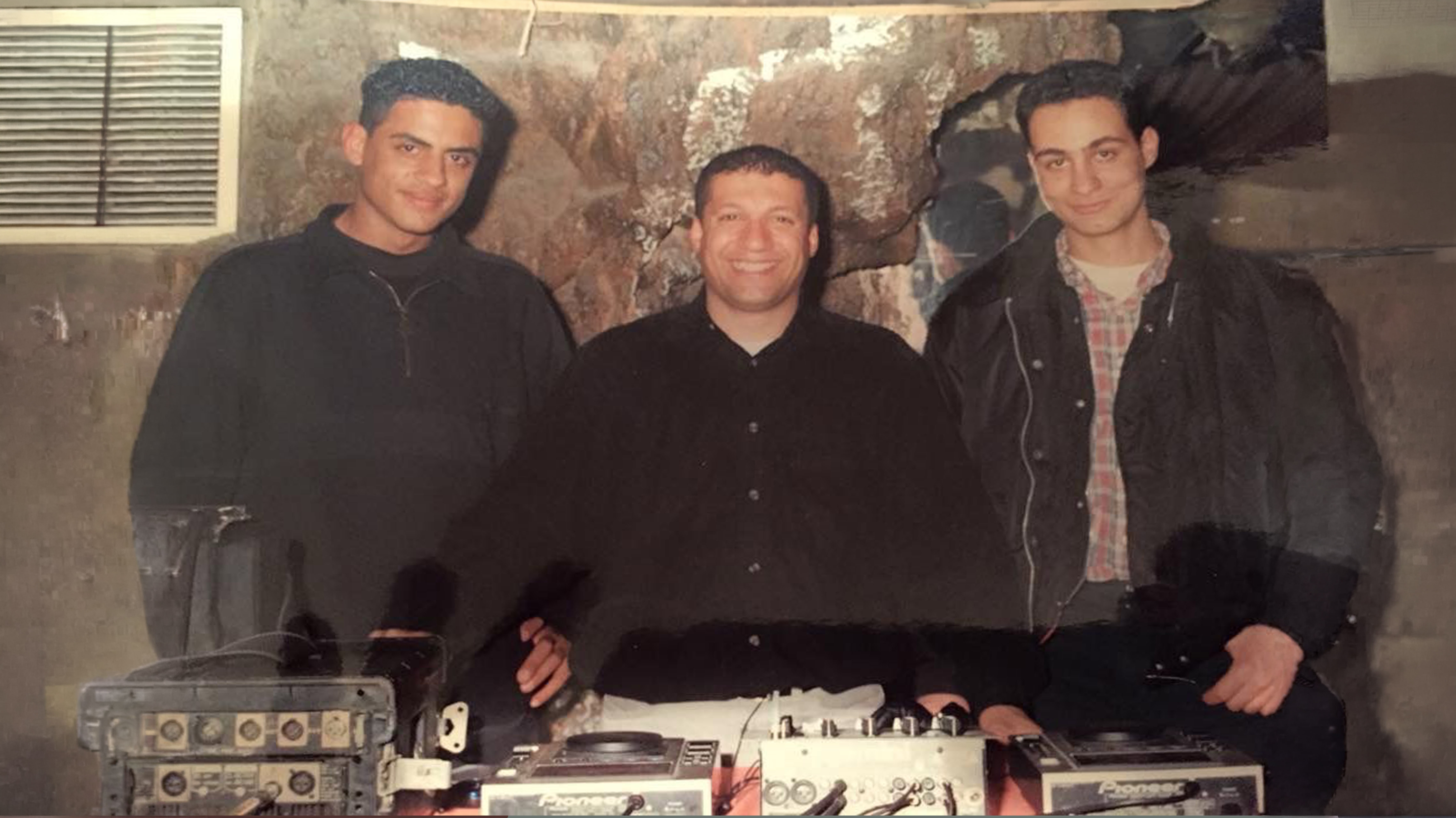
In the courtyard of a villa teeming with people, sounds and colors, a party was under way that went beyond an ordinary night out: equipment unfamiliar for the time, speakers hung from the walls, a white strobe light cutting through the dark, colored lights spinning across the space. It was the first time lighting had been set up this way, and with it came a sound system that made the ground tremble under the dancers’ feet. Hundreds came; many had made the trip from Beirut especially. Such simple details turned a private villa into a temporary public space, a dance floor open to everyone for a single night.
DJ Ali remembers that night in the village of Sultaniyeh, one of the villages of Jabal Amel in South Lebanon, when he sat on the steps watching the scene. People were dancing, old and young. It was the early 1990s. The night would later return in the accounts of DJs Mohammad and Youssef too, as a sign that something was changing in the shape of going out. Parties had mostly been tied to set occasions such as weddings and engagement celebrations; now youth gatherings appeared whose only purpose was to get together and dance, drawing crowds from the village and beyond. The cassette sat at the heart of this shift, since it allowed music to be arranged in advance and a party’s rhythm to be built through the choice and ordering of songs. With it emerged the role of the DJ: playing the music and controlling its sequence according to the crowd and the context.
I knew Ali, Mohammad and Youssef before they became narrators of this memory; they were part of my childhood in my village, which I always visited in the summers and during holidays. Last summer, I returned to their stories to understand their experience up close: the new practices that came with working in music, their movement between Beirut, its southern suburbs and the villages of Jabal Amel, and the formation of a new musical taste in these circles.
Today, as I write this text in the shadow of Israel’s genocidal war on the region, I return to these stories from a different angle. In a time when places are being erased and the memory of Jabal Amel, and of its people’s extension into Beirut, is under threat, recalling those moments becomes an attempt to hold on to the sounds and stories that once filled these places, and to trace what remains of them in memory, testimony and the leftovers of tapes, as part of the history and memory of a people who are meant to disappear.
These stories begin from a specific geographical and social path, the one Ali, Mohammad and Youssef lived. They grew up in Beirut’s Hay el Lija area, known in its early days as “Hayy al-Lujū’” (the Refuge Quarter), which was settled by newcomers from the countryside from the 1950s and 1960s, especially from Jabal Amel and the Bekaa. The neighborhood knew constant movement between the city and the South, through visits and work, and so their experience took shape in this local Shia environment, tied to internal migration and a fragile social and economic context, while at the same time intersecting with wider spaces.
These are not stories that represent Beirut’s entertainment scene in full. But they open a door onto the world of the cassette, the radio, the discotheque and the house party from this particular angle, where relationships, tastes and forms of gathering took shape, stretching between the margins of the city and the villages of the South, and hard to document in official archives. Through them I trace how recorded tapes became more than a technical medium: they reshaped the party and its atmosphere, and the DJ was one of its key agents, between the local and the global.
A World Made by Tapes
Ali, Mohammad and Youssef began in this field as part of a wave that stretched from Beirut to different parts of Lebanon, starting during the Civil War and continuing after it. In that period the cassette became part of everyday life, used for listening and for parties, and also for recording voice messages sent to relatives abroad or to distant regions. It combined songs with the voices of family and friends, as if carrying different faces of home, gatherings and relationships in one small tape.
The DJ’s first experiments came out of this world. Ali tells me:
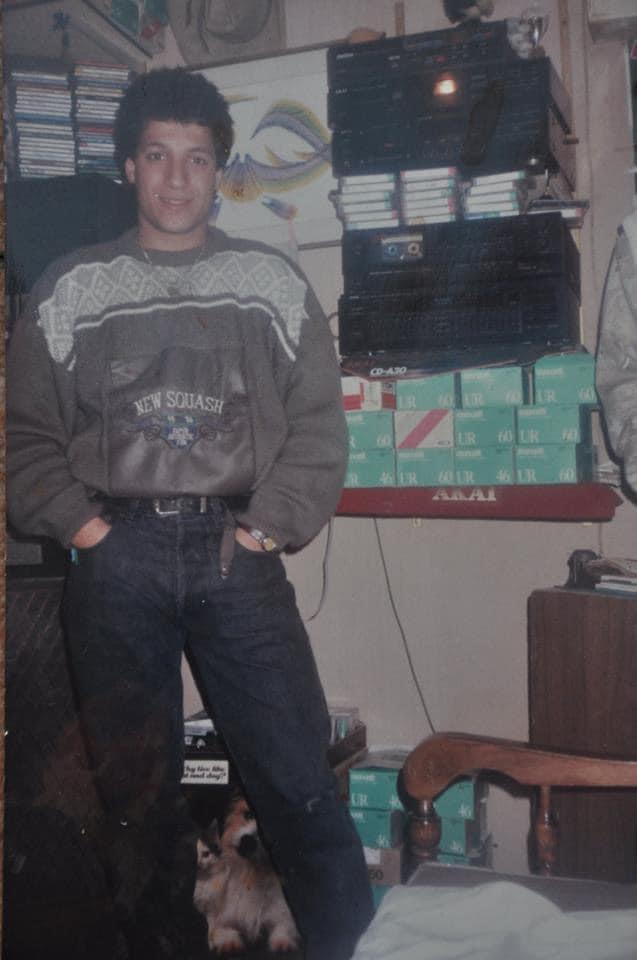
“You took me back to ’84. I was a little kid and I loved parties. My friends told me they were going to a party in Hamra. We went up to a rented apartment. That’s where I met DJ Hussein Hassan. He worked on Technics turntables and Aiwa tape decks. I didn’t go dance. I stayed and watched him, memorizing the movement of his hands. I started going over to his place. He’d record cassettes and I’d learn. Little by little I started helping him. After a few months he let me do a mix. It was wartime; we did parties at the West Hall in Ayoubi, at weddings, in people’s homes.”
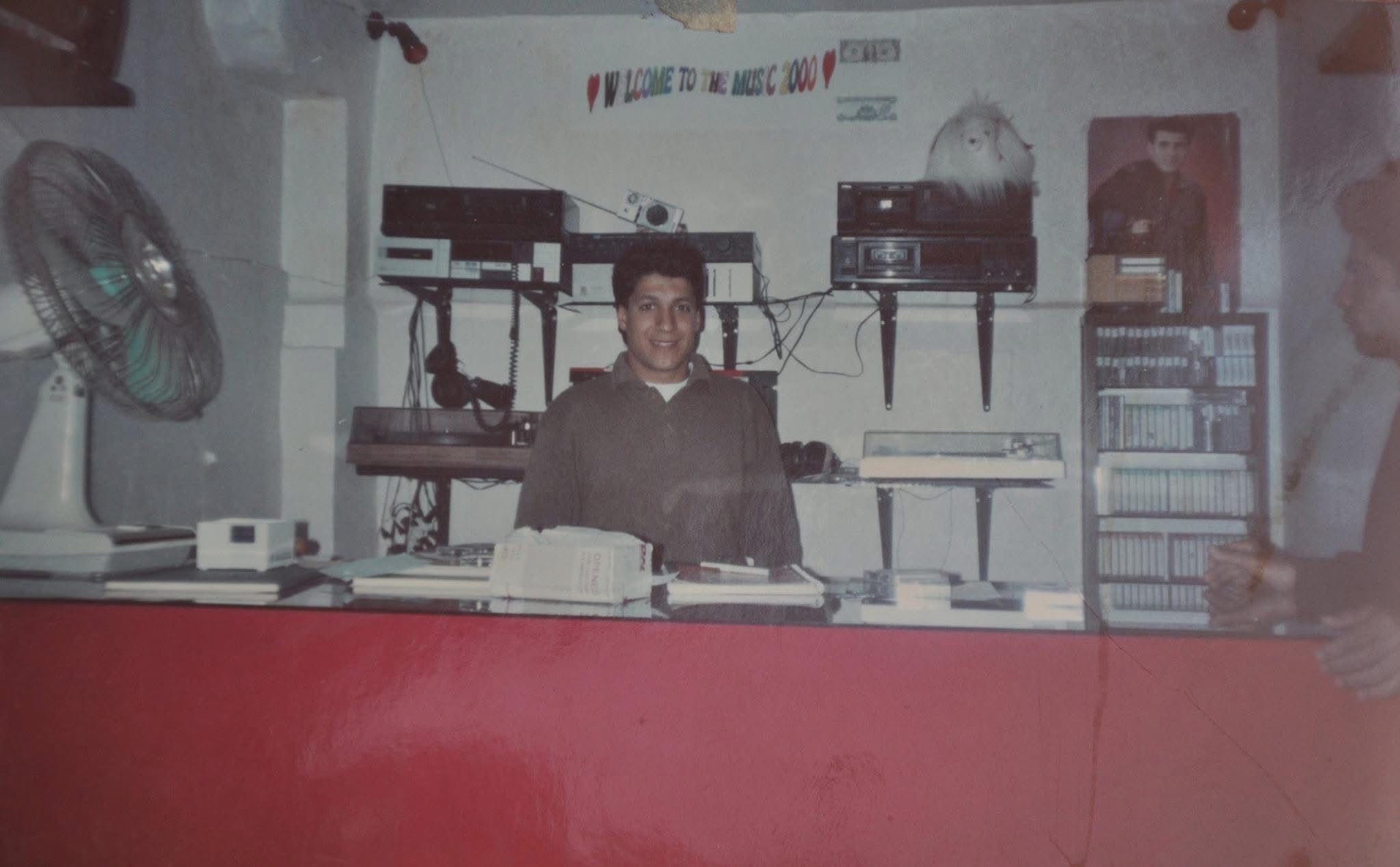
Hussein Hassan was one of the first prominent names in Beirut at the time, with equipment and up-to-date tapes that reached him before anyone else, at the discotheque “Marina Music” in the working-class neighborhood of Burj Abi Haidar. Many young men from these working-class neighborhoods gained their experience with him, by watching and taking part. Ali says: “In West Beirut there were no more than five or six DJs, and every area had its own DJs. After a while I had a small discotheque under our building in Hay el Lija, Disco Music Dimel (2000).” Despite the competition, a network of relationships formed among them, built on the exchange of tapes, knowledge and skills.
Youssef, for his part, was 16 when he left school in the early 1990s and went to work at Ali’s discotheque. He says:
“That was the golden age of house music, and a time of recklessness. We got around on motorbikes, there were no cars, and we always had a Walkman on us. You know, without music you can’t get anywhere. So because of our experience, my friend Mohammad and I, whenever anyone wanted to throw a party they’d come and tell us. We had no equipment. We’d borrow two decks and two speakers, hook them up together, and play the cassettes. There were no CDs then. Whoever had a CD was showing off, like Mix FM. But our equipment did the job. Honestly, we created a really great atmosphere. And like I tell you:
Music is my life.”
Youssef recalls that period when the cassette was at once a modest source of income and a pleasure, despite the effort and time it demanded: “Back then, we weren’t focused on selling tapes in the shop as much as on recording them for people. A ready-made cassette was 1,500 lira (one US dollar), but the ones I recorded on request were 8,000.” The cassette was part of a small economy built on requesting, copying and swapping songs.
A customer would come to the discotheque with a list of the songs they wanted, to keep for themselves or to give to a friend or a lover, sometimes loaded with veiled messages. New songs, especially Arabic ones, were the most requested, and “we had to get them no matter what,” as Youssef puts it. The tape carried people’s feelings and choices, and copying became essential to the work. The DJ chose the songs, especially the “bangers,” and arranged them according to a certain mood, producing a tape that people would ask for over a period of time. Song selection itself became a service they offered, and trust grew in whoever knew what to play and when; what people heard took shape at the overlap between what people demanded and what the market made available.
Sometimes these requests took on a collective character, as with tapes of chants for the Nejmeh football club, which was associated more with Shia milieus, while the Ansar team was closer to Sunni milieus. And if someone came asking for a tape of Ansar songs, Youssef would laugh and tell him in a low voice: “Scram, scram before the boss hears you,” a joke that reflects the depth of the tension between the two clubs’ supporters, inseparable from these wider affiliations.
In Mar Elias, Mohammad was entering the world of sound from somewhere else. He says:
“We were displaced from Chiyah in Dahiyeh. We lived in Mar Elias at the end of the eighties, in the same building as a radio station called New Lebanon, on FM. There was no elevator and no electricity. The station was on the seventh floor. Every day I’d run into people going up and down. The first person I got to know was Ibrahim Shamoun, from the South. He’d ask me to give a shout-out to a girl he liked in the neighborhood. Little by little he started letting me go up to the station, watch, and then sit behind the equipment. I was maybe 12. I felt it wasn’t hard. I asked him to teach me. And since then, I’ve lived with music.”
At the radio station, founded in the wave of stations that spread during the war, often without a license, Mohammad learned to operate the equipment and to deal with an audience he couldn’t see. He went there after school, watching and then trying, until he began taking on simple tasks, such as playing Arabic songs during the afternoon broadcast hours, from three to seven. He did this in secret from his father, since this world was viewed with suspicion at home and considered unreliable or improper work. Sound became part of his life, between school and the radio station.
As I listen to them, each telling his own story, I follow how their life stories intersect with the history of the cassette, this light, cheap, easily carried medium. These young men entered the labor market early, often before finishing school, and found their way to music outside the professional frameworks tied to clubs and large institutions. With the cassette, their place at the party changed: they now helped organize it and set its rhythm, and they learned to respond to the audience and to deal with the conditions the venue imposed. Gradually, they moved with the cassette between parties, discotheques and radio stations, in personal trajectories that combined self-teaching, modest income and the movement of music among people.
From Hobby to Network
At first, the requests were simple: a night here, a party there. But the activity soon grew. In the mid-1990s, Mohammad and Youssef bought their first car and fitted it with speakers and amplifiers, so that it became something like a mobile sound-control room. They traveled with their tapes and built the atmosphere of the night through what they chose and replayed. They became the ones with “the loudest sound” in the street, which gave them a symbolic capital, a standing, that they accumulated thanks to the quality of their equipment, the kind of music they played, the force of the sound as they passed through the street, and the network of acquaintances they had woven.
Youssef worked by day at Ali’s shop, then went out in the evening with Mohammad to play parties stretching from Beirut and its suburbs to the South and the Bekaa. Sometimes it was three or four parties a week, for a fee of between 75 and 130 US dollars, an amount that barely covered the costs. At times the work was intermittent, with no clear continuity, which pushed them to rely on other jobs for extra income. So for them this activity remained a mix of work and hobby, and what drew them to it was pleasure and the feeling of belonging to this scene.
The cassette opened the door to a new kind of gathering, outside the traditional entertainment venues. Invitations traveled through friends and acquaintances, and young men and women from the village and from outside it, would come together, carrying equipment and tapes, set up the gear, and the party would begin. These gatherings moved between the private and the public. They were held in houses and villas, spaces that are supposed to be private but were opened for a night to a wider group of people. Even so, getting in was governed by relationships: it was limited to those who knew the organizers or belonged to the same circle, or who could take part as far as their family and surroundings allowed.
This field also remained, for the most part, a male world, especially in their memory. Neither Ali, Mohammad nor Youssef recall any women working behind the sound in that period, since the trade was tied to night, movement and the street, and to the nature of the nocturnal space itself, where symbolic, technical and organizational power remained in men’s hands. By contrast, women’s presence was essential, through dancing and social interaction, but it remained governed by clear social conditions.
Nor were these nights free of tension. Sometimes neighbors complained, or the sound had to be turned down, or the electricity cut out in the middle of the night. In other cases a small clash or a passing remark could be enough to change the course of the night or end it, turning the moment into a source of disorder and anxiety and pushing some people to leave. So these gatherings remained bound by limits set by the place, the people and the circumstances, despite the nostalgia with which they are recalled today.
As the business expanded, it demanded more effort and an investment of time and money, since “success” depended on several factors. Mohammad tells me: “I had a small setup at home: two cassette decks, a mixer, and an amp. But the speakers I had to rent. They were big and heavy, and I had no place for them.” The equipment filled half the car, and setting it up took time, and the DJ was the technician and the porter, carrying the gear, running the tapes and setting the rhythm. He often resorted to improvised solutions, such as drawing electricity from the neighbors’ generators when the power went out.
As for Ali’s shop, “Disco 2000,” which he opened in the mid-1990s, it was a key point in this scene. Like other discotheques at the time, it was a place where the neighborhood’s young men met, discovered new music, hung out and passed the time, watched the girls walking by and threw a few passing remarks at them. The parties started from there, and relationships formed there too.
One could enter this field as an assistant, or through the tapes and equipment one owned, and through the people one knew and worked with. Whoever had newer songs or better gear, or knew more organizers, was in higher demand, and his chances and his name in the market grew. “Sound” itself became a resource, not just a technical element, opening doors to work and fixing each person’s position in this scene.
The DJ Between Different Worlds
In Beirut, Ali worked at a number of venues such as “Lambada” in Hamra, “Kings” in Raouche, and the “Ajram” pool in Ain al-Mreisseh, where some days were mixed and others women-only. He also played private parties in neighbourhoods in the southern suburbs, such as Jnah, Bir Hassan, Bir al-Abed and Chiyah. Mohammad and Youssef, meanwhile, kept playing songs at private gatherings, which placed them in different worlds in terms of scale, organization and the nature of the audience.
In that period, the media began to change with the arrival of laser discs, the “CD.” Ali laughs as he remembers the first time they played a CD: “The idea struck us as strange. We were used to cassettes and decks. Suddenly this disc showed up that needed its own machine.” The CD offered purer sound and wider choice, and its use began in cars and then at parties, opening up new possibilities for arranging music, without immediately doing away with the cassette’s presence.
Gradually, Ali’s work expanded to cover running weddings in all their details, from sound and lighting to decoration and the procession. In the late 1990s, he opened a wedding-planning office in cooperation with a professional photographer, and took part in managing the details of the ceremony. He would coordinate the couple’s entrance, choose the songs, and follow the lighting and the course of the night, in coordination with the hosts and their requirements.
As these practices moved from marginal parties to weddings, the DJ’s role grew stronger in this essential social occasion, through which the family presents itself anew before others via carefully considered details. The DJ took into account the wishes of the family and the guests, and provided a service within a wider team that included photographers, organizers and hall owners, which gave him a social role that went beyond playing music.
The wedding, unlike the youth parties, remained a family and collective space in which dabke and Arabic songs kept their central place, to affirm belonging and social standing before the guests. And even when foreign music was played, it usually appeared as a brief breather within the overall rhythm, without changing its general structure.

At the same time, people’s view of this trade, from family and neighbors and others, stayed tied to nightlife, the night and modest, fragile income, in an unstable and disreputable world, at times a suspicious one. DJs were sometimes seen as young men outside the prevailing social norms, despite their essential presence at weddings. As Mohammad tells it: “They talked about us a lot, but we never harmed or bothered anyone, we just liked to live and have a good time.” So their image remained ambiguous.
Although they started from a single environment, Ali, Mohammad and Youssef each took a different path. For Ali, the work was more organized and stable and tied to the wedding market. Mohammad and Youssef’s activity stayed closer to small gatherings connected to friends and the social sphere. These experiences took shape in a balance between work, pleasure and experimentation, in spaces that differed in organization, standing and tastes.
How Did Taste Take Shape Through the Cassette?
The listening experience of these young men formed amid a mix of sounds that surrounded them, from radio and television to the noise of the street. The call to prayer, the processions, the anthems of the Amal Movement and the lamentations (laṭmiyyāt) sat in the background alongside the hit songs on the radio and the cassette, in a single auditory scene. With the tape, some of these sounds spread and moved from one context to another, taking part in forming a shared memory that reflects the environment they grew up in. Their relationship to music thus took shape through this continuous coexistence of the sounds of war, religion, entertainment and consumption.
In this sonic environment, new musical styles began to enter, such as house and Eurodance, especially through the proliferating radio stations that broadcast in English. Youssef remembers that time: “We were hearing house. It was at its peak between 1992 and 1996. Then styles like deep house and funk showed up, then rave and techno.”
They followed Radio DJ 99.1, and DJ programs like “Amadeus” and “Rodge,” where parties were broadcast live from the studio. They waited for them every week, and they filled the cars every Friday evening. Later they moved on to “Radio One” and then “Mix FM,” which Rodge founded. And despite the limited number of television channels, some local stations opened a window onto the outside world by broadcasting music videos from Music TV. Through these different media, foreign music entered that had not been available so easily or so abundantly before.
With the cassette, songs broadcast on the radio came to be recorded and circulated among homes, cars and parties, where they were reused and rearranged according to the occasion. Access to music depended more and more on copying and unauthorized sharing, rather than on official radio stations or buying original records. The piracy of tapes helped speed the spread of foreign songs among neighborhoods and young people, while the market played an essential role, since it became possible to pick the hit songs and compile them according to the listener’s wishes.
Even when the CD appeared, which was relatively expensive and sold for around 20 US dollars, circulation of these songs continued. They would chip in together to buy discs, or trade three old ones for a new one, then copy them onto tape. Hamra was their main destination for discovering new music, and they went to ABC and to a small shop resembling an early version of the Virgin Megastore.
From here, many international bands entered their lives, such as Backstreet Boys, Spice Girls, East 17, Boyzone, Ace of Base and Take That. The artist’s name wasn’t always as important as the tune itself. As Mohammad says, laughing: “Sometimes we’d sing along to foreign lyrics without understanding them… and the French we didn’t understand at all, we just put it on for the girls.” The importance of a song was sometimes in its effect on interaction and the role it played in relationships and in attracting girls, more than in its meaning or words. These parties were also tied to forms of asserting male presence, where music, dance and the choice of songs played a role in building social relationships and confirming one’s standing within the group.
At the same time, the Walkman, the portable cassette player, changed the way of listening, moving it into a more individual space. Mohammad remembers the first device he owned, a Sony Walkman without auto-reverse, so he had to flip the tape by hand. It cost about 80 US dollars, a large sum at the time. A few years later, around 1992, he bought a CD player, which he carried in a special case, since it could not be clipped to the waist like the Walkman.
With these devices, he could listen to music alone on the road, on the motorbike or while waiting, choosing what he wanted and replaying it as he pleased, away from the choices of family or group or radio programs. Music became part of his daily life, and listening became a personal experience whose timing and rhythm he chose himself; it also allowed him a temporary separation from the surrounding noise and helped form a new youthful individuality.
At the same time, the cassette remained the medium through which music moved between the radio and the portable tape, and between individual listening and collective gatherings, so foreign songs spread between Beirut and its margins, Jabal Amel and other regions, allowing young people living in relatively marginalized areas to come closer to a global youth culture.
The cassette was also tied to wider changes Lebanon saw in the 1990s, as in other Arabic speaking countries, with the expansion of the market and the appearance of new patterns of consumption, the spread of satellite channels and of tape stores such as ABC and Virgin, where searching for new music became part of the habit of going to these shops. Global pop widened its presence within a youth culture that showed in dress, appearance, the way of dancing and lifestyle, as reflected in music videos and photos of stars.
This musical world, formed through recorded tapes and the DJs’ choices, was made of a mix between what was produced locally and what arrived from abroad. With time, these parties and songs went beyond being mere entertainment or a youth fashion, and revealed social and cultural transformations tied to globalization, technology, gender, and the way the city was lived and collective time in the 1990s.
Building Parties: A Rhythm That Never Stops
At parties, a song’s success was measured by its ability to move people, so the DJ chose songs according to how the crowd responded to them and what was on the market, more than what he liked himself. Mohammad recalls: “I loved rap, but nobody could stand it. The second I put it on, they’d ask me to change it.” He would play some songs and replay them, while others passed without leaving a trace. The hosts and the guests also sometimes dictated what was played, depending on the mood and the nature of the occasion.
At weddings, Arabic songs, especially dabke, were the foundation. “We’d leave the foreign music for the end,” says Youssef, “half an hour of craziness.” At youth parties, there was more room for experimentation, with a strong presence of Eurodance, hip-hop and reggae:
I’ve Got the Power, The Rhythm of the Night, U Can’t Touch This, Informer, No Coke, Be My Lover, Ice Ice Baby, Freed from Desire and No Limit.
These songs suited the rhythm of dancing, thanks to their repeated hooks, which helped fix them in memory. And with the cassette, it became possible to replay them and circulate them between tapes.
Alongside Snap, Dr. Alban and Corona, danceable Arabic songs were played, such as “Ghazali,” “Rajeen,” “Eini,” “Ahla ma Feki” and “Shouqna,” in a single rhythm that brought these styles together. Some songs were recognized from the first note and awaited, like Look Who’s Talking, What’s Love, Rhythm Is a Dancer and It’s My Life, while others disappeared because people never took to them.
Ali talks about this shift in musical leaning by comparing the eighties and the nineties. In the beginning, the nights leaned toward a calmer rhythm, with songs in the “freestyle” vein, such as Spring Love, You’re My Heart, You’re My Soul, Brother Louie, Cheri Cheri Lady and Careless Whisper. Later, with the rise of Eurodance, the scene changed, movement became an essential element and the body became the center, with songs like Mr. Vain and Coco Jumbo.
In a country coming out of war, these parties were also tied to a desire to recover normal life, movement, celebration, even if only for a short while. Their relationship to music came to be shaped more and more by what was popular globally and reached them through radio and cassettes. And in the late 1990s, lighter, more mass-oriented songs tied to the global pop culture of the day came in, such as Maria Maria, reflecting a growing inclination toward simple, fast rhythms. With them, dancing, electronic rhythm and nightclubs became part of an urban youth culture in constant expansion.
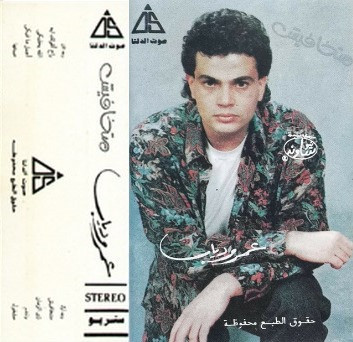
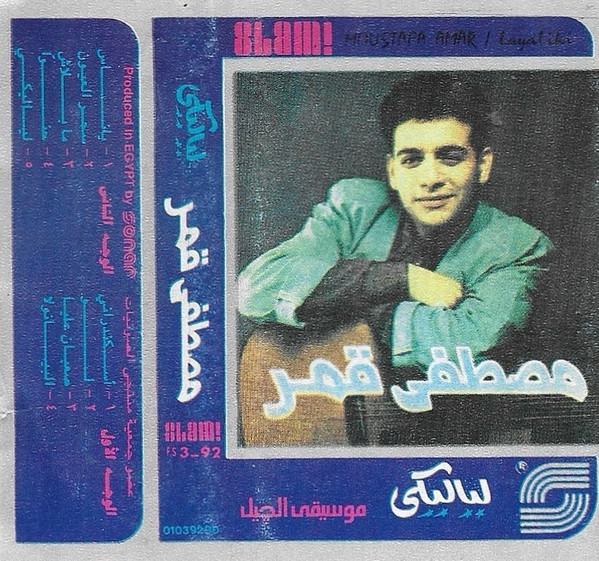
At the same time, the Egyptian song was strongly present. Amr Diab topped the scene, sometimes with more than ten songs in a single night, alongside Ehab Tawfik, Mohamed Fouad, Mostafa Amar and Hisham Abbas. “No party went by without Habibi Ya Nour el-Ain,” says Mohammad. “It had to be repeated.” Amr Diab was a model of a new Arabic sound that combined a Western beat, light Arabic language and a youthful image, within a musical wave in which Hamid al-Shaeri also played an essential role, through the electronic arrangements and dance rhythms that marked Arabic music of the nineties.
These songs, with their fast rhythm, modern arrangements and easy youthful or romantic lyrics, moved with ease between the radio, the car, the cassette and the party, and became an essential part of the atmosphere of a night out. They were also increasingly built to suit parties, with a rhythm that allowed repetition and collective dancing, which explains their heavy presence and the continued centrality of Egypt in the Arab music market at the time, whether in production, distribution or star-making.
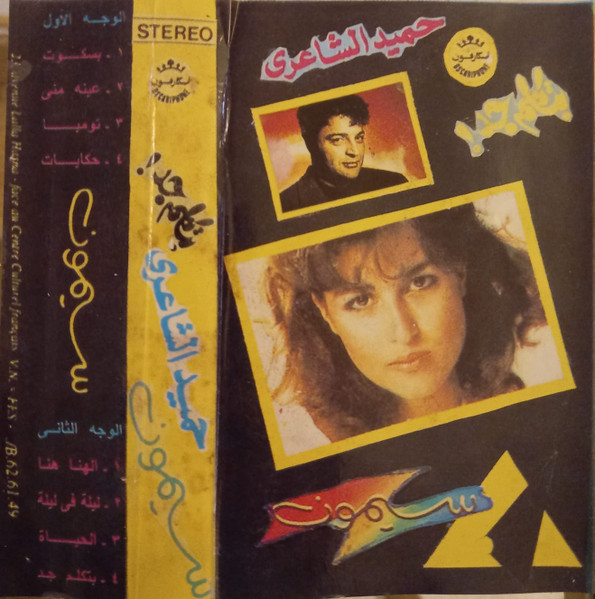
By contrast, the use of songs by Egyptian women singers remained relatively limited in the dance circles, with a few exceptions such as Simone and some duet songs. Simone also offered a different image from that of the traditional female singer of that period, with danceable songs close to ordinary life, and she became well known for Arabizing international songs and reworking them in an Arabic pop mold that spread widely during the nineties. Even so, this field remained for the most part in the hands of male artists, producers and technicians.
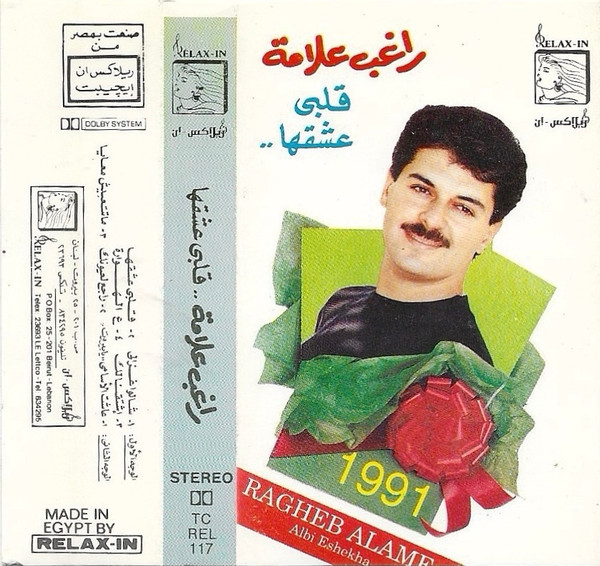
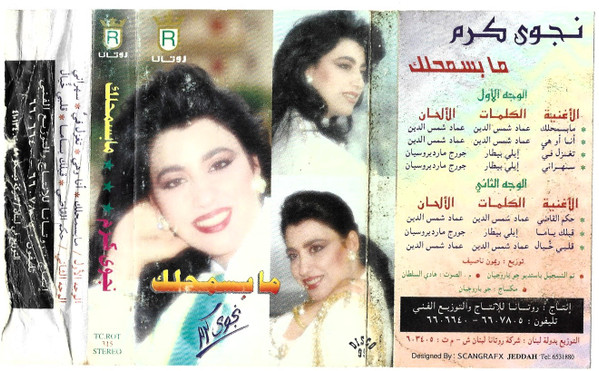
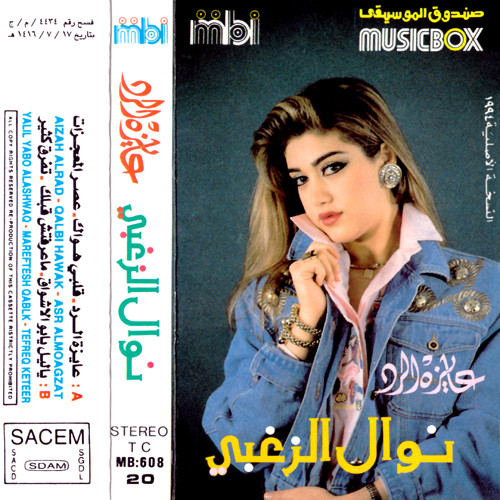
As for the Lebanese song, it remained less present in their nights, despite the rise of names such as Ragheb Alama, George Wassouf, Assi al-Hallani, Alaa Zalzali, Nawal al-Zoghbi and Najwa Karam. Whereas the Egyptian song was tied more to the atmosphere of dancing and of popular and youth parties, a large part of the Lebanese song turned toward the music video, visual stardom and relatively quiet songs, in step with the rise of the satellite channels in the nineties and their transformation into a main force steering the music market and setting the patterns of spread and stardom. The artist’s image became an essential element in a song’s circulation and marketing, which gave it a stronger presence through television than on the dance floor itself.
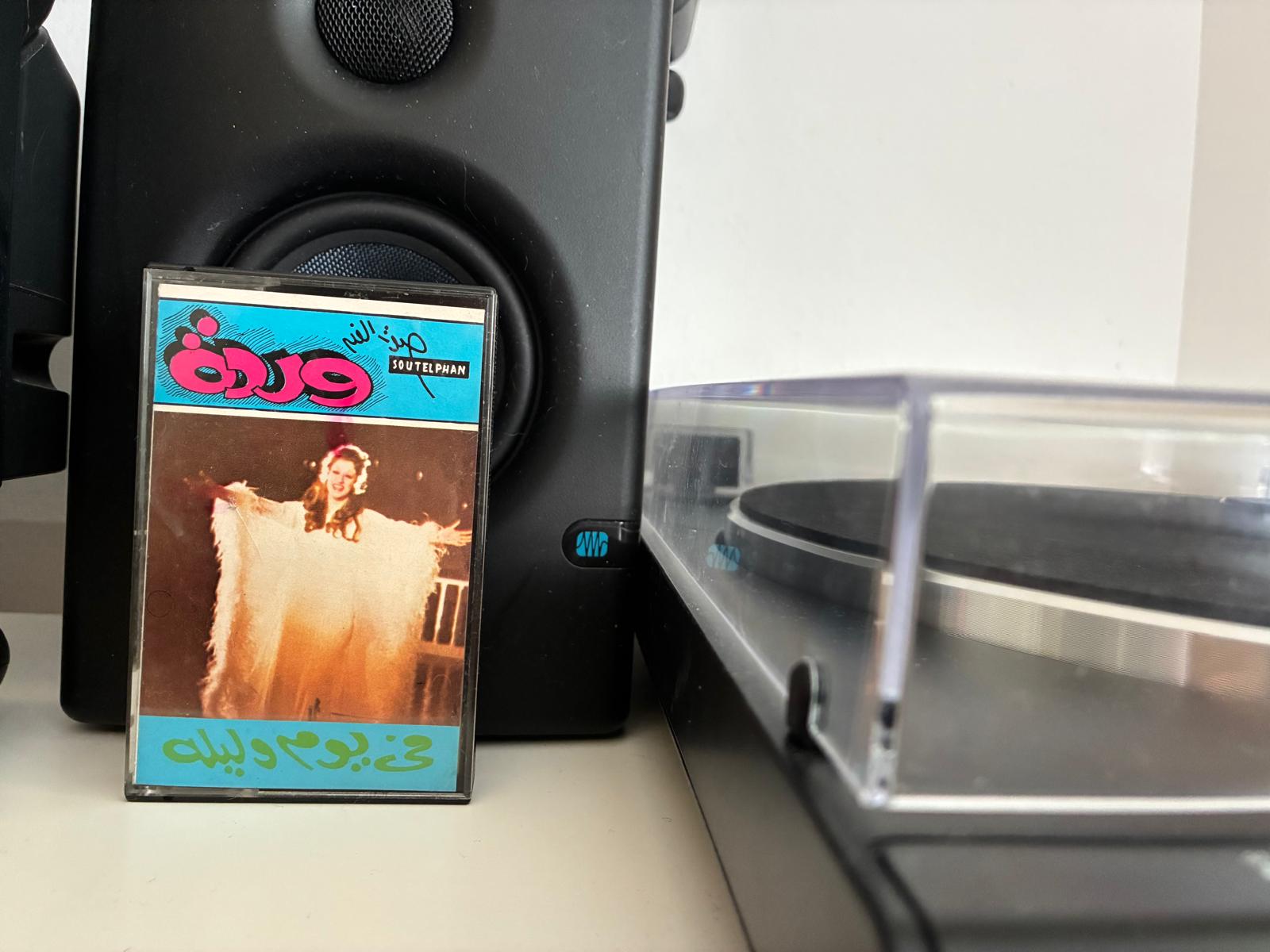
As for the party, Ali stresses that it was built as a path, with a preliminary start, then a gradual rise, up to a climax, usually ending with a tarab song by Melhem Barakat or Warda. The DJ controls the transition between moments, according to how the people respond and the nature of the occasion. As Youssef says: “A successful party is one that never loses its breath.” That is why parties were prepared with arranged “Best Of” tapes, in a sequence that made transitions easier. But each had his own style: some chose rapid switching between songs and others preferred a gradual build. Youssef adds: “I’d put the new song on before the one before it had finished. People want it to keep going.”
Styles overlapped across tapes and places: Eurodance, pop and hip-hop came together with Arabic songs in a single musical mood, and some songs became a shared memory, songs everyone knew and waited for, repeated across the nights. Foreign songs sometimes carried a meaning beyond the melody itself, as playing them was tied to a sense of belonging to a global youth culture and to lifestyles considered modern at the time. By contrast, the Egyptian song remained the closest in language and feeling, and the DJ used it to create shared moments that were easy to join in on. Between these two dimensions, the party moved, between what arrived from the outside market and what formed within it.
In this circle, the musical atmosphere of the nineties, as these men lived it, took shape from a constant mixing of global music and local styles, through listening practices that readapted what arrived from abroad within particular social contexts. As the years passed, the songs came to belong more to these collective moments than to their words, passing on as an experience tied to a specific place and time. And so a form of nightlife emerged in some marginal neighborhoods, intersecting with wider patterns of consumption and youth culture.
From Beirut to the Village: Cassette Routes
This nightlife was born in the city, but it did not stay there. These DJs lived in Beirut, but they remained in constant touch with their village in Jabal Amel, returning to it in summers and on holidays. This paved the way for nights that brought together teenagers and young people in their early twenties, something not easily familiar before, especially in other villages of Jabal Amel, where through these nights they discovered themselves and their relationships with their wider surroundings. Between coming and going, the tapes moved with them, shuttling between two rhythms: nights dominated by house, Eurodance and foreign songs, and others where dabke and Arabic songs took the stage.
In Beirut, private parties were held in houses empty of parents, among friends and acquaintances, in an atmosphere open to mixing and getting to know one another. A young man steps into the middle of the circle, trying to catch a girl’s attention and invite her to dance, sometimes with a light gesture of the foot. She might respond, or just offer a smile and withdraw. Around them, others move, dancing or watching. The scene looks spontaneous, but it was not experienced in the same way by everyone.
In the village, these relationships become more exposed. Young men and women dance together, but with greater distance, and with a wider presence of the village’s people, where the elders’ gazes stay close even without direct intervention. And if the interaction between a young man and a girl lasts or repeats, it turns into talk the next day and affects the image and reputation of those present, especially the girls, who were balancing parental oversight, people’s talk and watching their own behavior during the night on one side, against their desire to take part, what they were allowed, and avoiding comments on the other, in a space where their movement remained more fragile and more sensitive to others’ looks and remarks. That is how the party extended beyond its moment, and carried its mark into the community.
Migration also played an important role in shaping these parties. Many sons and daughters of the villages had emigrated to the United States and came back in the summer carrying clothes, tapes and new tastes: Levi’s jeans, recorded cassettes, and songs that had not yet reached the local market. These items entered the parties and affected what was heard, what was worn and what was considered modern, and with them some spaces, especially the empty villas, became meeting points that made parties like these easier to spread.
Mohammad laughs as he remembers the competition between groups to put on parties: “Sometimes a smaller crew would throw a party to beat us to it, so we’d answer with a bigger one at the place of Zahiyya the American’s son.” Sometimes a party starts with no equipment at all: a car is opened, the volume goes up, and the circle gathers. In other cases, the gear is carried over and set up, and the music adapts to the context, ranging between Western songs and dabke, depending on the people.
These practices were not entirely separate from older forms of gathering, such as dabke, communal singing, the mijwiz, the mijana and the ataba, which the villages of Jabal Amel had known, where people gathered in the squares and on the threshing floor, women and men dancing dabke in circles, and those present took part in making the rhythm through clapping and stamping their feet, with the mijwiz player or the singer interacting with the crowd.
But with the cassette, the form of these parties changed. The rhythm came to be prepared in advance, and traveled with the tape. The DJ stands a little outside the circle, choosing pre-recorded songs and setting their sequence. So part of the collective joy shifted from a live act built through the singer, the player and the group, to a path the DJ prepares beforehand through a tape recorded in another time and place, even as people continued to engage with the songs through singing, movement and shouting within this frame. This affected the way collective joy was expressed, and the spaces of improvisation, interaction and live singing shrank.
Nor were these nights free of tension; they were not entirely familiar in their surroundings, and the way people dealt with them ranged between acceptance, reservation and criticism. Sometimes neighbors complained, or attempts were made to stop the party. “They’d ask us to turn it down… but we’d carry on,” says Youssef. These occasions were a space of continual negotiation over the use of the place, the volume, the length of the night, and the limits of what counted as “too much” between a young man and a girl.
The pressure sometimes came from the village’s strict members or from those affiliated with Hezbollah, and sometimes from people’s talk itself, as a kind of constant policing, fed by the image of the “loose” youth in some people’s eyes. It was not always an outright ban, but a framework everyone knew how to move within or get around. The volume is lowered after a certain hour, certain songs are put off until late, or a beer is drunk out of sight; and the night goes on within these small calculations.
In the end, these parties were part of a life lived in specific social and political geographies, with all the limits, compromises and wider social stigma that may surround these young men and women. Inside them, relationships and romances were tried out, and moments of closeness and fun were built alongside problems and frictions, forming a particular time tied to the rhythm of the night, without ever being detached from the constraints around it. And in the middle stood the DJ and with him the cassette, linking these places and weaving shared moments that stay in memory and pass between people.
What Remains of the Night: A Small Memory of a Changed Time
When I revisit the stories of Ali, Mohammad and Youssef today, I return to paths that can be traced through the remnants of tapes, photographs and memories. It is a small, intimate archive that opens moments from the time between the wars, and calls up details that never made it into the grand narratives. Through it, forms of nightlife, movement and work appear, in regions stretching between Beirut and the villages of Jabal Amel.
These experiences come in a period when the city and the villages were reordering themselves after the Civil War, and when many places for going out and meeting emerged, between halls and private homes. The DJ and the tapes helped carry music between these places and link them through repeated use, and they changed the ways of listening and celebrating between the public and the private.
With them, a new auditory scene took shape, moving away from the neighborhood and the family toward a youth culture tied to the cassette, dancing and satellite channels. These songs stayed in memory, not through their words alone, but through dancing and movement and the new ways of gathering, of living and of imagining modern life that came with them.
So these experiences, in these circles, can be read as part of a history of entertainment, where movement between the city and the village intersects with networks of work and relationships, in a space full of limits, balances and power relations. In regions that today are often reduced to stereotypes of closure or discipline, these stories reveal spaces of experimentation and difference, threatened today with oblivion, given the attempts at erasure that these places are suffering.
After 2000, paths diverged. Some emigrated, some married, some got absorbed in work. That chapter ended the way many chapters end. For Ali, Mohammad and Youssef, those years were a time of beginnings and dreams, a time of learning and of being caught up in sound and parties, before their lives entered another rhythm.
And yet, some things remained. Youssef still keeps recordings from that period. He says: “To this day I have playlists from those days. The moment I hear them, I go back to those nights and live the moment.” With these songs, Youssef returns to a whole time, with its rhythm and details, and with the possibilities and the limits it carried.